How to explore ideas with your child: How do birds fly?
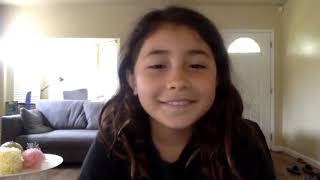
A facilitator guides a child named Alana through questions about how birds fly. She starts with intuitive ideas like light bones and feathers, then refines them by comparing birds to paper airplanes and kites, discovering that wing shape and surface area matter for catching air.
Chapters
Hey, Alana, how are you?
I'm good. How are you?
Well, I'm well. Is it a beautiful day there in San Diego?
It's kind of cloudy outside, but it's kind of light in here.
Okay. It's a beautiful day here where I am in Austin. It's sunny and nice and pleasantly spring. And I was listening to birds and I was wondering, how do you think it is that birds fly?
To me, their bones are lighter, they have feathers, and they have wings and different kinds of muscles. And they also have lighter bodies, maybe.
Have you ever picked up a bird?
I haven't.
They are incredibly light. It's kind of amazing because given how big they look, if you pick one up, they just feel really light. So all of that sounds accurate. Do you think that the way they actually fly is similar to the way a paper airplane flies, or is it somehow different?
I think it's different.
So what makes a paper airplane fly?
Well, it still has wings, but also like it flies like an airplane.
Go ahead. I was going to say, a coffee cup doesn't fly, right?
No, it doesn't.
So, and you don't fly, right?
No, I don't.
So why do things fly? What makes planes fly? What makes paper airplanes fly? What makes birds fly?
They're also light. They fly like airplanes. They have wings and maybe they have the same position. Like, I know it's not the same shape, as airplanes, as real airplanes, but they can still fly. Like if they're in a certain position, like maybe you're making a certain type of paper airplane, maybe that would fly differently than another one. It's because maybe there are different styles.
So I'm trying to make sense of everything. So birds are light and being light helps them fly. Paper airplanes are light and being light helps them fly. Then you say they fly like real airplanes, and real airplanes are super heavy. They're like this huge chunk of metal, right? So if birds and paper airplanes fly because they're light, then why does a huge chunk of metal fly through the sky?
Well, first you just start the engine, and then once you start to go forward, The wind goes under the wings and sometimes the wings are positioned a little, like maybe one part is higher than the other. And then the wind still goes on top, just like on the surface of the wing. So if it was like, and then down a little bit, it would go like that.
Okay, so it has something to do with the engines and the wings and the wind. So I'm trying to figure out what's common about the way birds and paper airplanes and airplanes fly and what's different. Birds don't have engines. How do they fly without engines?
Sometimes they get a running start or they just jump, maybe if they're on a branch.
Okay, and does any light animal that jumps fly? I mean, like a cricket. Crickets jump, right? Do crickets fly?
Yeah. No.
So how come birds fly when they jump, but crickets don't fly when they jump?
Well, first of all, they don't have wings and they don't have feathers, and feathers are maybe just different than the skin or type of material on crickets' body, and they're probably different than feathers and That.
So are feathers like a magical substance, like something out of Harry Potter?
No. A lot of birds have feathers, but they can't fly.
Okay, so what do you think feathers have to do with flying then?
Um, maybe it helps them fly, or maybe it gives them the right amount of weight.
The right amount of weight? You mean they need more weight? The feathers are just like extra weight?
Actually, I take that back. I don't think it is now, but maybe it could be with something like— like maybe if it— maybe if a bird was plucked. And if I— I'm not saying this is true because I've never really seen one, or like, I'm just thinking out loud kind of. Maybe if a bird was plucked, maybe from its feathers, maybe it couldn't fly. Maybe because the feathers have something to do with flying.
Okay, so you have a hypothesis that if a bird lost its feathers, it would no longer be able to fly. Is that correct?
Yeah.
So what function do you think the feathers could play then? If they're not magical like something out of Harry Potter, but somehow they're important for flying, what function do you think they play?
Hmm, it could have something to do with when they take off, like maybe Like I said a lot before, maybe it helps them fly. Like, maybe it doesn't give extra weight, but like it helps push the wind under them, making them go up. Or maybe it just helps them fly, maybe. Or it does the first thing I said.
So when you talk about pushing the wind, have you ever taken something big and flat and tried to wave it through the air? Like I don't know, part of a cardboard box or some paper. Yeah, paper. Or like a kite. Have you ever flown a kite?
Yes, but I haven't done it in a long time.
Why do you think kites fly?
Maybe it's because when the string is attached to your hand and then the kite goes up, it's probably because of the wind. It helps it fly. Stuff like that.
Do kites fly if there's no wind at all, or do you absolutely have to have wind for a kite to fly?
I think you have to have wind, but also it's very light. Like, if you tried to fly a bowling ball, that wouldn't work.
Right. You know, you're right.
Or maybe a tennis ball.
I'm going back to what you said about the feathers pushing on the wind or pushing on the air, because you're right, kites need wind to fly. And I think the windier, the windier almost the better for kites. I mean, a hurricane would be too much, but you know, if you're holding a kite, the wind is pushing it and somehow the surface of the kite kind of pushes back against the wind. Does that make sense?
Yes.
So maybe it's the feathers, and you said with real airplanes The flying has something to do with the engine and the wings. That is, the air going over the wings has something to do with why real planes fly. Is that right?
Yeah. Yes.
Maybe the feathers have something to do with resisting the wind or pushing the air or something like that. Does that seem possible?
Yes, it actually does.
Um, so Let's look at paper airplanes. Do all pieces of paper fly or do only some pieces of paper fly?
Um, well, some fly better than others, like maybe a javelin or maybe a shooter would fly better. So have you ever made a shooter?
Is that like kind of 3 big pieces or something like that?
No, but like what I'm saying is like some types of paper airplanes are better than others, like Javelin, if it isn't good, maybe it does a little, maybe catches a little air, does a loop-de-loop and then it lands. It doesn't go far. But if you make a really good one, it might go far. If you made a shooter, it would go maybe a little further. And if you made another one, well, I don't really know what would happen.
I totally get that. But what if you just had an 8.5 by 11 sheet of paper, a regular piece of paper, just flat and unfolded? Does that fly?
No, maybe it's because it's not folded in a position like that. That does not look like an airplane. It doesn't fly like an airplane. And maybe it just doesn't act like an airplane because it's a different shape. Or like, you just need— it just needs to be in a position because sometimes you need to have wings. Like, if it has wings, maybe it could fly, like when you fold it. But the wind has to— but the wind has— or just if it's not windy, you could probably still fly it. It just needs to go because if it goes, like, it's kind of like the wind is going, like, so you would need the wind to go above the wings and And below the wings, right on the like paper.
So what are the wings doing? What function do you think the wings have there?
I think it's holding it up. Like if it was just like, like if it wasn't this thick, but like thinner, it would probably just fall because the wings probably aren't holding it up.
So it sounds like with the wings of real airplanes, the wings of paper airplanes, And the feathers, I think you've seen chicken wings, like the kind of chicken wings we eat, right?
Yes.
Those are obviously chicken wings without the feathers. And you see how skinny they are? Chicken wings without feathers are pretty skinny. And chickens don't fly long distances. Chickens can kind of jump up and fly a little tiny ways. But you see it without the feathers, their wings are not really, not really very good wings. Does that make sense?
Yeah.
So birds, you know, flying birds, really good flying birds, the feathers give them bigger wings that catch more air. And with your paper airplanes, you have to have some kind of wing to catch some air, kind of to The air, somehow the air has to push up on a wing in order for something to fly. Does that seem likely?
Yes, it actually does.
Okay. Well, you know, your initial answer about why birds fly, kind of about their bones, their lighter bones and all of that, that made sense. And I wanted to kind of think about wings and the exact role of wings. And now kind of the role of feathers and how feathers give them kind of bigger, broader, lighter wings. And I think next time you see a bird— do you ever have any opportunities to see birds?
Yeah, like sometimes when I'm in my backyard, I see some flying in the air, or like in the side patio, there's a bush, and sometimes little birds go in there even though it's really thorny.
You might start studying how birds use their wings. Well, for the other thing, birds flap their wings like paper airplanes. Real airplanes don't flap their wings. Why do you think birds flap their wings? You know, they kind of go like this, sort of. You know what I mean?
Yeah.
Why do you think they do that?
Maybe to get a head start, like to push them upward.
Okay. Yeah, I think it's really fascinating how birds fly. So when you're, you know, obviously you learn from— where did you learn so much about birds to begin with? Again, you knew all about light bones and things like that. How did you learn all of that stuff?
I learned about like light bones and feathers Um, from actually at the zoo when we, when we were about to go, um, I forget its name even though I've been there like 100 times, but, um, you know, like the Skyline kind of where you can go up.
Yep.
Um, before you go in, sometimes on the TV there's like, it teaches you a little bit about like flying, like maybe the bones are lighter or the feathers help them.
Got it. Well, you certainly knew a lot and What I'm thinking now is in order to understand flying more deeply, you can think about how paper airplanes and birds and real airplanes all have wings, and the kites, you know, the air is pushing against the kite, and that the wings— birds flap their wings and somehow they're pushing against air. And you might kind of study birds when you see them flying, see what they do with their wings. Some birds flap their wings very fast. You know what a hummingbird is?
Yes, they flap their wings very, very fast.
Very, very fast. On the other hand, like a seagull or a hawk or an eagle, sometimes they kind of float across the sky without barely moving their wings at all. Have you ever seen those kind of birds? They just kind of float? Exactly. So you might start to check out different birds and see how different birds use their wings and, um, and try to figure out how that helps them fly. Okay?
Okay.
All right. Well, have a wonderful Mother's Day and maybe we'll talk next week. Okay.






