Loving your child's mind: Alana on how she knows what she knows
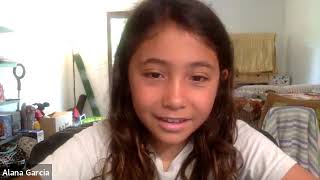
A second-grader named Alana talks through what she knows, doesn't know, and sort-of knows. She realizes division is fuzzy, that half of what she believes might be wrong, and that the world contains vastly more than any one person can learn.
Chapters
Hey, Lana, how are you? I'm good. You having a good day so far? I'm well, thank you.
I am.
Good. So I'm wondering, how do you know what you don't know?
I don't understand that. What do you mean?
Okay, there's some things you know that you know, right?
Uh-huh.
What are some examples of things that you know that you know?
Um, what's 2 plus 2 equals 4? Um, that my mom is sleeping. Um, that 10 plus 10 is 20.
Excellent. Um, and we can go on about things you know, but for now let's think about, are there any, is there anything that you know that you don't know?
What do you mean by that?
Um, do you know what, uh, 754 plus 754 is? No. Okay, so that's one example of something that you know that you don't know, correct?
I don't understand that because I thought you would say like that's an example of that if I actually figured it out.
Okay, if you figured it out then you would know it, but right now you don't know it, right? And, um, go ahead.
And like, you know, it's like you know like what the equation is but you don't know is is what it adds up to?
So it sounds like you're thinking that's an example where right now you don't know it, but that if you worked through it, you could figure it out. Is that right? Yes. Okay. Um, no, that's an interesting example and an interesting distinction you're making. Um, how about, do you know what the word evanescent means?
Nope.
Okay, so now there's a word. Had you ever heard of it before?
No.
Okay, so evanescent is a word in the English language, and so now you know that there is at least one word in the English language you don't know, correct?
Yes.
Um, how about the word discombobulated? Do you know what discombobulated means?
No.
Okay, so does it make sense that there may be some words in English, in the English language, you don't know?
So like, I know things, but I don't know these words.
Yeah, right? Und kannst du Deutsch sprechen?
What's that?
That's German. Do you know how to speak German? Nope. Okay. Pero tú hablas español, ¿sí?
Un poquito.
Un poquito. So you know that you don't know German, and you do know that you know at least some Spanish, right?
Mm-hmm.
So if we think about everything you know, on this side there's everything you know, and on this side there are lots and lots of things you don't know, right?
Yes.
Do you know where the boundary is between what you know and where— what you don't know?
Um, things in the middle, like you kind of know what you don't know.
What's an example of that?
Um, maybe for me, division, because like I know how to I can do it, but like I just can't do some questions.
Okay. Do you know what 4 divided by 2 is?
8. Er, wait.
No. 4 times 2 is 8. That's going the other direction. 4 divided by 2. 4 divided by 2 is the same as half of 4. Do you know what half of 4 is?
Yeah.
Yep. So division sounds like a good example. It's something where you kind of sort of know but not quite. And so you know that division exists. And are you learning division in school now, or how do you know that division exists?
Um, I know that it exists because, um, sometimes Well, my mom and dad told me about it. Um, yeah, and then I sometimes I just do some questions.
So it sounds like there's sort of 3 categories. There are things you definitely know, like 2 2 4.
Yeah.
There are things you don't yet know, like evanescent. And there are things that you kind of know, like division, where you know that it exists and you sort of maybe kind of understand it but not quite. Does that seem fair that you've got these 3 categories?
Yeah.
Um, how about animals? Do you think you know all the kinds of animals in the world?
Nope.
Okay, but is it fair to say there's some that you know and some that you don't know and maybe some that you kind of know about?
Um, yeah, like, there's some I do know, but some I've never heard of. And ones that I know of, but I don't really, like, maybe pay attention to them, or maybe I just don't know much about them. I can't really remember anything like that, but it's a possibility.
So one possibility that I think may be the case is that I think generally most of us remember mammals like lions and tigers and bears because I think we care about mammals. But like certain species of fish or insects, maybe you kind of heard of a certain species of fish once but forget about it. Is that a possibility?
Yeah, like maybe a bigmouth bass or something like that.
Do you know what a bigmouth bass looks like?
Nope, but what I'm guessing is that they have a big mouth.
Yeah, it's a pretty good guess. Absolutely a good guess. So there are— there's this kind of world, universe of knowledge that Alana has. Would you say that universe of knowledge is growing every year and all the time? Yeah.
Like every time I learn something new, it just expands.
Okay. Do you think that some people know everything there is to know?
No.
Why not?
Because there's always new things being discovered, and maybe if they aren't like maybe connected to that, they don't maybe learn that until like in the future or And like me, and nobody knows everything 100%.
And I'm not disagreeing, but how do you know that nobody knows everything 100%?
Um, you could ask everybody in the world maybe, do you know everything 100%? Or maybe you could ask some of the best scientists in our day and ask, or, um, biologists, something like that. If they know everything.
Okay.
Maybe Ash could be one of them.
Do you think that you know how much knowledge there is to learn, or do you not really have any idea how much knowledge there is to learn?
Um, I'm pretty sure that I don't know it all, all of it that I have to learn yet, because I'm only in second grade going on third grade next year. So I'm pretty sure that I don't know everything.
Fair enough. Is it possible that you know some things that might not be true?
It's possible.
Okay. Do you think that might be like 1% of what you know or 10% of what you know or 50% of what you know? How much of what you know do you think might not be true?
Um, I don't know, maybe 50%.
Oh wow, so you think there might be a lot of uncertainty in what you know, that there's maybe 50% that's solid and you know it and it's true for sure, but maybe as much as 50% of stuff might not be quite accurate.
Yeah.
Um, where do you think, where do you think the inaccuracies are coming from if 50% of your knowledge might not be true?
Oh wait, actually I don't know.
Okay, but does it make sense that there might be places some inaccuracies could creep into your knowledge in terms of what you know?
Yeah.
Um, has there ever been something where you thought something was true and then you discovered it was not true?
I can't really remember anything.
Okay, is it possible or you're pretty certain that has never ever happened to you?
It's possible. Like, I think that somebody like I've been told something, but then like maybe mom or dad told me that it's not true. Or maybe somebody told, or I learned it on maybe an educational video or maybe mythology. Like maybe I don't believe that, but like it's fun to watch, it's interesting.
Got it. So there may be some sources of information that are not always 100% accurate. Does that seem true?
Yeah.
Um, so how do we— I mean, in some ways, um, I would think we want to make sure that most of what we know is true. Is there any way that we can figure out what parts of what we know are true and what parts of what we know are are not true? Is there anything we can do about that?
We can ask someone that we really, really trust, like, if that's true or not based on what they believe.
Mm-hmm. And is there anybody, do you think, who is absolutely 100% accurate and never, ever, ever, ever wrong?
I don't think I've met anyone that's like that, but one of my guesses is that there's really no one on Earth that could really know like what's real, like everything that's true and everything that's not. It's 'cause we all have our different beliefs.
So is it fair to say that maybe we have to accept that there's at least a little bit of uncertainty, maybe a lot of uncertainty about what parts of what we believe we know are actually true and what parts might not be true?
Yeah.
Does that bother you at all or it doesn't bother you at all?
It doesn't really bother me.
Okay, good. Um, just to— so I'm fascinated with this question. Over time we'll think more about this. This is kind of the foundation of what's called philosophy. Have you ever heard the word philosophy?
I have, I just forget what it means.
Well, we were doing philosophy just there. Is that fair enough? You just did a little bit of philosophy. And occasionally we've done philosophy before. One of the big questions in philosophy is how do we know what we know? Does it— and there are people who are professors of philosophy. Does it make sense there are people who do nothing but specialize in how we know what we know?
Hmm. Yeah, I think that could be true.
Okay. In which case, I enjoyed this. This was fun. I want to just touch base, and your dad said Island of Blue Dolphins is coming in the mail, the book? Okay, so I can't wait. Let me know when you've read it. That's one of my favorite books when I was a kid, and there are a bunch of others. So I am so excited for you because you have so many wonderful things you're going to read in the coming years. So I look forward to hearing what you think of some of these books, OK? OK. Have a wonderful Sunday, and we talk next week maybe, OK? OK. Bye-bye.
Bye.






