Michael Strong: An Education Designed for the Individual
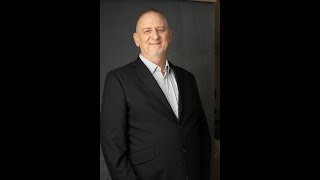
Educator Michael Strong built The Socratic Experience, a virtual program for ages 8-19 that replaces one-size-fits-all schooling with personalized learning, small cohorts, and Socratic discussion. His schools consistently attracted neurodivergent and twice-exceptional students who thrived when treated as individuals rather than problems to fix.
Chapters
Hi, I'm Dawn Marie Salaise, and I am organizing INNIS 2022 Neurodiversity Conference, and I'm having the most amazing time talking to incredible people from all over the world about what they're doing that can help support, advocate for, participate with, and be a neurodiverse person or family member. And today I am talking with Michael Strong. Michael is somebody that I have been aware of for a number of years as a, a leader and a thinker in the education space, and I'm so excited to be talking to you, Michael. I'm gonna let you do most of your introduction because I think you're gonna say it better than I do, but I definitely want folks to know that you're somebody that I respect and value as part of what we're doing and The things you have been able to accomplish in education are just truly inspiring, and I can't wait for other people to hear about it.
Well, thank you, Dawn Marie. That's a very gracious introduction. Well, I'll try to do a relatively quick summary of my background in education, which is highly unusual, and then go into how that's relevant to the neurodiverse community. First, I I love learning. I always tell students I love learning, I hate school. So right off the bat, I'm unusual as an educator who is out of the closet as hating school. And I think the one-size-fits-all model is absolutely dreadful. But how did I get here? I went to St. John's College, known as the Great Book School, in Santa Fe, New Mexico, also a camp in Santa Fe, New Mexico. In Annapolis. What's distinctive about that, it's for 4 years, all one does is read and discuss books. So there are no lectures, there are no tests. So a lot of the rigmarole of regular school is simply not there. I then went on to graduate school in the University of Chicago in the Committee on Social Thought, and the only requirement for my master's degree was to read books and write a 5-day test on them. A written essay. So, and the questions were wide open. And so while I was very good at conventional school, you know, taking notes, listening to lectures, memorizing stuff, you know, doing well on tests, I find it completely be of no value to me personally. I actually did so well in school, I got into Harvard, and I actually left Harvard to go to St. John's because even at Harvard, famous place, but famous people talking at me. I just have no patience for lectures. Even when I go to conferences to this day, I talk to people at lunch and dinner and I skip all the talks. I used to have a bad conscience about that, but I have no patience for being talked at. It's just who I am. You know, and then one of the things I began doing while I was in graduate school at the University of Chicago was leading Socratic seminars, that is these conversations where we ask questions. And I found when I was leading Socratic seminars in public school classrooms in inner city Chicago. It was like liberating prisoners. The kids were so happy to be listened to, to be asked questions, to talk, engage. They had so much fun. I went on to Alaska where I spent 3 years as a teacher trainer under Mortimer Adler's Paideia Project there, again leading training teachers to lead Socratic seminars. That led to— we were on grant money and after the grant money disappeared, Parents asked me to start a private school. So by accident, I became an educational entrepreneur because the parents loved it. That school, the whole faculty and student body did tai chi together every morning in addition to seminars on the projects. Yeah, it was very cool. I then joined a Montessori school in San Antonio because many Montessorians saw my Socratic Secondary as an appropriate sequel. I then created a school for highly gifted children in South Florida. In Florida, where children grades 6, 7, and 8 were taking and passing advanced placement exams. It may have been the most academically advanced school in the country for a period of time. Then created Montessori middle schools in Palo Alto, where we had students from the tech entrepreneurial elite. I then created a charter high school in Angel Fire, New Mexico, where we were ranked the 36th best public high school in the US. In our third year. I then met John Mackey, the founder and CEO of Whole Foods Market, and he and I both had a background in entrepreneurship. He created a grocery store, I created schools, and so we created a nonprofit to promote entrepreneurial solutions to world problems. About a decade ago, I got back into education here in Austin. I created CoSchool with a partner, Kotsuo Kabe, who's now deceased, unfortunately. And that was combined the entrepreneurial projects plus the Socratic. And that was essentially taken over by the largest Montessori chain in the US, which hired me to create a high school model for their Montessori chain. And then fall of 2020, seeing what's going on with COVID I took my model that had been under development for 35 years, and I created the Socratic Experience, a virtual school for children grades 3 through 12. So that's a quick tour of the background. Anything you want to pause on, or should I jump into how this might be relevant to the neurodivergent community?
I'm just a little in awe.
Well, it's crazy.
Education has been my happy space, I think, since I was 9 or 10 years old, um, I had an aunt who was a 4th and 5th grade public school teacher, and a unique situation, I ended up staying with her for a week and I had to go to work with her. So there I was in her classroom, and the way she treated her students was not at all the way I was being treated in public school. She respected them. She expected a lot from them. She treated them as though their ideas were valid and important and real and useful. And they loved coming to school to work with her. It was definitely a combined effort for their education. And that just turned all of my lights on. And I had, uh, after that I had a, a teacher in high school that I might have been the only person who liked him. Um, I now understand it's part of my autism, but I can tend to like just about anybody. I, I find the good stuff. Um, but he— one of the things that really inspired me about him was he was able to get students who were grumpy to be in his class because they didn't like him, but he got them to think. Like, we discussed literature. It was an English teacher. We discussed literature at a depth that I had never experienced before. And here were my peers who also had not had this experience before, kind of resisting it to begin with, but then really just opening up their minds and their hearts and their beings and there wasn't a single person who didn't value the class, regardless of what they thought of the person, they valued the class. And I wanted to do that. And so listening to your, your experience, all of these different educational modalities and locations and all the different richness of your experience. And we're not even to today yet, really, right? We haven't talked about, you know, 'Your Socratic Experience' dot com or anything like that yet, right? So there's so much more to come. So I'm just— I'm thrilled.
And thank you. Both the educators you mentioned, their stories resonate highly. All of those things resonate highly. Well, and just to kind of cut to your main theme, and then we can go more deeply in any direction you want. All of these schools were very small, highly personalized schools. And as a consequence, I would attract a lot of neurodivergent children. Just, you know, why do you send your kid to a brand new school? Because the system's not working. So round peg, square hole, you know, some of them with IEPs, some of them not, you know, some of them with these large, you know, 50-page psych reports, and some just who knows why it's not working out. But in one sense or another, you know, most of the children I worked with were not functioning well in the regular system, or even if they were functioning well, again, sometimes they're straight-A students, but they're miserable one way or another. And, you know, it's funny, just the themes you brought up, things like asking them what they thought, respecting them, you know, paying attention to them, you know, figuring out what was best for them, was often transformative. I mean, I've literally seen, you know, probably hundreds of students who are anxious, depressed, suicidal sometimes in the regular system, come to one of these small, highly personalized schools, and within a few weeks become— sometimes months, sometimes it took a while— but in a few weeks or a few months become happy, well, flourishing. Sometimes they were on meds and they would go off the meds, they didn't need them anymore. Um, you know, and for me, the strange thing is it's so easy to treat other people like human beings, which It sounds like a strange thing, but going back to your perception of, you know, your— I think you said it was your aunt respecting you and respecting the children. I think there's a format in conventional schooling that is, you know, it's about the curriculum. And they're great teachers, and so I don't want to bash the teachers, but the role they have been thrust in is that it's about transmitting the curriculum. And it's not about the child and what's in the best interest of the child. And for some kids, maybe for 20 to 30% of the kids, just marching through the curriculum is completely okay. You know, it works for them, they do their thing. But I think for a majority, I think for 70 to 80%, it doesn't work well. And in very different ways, people are unhappy. Quick data dump. Um, before COVID Yale studied high school and found 75% of high school students are unhappy. 2/3 are disengaged, 37% seriously depressed, and 19% suicidal. This is pre-COVID. This is a catastrophe. So for me, the extent to which school is mismatched for the diversity of human nature is profound. So I'll pause there before ranting. You get me going, I'll just rant.
I love a good rant. Makes me happy. You know, my experience in school was, I found out I was dyslexic when I was 15, because somebody noticed that I got really good grades. But when I read out loud, I didn't necessarily make sense. And so I'm old enough that pretty much the only thing they knew to do for us dyslexic folks was stick your finger under the word. And there is a certain amount of usefulness to that. So I appreciated that, right? 3x5 card, ruler, whatever. But really no understanding of the, of the much broader perspective of dyslexia and nobody noticed I was autistic or ADHD. And I am. I don't know if dyscalculia was even a thing people knew about when I was going through school, but I was able to somehow figure it out despite the system. And I think there, there are a lot of kids who can do that, and so they appear as though it's a fine system, but I kind of rebel against believing it's a fine system for anyone because what do we actually learn? And are our lessons truly translatable into our experience outside of school? Do we feel well positioned once we leave high school? Do we even know how to open a bank account or, you know, you know, take out a Carlin, that right there. So I don't personally believe our system of education today serves anyone, and I do think it harms many. Um, it was a system that was harmful to me, but no one would have known. No one would have known.
And of course, I agree with you. I try to be nice, and again, some people have the experience that school worked fine for them, and I don't want to be disrespectful of their experience. I personally think it could have been much, much better. But, um, you know, this might be a good platform, you know, because I've seen so many kids, human beings whom I believed were wonderful human beings who had been battered by the system. I actually coined the term scolianormativity by analog with heteronormativity, that who said working well in school is in any sense whatsoever normal? You know, and part of this is—
I love that.
There you go. You know, I've worked a lot with entrepreneurs when, you know, John Mackey and Entrepreneurial Solutions for World Problems. I have probably one of the best networks of purpose-driven entrepreneurs in the world. And a lot of entrepreneurs had a terrible time in school. You know, famously, many of them are dyslexic, you know, ADHD and so forth. You know, and yet these are some of the most successful people in our society. And so wait, wait, wait. You know, the most successful people in our society did poorly in school. And why are we saying school is the normal way to be? Doesn't make sense. Different category of people I work a lot— my wife has a consumer brand. It's a lip balm she produces in Africa, Skin Is Skin. And we spend a lot of money on creatives. We buy packaging and graphic design and video production and spend a lot of time with professional creatives. And many professional creatives had a terrible time at school. But here they are producing world-class video, world-class graphic design, world-class animation, you know, absolute geniuses in what they do. And, you know, school didn't work for them. So, you know, much of my life is working with absolutely amazing adults who also hated school. And I gradually, I realized, wait, these poor young children are being pathologized by the system when in fact they may have some of the most important entrepreneurial and creative attributes that the world needs right now. If you read about 21st century education, it talks on and on about how we need more entrepreneurial and creative people, and yet the school system actively crushes that, and even worse, right, medicates and, you know, pathologizes, and you know, literally the point of suicide. I've met— it's horrible, it really is horrible. So I'll pause on that rant.
You know, um, an interesting thing about ADHD and, um, for these videos, I'm working against myself. So I'm very kinetic. I focus better. I think better. I'm happier when I'm moving. Right. But if I sit on my yoga ball while we're doing these, these conversations, this is what everybody's gonna see because I don't sit still. I kind of have to throttle some of that, which makes my job harder, right? Makes it harder for me to stay connected to what we're talking about, right? I refer to my ADHD in part as thought monkeys. So I have a lot of busy monkeys in my head. They're very happy. You say a thing, 19 of them get very excited and start yelling and jumping up and down and swinging from the trees, right? Very active in there. With all of that activity, moving helps me stay focused, right? But you put me in school and I get in trouble for moving. I certainly can't get up and pace in the back of the room, right? I can't. So part of autism sometimes can be a general discomfort within one's own body, so we tend to sit a little different, like a knee up or twisted, or— right, we're in odd positions and we get in trouble, right? Put your feet on the floor, don't sit on your feet. Um, and I did this to my own son because I was trying to be a good parent and I didn't understand my own neurodiversity, let alone my children's, right? So every night at dinner, don't sit on your feet. I finally started asking myself why. Who made the rule? Why? Why does anybody care whether or not somebody sits on their feet, right? Why does anybody care whether or not you pace in the back of the room? So that by the time I started teaching English, 7th to 9th grade, my classroom was a movement-ready classroom. You could, you could pick up your desk and turn your back to me. You could sit totally out of the side. You could sit backwards in your chair as long as you didn't break the desk or hurt yourself, right? As long as people were safe and not irritating their neighbor, they could do whatever. And the moment they were introduced to that, I had student attention. And then when they learned I respected them as individuals, I had student buy-in.
Mm-hmm. Go ahead.
No, you're good. Go ahead.
Well, the whole movement thing reminds me of Another big theme for me is evolutionary mismatch, where, you know, we evolved, you know, from— for hundreds of thousands of years in small groups of hunter-gatherers. And in those, of course, we were moving. But, you know, the paleo diet has become a thing in recent decades, and people are looking at what did our ancestors eat. And, you know, the no refined or fewer refined carbohydrates, no refined that kind of thing, meat and vegetables. But nobody's gotten into paleo lifestyle, or very few. But again, this goes back to scully normative is ridiculous because human beings were designed to be moving, to be outdoors, to be in the sunshine, to be in very closely knit communities. You know, there are all kinds of ways in which, you know, there was a healthy culture. I'm not saying it was perfect, but at least there was a very closely knit culture. You know, my wife is from Senegal and it's still a more traditional society and there's a warmth there in the culture that I feel, as does she, is lacking here in the West. And so I think a lot of these issues come from being out of our evolutionary environment, the environment to which we had been adapted. And, you know, we can't obviously go back to hunter-gatherer lifestyle, but things like letting kids move, Things like paying attention to the healthy relationships, because that's really, really important. Things like, yeah, not forcing people to sit still or focus in a particular way. There are all kinds of ways. I'm talking, you know, my whole thing is kids talk. We talked, people talked along the campfire, people have been talking. So having children of all people Shut up is insane. And so I see just as, you know, diabetes, type 2 diabetes, is the result of eating too many refined carbohydrates in modern diets, I see— I have a whole article on evolutionary mismatch as a causal factor in adolescent dysfunction. And so whether it's anxiety, depression, suicide, you know, violence, substance abuse, eating disorders, self-harm. In different ways, I think the roots of all of these things has to do with being outside of our evolutionary environment. And the more we can pay attention to nature, to put a cliché out there, to think about what would be healthy for us in a natural environment, then I think the less we'll have these kind of pathologies.
Yeah, I, I'm with you. Um, I, I am a natural rebel against imposed sameness, um, and our education system by design imposes sameness. And I think, you know, one of the things that happens when that is your educational environment, you may be able to succeed at that task, right? But what have we taught? We haven't taught working in groups very well. We haven't taught community. We haven't taught the things we're actually going to need outside of the school, we've created a very unnatural environment that's truly unlike anything else you experience, potentially shy of the military, but not even, because for the military, it's exceptionally important that those individuals are highly bonded to one another. And school accidentally works against that. It, you know, cover your answers, don't, don't tell each other, right? It's very protect yourself from all outside invasion, right? Um, yeah, so I, I just really think that it's, it's just not how we're designed. Um, it's not working.
So yeah, both. It's not how we're designed and it doesn't lead to 21st century skills. In addition to the entrepreneurial and creative, there is the working in teams. Google Project Aristotle found that the most effective employees were those who worked together in teams. Hello! You know, and then going back to your thing of the enforced sameness, John Taylor Gatto, New York State Teacher of the Year, absolutely required reading. His Seven Lessons.
Hero of mine.
There you go. Absolutely required read. Anyone who wants to talk education, have you read Seven Lessons of a Schoolteacher? Required. But yeah, conventional education is basically 13 years of training in how to be passive and dependent, how to sit still, be obedient, do as you're told. And it's not only contrary to human nature, it prevents fundamental well-being. Initiative, just taking initiative, one of the most important things in life. But if I could spin it in another related direction on this, the same— this reminded me of this— is human diversity. Human beings are so extraordinarily different by nature, and I think something that, you know, we've been taught not to respect or understand is that the full range of human nature. James Hillman is a Jungian psychologist who has a book, I think it's Character and Calling, but he has a whole chapter there of famous people who did not do well in school. And so, for instance, Pablo Picasso could barely do arithmetic, you know, and obviously Pablo Picasso was brilliant in his own unique way. And I've known children like that who they will never be mathematicians, but they are often brilliant creators. Going in a different direction, you know, Einstein famously was slow to talk, and people thought that he might be intellectually deficient. You know, it turned out he did okay on the intellectual side, but I think in a modern school, he probably would have, you know, been put in a special ed program, and it would have done damaging things to his psyche. And, you know, he probably would never have developed into Einstein. You know, Richard Bernard, the different kind of thing, but Richard Bernard, the actor, hated school so much he would deliberately throw himself downstairs in order to injure himself so he wouldn't have to go to school. You know, children— yeah, exactly. So, you know, often as an educator, I think, what if I had Robin Williams in a class? You know, the comedian Robin Williams, he'd be on the table, jumping on the table, under the table, talking all over the place. Robin Williams would have made it almost impossible to run a normal class, and yet his genius was the fact that he was Robin Williams. So with my schools, we talk about discovering and developing your child's unique genius, and part of this is recognition. I think the more individual people are, the more they, you know, Another favorite quotation I have is Dolly Parton says, "Find out who you are and do it on purpose." And I kind of love that kind of radical acceptance of be yourself, basically acknowledge your genius. And each of us has something that's completely different from anybody else. And sometimes it is humor and comedy, and sometimes it's compassion. Sometimes it's the ability to release a tension in a conversation. Sometimes it is the ability to create amazing creative work, to create companies. There's so many different ways. And, you know, I'm good at school. And so I feel like those of us who are good at school, we have— we're almost an evil force where we went in and said, if you're good in school like us, then you're a good person. But if you're not good in school like us, you're a bad person. I'm like, it was such a horrible thing for us to do. We need to recognize the, you know, 7 billion, going on 8 billion different kinds of genius out there.
Yeah, I think one of the highest anxiety pieces that we accidentally train into our children is the fear of being different. And when you talk about people in the neurodiverse community, um, we have a tendency to feel our difference in a very visceral kind of way, very in our guts kind of, I am not of this planet kind of way. And going into school where, where we're told you're supposed to be like this type of person. And there's very little about us that's like that type of person. Now, some of us can pretend to be like that type of person and and mask what we're really like. And if we start doing that early enough, we may not even get to know who we actually are as independent people. Having come to understanding my identity as an autistic person, ADHD person, etc., after I was 50, it gave me this amazing hindsight of what was going on in some of my most vivid memories, right? Standing in the kindergarten classroom looking at all the little groups of children playing going, yeah, I don't get that. No, no idea. No idea. So I went to the teacher. I'm like, can I help? That I knew how to do. I could be helpful. They taught me at home how to be helpful. And I got this immediate reputation of being this good little helpful girl that followed me well into adult life. But those pieces of me that were really me, those were the things that tended to get told, be quiet, sit down, regulate your face, right? Smile, do stuff differently than you. So, okay, I'll stay the good helpful girl. And that did not support my well-being in any way, not in any way. In some ways, it put me in danger, right? So when we're talking about the neurodiverse community, our, our approach to education has to be in my opinion, vigorously about the individual. Who are you? How do you learn? How do you take information? How do you give it back? What do you remember? What inspires you? What lights up your eyes, right? And how do we help you figure out who you are so you can go do you successfully? Not how do we shove you into a box so that maybe you can approximate the outside world that people tell you exists. That will change on you in 10 to 20 years, and you'll have to learn how to do it over again. This idea that there's some neurotypical standard, I don't like that. I don't like that because what, what we think of as neurotypical is trained behavior that somebody decided at some point was appropriate, right? But 30 years ago, it wasn't appropriate behavior, and 30 years before that, that wasn't appropriate. It changes on us all the time. So what we would think of as typical behavior, typical sociability, typical politeness, right? It's all training. It's an illusion of normal, right?
Well, one of the kind of other things I think— this is where I think one of the gifts of, I would say, Western civilization is individuality, that I think human nature —this is one way in which I'm glad we're not in the Polish environment—is radically conformist. I think we are biologically designed—part of the flip side of community is conformism. And so actually one of the things that I strive to work on is individuality within community, because we do need the community, but community can be foremost, sometimes to the point of soul-killing. You know, it really can be rough. But, you know, the whole Socratic thing is thinking for yourself. What do you believe and why? And ultimately listening to the still small voice within. And I think that develops into the voice of individual conscience and Galileo and Martin Luther King and so forth. And I think that Ralph Waldo Emerson— I'm a big Emerson fan— I think that if we create an environment which children are encouraged to be themselves, as long as they're, you know, obviously respectful and things— you can't be mean to people— but as long as you encourage them to be themselves and kind of celebrate the fact that other people are being, you know, idiosyncratic, I think that is a wonderful world. I like interesting people, you know. I personally also felt very alienated from mainstream culture in K-12 just because, you know, I wanted to think and read books and I would have, you know, I would hang out with adults when I was 12, 13, 14 because they were interesting. And it was only when I got to college that I felt that I met my people, just because I had nothing in common with kids, you know. And even as an adult, not only do I like lectures, I don't like small talk. So if I ever go to a party or a cocktail party, whatever, I always find the one or two people to have a long deep dive conversation. And I used to feel rude because we'd find a corner to kind of really talk seriously about stuff, and everybody else is chitting and chatting. But, you know, no, I like, they can like that, totally cool, whatever works. Uh, let's, let's allow each other to be ourselves. Yeah, that's great.
So in your school experience, which now you mentioned because of COVID you've moved so much stuff online, right? So now people all over the United States, possibly even beyond, would have access to your education model. Um, can you tell me what, um, so online you do pretty much from ages 8 to 19, is that correct?
Correct. 8 to 19.
Sounds right. Yeah. So let's take your average 12-year-old who's doing your online, uh, education experience. What would, what would that look like for them? What would your 12-year-old be doing with you?
Thank you. So everything is in cohorts of 15 to 1 or fewer. Right now we use Zoom, you know, a small online conversation, and we start with community. One of the things we've discovered as a virtual program is we do need to give kids time to connect. So it's led by a guide so it doesn't become inappropriate, but they can talk about books, movies, games, current events, laugh, joke, just be kids. And so we spend some time like that every day, and we found that helps their focus later on. The next piece is personal growth, also led by a guide where the guide might ask a question such as, how do you set goals? How do you learn from your mistake? What do you do when you're angry? What do you do if you're not getting along with your friends? Whatever it is, there's a daily topic where they think about it and over time they— obviously we have to build trust and trust is really essential, but as we're able to build trust, they often become very reflective about who they are and where they're going and what they're doing with their life. The next piece is Socratic. There we read and discuss complex texts— philosophy, literature, poetry, psychology, etc. And there kids love to argue. Most kids love to argue, and the few that don't love to watch their friends argue. They're having fun arguing, but at the same time they're learning to analyze difficult texts, and, and that's really valuable later on. Some, some of our dyslexics listen. That's fine. We don't care. It's short passages, and so it's a short piece of text that most everybody can engage with. And then the talking is pretty much human universal, and most kids love it. Next piece is writing. A lot of kids like to write fiction. Very few kids like to write essays. We motivate essay writing by explaining it's a continuation of arguing. So last year we read two essays on on should we bring the woolly mammoths back from extinction or not. Of course, kids have all sorts of opinions on that. They get all excited and argue, but at the end, yeah, what do you think and why? And that's the basic motivation for the writing. And then we have about 20 hours of writing coaches for one-on-one or small group writing. We also have some writing instruction, and then we also have asynchronous feedback. So the writing program's highly, highly personalized. I've had students, I've had a 7th grader who was writing a 100-page novel. And another 7th grader who's dysgraphic and can barely write a paragraph that even with spell check, grammar check, one cannot possibly decipher. That's OK, whatever, wherever you are, we coach and work with you to take you wherever you want to go. Next piece of project, every student is expected to have a personal project, and that's based entirely on their interests. We have middle schoolers who are sending us ski videos and cooking videos and James Bond videos and whatever it is. They do their thing and share in their community and celebrate, and that's just kind of validation. There we mentor them so by the age of 18 they're doing world-class or at least adult-level professional work. I've had students do the website for an American Idol finalist. I've had a student write for Atlas Obscura, a famous website with a million monthly page views. I had a student do a music festival, a 3-day music festival, bands from around the world. This is a way of recognizing their genius. So I think One challenge with schools that are even focused on learning differences is if there's no opportunity for the animator to be amazing, or for the, you know, musician to be amazing, or the entrepreneur to be amazing, then they're still just doing remedial math. So one thing is we have this opportunity for everybody to be a genius in their own way. Math program is entirely individualized, so We have self-paced adaptive math software with tutors where 20 hours a week, one-on-one or small group tutors. We have some students do a year of math in one year, others 2 years, one 4 years. We also have students perhaps with learning differences who do half a year of math here. Totally okay, and everything is exactly what that child needs, and we work with the families to do whatever that child needs. Um, there's also group problem solving where they argue about math brain teasers, problem sets. That's fun. And then we have science where actually your brother Bert worked with me as a science guide and he was doing these wonderful Socratic science sessions. What is theory? What is evidence? How do we— how do scientists learn? Things like that. So it's a rich, diverse day that is largely talking, but the skill things like writing and math are highly individualized. And what that does, it's an equalizer. You know, most children can engage in a conversation, and then wherever they are on the skills, that's personalized, and we're not encouraging— we're not requiring everybody to be on the same page. And then things like the project and the— we also provide a mentor. Every child meets one-on-one with a mentor 20 to 30 minutes a week, and that mentor kind of helps them sort of integrate, develop direction, figure out their projects. Be, help them become who they want to be or meant to be. So that's kind of a really quick scan. So no lectures, no worksheets, relatively little homework, and highly personalized.
Yeah, I, I would have absolutely thrived in that environment because I didn't thrive in regular school, but nobody knew that. One of the evidences was I did very few assignments as assigned. I just, I was either bored or frustrated or couldn't learn that way or something. And fortunately, I was creative enough to come up with something the teachers would let me do it. It was often much more work than was being required of everybody else. So how could they argue with me? But even in college, I had a Shakespeare professor who— with my dyslexia, I can be very, very slow with, with tests. It can take me a long time to understand the way if a question is put in a particular way that I'm not quite relating to, I get things wrong because words will jumble on me, stuff like that. So written tests are very, very hard for me. Time tests are very, very hard for me, and this particular professor's tests were impossible for me, literally impossible. And so I said, can I please write a paper every time? And he let me do that. So I even showed up at the final exam, which he told me he would not accept a paper for the final exam. I still showed up with a, with a paper just in case. But I was always trying to make my education fit me. In a space that, that didn't enjoy who I was. People did— like, they may have cooperated with me or put up with me, but they weren't enjoying who I was. Um, I only had a couple of teachers throughout that liked who I was. So in an environment where from, hello, my name is Dawn Marie, you would have been like, okay. Let's figure out who you are and, you know, let you do you. I, I can't even imagine it. It just would have been amazing, amazing. And I'm sure there are going to be parents listening to you, Michael, and they're going to be like trying to climb through the computer to figure out how do I get my kid into this program. So that's my next question. How do people get their kid into your program? Is there financial aid? All of that kind of stuff. What, what's the, the, you know, the 10-second download on that.
Yeah, so socraticexperience.com, sign up for a meeting with us and we'll kind of talk through and evaluate how we would work with your particular child. And then the finances, we have a range of price points. We have an à la carte program that at the low end is $3,500 a year, $300 a month, and at the high end is $15,000 a year. $1,250 a month, and it depends on a bunch of different factors. Um, we also are eligible for ESAs, educational savings accounts, in Arizona, New Hampshire, where it's free. So children with learning differences can attend our school for free in Arizona, New Hampshire, and we're working on getting that to be the case in other states. Um, so socraticexperience.com, uh, reach out, we have an interview. And if, you know, there are a few extreme cases we can't work with, but we work well with a lot of children with learning differences. I'll give you one nice success story. A child who is twice exceptional had been in a public school. We had a full-time teacher's aide because of his learning differences. His family moved from New Jersey to Austin so he could attend my school before we were virtual. And he began to thrive. His mother wrote a wonderful column in the Twice Exceptional newsletter on that child. And now he is a guide with us. He is a young adult and is teaching for us, and he is brilliant and wonderful and happy and well. And so— Oh, that's so good. Yeah, no, it's a wonderful success story.
Um, for people who may not be immediately familiar with twice exceptional, um, can you Could you explain what that means, please?
Yeah, it's, you know, two exceptional ways of being different, and one typical one is gifted, a learning difference. So perhaps dyslexia and giftedness, or, you know, ADHD and giftedness, and there are all sorts of combinations, you know, as you know. So different ways to be a different person.
Yeah, one of the other conversations that's part of this digital package for the conference is Julie Skolnick, who is just a powerhouse in the twice exceptional space, and I'm so excited to have her participating. Almost the entire time you've been talking, I'm like, oh, Michael and Julie need to know each other. It'd be a very, very happy, happy thought pairing. So I guess I kind of want to want to find a way to gently wrap this up. There's so many different things you and I could talk about. Education is one of my absolute favorite, favorite spaces. Helping, helping people be their unique, brilliant selves. Just, yeah, this makes me happy. You have the Socratic— or it's socraticexperience.com. You have that. That's an 8-year-old to 19-year-old thing. Do you have other things that you are doing that other people might be able to support or be involved in? You know, I'm 53 years old. And I'm always looking for a way to understand my neurodiversity better, uh, learn more, those sorts of things. Do you have, uh, other things besides this education platform that people might be able to participate in?
Well, I would say I'm, um, passionately devoted to promoting this kind of an education. So the other thing I do is actually consult with people who are starting their own schools. And so if people want to, you know, whether it's a learning pod at home or a microschool or a larger school, if these themes resonate, I'm more than happy. And sometimes there are hybrid schools where we pipe in my program and I help people develop, you know, develop their own in real life program. So I would say if any of these educational themes resonate, people should reach out to me. And if my school isn't— my virtual program is not Maybe I can help you develop or create solutions in your neighborhood that work for you and your children.
Brilliant. Wonderful. Last question. You mentioned that you're available through public funding in New Hampshire and New Mexico. Is that what you said? Arizona. Arizona. Arizona. Excuse me. Arizona and New Hampshire. But you're trying to get other places, are there things that people could do? Like, here I am in New York State, and I know this local community is going to be like, "Oh, how do we get New York State to include you in their education system?" Massachusetts, where I used to live, uh, has 3 or 4 different online educational platforms that they already allow access to even before COVID You could do a full online education through, through national programs. So I know that there are states at least considering it, but how do we help you do it?
No, thank you. So I would say this is where the least restrictive— the more they can push for policies that remove restrictions from how education funding is spent. So, for instance, when I mentioned the educational savings accounts in Arizona, New Hampshire, they allow parents to pick what they want in terms of what counts as an educational program for them. Whereas in the Northeast, sadly, both New York and Massachusetts tend to have highly regulated education systems. So for instance, suppose I have a child who is a brilliant creative but doesn't want to do, you know, the required high school math. I want to be able to say we're not going to prepare for the Regents exam. You know, I mean, of course you can opt out, but there's this sort of presumption on the behalf of some states that the government curriculum is mandatory, required. You've got to do the state standards, this kind of thing. I'm all about flexibility, and part of that is I've seen so many kids— part of recognizing their genius. And sometimes, you know, for you, maybe this year we don't do any math. Maybe that's the right decision this year. And from the state's perspective, what, you're not doing math? I'm like, no, this kid has been so harmed by feeling like, you know, again, endless years of remediation. I'm personally very angry at the notion that, oh, if you're behind, we have to make you do 4th grade arithmetic for the 3rd year in a row. No. So I'm all about flexibility. Um, funding follows the child with as few restrictions as possible, because only then can we truly focus on the genius of the child.
Rather than state mandates. Wonderful. Michael, thank you so much for taking this time. I'm just profoundly grateful that you're willing to participate in the conference, that you are such, such a steadfast advocate for young people and their families. It's been an honor to get to know you. You briefly mentioned my brother. Yes, my brother Albert Lone, who's an amazingly wonderful, brilliant guy. I was thrilled to know that he was doing some teaching with you because he is my, he is my introduction to you and, and all that you are doing. You mentioned a few different authors. I will, I will look for links to their, their work so that people can look them up. And if there are any other links that you'd like me to be listing in the in the descriptions. I'll definitely do that. Um, but thank you for your time. It has truly been a pleasure and an honor.
Thank you, Dawn Marie. It's been delightful talking with you, and I look forward to seeing how spectacularly successful the whole conference is. Thank you.
Me too. Alrighty, take care. All right, take care.
Bye-bye.






