Socratic educator Michael Strong discusses "knowledge" with Alana, Age 7
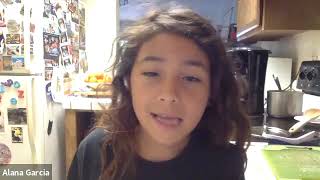
Michael Strong asks 7-year-old Alana what knowledge means. They discover two kinds: facts you read in books and skills you learn by doing, like jiu-jitsu or cooking eggs. Alana realizes she learns from teachers, practice, and competing with others.
Chapters
Hello, Ilana, how are you? I can't hear you, you're muted. You need to turn off— turn your speaker on.
Hello, Michael Sean. Can you hear me now?
Hello, I understand I can, I can. I understand that your dad had to wake you up. But you're wide awake now?
Yep.
What did you do yesterday? It sounds like a long day.
Yeah, so yesterday we went on a road trip to LA. Um, yeah, me, my dad, and Logan went to that too because, um, we had to go to a photo shoot for Friendly.
Got it, got it. So it was a long day.
Yeah.
Okay, so I sent your dad the definition of knowledge. Did you get a chance to read it before we got on the call?
Yep, just now.
Okay, wonderful. So let's go ahead, can you just read it out loud? Do you have it right there in front of you?
Uh, no, I don't.
Okay, in which case it's very short, so I want to read it and then we talk about it. Does that sound okay?
Okay.
Okay, so definition of knowledge. 1: the fact or condition of knowing something with familiarity gained through experience or association. 2: acquaintance with or understanding of a science, art, or technique. And that, that was 1A1 and 1A2. Then there's 1B1: the fact or condition of being aware of something And then 1b) to the range of one's information or understanding, as when you say, "I answered the best to the best of my knowledge." So I'll pause there and first ask, what, how do you describe knowledge? What do you think of knowledge as?
As you are very smart or like—
So you think, okay, knowledge is if you're very smart? And what is a definition? Why do we, why do dictionaries, have you used dictionaries to look up definitions?
Only one time.
Of words? One time? So why, why, why do we have dictionaries to create definitions or to give us definitions?
Excuse me?
Why do we have dictionaries to provide us with definitions of words? Why do you think we use dictionaries?
To help us understand the word, or maybe we forgot it, but to me mostly to help us understand the word.
And do you think that this is what knowledge is?
Excuse me?
Does this particular definition of knowledge help us to understand what knowledge is?
To me, yes.
Okay, so you said knowledge is when you're really smart. Is that what you said?
Yeah.
Okay, so let's just look at the first definition. It said the fact or condition of knowing something with familiarity gained through experience or association. What is— what does that definition have to do with being smart?
Within— within what did you say?
With being smart. So I'm trying to take on the one hand— I'll even use my hands— on the one hand we have the dictionary definition, right? So the dictionary definition is the fact or condition of knowing something with familiarity gained through experience or association. Association. Okay, that's a dictionary definition.
Okay.
Do you— right now the dictionary and the Ilana are kind of different?
Yeah.
So are— is the Ilana definition related to the dictionary definition, or is it very different? Or is it— or are you really saying that knowledge is something Are you disagreeing with the dictionary?
I think the dictionary is agreeing.
With you? You're saying the dictionary agrees with you?
What do you mean by agrees with me?
So, if suppose there was the Alana dictionary. So right now this is the Merriam-Webster dictionary. Merriam-Webster is the brand of the dictionary. Suppose there was the Ilana dictionary. It sounds like the Ilana dictionary would say the definition of knowledge is being really smart, correct?
Yeah.
But that's not what the Merriam-Webster dictionary says. So the Merriam-Webster— actually, let's look at number 2. Maybe 2 is closer. Number 2 says acquaintance with or understanding of a science science, art, or technique. What does it mean to be acquainted with or to understand something?
To understand something to me is to, um, like know what it is.
Okay, do you think that's related to what you think of as being really smart?
Yeah, because if you're really smart, you know what things are.
Okay, see, I was looking for a place in the dictionary that was more similar to what you were saying. Does that make sense why I would try to figure out how what you were saying was similar to what's in the dictionary?
Yeah.
So it says this one, this is the second definition. So right now we're looking at 4 possible definitions of knowledge. The second one is a acquaintance with or understanding of a science, art, or technique. So sounds like you're thinking knowledge, understanding science is knowledge. Would you agree with that?
Yep.
What does it mean to understand a technique? What is a technique?
Like a technique is like something that you do or like something you learned or Like you're really good at.
Okay, and thinking of things you do, am I correct that you surf or bodysurf?
Uh, yeah, I do.
Okay, would you say that you have knowledge of how to surf?
Yeah, or knowledge of how to do jiu-jitsu.
That's a better example because you're really good at jiu-jitsu. So you have knowledge of how to do jiu-jitsu. Do you think that's the same as being really smart?
Um, yeah, yeah, in a way.
Okay, so our knowledge of science and knowledge— so tell me some science. You know some science, right?
Yeah.
What's an example of some science that you know?
Like, are you talking about like it's experiments?
Whatever you think of a science. We're trying to understand knowledge and you said, you told me that knowledge is being really smart. The dictionary says understanding of a science. So I'm asking you, what's an example of scientific knowledge that you might have?
Like maybe reading a book that's about science, like maybe facts about like animals in the world or maybe experiments you could do. And if you read that book for a very long time, you can memorize it and you can do that.
Okay, so facts about animals in the world or facts about experiments that you can do? Is that similar to knowledge of jiu-jitsu, or is knowledge of jiu-jitsu a different thing than knowing facts about animals of the world?
I think it's a different thing.
Okay, do you think it's fair to use the word knowledge for both kinds of things?
To me, knowledge can be both things.
Could you have knowledge about how to cook an egg?
Yeah.
Okay.
Like you know how to chew?
So it sounds like you're thinking maybe knowledge of facts is different from knowledge of how to do things. They're kind of two different uses of knowledge.
Yeah.
Um, do you think that both are kinds of being, are different ways of being smart?
I think so.
So suppose there was somebody, I'm looking for a test case, suppose there was somebody who knew all sorts of facts but didn't know how to do anything. Would you say they were smart?
In one part of being smart, yes.
And then let's look at the other case. Suppose there was somebody who knew how to do everything. They know how to cook eggs, they knew how to surf, they knew how to do jiu-jitsu, they knew how to build houses, they knew how to do all kinds of things, but they didn't know any book stuff. Would they be smart?
In, in the other type of way, yes.
Do you think there's any connection between the book smart and the doing things in the world smart at all?
Well, in a book you could learn how to do things.
Like, I was actually thinking about, well, you, you were saying an experiment, like you could learn how to do an experiment and then you could do the experiment, right?
Yeah.
Are there any experiments that you learned how to do in a book that you actually did?
No, but there could be some out in the world.
Okay, so it's a possibility at some point you could learn about an experiment in a book and then doing it. Do you think you would learn something different by doing it from reading about it in a book?
Yeah.
What would you learn differently about doing it?
From differently, you mean that from like actually like trying without the book?
Or I was thinking of from reading about it. So suppose you read about it in a book and then you did it in real life. How would you learn differently in doing it in real life than just reading about it?
So reading the book actually gives you instructions like how to do it like the right way. And if you like didn't read the book, you would probably do it the wrong way. If you just experimented to do that experiment, but you're basically still doing an experiment because you're trying to experiment to do that experiment.
I see. Let's go the other direction. Could you do an experiment that was valuable without a book?
Yeah, if you knew it. If you knew it.
And how would you know what to do? How could you— how can you even think about experiments without books telling you what to do?
Maybe you just had an idea like, let's try boil some water with maybe some rice in it, then we can look at it in our phone and we can see if the color changes when we look at it through our phone.
So it sounds like you can see how doing things is a way to learn about the world, even if a book doesn't tell you how to do it.
Yeah.
Okay, so these are kind of Sounds like different but related kinds of knowledge. Is it fair to say that reading about stuff and doing stuff are related kinds of knowledge?
Yeah.
Okay. So I'll use the definition where it says, "The fact or condition of knowing something with familiarity gained through experience." Do you know stuff by means of having experiences?
Like experiences, like if you've done it before.
Yep.
Because if you've done it before, you probably already know how to do it, so you could just do it.
Do you think that you are still— you've been doing jiu-jitsu for quite a few years, right?
Yep.
Do you think that you're still learning how to do jiu-jitsu better?
Oh yeah.
Do you think you're getting more knowledge about how to do, how to do jiu-jitsu?
Yes, I actually think I am.
And do you get the knowledge from just from things your teacher tells you or just also from practicing on your own?
Also from practicing on my own. Like sometimes I make up moves.
Do you think that you also gain knowledge about jiu-jitsu from competing in competitions?
Yep.
What kind of knowledge do you get from competing in competitions?
Um, first of all, since you're competing with other gyms and other people from other gyms, you would learn how to do their technique. And if you went with them again, you know how to defeat them. And if you put them again in a competition in a different one, you could, you know, how to defeat them. And if there's a person in your class that is like them, you know how to defeat them.
Yeah, it sounds like you're actually learning a lot from competitions. Would you agree?
Yep.
Okay, well, I think that we have explored knowledge pretty well today, and we'll probably do other definitions in the future. Any last thoughts before we take a break for this week?
No, how about you?
Just that I'm very impressed with how well you think about the knowledge of practice and competitions. I think you have a pretty sophisticated understanding of how you learn jiu-jitsu. So go along.
Thank you.
You're welcome. Have a wonderful week. Hope to talk next weekend, okay?
Okay.
Goodbye.
Bye.






