Socratic educator Michael Strong with Alana, age seven
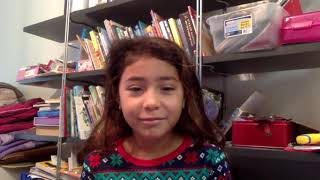
Michael Strong asks seven-year-old Alana what an entrepreneur is, using her dad's shoe business and companies like Apple and DoorDash as examples. They talk about venture capital, how teenagers can start their own businesses, and what it means to be your own boss.
Chapters
Hello, Alana, how are you?
I'm good, how are you?
I'm well, thanks for your patience. I had some technical difficulties. The audio didn't work. Does that make sense?
Yes, it does.
Okay, I understand from your father that you listened to at least part of my podcast with Danielle Strackmann. I did. And was there a nice surprise surprise there for you?
Yeah.
What was it?
Um, where, um, because you know me and, um, I go to her school, you said that, um, you know a student that goes to her school. I know you and also go to her school.
That's right. Have you met Danielle?
No, I have not.
Oh, someday you'll have to meet her. She's a wonderful person. She actually runs a venture capital fund. Do you know what a venture capital fund is?
I do not.
Do you know what an entrepreneur is?
An entrepreneur?
Mm-hmm.
I do. I think my dad is.
Okay, excellent. What is an entrepreneur? Can you describe what an entrepreneur does?
I think he, like, Um, he like makes up stuff to like do and, um, he— I don't really know how to describe it.
So he makes up stuff to do. Excellent. Um, have you heard of any entrepreneurs other than your father or is your father the only entrepreneur you know?
Um, probably his co— his, um, worker Joseph.
And Joseph also makes up stuff to do? So, um, so an entrepreneur makes up stuff to do. Do you know, have you ever heard of, say, Steve Jobs?
No, I have not.
Okay. So entrepreneurs are people who start companies. Does it make sense? Do you know any companies? Which one?
Friendly Shoes.
Friendly Shoes. Friendly Shoes is a company. So what does Friendly Shoes as a company do?
Um, sell stuff.
What's that?
It sells stuff.
What kinds of stuff does it sell?
Shoes.
And did your father found Friendly Shoes or did somebody else create Friendly Shoes?
I think Joseph made Friendly Shoes because he was an occupational therapist.
So maybe Joseph created Friendly Shoes, in which case Joseph is the entrepreneur. So an entrepreneur is somebody who creates businesses. Friendly Shoes is a business, so then Joseph would be the entrepreneur who created Friendly Shoes. Does that make sense? And then I think your father helps to sell Friendly Shoes, is that correct?
Yes.
Does your father kind of run a store that sells Friendly Shoes, or do you know exactly what he does with Friendly Shoes?
Um, so, so he doesn't run a store, he, um, just, he, yeah, he helps sell them, like, I mean, like he found a, a mall that he He's selling it until Tuesday.
Got it. So he doesn't run a store, but he does help to sell Friendly Shoes, right? Okay.
Yes.
So I can see that's also an entrepreneur. An entrepreneur is somebody who also helps to sell things. Do you know any companies in addition to Friendly Shoes?
Um, what do you mean by addition?
Are there other companies? Is Friendly Shoes the only company in the world? Or are there other companies?
There are other companies.
So what are— can you name a couple? Um, Zappos. Zappos. So what does Zappos sell?
Shoes.
Okay, so you know about Zappos. Zappos is definitely a company, definitely an entrepreneur created it, and they definitely sell lots of shoes. Can you think of any other companies?
Um, is Taken one?
What is it? Taken?
Taken.
What do they sell?
Um, it's a food app.
Oh, I do not know about it, but it sounds, definitely sounds like a company. So is it like a company where you can, where Order food online, is that what it does?
Yeah.
Okay, and you use this app, this phone app?
Yeah.
Do you know the person—
People try to use it.
Go ahead.
Like my dad, because he's part of the company, he, like my jiu-jitsu coach, he said to him about Taken and he ordered something for my coach. I think it was a burger.
Got it.
So restaurants and then to get on to Taken and then they can order their food on Taken.
Excellent, excellent. It sounds a little bit like there's another one, DoorDash. Have you heard of DoorDash?
Yes, I have.
I think that's similar. Is DoorDash and Taken, are they similar kind of apps?
I think they are.
Okay, so those are definitely a couple other companies. We don't have to do lots of companies, but do you know of any other companies? Um, Uh, so I'm gonna make it easy for you, okay? You're thinking really, really hard, and that's good, but how about, say, McDonald's or Apple or Walmart or Levi's or, um, Odwalla? And there are lots and lots and lots and lots and lots of companies. Does that make sense? Every time you buy something from somewhere, pretty much, unless you buy it from somebody who makes it homemade, everything else you buy is probably made by a company. Does that make sense?
Yes, it does.
Does that make it easier to see that there are lots of companies out there? So every company was started either by one person or by a group of people. And so the entrepreneurs are the individuals or groups of people who start companies. So, um, of those companies I mentioned, do any of them sound familiar?
Yes, they do.
Like, what's one that sounds familiar?
McDonald's.
Okay. So McDonald's was, um, created a long time ago. Um, and first they just all started selling, you know, hamburgers and fries and milkshakes. Then, um, they created this system. So now there are McDonald's all over the world. So McDonald's, definitely it was founded by an entrepreneur. So what Danielle Strackman does is entrepreneurs need money to make their businesses, to help their businesses grow. So if you want to go from 1 McDonald's to 10 McDonald's, um, you need money to buy, to build new buildings and to, you know, buy new milkshake machines and new, um, you know, fryer fats for frying more French fries and all that. Does it make sense you need more money in order to help businesses grow? So money that's used to make businesses grow is called capital. Have you ever heard that word before?
In other ways, yes, but in this way, no.
I think that's very well, well thought. So you've heard of like capital letters. There's capital letters and small letters, that kind of thing. Um, but that's a completely different kind of use of the word capital. You're absolutely right to recognize that. So in this sense, capital is the money used to help businesses grow. Um, so yeah, Danielle started out creating the school that you go to Innovations Academy, but now she's helping businesses grow by investing, and we say investing capital into the business. And she actually specializes in businesses created by teenagers. So some businesses, your dad's probably a bit older than a teenager, right? Okay. So some businesses, most businesses are actually created by older people. But there are some businesses created by teenagers, and teenagers are not that much older than you. Is that right?
I think so, yeah.
So how old are you these days?
I'm 7.
And how old is a teenager? What's the youngest teenager?
Um, maybe 15 or 16.
Maybe. How about, how about 13?
13?
So if you're 7 and you'll be a teenager at 13, how many years is that?
6.
Does that seem like a long time?
For me, yes.
Yes, and it is, but it's not as long as till you're like 30, correct?
Yeah.
So could you imagine creating your own company?
Yes, Sam. Yes, I can.
Do you think you might like to create your own company?
Mm-hmm.
Do you have any idea what kind of company you might want to create?
No.
That's totally okay. Again, even, even if you started when you're 13, which is super duper young, you've still got 6 years, which is a long, long, long time. But yeah, I think it's, it's Interesting. Do you think that your dad, your dad likes being an entrepreneur?
I think he does.
What makes you think he likes it? What does he like about it?
I think he likes selling and going to different places to introduce his company.
Do you think that you would like selling?
Mm-hmm.
Okay. Yeah, I think, I think entrepreneur is, it's interesting. Entrepreneur is, I think you started by saying They make up their own things to do. Is that what you said?
I think so, yes.
So part of that is they tend to have a lot of freedom. You know, they, they can decide what they want to do and how to do it. And some people like being entrepreneurs because they have freedom. Do you like the idea of you being, well, really your own, your own, you are your own boss. Um, so some people have a boss. Entrepreneur is you are your own boss. Do you think you would like to be your own boss?
Yes. Okay.
Okay. Well, I think, I think you might like that as well. So just a thought. So yeah, I thought since you listened to Danielle and you heard her voice, did you listen to the whole podcast or just a little bit of it?
Just like, oh, just a little bit. I didn't listen to the whole.
No problem.
Like I finished like the story. Of how she made it, but, and then, um, we have to get out of the car.
No problem, that's plenty. Yeah, so now you'll know you can, you can learn more about Daniela and entrepreneurs and teen entrepreneurs, and in the next 6 or 7 or 8 years, maybe 9 years, you can think about maybe becoming a teen entrepreneur yourself. How about that? Okay, I'm gonna let you go. What are you gonna do today?
I don't really know.
That's good, that's totally fine. You get to pick what you want to do, right? So you'll be, you're going to be the entrepreneur of your own day today, how about that? Okay, great talking to you, Alana. Have a wonderful day, bye-bye.
Bye.






