Socratic educator Michael Strong with Alana, Age Six
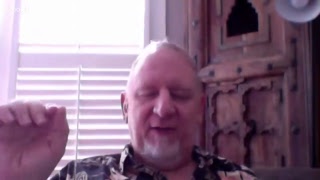
Michael Strong asks six-year-old Alana questions about how shoes get made and sold, where money goes in a bank, and how to calculate change. She traces shoes from factories through ships and trucks to stores, explains what banks do, and solves subtraction problems with real purchases.
Chapters
Well, are those shoeboxes behind you?
Yes, they are. I'm at Friendly right now.
I see you. Where are you?
I'm at Friendly right now. It's in Hillcrest.
Excellent. Well, let's— what do you— is there anything you want to think about today?
Not that I can think of. What do you want to think? About today?
Well, I am thinking about how they got all those shoes. So behind you are many boxes of shoes, right?
Yes.
Do you have any idea how those shoes got made and how they got to those to sit behind you?
I think I do. I watched a video about it.
Terrific, tell me about it.
So they get, um, uh, like a model of a shoe, but it's all white. Then they find leather and put it on, nail it on, hammer it on. Then I think they find the laces and they put on the zipper somehow. I think that's how they do it.
And then It sounds like it was a good video, and it sounds like you really remember the video pretty well. So somewhere they are making these shoes. How do you think they get from the shoemaker's place to sitting in boxes behind you?
I, me, to me personally, I think they're coming in ships or maybe that kind of stuff.
Do you ever see, um, those Do you know what a container is? Those big things on the docks or harbors?
Yes.
You know, and those cranes that lift the container up and take them off the boat and put them on shore? You ever watched that?
Yes, I have. I've seen a crane and those little— and the packages. I've just never seen the cranes lift them.
Okay. Yes, so those, you know, if something comes by water, and a lot of stuff, most stuff comes by water. You're right, it comes across on the ships, and it's made somewhere else, and I'm glad you saw a video showing how it's made, and then it's transported, and then usually, how do you think it gets from the ships to the store?
So I, to me, I think trucks pick it up, and then they drive it here, and then they drop it off.
That sounds exactly right. And so you see trucks on the highway and everything?
No, I don't. I just thought about it.
Okay. Have you ever seen a truck on the highway?
I've never seen a truck carry those stuff.
Okay. I think we don't know what trucks are carrying, so they could be carrying lots of different things. Yeah. And so how do you think everybody— so do you think people get paid for making shoes?
I think so, because like they're the ones who made it for the company.
And how— when you buy shoes, where does the money go?
When we buy shoes, it goes to this place. I don't know what it's called. I'll ask my dad. But I know it goes to this place.
Okay, so you buy shoes and money goes to a place. Are you thinking to the store or to a bank or something else?
Something else of those two.
Okay, do you know what a bank is?
Yes, I do.
What is a bank?
It's where you get like checks, you drop off checks, you save money from your account.
Yeah, and so, um, one of the things to figure out would be how, how the money goes from when you buy the shoe to all of the people. You know, I think probably everybody who helps get the shoes to you, um, probably needs to get paid somehow. Does that make sense?
Yeah.
So the store takes your money, right? If you buy the shoe, the store takes your money.
Yeah.
Um, actually, this is a tricky thing because most people buy with credit cards now. Um, do you know what the difference is between cash and credit cards?
Maybe like the cash, like, um, dollar bills and stuff. Yeah, um, they're like money, and then credit cards hold money in them. It's not like real money, they, they have money based on their account.
Yeah, so if, if you buy a pair of shoes, then if it goes on the credit card, it'll go from your account into the store's bank account. Does that make sense?
Yes.
And then what do you think the store does with that money once it's in the store's bank account?
One, I think some of them, they save some for them, and they— and then they give some to other properties or something.
And who all do you think— so the store probably does have to pay a whole bunch of people different things. What kinds of things do you think the store has to pay people for?
Um, you know, maybe, um, wait, what did you say again?
So I'm trying to get you to think like you're a store owner. So suppose we have Alana's Shoe Store, and Alana— so before I was saying you were the customer, When buying the shoes. Now I want you to get to think like a store owner. So Alana, and Alana's shoe store just sold some shoes, and now she has more money in her bank account, or in her store's bank account. But in order to keep selling shoes, you probably have to pay some people to keep your store going and to buy new products. So where all do you think the money goes from your account to keep Alana's Shoe Store open?
One, maybe it could— it goes to the bank too. I think it goes to some of the customers.
Okay, so are you thinking that you would pay your customers?
Well, kind of, but— and sometimes I could keep it from my bank. Account.
So usually I think customers pay the store. Have you ever been to a store where they pay you?
Well, they give you back just a little bit of money.
Well, if you, if you spend in cash, right, they give you change. Do you know why they give you change sometimes?
No, I don't.
Okay. Do you know what a $20 bill is?
Yes, I do.
So we're going to go back to math. Suppose you bought a pair of shoes for $15 and you paid for that pair of shoes with a $20 bill. Do you think the store should give you some money back?
Just a little bit of change.
How much change? If the shoes cost $15 and you paid with a $20 bill, How much money should the store give you back?
Maybe as much as they paid, or as, or maybe just 10 more.
Okay, so I'm gonna, so dollars, dollars work just like other kinds of numbers in math. So let's go to what is 20 20 minus 15.
20 minus 15?
Yep.
5?
Yep. So I would say that if you bought a pair of shoes for $15, um, or the shoes, the shoes you're buying cost $15, and you pay with a $20 bill, I would say the store should give you $5 back. Does that make sense?
Yes.
Because you were giving the store too much money. That is, you're giving the store in that $20 bill $5 more than the shoes actually cost. So if you're going to get these shoes that are worth $15, but you paid with a $20 bill, they better pay you $5. They better give you $5 back in change. Right?
Yep.
Okay, so that's how change works. So when you see stores giving money back, um, they are only giving change back to customers when customers pay more than the products cost. Um, should we do one more just to get it? Okay, so how about you have, um, You have a $100 bill. Have you ever seen a $100 bill?
Yes, I have.
Okay, and you are buying shoes that are worth $90. How much change should the store owner give you back?
10 or—
10 or?
I don't know about that.
10 is exactly right. Your instincts are exactly right because 100 is 10 more than 90. So you gave them a $100 bill, um, it's 90, the shoes cost $90, they should definitely give you $10 back. So your mind was exactly right on, but you were just a little unsure. You think that's just because these are new kinds of problems?
Yeah.
No problem. A lot of times when we try to figure out new problems, our minds are not sure, and I'm trying to help you reason through or think through so you can figure these out on your own ever better, ever more powerfully. Make sense?
Yes.
So I want to do just one more making change then. So this time, suppose you go to a store to buy candy. And do you ever buy candy?
A little bit.
Okay, um, too much candy is not good for you, but maybe every once in a while. Maybe ice cream. Is ice cream better?
Yeah, a little more better.
Okay, so let's say you go to the ice cream stand and you want to buy a yummy ice cream cone. What's your favorite, favorite flavor?
Mint chocolate chip.
Mint chocolate chip. So the mint chocolate chip cone at this store costs $4, and you give the store owner a $5 bill. How much change should the store owner give you?
5.
So you give the store owner $5, and the store owner should give you $5 back?
In my mind, yes.
And also the ice cream cone?
Maybe.
So if the store owner gives you an ice cream cone that costs $4 and you pay for it with a $5 bill, if the store owner gives you a $4 ice cream cone and a $5 bill, it seems like the store owner is giving you $9 worth of stuff, a $4 ice cream cone and a $5 bill. Does that sound right?
Yes, and yeah.
So I would propose that if you are paying for a $4 ice cream cone with $5 bill, the store owner should give you $1 back. Can you see how I calculated that?
Yes.
How did I calculate that?
Um, I don't know how to say it. I don't really know how to say it. Um, but you figured out how, what was worth, because if, um, the ice cream cone actually cost $4, but you pay one more, they give you one more.
That's exactly right. I think you explained that really well. Let's do just one more then. Let's go back to— this time we'll go ahead and buy candy. Okay?
Okay.
Um, suppose you go and you buy, um, candy, and the candy costs 50 cents, and you pay with a $1 bill. How much change should you give back?
I'm thinking 10.
Now why do you think 10?
Because if you give $1 bill, 10 cents or dollar or dollars more, that would make like, yeah.
So 50 cents, you know how many cents there are in a dollar?
No.
Okay, so that's why this was a tricky one. There are 100 cents in a dollar. 100 pennies equals $1, so 50 cents is half of a dollar. Does that make sense?
Yes.
So if 50 cents is half a dollar and that's how much the candy is worth and you pay with a $1 bill, how much How much change do you think they should give you now?
Maybe 50 or 10.
50 cents is exactly right. So it looks like, so in math sometimes we call these story problems. And we call them, have you ever done story problems in math at school?
No.
Okay, so we're doing fancy math for you. The reason they call them story problems is it's like I tell you a little bit, little story, and then you try to figure out some math based on that story. And so, you know, it's a tiny story to say you're buying candy or you're buying ice cream, but do you see why that we call those story problems in math?
Yes, I do.
Okay, so we'll try story problems again, maybe based on stores, maybe based on other things. But it's a new way to use your math understanding. You try to figure out real-world problems using math. Did you know you can figure out real-world problems using math?
Yes.
Okay. So I will let you have a wonderful day, and you can talk to your parents about what's going on when they buy things in stores, okay? Thanks, Michael. All right, thanks. Have a great night, you guys. Bye-bye.
Bye, see you next week.






