Socratic educator Michael Strong with Alana, age seven
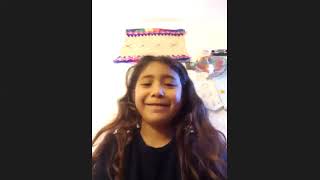
Michael Strong talks with seven-year-old Alana about archery, jiu-jitsu, math, and her paper-airplane business. He explains deliberate practice: breaking a skill into parts and focusing on targeted improvement, like a coach would. Alana already tracks her progress through ST Math levels, DRA reading scores, and how mastery feels.
Chapters
Hello, Alana. Can you hear me? I can see you, but I cannot hear you.
Hello, Michael Strong.
Now I can hear you. Good morning, how are you?
I'm good, how are you?
I'm well. Have you been awake for a while, or did you just wake up?
I just woke up like a minute ago, I think.
Okay, but you're pretty alert?
Yes, I am.
Okay, great. Um, I remember a few weeks ago you were practicing archery.
Yes, I was.
Have you continued to practice archery, or is that the only time?
I've continued to practice it.
Would you say you're getting better?
I think so, yes.
Do you actually count how many times you hit the target, how many times you miss, how many times you hit the bullseye, how many you miss?
Actually, I don't, but I should get into doing that.
I mean, it depends on what you want. Would you say, would you, would you say you like getting better at doing things?
I do like getting better at doing things.
Uh, that was my thought, but I didn't want to assume. I always like to know what you want and not have it be something somebody else wants. So with jujitsu, I think you try to get better at doing jujitsu. Yes.
Yes, I do.
Would you say you're continuing to get better at that?
I think I'm continuing to get better at it.
Do you know how or what, how can you tell if you're getting better at jujitsu?
Like if you train hard, like you can feel, sometimes it can feel like, like if you were stuck on bottom and then the next time you're on top, I think you would get better by that.
Got it. Um, do you, can you tell if you're doing some moves better, that you've developed greater mastery about how to do certain moves?
Um, I think since I started jiu-jitsu, I didn't really know anything. So, um, like my first few months, I learned like arm bars, the positions.
You're frozen.
Your knees, and then the other person wraps you up with his legs.
Got it. So, um, what are some other things besides jiu-jitsu and archery that you try to get better at?
Um, math and reading in school. Probably. Math and reading.
Can you tell if you're getting better at math?
I think I can tell. Yes, I can tell that I'm getting better because each year in school I pass through the levels faster in ST Math, which is a game for you to help learn math.
So can you go at your own pace in your math program?
So like last year I would go through it slower and then since I got good at it this year I got a little bit faster at doing it.
I see, and so ST Math allows you to go at your own pace in mathematics? You're frozen again. You're back?
Yes, I am.
Yeah, your, your screen froze. So I was asking, um, can you go at your own pace in ST Math? Can you go as fast as you want?
I mean, yes, like I can get faster each year, but this year I have like, I each Each year I have like my own pace, like kindergarten I was a little slower, first grade a little faster, second grade a little faster.
And you're in second grade now?
Yes, I am.
So what math are you doing right now? Are you doing addition, subtraction, multiplication, division?
Right now I'm on, um, the second to last level, so it's, um, and the second to last level is time. I'm learning about time right now.
Got it. And that means like how to tell time on an old-fashioned clock?
Yeah.
Okay, great. And then with respect to reading, how can you tell if you're getting better at reading?
Because, um, so in classes you will get like tested, um, from like, it's like for your DRA level. Um, right now I'm on 40. And before I was on like 30 or something, and they test us to read books, and if we do a good job, we go on to the next level. Like I'm 30, now I'm 40.
Got it. Do you also continue to read books at home on your own?
I do. I have a lot of them.
So I remember some time ago you were reading Harry Potter, like 2 years ago. What are you reading these days?
So my grandparents got me Diaries of Nancy Drew, Nancy Drew, I think. Mm-hmm.
And there are like a whole bunch of Nancy Drew books, like 40 or something?
I don't really know.
How many have you read so far?
I'm on number 4, but it's my first one.
Oh, okay.
It's really good.
I'm glad you like Nancy Drew. You like mysteries?
I do. And, um, she also gave me like a double-sided mystery book of Nancy Drew.
Can you usually figure out what's going— what the mystery is before you get to the end of the book?
Like sometimes, like I'm not on the mystery part yet in the first book that I'm reading, and, um, then book, but I think the next chapter is called The Missing Wallet.
Mm-hmm.
So I think one of her wallets is gonna go missing and then they have to find it.
Do you think that you could get better at figuring out mysteries?
I think I could.
Okay, so archery, jiu-jitsu, math and reading and maybe figuring out mysteries. Um, anything else that you are trying to get better at doing?
Um, I'm trying to get better at folding paper airplanes because, um, I forgot to mention this like a week ago or so, but, um, I'm trying to make like a paper airplane business, like to sell at like the park and stuff.
Very cool, very cool. How did you come up with that idea?
Because, um, so me and my brother watched these, a video called Lil V. It's like this kid with his sister trying to make a business to sell slime, and I just got an idea of paper airplanes because I love folding them.
That's great. Um, Can you create paper airplanes that fly a long ways?
Yep, I can.
Have you ever seen a paper airplane competition?
Uh, no, I haven't.
You should look on YouTube. There are some, there are people that can make paper airplanes fly farther than you can even imagine. It's really, people get really, really good at it. So talking about getting better and better at things, if you wanted to be a competitive paper airplane person, Do you know what, you know what like a really big gymnasium is? Like for a basketball game?
Yes, I do.
Do you think you could create a paper airplane that could fly all the way across the long side of a gymnasium?
Um, maybe?
Okay, so that's something you can aspire to do, but it's exciting you're doing a business, and with the business you want to get better at folding airplanes because you want to sell the paper airplanes to other kids?
Yes, I do.
How much are you gonna sell them for?
Maybe like $3 or something.
Excellent. So when we were talking about archery, when you were at the, you know, out at the archery place, I introduced the concept of deliberate practice to you. Do you remember what I, what I said deliberate practice meant?
I don't think so.
Okay, no problem. It's when you practice something like jiu-jitsu or archery, but you pay attention to the very specific parts of it. Like we were talking about, I think you have to hold the arrow next to your cheek in archery, and you have to hold your hand really steady. And we didn't talk about how you, how your legs need to be positioned. But I think you have to have your legs positioned in a certain way. And if you are deliberate about practice, you're very focused, or you could even have a coach like your dad or your jiu-jitsu master who helps you figure out where you need to change how you do it in order to get better faster. Does that make sense?
Yes, it does.
So anytime you want to get better at something, there are usually lots and lots of different pieces of it. You know, the archery, it's how you hold the bow. It's how you put the arrow on. It's how you pull the arrow back. It's how you kind of maybe take a breath to be really calm before you let it go. It's how you aim. You can, anytime you do something, you can break it up into lots of pieces. And with deliberate practice, you learn to pay really close attention to every part of how you do it. And so you can see, what you need to improve in order and how you need to improve it in order to get better. Make sense?
Yes, it does.
So the reason I think this is important is that, um, people that are really great at what they do use this deliberate practice where they're very focused on how to get better at every stage. And they, they really are careful to learn how to get better at every piece of it. And if you do that over time, you will get better faster. And since you like to get better at things, I'm suggesting this could be a tool so you can get even better faster over time so that you can be really great at whatever you want to be great at. Does that sound good?
It does.
Okay. Well, what are you gonna do for the rest of the day?
This morning I'm thinking we're gonna go to the gym even though it's Sunday here. And maybe I can go and I think I can go to open mat with the women that train there and also other women that's coming from other gyms.
Excellent, excellent. Well, have a wonderful day and happy New Year because I'll talk to you next in 2020.
Okay.
Bye-bye.
Bye.






