Socratic educator Michael Strong with father Ryan Nohea Garcia
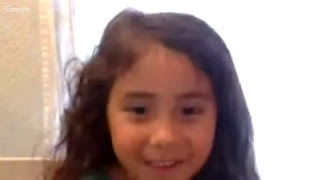
Educator Michael Strong guides 8-year-old Alana through a Socratic dialogue to define "puzzle." By asking whether Legos, books, and building activities count as puzzles, Alana discovers that a puzzle involves assembling pieces and thinking about how they fit together. The conversation includes Spanish exchanges and sets up future lessons on "if-then" thinking.
Chapters
How are you?
I'm well, how are you?
I'm well, I'm going outside. I like being outside.
Okay, stay strong.
So, you are, are you inside or outside?
Inside.
Oh, there's lots of light. I see lots of light around your head, which looks really, it looks sunny and fun.
Yeah. I know, I know, because I'm inside.
Brilliant, brilliant. So how was your week? Tell me about your week.
Good. So I went to my friend's house too.
You went to your friend's house?
Yes.
What did you do at your friend's house?
Well, we played with her Legos and we played with her iPad.
Whoa! That looks cool.
I've been there before.
Do you like Legos better or iPad better?
Both.
What did you build with the Legos?
Um, excuse me?
What did you build with the Legos?
Oh, maybe a house.
Legos are pretty amazing. They're one of the best toys ever, I think. What did you play on Skype?
Um, some puzzles.
Really? So I have a question. You ready to start with questions?
Yes.
So I always, I always think about things. So when you say a puzzle, I immediately think, what is a puzzle? Does that seem like a weird question?
Yes.
Do you mind weird questions?
Yes.
You do mind. It means you don't want me to ask you weird questions.
I do.
Okay, so tell me what a puzzle is. How do we know if something is a puzzle? Hmm? How do we know whether or not something is a puzzle? Are Legos a puzzle?
No.
Why not?
But we can build stuff on it.
Could you build a puzzle out of Legos?
Mm, no. Yes.
No or yes? Are you thinking about it? Maybe both?
Yes.
Okay, so let me think about other examples of things that might be puzzles. Is a book a puzzle?
Yes.
What makes a book into a puzzle?
Like when you read.
So reading is a puzzle?
Yes.
Okay. How about eating lunch? Is eating lunch a puzzle?
That's a funny one.
Okay, does that mean yes, eating lunch is a puzzle, or no, eating lunch is not a puzzle?
Yes, it is.
Eating lunch is a puzzle.
Yes, it's a puzzle a little bit.
Okay, what makes eating lunch into a puzzle?
Because you eat it and put it in your mouth.
So I guess I'm thinking, so do you know what a jigsaw puzzle is?
No.
It's one when you, you have lots of little pieces and you put them together and it makes a picture.
Yes.
You've done puzzles like that where you put them all together and it makes one big picture at the end?
Oh, yes.
Usually those are called jigsaw puzzles, and I think it's because they used to cut the pieces with a kind of a saw called a jigsaw. So when you say that eating lunch is a puzzle, is the puzzle You— what kind of food do you like to eat? What's an example of food you like to eat?
Pizza.
Pizza. So if you take a bite of pizza and put it in your mouth, are you putting the pieces of the puzzle together? You froze for a minute, so I didn't hear you. What did you say?
Yes.
Yes? So is everything, is everything on Earth a puzzle?
No.
So tell me something, tell me one thing, just one thing that's not a puzzle.
A tree.
A tree is not a puzzle. Okay, I'll buy that. Um, how about, let's see, how about is your house a puzzle?
Yes.
What makes your house into a puzzle?
Because constructors build it.
Oh, that's interesting. That's really interesting. So what I'm understanding— let me know if I understand you correctly— just like with a jigsaw puzzle, you take all the pieces and you make a picture, you're saying that a house is a puzzle because the builders take all the wood and the lights and the sink and everything and they put it together like a puzzle. Is that right?
Yes.
Very cool. I'm totally convinced. You convinced me that a house is a puzzle. I think that's really cool. So I get the house is a puzzle. Let's go back to reading. How is it that reading is a puzzle?
That would be a funny puzzle.
Will, I asked you if reading was a puzzle and I think you said yes. Did I misunderstand you?
Yes, I did say yes.
Okay, so are you not a puzzle?
Um, excuse me?
Are you now saying that reading is not a puzzle?
No.
Okay, so what makes reading not a puzzle?
Um, You, you read by the words and you switch the pages to when you're all done.
I love your description of reading. I really love how well you think and talk, Alana. I think you're wonderful. So, so it sounds like the way you're talking about reading, so let's say puzzles, some kinds of puzzles are putting things together. Like a jigsaw puzzle, you're putting pieces together. A house, you're putting wood and sinks and lamps together. But you're saying reading is not a puzzle because you're not putting things together? Is that right?
Wait, excuse me?
Reading is not a puzzle because you're not putting things together?
Well, when you're making a bucket, is that a puzzle?
Ah, puzzles are when you're making things. And I'm moving around because my computer is almost out of power and I'm hoping it doesn't disappear. So let me get the power cord plugged in. Does— you know computers can run out of power and that's no fun. Oh, we're in good shape, I've got power now. So is it true that every time you put something together that that's a puzzle?
No, not everything is.
Well, let's, let's try a couple of examples. How about an airplane? You know, somebody had to build an airplane, right?
Excuse me?
An airplane. Someone had to build an airplane, right? Yes. Do you think putting an airplane together is a kind of puzzle?
Yes, because you need to build it.
Okay.
Um, big, big puzzle.
Have you ever— it is a big, big puzzle. You're right on that one. It's an amazing puzzle. How about, have you ever built a fort in your house?
Yes.
What do you build forts out of?
In my From the stuff around my living room.
You know, I think kids love to build forts. When I was a kid, I loved to build forts. There's something about it that's so much fun. Is building forts a puzzle?
What?
Is building a fort a puzzle in your house?
Yes.
Why? You know, why would you say that building a fort is a puzzle? What makes that a puzzle?
Because you need to get stuff and then build it.
Okay, so you're putting all the parts together. It sounds like anytime you have a bunch of parts and you need to put the parts together somehow, and you have to think about how to put the parts together, then that's a puzzle. That sound right?
Yes.
What, what it means to define a word? What a definition of a word is? Definition is a great big word. Have you ever heard the word definition?
Excuse me?
Have you ever heard the word definition? To define word is to come up with a definition. A bird? A word. So a word, every word has a definition. We define words. And what that means is that means explaining what a word means. So right now I'm giving you the definition of the word definition, which is explaining what a word means. You are telling me that the definition of puzzle is putting pieces together. Make sense?
Yes.
So when you're learning a new word, when you read, somebody has to tell you what that word means, right?
Yes.
Um, and when they tell you what that word means, they're kind of giving you the definition of the word. So every word Every word has something that it means. And when we're learning new words, then we have to learn the definition of every new word. So I bet there are words that you know in Spanish that I don't know in Spanish, and you would have to tell me the definition of the word in Spanish. Porque yo no hablo español perfecto.
¿Qué? Yo sí.
But I bet you speak Spanish pretty well. Hablas español perfecto?
Sí.
Sí. Maravilloso.
Gracias.
De nada. So I want to go back to puzzles and food. If puzzle, the definition of puzzle is putting pieces together, then how is eating lunch a puzzle?
Um, because you are— because people are cooking it, and then when it goes on the plate, you eat it.
And do you think when you eat it, that putting food in your body is like putting the pieces of a puzzle together? It's a funny case. It's sort of like a funny case. Sort of yes, sort of no. Does that seem right?
Yes.
Are you okay with things that are sort of yes, sort of no?
Yes.
You know, when you're thinking, Alana, sometimes your eyes go up like this when you're thinking. I think it's really funny because it's almost like you're looking at the Thoughts in your head. What's going on in my head? Is that what you're doing when you go like this?
That's funny.
Is that what you're doing? You do that. You really do. When I ask you a question and you don't know the answer, your eyes go, hmm. You should watch yourself. It's funny, but I think it's good because you really are thinking. Do you like to think?
I am.
You do?
Yes.
Is your mom or dad right there?
My dad and my brother are here right now.
So you—
My mom's awake, but right now my dad and my brother are here.
Okay. So just to explain to your dad and other people, You are doing a really good job of coming up with definitions. Today we did a definition of puzzle, and you not only came up with an interesting definition, you applied it in new ways. So I was excited when you saw that building an airplane was a really hard puzzle. And yes, at first you said that reading was a puzzle, and then you decided probably not, which is Makes sense to me. And then you said that eating lunch was a puzzle, and then, then it sounds like you're saying maybe yes, maybe no. Is that a good summary of what you think a puzzle is? Do you know what the word summary means?
Yes.
What does summary mean?
Like when a submarine goes underwater and swims by itself. It's like a machine.
That's not the word I was thinking of. When I use the word summary, it means to kind of include everything you said. So I was trying to, in a few sentences, include everything you said. Does that make some sense? A little bit? So I was trying to, I was trying to explain Alana's definition of puzzle using the examples of an airplane, reading a book, and eating a meal, and building a fort. I'm trying to explain what Alana thinks. Does that make sense?
Yes.
Okay. Um, also we did a little bit of if-then thinking, and I'll explain that on another call. I want to keep them short so people don't get exhausted watching them. Anything else you want to say before we end for this week? Any more questions or thoughts, Alana? You're kind of cutting out there, Michael. There's a bit of a delay in the voice. Well, I was wrapping up. I was wrapping up. So we talked about definition of a puzzle, got into a little bit of an if-then thinking, and I think Alana, you are doing spectacularly well in terms of thinking and figuring out the world. So have a wonderful week, have lots of fun, and I look forward to talking to you next week, hopefully. Okay?
Okay.
Sounds good, Michael. Thanks a lot for your time. Sounded fun. Okay, bye-bye.






