Socratic educator Michael Strong with father Ryan Nohea Garcia
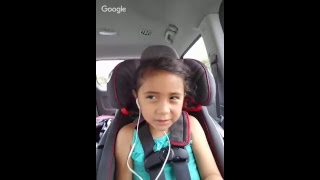
Educator Michael Strong asks nine-year-old Alana what makes something a bird. He tests her ideas by asking whether dragonflies, bats, and model airplanes count, pushing her to move past simple rules like "has wings" or "can fly" toward real reasons things belong in categories.
Chapters
Can you hear me?
Good morning, Mr. Swan.
Good morning, Alana. It's wonderful to talk.
I can hear you a little bit.
Is this better? Can you hear me better now? What? Can you hear me better?
Yes.
Okay. I should have headphones. I don't have headphones, so there's birds and things that Sometimes you may hear birds. Is that okay?
Yes.
Okay, see, I'm in nature. There's all this nature going on, and birds, you know, they make lots of sounds.
That's cool.
You like birds?
Yes.
Last time, was it last time we talked about the difference between birds and dinosaurs?
Yes.
You like pterodactyls, right?
Yes, I do.
And you said that pterodactyls are different birds, right? Yes. Remind me why you think pterodactyls are different from birds.
Because they have hands on the wings.
Like those hands on the wings. So that makes, that makes it so no way is a pterodactyl a bird. Okay, so how about our— and we talked, I'm trying to remember last week. Is it okay if we go over last week's conversation again? Yeah, I'm trying to remember. So you said that dragonflies are not birds either, right?
Yes, because they have four wings.
I see. So how about this? Suppose you pull off— and this is really mean thing to do— if you pull off two of the wings on dragonflies so they only have two wings, Is a dragonfly then a bird?
No.
Why not?
Because they have a longer tail.
Oh, okay. I'm tempted to be really mean. I shouldn't do that. But suppose they had a shorter tail, would that make them into a bird?
No.
No?
Shorter tail would just be a shorter Dragonfly.
So, uh, I guess I'm wondering, how do you know if something— how do you know something is a bird? Do you think you just know, or can you figure it out?
I can figure it out because they have two wings on each side.
So is a bat a bird?
What?
Is a bat a bird?
No.
But bats have two wings, right?
Um, yes, but they hang upside down.
I see. So that's why bats are not birds. Okay. And airplanes are not birds, right?
Yes, because they fly higher.
I see. So what if we had an airplane that stayed pretty low? Is that still Does that make it a bird?
No.
You've seen— have you seen little model airplanes? Those don't fly very high.
Yeah.
Are those birds? No. Why not?
Because they only— because they have wheels too, and birds don't.
Ah, so I don't feel so mean about this. Let's just pull off the wheels on the model airplane. Now is it a bird?
No.
Why not?
Because it would just be an airplane that has no wheels to go.
I know, how about if— what if we put some feathers, we glue some feathers on a model airplane wing and we take off the wheels? Now is it a bird?
No.
Why not?
I don't know.
So maybe it is a bird. If you don't know, maybe, maybe Maybe, what if birds are just model airplanes that somebody put feathers on? You think?
No.
Maybe all these birds are just model airplanes with feathers. How do you know?
Because model airplanes are not just actually birds.
I hear you.
Because they have windows.
They have what?
Because they have windows.
The birds have windows or the airplanes have windows?
The airplanes have windows.
Oh, well, this is easy. So let's just cover up the windows with feathers and now we have a bird, right?
No.
Why not?
Because it's not a bird.
Okay, okay, okay. And so I'm going back to the— no, you said dragonflies and I didn't want to be mean to dragonflies. That wasn't nice. But how about houseflies? Houseflies just have two wings. Are they birds?
No, because they're smaller.
Okay, so now all we need to do is find a really, really big housefly. Um, does that make it a bird?
No.
Why not?
Because it just needs to be a little fly.
But I guess my question is, you know, on the one hand we've got these— so I'm picturing we've got these airplanes with feathers on them, model airplanes with feathers, and you say those aren't birds. And we've got these really big houseflies with just two wings, you say those aren't birds. How do you know? How about— so Turkeys don't— big turkeys don't fly very well, right?
Yes, because they don't have wings.
So does that mean turkeys are not birds?
Yes.
Okay, so if you have to fly to be a bird, which means things like turkeys and chickens are not birds. Okay, so what is a turkey? Is it a model airplane or is it a fly, or what is a turkey?
Um, a cricket is a thing that hops.
No, that's a cricket. I was asking about a turkey. You know what a turkey is?
Yes.
So is a turkey more like a model airplane or more like a— is it like a horse?
What?
Is a turkey more like a horse?
Excuse me?
I'm wondering, is a turkey more like a horse than it is like a bird? Because horses— I'm thinking horses stay on the ground, turkeys stay on the ground. So we've got things like model airplanes that fly, and we've got mosquitoes and flies that fly, and we've got birds that fly. And we've got things like turkey that sit on the ground.
Excuse me?
Turkeys stay on the ground mostly, right?
Yeah.
So I'm wondering, is it turkey? Maybe it's like a puppy dog?
Lana, hold it in your ear.
Oh, it sounds like your brother's loud.
Yeah.
Um, how about ostriches? Do you know what an ostrich is?
Ostriches? I don't know about them, but they run pretty fast.
They do run fast. You think an ostrich is more like a horse or more like a chicken?
It's more like a horse, I think.
Okay, so do you think that ostriches and horses are related?
No.
Why not?
Because they run a lot more faster.
Which ones run faster?
The ostriches.
Really? Maybe they do. I actually saw a video of ostriches chasing bicycle riders. Can you imagine an ostrich chasing you on a bicycle? No. I think it would be scary. Ostriches are big animals.
Yes.
So it sounds like we've got— we know a little bit about birds and we know a little bit about ostriches. And ostriches are more like horses than like birds, right?
Yes.
But ostriches have feathers, don't they?
No. Yes. Wah.
Are you not sure? Okay, well, this is good. It's okay. It's okay not to know things. I— one of the reasons I like to learn is there are a lot of things I don't know, and that makes me want to learn new things. So maybe you might want to— do you ever— do you know where research is? Have you ever heard what research— the word research? Research is where you go and find out something. So maybe you might want to go and research about ostriches to see if they have feathers or not.
Okay.
You think it would be interesting to find that out?
Yes, they do have feathers.
They do?
Yes.
Well, doesn't that make them more like chickens than horses?
Wait, excuse me?
Does— if they have feathers, doesn't that make them more like chickens than like horses?
No, they have purple.
Okay, so basically ostriches are horses with feathers, right?
Um, excuse me?
Are ostriches basically horses plus feathers?
No, because horses have 4 legs and ostriches has 2 legs.
Oh, okay. Um, so a turkey is bigger than a chicken, right? Have you seen turkeys that are big and chickens that are littler?
I don't know.
Not sure? Okay, maybe again you might want to think about chickens and turkeys and research about chickens and turkeys. There are some people who think that feathers are an important way to just put families. We're kind of talking about families of animals. Does that make sense?
No.
Why not? You don't think animals have families?
Well, they do. It's just they have animal families.
I see. You think that some kinds of birds are related to other kinds of birds? I don't know. Okay. Do you think people are related to each other?
No, I don't know.
You know, you don't know. Um, do you think that, um, so suppose you see another human being, how do you know that they're another human being?
Because there's a lot of human beings.
Okay, okay. Um, well, I am very grateful that you're okay. Do my questions annoy you, or you're okay with with these questions?
I'm okay with these questions. Okay.
Do they get you to think about things?
Yes.
Okay. Do you like to think?
Um, I don't know.
You don't know? Okay. Well, I like to think. I really like to think. For me, I think it— I believe it's interesting, or I feel that it's interesting to try to think about are birds like planes or birds like insects? Does it just seem weird to you or is it okay?
It's weird to me. Insects are not birds.
Okay, okay. Well, that's okay that it's weird to you, and I want to know how you understand the world. You think you understand the world pretty, pretty well?
Yes.
Okay, well, I love talking to you on Sundays and learning how you understand the world, so I'm grateful that you're okay if I ask you weird questions.
Okay? Okay.
Where are you going today?
I'm to the safari park.
That sounds like fun. Is that fun?
Yes.
Have you been there before?
Yes.
What, what is there? I don't know what, what actually are there. Lots of animals?
Yes, and there's a bus, and there's a water place that we can go in. I'm going to walk towards it so Logan and I can play.
It sounds like so much fun. Well, I'm going to let you go on your trip. Hello to your whole family from me, and we'll probably talk again next week, okay?
Okay.
Okay, bye-bye, Alana. Thank you.
You're welcome. Bye, Mr. Strunk.
Bye-bye.






