Socratic educator Michael Strong with father Ryan Nohea Garcia
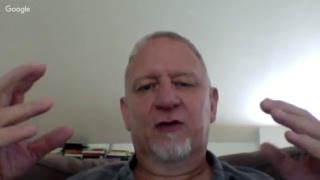
Educator Michael Strong uses Socratic questions to explore how four-year-old Alana thinks about identity, honesty, and what makes her herself. She reasons that she'd stay the same person even with a different name, and that thoughts are part of who she is. Her father Ryan watches as she navigates questions about politeness versus truthfulness.
Chapters
Can you hear me?
Yeah.
All right, I'm so glad. How are you, Alana?
Good.
¿Cómo estás?
Bien.
Muy bueno, muy bueno. What did you do this week?
I bought flowers for my mom for Mother's Day.
Oh, you are such a sweet daughter. That's such a nice thing.
Thanks.
Were they pretty?
Yeah, and they're red roses.
Oh, do you like roses?
Yeah.
What's your favorite flower of all?
Um, the purple ones and the blue ones and the red ones.
Do you remember what kind of flowers the purple ones are?
No.
Are they roses or something else?
I think something else, but I don't know its name.
Okay. Yeah, there are a lot of pretty flowers. Do you grow flowers? Do you have a garden?
No, not yet.
You want to have a garden someday?
Yeah.
Okay. I saw your dad post a picture of you reading a book, and it was a really thick book. Do you read long books?
Yeah.
Are they chapter books?
Yeah.
Wow. What's the longest book you've read?
The Warrior Kid.
The Warrior Kid.
Well, actually it's this book.
Oh yeah, this book.
What's the title, Alana?
Can you read it?
The Big Book of Benson Bear Beginner Books.
That's right.
You are a reader. I love how well you read.
Thanks.
You're welcome. So I have something I want to ask you. Is it okay if I start asking you questions?
Yes.
Okay, so I'm going to give you 3 possibilities.
Okay.
Possibility number 1: your name is yourself. Possibility number 2 is your body is yourself. And possibility number 3 is that your mind is yourself. So is Alana really her name, or is Alana her body, or is Alana her mind? Which one? All three, maybe?
Yeah.
Would you still be Alana without your name?
No.
Would you still be you without your name?
Yes.
So if we started calling you, um, I don't know, what's a name that you love?
Sophia.
Sophia. So if we started calling you Sophia, would you still be you?
Yeah.
Wow. So there's a you that is different from the name Alana, is that right?
Yeah. Yes.
Yes. And how about your body. So suppose, suppose you got, you know, well, is it possible? Would you say that you is really, or your body and the mind the same thing? What do I mean by mind? Do you know what a mind is?
In your brain.
Okay, so in your brain. And do you have thoughts in your brain?
Yeah.
Are your thoughts you?
Yes, I think.
You think? I think that's pretty good thinking. So suppose somebody else gave you thoughts. Suppose somebody whispered in your ear, "Ah!" different thoughts. "Ah!" Would that still be you?
Yeah.
As long as you hear something and it goes through your brain, then it's you, right?
Yeah.
What happens when you change your mind? Suppose today you like the purple flowers, but tomorrow you like the red flowers. Are you still you?
Yeah. Yes.
Okay. Is it possible to lose who you are, or you're always going to be you?
I'm always going to be me.
That's wonderful. That's wonderful. Do you think that your thoughts are important, an important part of you?
Yeah. Yes.
Do you— what do you like to think about?
Dinosaurs and dragons.
Oh, we talked about dinosaurs last time, but dragons are new. Tell me what you like about dragons.
That they fly.
Do you like dinosaurs that fly?
Yeah.
Do you like birds?
Yeah.
How about bats?
Mats?
Bats.
Oh yeah, bats. Yes, I like them.
Would you say you like all animals that fly?
Yeah.
Yes.
Do you like flying machines?
What?
You like flying machines like airplanes and drones?
Yeah, and they also have a flying kite.
Wow, are you any good at flying it?
It said the car.
It's in the car? Yeah. Is it like a regular kind of rectangle or triangle, or what shape is it?
I think it's a diamond, and it's a rainbow.
Oh, it sounds very beautiful.
Thanks.
Can you launch it all by yourself, or do you need mom and dad to help you?
I need dad to throw it in the air.
But after that, you totally take care of it?
And then I hold on to the rubber band.
That's really, it sounds like fun. I think kites are fun. Do you like flying in airplanes?
Yeah.
What do you like about flying in airplanes?
That we can go on a trip and we fly.
You like to sit next to the window and look out of the window when you take off and land? Yeah. You're not afraid?
What?
You're not afraid?
I'm not afraid.
Good for you. Good for you. So you love to fly, you love flying animals, and do you like dragons and dinosaurs because they're really big?
Yeah, I do.
How about if you had a tiny, a tiny flying dragon? Would you like a tiny flying dragon or just big ones? Both. Both? How about birds? Is a bird as good as a dragon or is a dragon better than a bird?
A dragon and birds are cool.
I see. What's your favorite bird?
Um, ko'ae.
I don't know that bird.
Michael, she's— her Hawaiian name is Kekoa e Onalani, and it means the red-tailed tropic bird of the heavens. So we took inspiration from a particular seabird called the tropic bird in naming her. So we call her our little seabird, Kekoa e.
That's a beautiful story, Alana.
Thank you.
Are you happy to be named after such a beautiful bird?
Yeah.
Have you seen one in real life?
No.
Yes, you have. We've seen them several times on Kauai at Waimea Canyon.
I don't remember.
The little white birds that are flying through the canyon.
I don't remember.
That's okay. The bird is also prominently featured in that short film by Pixar, Lava, I Lava You, and Moana. The little white birds are leading the wayfarers across the sea are the tropic birds.
That sounds beautiful. You know, Alana, I actually really like that you can tell your dad when you don't remember. I love it that you are very clear about what you know and what you don't know. Does that make sense?
Yeah. Yeah.
Her intellectual honesty is very, very good. I love it.
I was going to use that term exactly. Do you know what we mean by intellectual honesty, Alana?
We what?
What do your dad and I mean by intellectual honesty? It's a hard— it's a very, very fancy word. You know what honesty is, don't you?
No.
Honest.
Would you say that you're a pretty honest person?
What?
Are you a pretty honest person?
Yeah.
So that's, that's what your dad and I mean. And when we say intellectually honest, we mean honest about your beliefs and ideas and your thoughts.
Wait, oh yeah, okay, okay.
So remember we were talking about your thoughts?
Yeah.
I know a way to explain this, maybe.
Yeah.
Do you think that sometimes people say things just to make other people happy? Uh, so, so suppose, um, suppose my wife gave me a present, but I didn't really like the present, but I said, oh, I love the present, just to be nice. You think people sometimes do that, say things just to be nice?
Yeah.
You think that's a good idea, or should we be honest?
We should say some things to be nice.
I think you're a very wise young woman.
Thank you.
You're welcome. But it's hard sometimes because you're right, we should say things to be nice, but sometimes— do you think sometimes we should be honest? Yeah. When should we When should we go ahead and be honest even if it hurts somebody's feelings? Um, okay, so how about, suppose, um, somebody is giving you food that you didn't like. Should you pretend you like the food or should you say, "I'm sorry, I don't like this food." Wait, what did you say? So suppose somebody is giving you food like invites you to a meal that you don't like, should you pretend to like the food, or should you be honest and tell them you don't like the food?
Maybe we could pretend we should be honest or something.
Does it depend on who it is? Do you ever tell your mom or dad that you don't like something?
I like all the foods.
You like all the foods? You sound like the easiest young person on earth.
Thank you.
Have you ever met a young person who doesn't like some food?
No.
Good for you. So do you ever— is there anything that you dislike? Or do you like everything on earth?
Uh-huh. Wait, what?
Excuse me? Is there anything you dislike, or do you like everything on earth?
Um, can you think of something that you don't like?
I don't have anything that I don't like.
How about, how about, have you ever had a mosquito bite?
No, but I have—
have you ever had any kind of a bug bite you?
Well, a lot of times I have bumps.
Bumps from bug bites?
Yeah. Speak loud.
Okay.
Do you like those bug bites or do you not like those bug bites?
I do not like those bug bites.
I thought there was something you didn't like. So now we have at least one thing that Alana does not like, bug bites, right?
Yeah.
Okay, is there anything else you don't like other than bug bites?
No.
What about spicy salsa? Can I put that on your fish taco?
No. Why? Because I only use too little bit spice.
Okay, I see.
Okay, so some things are too spicy for you, is that right?
Yeah.
So is it okay to be honest with your dad and say, Dad, I don't like the spicy salsa?
Yeah.
But earlier you said that you should always like whatever people give you.
Yeah.
So I'm confused. Can you tell your dad you don't like spicy salsa, or you're not allowed to tell your dad you don't like spicy salsa?
Um, I can tell my dad.
Oh, so it sounds like, and I'm guessing, It sounds like you are a very polite person.
Thank you.
You're welcome. And that if a stranger, or not a stranger, if a friend offers you salsa, you might go ahead and pretend to like it, but with your dad you can be honest?
With what?
Excuse me?
So if a friend offers you salsa, would you pretend you liked it even if you didn't?
Yeah.
But if your dad offers you salsa, you say, "No, Dad, I don't like salsa." I'm trying to figure out when you can be honest with people, because it sounds like sometimes you want to be really, really nice, and that's wonderful, but that with your dad you can be honest about salsa anyway. I think You think you can be honest with him?
Yeah.
Okay.
Is this, is it kind of hard to figure out when you can be honest?
Yeah.
This is, this is pretty tricky. So Ryan, I would say that we're going way, way more abstract than is typical with 4-year-olds. And again, if you look at developmental psychology, a lot of developmental psychologists would say that Alana is in a very concrete material stage such that she is not capable of abstract thought. Sometimes Piaget speaks as if children at this age are not capable of abstract thought. But I would say that Alana is very capable of abstract thought.
Absolutely.
And we're stretching her. There are some of these questions—
Definitely.
But she's evaluating. You can see she's trying to figure it out, and she does recognize that there is something to be figured out. And I am absolutely delighted with, you know, and pushing her, and then she starts, tries to— so the way I work is just keep stretching and stretching and stretching, and with these stretches become better and better at abstract thought, and she will become a far more abstract thinker, far more quickly than is the case with other, with other young people. And to that extent, I think you can dramatically accelerate the phases of developmental psychology with respect to abstract thinking.
Yeah, Lana's doing great. We have really interesting conversations. You know, I'm glad that you stretch her in this sense. I think it's really good. Alana is very polite. You know, she'll eat anything that is served to her unless it's burning her mouth, which happens now and then here in San Diego, you know. Sometimes people give you spicy food.
Wonderful how kind and polite. Clearly, you know, it's interesting that even though she's so young, She's so careful about other human beings.
Yeah, she's really nice.
And then at the same time, she's also a very honest person. And so, you know, once we got there, in some ways I think this will be a— it's a lifelong challenge for all of us.
Sure.
When do we be honest, and then when do we put the feelings of somebody else first? And I love the fact that she's definitely got both and trying to figure it out.
Yeah, and regarding the book that she's reading in that video, Alana's been reading for the better part of a year. Since before she was 4, she could— we could tell that she understood the mechanics of reading and was trying to learn the phonics and struggling to piece together the words. And then throughout this 4th year, she's gotten better and better every day, seemingly. But She figured out punctuation basically on her own. We've had a couple of conversations here and there about periods and sentences and denote a pause or a question mark, but her intonation and expression is something that's really come about in the last couple of months. And I'd say it's all her. Maybe she's watching us read to Logan and we're having to use more expression because Logan's small to keep his attention, She's doing really good. And her reading comprehension is also improving. I mean, there's still room for improvement. She's 4 and a half. But so she'll read a 6 or 7 page chapter in that book, and then we'll ask her about it. And she won't remember everything, but she'll get a lot of the highlights. And so there's always things that stick out in her mind. She definitely is learning and absorbing knowledge. So then we'll go back and reread the chapter. And she'll often say, "Oh yeah, I forgot that!" You know, she'll recognize something else as being important. So I'm really, really proud of her.
No, she's absolutely amazing. So Alana, I want to let you go off and have a wonderful day, but I want to thank you. You really are a wonderful person with whom to have conversations. Thank you. You're most welcome.
Thanks, Michael.
You're welcome. Bye-bye, you guys.
Bye!
Bye!






