Socratic educator Michael Strong with father Ryan Nohea Garcia
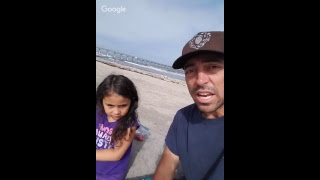
Michael Strong uses Socratic questions to explore economics with five-year-old Alana on a beach, asking about buying food, creating pictures, and trading toys. He traces where money comes from, how stores get it, and how nurses earn wages and pay for housing, building on what she already knows rather than lecturing.
Chapters
How about now? Oh, let me, let me open the video. I didn't know. Okay, I actually restarted my computer before I got on.
Oh man, perfect.
Hey Alana, how are you?
Good.
Well, how are you? I'm well, I'm well. You're on the beach today?
Yeah, yeah, we're hanging out. So Alana's going to be holding the phone because I'll probably be chasing Logan, but, uh, we're excited. She had a great talk with you last week. We talked about it afterwards and she's looking forward to learning more and to sharing some of her success.
Wonderful. So Alana, is it okay if I just start in and ask— start asking you questions?
Yeah.
You able to say?
Yeah, I can.
Got it? Yeah. So I want to know, do you ever buy anything Yes, we do. What do you buy?
Food.
Do Alana buy things or just your mom and dad buy things?
Um, sometimes all of us buy things.
I see. And where does the money come from to buy things with?
Like from stores.
Do the stores give you money? You go to the stores and they give you money?
Yeah, they do.
That's wonderful. It's very generous of them. Yeah. And where do the stores get the money?
I don't know.
Okay, that's okay. I'm trying to figure out how much you know about— have you ever heard the word economics?
Nope, I haven't.
It's a big word, but the economy is how people buy and sell things and create things.
Yeah, they do.
You create things? You create things?
I do. I do create things.
What kind of things do you create?
Um, picture— um, pictures and Draw flowers.
Okay. It's tricky. Um, do you create pictures of flowers? Um, do you give the things you create to your parents sometimes? Excuse me?
Will you say that again, Michael?
Do you give the pictures that you create to your parents?
Do you give your parents pictures? Say yes.
Yes, I do.
Do they like it when you give them presents?
Oh wait, excuse me.
Do they like them?
Yes, they like them.
Oh, do you like it when people give you presents?
Wait, what?
Excuse me.
Excuse me.
You like it when people give you presents?
Um, yes, I like that too.
Oh, I bet you do. Have you ever traded a toy with another kid?
With him?
Traded a toy with another kid? So you have a toy and you give the toy to them to play with and they give you a different toy to play with?
Um, um, we do do that sometimes, but not all the time.
Yeah, probably not, not all the time, but sometimes.
Yeah, me do.
Do you think that grown-ups trade things back and forth sometimes?
Yeah, I think so.
Okay, do you think the grown-ups create things sometimes?
Wait, excuse me?
Create things? You create pictures and things and stories. Do grown-ups create things? Do grown-ups create things?
Um, I think so. Wait, excuse me?
What do grown-ups create? What kinds of things do grown-ups create?
Um, maybe statues.
Statues?
Yeah.
How about cell phones? Do you think grown-ups created cell phones?
Um, yes, I think so. Maybe.
Maybe. Do you think deer created cell phones? Or horses? Did horses create cell phones?
Wait, excuse me?
I'm being funny. Do you think deer created cell phones or horses created cell phones?
Um, maybe humans create cell phones.
That's what I thought. That's why, that's why I was saying I was being funny. I'm guessing a lot of no's, right? Probably humans. So, you— who creates—
wait, excuse me.
You know, Michael, I'm sorry, it's not as loud as it probably needs to be, and I've been chasing Alana. What was the question?
I was asking who creates houses. We just got to who creates cell phones, and she said humans create cell phones.
Who makes houses, Alana?
Um, constructors.
Constructors.
There we go. So, it sounds like on the beach it is a little bit hard to hear. We're trying— I was working with Alana to think through basic— who creates things, how we trade things. Sometimes we give money to people to buy things. Rather than contradict her, I'm going with what she does understand. People create cell phones, people create houses, people trade things, and all of economics. I'm just— I always look at questions like this as sort of a drip, drip, drip process to get her to start thinking about how the world works. My first task is to ask how she already believes the world works, and then by means of questions, gets her to the point where she understands how the world works bit by bit by bit better, but from the inside, from her side, rather than us telling her how it works.
Does she?
Well, Alana, I was sort of talking to your dad. Did you hear all that?
Where you are?
That's okay, I, I'll talk to you again. The construction of the houses, right?
Yeah.
Yes.
Yes, please. And then the people who live in houses have to pay for them? I bet your mom and dad, for the place you live in, I bet they pay somebody for that.
That's right.
That makes sense.
Yes.
Yes, they do.
So where do they get the money to pay for the place they live?
Um, excuse me, where does the money come from?
Uh, okay, that's really nice. Sure, in some sense you're absolutely right. Absolutely right. And how does the money get into the bank?
Um, I think other people, um, sell it to the bank.
Money to the bank. Okay. Yeah. Um, is your mom a nurse? I think your mom is a nurse. Is that right?
I mean, yes, she is a nurse.
Perfect.
And they fix other people.
That's wonderful. It's wonderful. I think people are grateful when your mom helps to fix them.
Wait, excuse me?
Does it make people happy when your mom helps to fix them?
Yes, they are.
I bet sometimes they pay the hospital when your mom fixes them because they're happy to be fixed. Do you think that they pay the hospital because they're happy to be fixed?
Yes.
And then I bet the hospital pays your mom because she helps to fix them.
Um, um, yes, I think, um, they do pay her.
And then I bet she puts her money in the bank and then the bank saves it until you have to pay for your apartment. Wait, it goes all the way around? People pay the hospital, the hospital pays the mom, the mom pays, like you said, and the bank, uh, take the money out and pay for the place to live, and then that goes to pay the construction workers. Full cycle. Yes.
It's complicated.
Is it too complicated?
No.
Okay, um, well, let's switch— let's switch gears for a bit. What are you going to do the rest of the day today?
I'm gonna pick up my mom and then go to the market.
That sounds like fun. Are you gonna buy something?
Um, would excuse me.
Hold on, Michael, there's an airplane going overhead. It is totally blocking our sound. But, uh, yeah, um, we're going to the market and then we're going to birthday party. What was the question about the birthday party, Michael?
I was asking about the market, if you're going to buy something in the market. I was going to bring it back to, um, buying and selling.
Um, and we are going to buy some something, something, maybe, maybe.
Is it usually your mom or your dad or you or Logan? Which one of you decides to buy something?
Mommy and Daddy.
Oh, not Alana.
Yeah, and Logan and Ben.
When you grow up, will you buy things for yourself?
Yes, I will.
What will you buy when you're a grown-up?
Some clothing or some dresses.
Buy dresses.
What else?
Glass. Glass.
Or, or I could buy a home.
You're going to buy a home for Alana? What kind of home will you buy?
Maybe a red one and a pink one.
I think that's Marvelous. A red home and a pink home for Lana, or a purple one too. So you'll have 3 homes. Wait, excuse me, you'll have 3 homes: red, pink, and purple. Um, wait, excuse me, a red home, a pink home, and a purple home. 3 homes.
Well, red and pink and purple, um Um, it's gonna be for my home.
Oh, oh, one home with three colors.
Wait, um, excuse me?
One home with three colors.
I don't— wait, wait, excuse me?
One home with three colors: red, pink, and purple. You just find one home, right?
Yes.
I think because it's loud on the beach, we should call it a day, and I should let you go play. We should talk next week, okay?
Okay.
Can I say bye to your dad? Okay. Bye-bye, Alana. Say bye. Bye.
Yeah, Michael, sorry for that noise. I thought it would work out a little bit better. I'm surprised that the noise, or that the sound, is not louder. I don't know if it's the connection. It's just the background noise, but sorry for that. Now, it's beautiful. We have talked to Alana about money and the economy, perhaps not as much as we should. She knows, for instance, that we go to the store and we buy things, and that, you know, we discussed the principle of scarcity in terms of she wants this, she wants that, and that's not how it works, and here's why, and priority of what we purchase, or some of the things that we're working on.
Again, um, this, this, this is very, very abstract for someone her age. And so rather, I don't think of it as— I am never ever disappointed if I tell somebody, tell something to a child that age and they don't get it. Never disappointed. Instead, again, see the world from their side and see what makes sense, and then bit by bit by bit to make more sense. And she's already way far ahead, so it's just a little bit each week. She has a map of how the world works, and we just keep extending it. I almost have a visual sense of all of her neuronal synapses sort of connecting. Okay. Yeah.
And something else that we worked on was her saying, excuse me. Rather than what if she couldn't hear you. So she did a great job doing that today. Thank you, Alana, very polite.
Alana, you are so mature and amazing. You are just amazing. Thank you very much. Okay, awesome. Oh, thanks, Michael. Bye, take care.
Bye.






