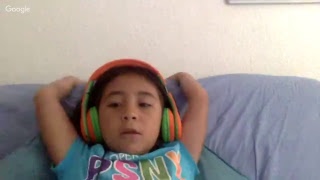
Michael Strong asks five-year-old Alana about her week, her solar-system mobile, and how she knows she's learning. She explains how she uses her fingers for addition and starts noticing patterns like 10 + 8 and 10 + 9, while Michael guides her to think about what numbers mean.
Chapters
Video. Hello, Alana.
Hello, Michael Straub.
How are you doing?
Good, how are you?
I'm well, actually. Tell me about your week. What went on this week for Alana?
Well, I'm working on my solar system mobile.
Wonderful. And what all will be included in that solar system mobile?
That all the planets are gonna like hang from the— a little string from a little— but not from the ceiling, but it's not gonna like hang on the ceiling. It's like, it's gonna like hang on something that's like, like, like it's in the box, but where it came from, but It sounds great.
In addition to your mobile, your Solar System Mobile, anything else that you did last week that's interesting?
Yeah.
What else happened last week?
I went to school again.
And you like school still?
Yes.
And what do you like best about school?
That I can learn things.
That's right. And what did you learn last week?
I told you some of the things, but I think I have a lot more.
So how can you tell if you are learning something?
Uh, because like, if they're teaching me something, I can tell how they're How I'm learning something.
So every time somebody teaches you something, then you automatically learn for sure?
Yes.
Okay, um, it sounds like learning is really easy. Is that true?
Not really easy.
Have you ever tried to learn something that was hard to learn?
Kind of, but I don't know. I don't know.
What was the hardest thing you think you ever learned? What was one thing that was hard to learn?
What dinosaurs eat. Those are really hard.
Why is it hard to learn what dinosaurs eat?
Because some— like, every time I like think about it, Sometimes I forget about it.
I see. Did somebody teach you what dinosaurs eat?
Yes, but I think I remember it now.
What are you remembering now?
That some dinosaurs eat meat and carnivores— well, carnivores eat meat and like the— some dinosaurs eat leaves.
So that doesn't sound so hard to remember.
Yeah, I just forget it sometimes.
How about math? What are you learning in math these days?
Pretty easy ones.
Like what?
Like 5 5 10.
How about what is 10 10?
Uh, 15.
Let's see.
That's kind of hard and tricky.
Tell me why it's hard and tricky.
Because it's hard to remember, and— but I wonder how I don't remember if I do it a lot of times.
Would you say that if you practice lots of times, then you remember it?
Yes. That would be great.
So can you figure out a math problem that you're not— you don't yet know? Could you figure out a new answer to a new math problem? I'm going to give you an example. How about what's— what is 10 plus 5?
15.
But I thought you told me a few minutes ago that 10 plus 10 equals 15.
Really?
I think that's what you said. Well, do you think that 10 10 15, or do you think that 10 5 15?
10 5 is 15.
You sounds like you're pretty sure.
Yep.
What makes you so sure that 10 5 15?
Because I used my fingers and I think I'm right.
Okay, in which case, um, is it possible to figure out what 10 10 equals?
It is hard.
Why is it hard?
Because it's a very hard math equation because, because it's so big that I can't even figure it out.
Okay, how about— so you figured out 10 plus 5. What would 10 plus 6 be?
16.
How did you figure that one out?
Because I used my fingers.
What would 10 plus 7 be?
17.
And you used your fingers again?
Yeah.
How about 10 plus 8?
18.
How did you figure that one out so fast?
This is like, because 17 and 18 makes like 18 because we added 1 more.
So you didn't have to count your fingers on that one?
Yeah, I didn't.
How about 10 plus 9?
19.
Did you have to count your fingers?
No.
So we just did 10 plus 9, right? Yes. And you said it's 19, right?
Yes.
So what do you think 10 plus 10 is?
15, I think.
15? You said that earlier that 10 plus 5 equals 15.
Oh, I forgot. I think 20.
20. It sounds like you counted on your fingers for that one.
Yep, I had to.
So when I asked 10 plus 5, you counted your fingers. 10 plus 6, you counted your fingers. 10 plus 7, you counted your fingers. But then with 10 plus 8, you figured that's 18 like that. Just by adding 1, and then 10 plus 9 you figured out was 19 just by adding 1. Does that sound right?
Yes.
So do you think you could have figured out that 10 plus 10 equals 20 by adding 1 to 19?
I would.
You would? Yeah. How about then if we said, what is 20 plus 1?
20 plus 1?
Mm-hmm.
I don't know.
Do you think it might be 30?
It might be, or 13.
You think it's 13?
Yes.
So what happens when you add 1 to a number? Usually, like 1 1, that's 2. How about 1 2?
1 2 is 3.
1 3?
1 3, 4.
1 15?
1. Oh no. I don't know, or 13.
Is 13 bigger than 15 or smaller than 15?
I think bigger.
You think 13 is bigger than 15? So when I think about, um, the teens, I think of 13 is 3 plus 10. So there's 10 and 3 more is 13. Does that sound right?
Yes.
And when I think of 15, I think of it as 5 plus 10. You can sort of hear the 5 in 15 and the 3 in 13. Does that sound right?
Yes.
Is 5 bigger than 3 or is 5 smaller than 3?
5 is bigger.
If 5 is bigger than 3, Do you think 15 is bigger than 13 or 15 is smaller than 13?
15 is bigger than 13.
Didn't you say a few minutes ago 13 was bigger?
Yes.
Which do you think is right?
Um, the bigger.
Which one is bigger?
13?
You think 13 is bigger? Yes. And does that mean 3 is bigger than 5?
No.
So is— what's 10 plus 3?
13. I know that.
Okay, what's 10 plus 5?
15.
So now which number do you think is bigger, 15 or 13?
15.
What makes you think that?
Because, because 3, because 13 is like kind of like 3 and 15 is kind of like 5, so 5 is bigger than 13. Actually, actually 15.
So now you're convinced that 15 is bigger than 13, is that right?
Yes.
Okay, um, so I'm— it sounds like— do you play with numbers like this very often, or is this unusual for you to play with numbers like this?
Well, I don't usually play things often, but I do know them.
Do you see why I call this playing with numbers?
No.
Well, you can do— these are sort of thought experiments where you use your head and you think, what's the relationship between 3 and 5 and 13 and 15? And you're doing it mostly in your head, sometimes on your fingers, but mostly in your head. Does that sound right?
Yes.
Do you think that you can learn to do math totally in your head without using your fingers? Uh, yes. And do you like doing math?
Yes.
In your head or only with your fingers?
With my head.
Why do you like doing math with your head?
Because it helps me do it faster.
That's a good reason, that's a good reason. So I would say that it is a good thing to learn to play with numbers in your head. And when you're, when you're doing math in school, is sometimes the math in school too easy for you? So easy that you're bored?
Yep, too easy.
In which case, If you're ever in school and it's too easy, can you start thinking about these harder problems like this?
Yes.
Because does it seem strange to think about numbers or do you like thinking about numbers?
I like thinking about numbers.
Okay, I would say that it's really, really useful to think about numbers like this and the more you learn to think about numbers like this the smarter you'll be at math for your whole life. Does that seem strange?
Yes.
Do you like the idea of being good at math your whole life?
Yes.
Why?
Because so that I know all my numbers.
Okay, okay. Um, your dad said that you won an award of some kind at school.
Yes.
Did you win an award?
What's an award?
Um, jiu-jitsu. You were student of the month at jiu-jitsu.
Oh yeah, yeah.
Was that fun?
Yes, it was.
What did you do to deserve that?
I was listening and I was the, like, I was the first ones.
Excellent, good for you. And he said you're reading Charlotte's Web?
Yep.
How is that going?
Good.
Do you like it?
Yes.
What's going on right now in the book?
Right now a little girl was like loving a pig, but she had to sell it.
That sounds sad. Was that sad? Okay, it's a really good book.
The little pig ran away from So the little pig ran away from the other barn.
Well, what's going to happen? Do you know what's going to happen?
Yeah. No.
Okay, are you excited to find out what's going to happen?
Yes.
Okay, it's a really, really good book. I'm so glad you're reading it.
It is.
Um, anything else you want to talk about before we sign off for this week?
I don't know.
Okay.
What do you want?
I think we like to keep these relatively short, so I'm going to thank you for thinking about numbers with me. And I will wish you a good week. How's that sound?