Socratic educator Michael Strong with four year old Alana
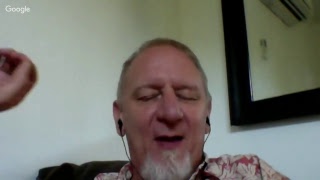
Educator Michael Strong talks with four-year-old Alana about freezing, boiling, and steam, then helps her understand the difference between watching something happen and testing it on purpose. She learns better when experiments are recorded for YouTube.
Chapters
time, hasn't it?
Yes, it is.
So let's catch up first. Tell me what you've been up to the last few weeks.
I've been driving to Vegas.
Wow, have you been to Vegas before?
Yes.
And do you like it?
Yes, I do.
What do you like best about Vegas?
That I can go swim in pools.
Swimming in swimming pools is a lot of fun for sure.
It is.
Your dad said you started school too.
I did.
Tell me about that.
Okay, so first, first we drive up and then maybe we get to play on the playground a little bit.
Uh-huh. And what else happens at school?
Then our teacher calls us and then we go to our meeting.
And what do you do in your meeting? What?
Excuse me?
What do you do in your meeting?
Like, we talk about things and—
Okay. Is it fun? Do you like the kids? Do you like the teacher?
Yes, I really do.
Oh, wonderful. I'm so glad for you. So happy for you. And your dad said you are still learning Spanish on Duolingo.
Yes, I am.
Y tú puedes hablar español perfecto.
Sí.
Sí. Mejor que yo, creo que sí. And then you're doing, is it karate or jiu-jitsu?
Jiu-jitsu.
And how is that going?
It is fun.
Okay, good. I want to go way back to a conversation we had a long time ago. We'll see if you remember. You remember the experiments we were doing with water and ice?
Yes.
So what happens when you put water in the freezer?
It turns into ice.
And what happens when you boil water?
It turns into heat.
The water turns into heat.
I mean steam.
Okay, and we were talking about doing an experiment where you just let the water sit on the counter for a while and see what happens? Did you guys do that one?
No.
Okay, so what do you think, what do you think steam is?
Water.
And how is it the water could be ice, or water could be water, or water could be steam? Does that seem weird?
Yeah.
Do you think that, let's say, could oil Can oil be frozen into ice cubes? Can you make oil ice cubes out of oil?
I don't think so.
Do you think that oil could boil?
Oil can boil?
Yeah, do you think it could boil? Could you make steam out of oil?
Mm-mm, nope.
Okay. How about metal? Do you think that you could melt metal into a liquid?
No, it's too strong.
Okay. Do you know what mercury is? Have you ever seen a thermometer with mercury in it?
No.
Okay. It's actually a metal that is liquid at room temperature. Could you imagine a metal that is liquid? No. So have your dad show you. So let's— I want to go back to the notion of an experiment.
What is—
remind me what is an experiment? Bless you.
Thanks.
Wait, excuse me, remind me what an experiment is. When we say we're going to do an experiment, what do we do? What are we trying to figure out, or what are we trying to do when we do an experiment?
We try to figure out things, and we try to like discover things, what we want to do and try out.
So can we do an experiment just by staring at something? Could you stare at an ice cube and do an experiment?
I don't know.
Okay, um, can you do an experiment just by talking about things? Are we doing an experiment right now?
Not right now.
Why not? How do you know we're not doing an experiment right now?
Because we're not even doing things, we're just doing a little talk.
Okay, so you have to do things to do an experiment. Is that right?
Yes.
Like, like what?
Like putting things in things and making things into something that you want to try out.
Or so if you go into a swimming pool today, is that an experiment?
No.
Why not? You're putting things in things. You're putting a lot in the swimming pool.
Yeah, but We still are not doing an experiment if we do that.
And tell me why. Why is that not an experiment?
Because I'm just in the water.
Okay.
Not doing things.
So what if you bring a toy into the pool? Is that doing an experiment?
Excuse me?
If you bring a toy into the pool, is that doing an experiment?
I think so.
Okay, why? Why would that be an experiment?
Because like you can see how it floats and you can see how much it stays up or goes down.
So it sounds like— do you know the word to observe? Like, do you observe things? So observing is another word for looking. And so it sounds like if you're looking at what the toy does, whether it floats or goes down or whatever, if you're looking at it, then somehow that makes it into an experiment, or that's part of what makes it into an experiment? I'm trying to figure out how would I know if Alana is doing an experiment or not? If I just see you playing in the pool, are you doing an experiment, or do you have to be doing something special with your toy? For you to be doing an experiment?
We need to do something special and something cool instead of just swimming in the pool.
Okay, so something special and something cool. That makes sense. And do you ever do experiments just on your own, just for fun?
Well, I did do experiments, but with my parents and for fun.
Okay, um, and what made it fun?
Wait, excuse me?
What made the experiment fun?
That, that those were my first experience— experiments, and, and sometimes I pretend like I'm On YouTube.
You pretend like you're what?
On YouTube.
Oh really? So that's what made it fun is, did you see experiments on YouTube or just because you know we're going to put this on YouTube, that's what makes it fun?
When I put it on YouTube, that's what makes it fun.
Okay, okay. So if you just do an experiment on your own and nobody watches it, then it's not fun?
That's fine, kind of funny.
Well, but is it true? It may be funny, but is it true? Is it only fun if it goes on YouTube? Excuse me? Is it only fun if it goes on YouTube?
It would be fun.
Okay, so why do you think— do you know that sometimes adults do experiments and those experiments do not go on YouTube? Why would an adult ever do an experiment if it doesn't go on YouTube?
Because maybe their videos are already on YouTube.
Okay. Okay. Do you think that it's possible that experiments are useful in some other way or fun in some other way or interesting in some other way? Okay, that's okay. I just wanted to— experiments are an interesting thing, and we'll talk more about experiments in the future. But I think it's great to catch up with you. It's great that you are doing so well in school and jiu-jitsu. Y en español también. And I know your dad is there. Anything else, Ryan, that we should touch base on?
Um, I'm really proud of her. She's doing really well. She's working really hard. She's learning. Um, she does see value in experiments that are not on YouTube, I'm sure. And, uh, we do watch a lot of things on YouTube to learn. There's a channel called It's Okay to Be Smart. I think it's like a PR or something. It's very, very well done. And we watch that a lot. I feel like she learns a ton from there.
Yep.
There's a new channel called Physics Girls. Physical?
Physics Girls.
Physics Girls. And we've been watching that and learning a lot. So I think Alana—
The main thing watching is just the commercials.
So Alana does strongly associate experiments with YouTube as a result. But she's doing great, Michael. She's a nice person. She's friendly to kids in her class. Other parents have been asking to have Alana hang out with their children on weekends because they really like her. And she's learning a lot in, um, her martial arts class. Sometimes some of the boys are not very nice. Alana's faster than them, or they're having a tough day and they're not real nice to her. So she's learning to kind of deal with that and be tough while also being nice. She gets to observe older children. One of the great things about this class is that the age group is like 4 4 to 8. So this— so she just turned 5 and there's 8-year-olds. So sometimes there's 9-year-olds that join the class and they, they demonstrate leadership. So Alana's learning what leadership looks like, um, and, uh, she's fit and strong and she's a lot of confidence and, uh, we're really proud of her.
Excelente, excelente! And I didn't know you were 5, so when was the birthday?
On 17th in August.
Yeah, she just turned 5.
Oh, congratulations!
As scary as that is. Goodness.
Yes. Well, I just wanted to kind of wrap up, catch up today, and then wrap up on the experiment theme. And we'll probably go in a different direction next week. But it's maravilloso. Creo que es una discusión maravillosa con tú. OK? OK. Adiós. Hasta luego.
Adiós y hasta luego.
OK. Bye-bye, you guys. Bye.






