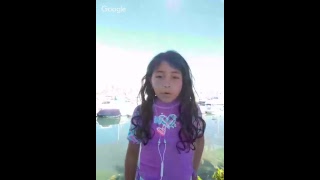
Michael Strong asks six-year-old Alana why some businesses succeed and fail. She identifies location, demand, and competition as key factors, using examples like umbrella sales in dry San Diego. They discuss how advertising works and Alana shares a story about a kid who mowed lawns for money.
Chapters
I'm well. Where are you?
I'm at my mom's stayaway vacation for her birthday.
Whoa, it looks like a beautiful place.
It is.
So are you gonna go sailing?
Maybe.
You like to go sailing?
Excuse me, what did you say?
You like to go sailing?
Yes, I do. I've just never gone in a long time.
Okay, so I was going to ask you about business. Do you know what a business is?
It's something that you make to make money.
Yeah, how does, how does a business make money?
By selling things.
So could you, could you make money right now by selling things?
Yes, I could. Or I could do things for other people.
Even with dyspraxia? What kind of stuff could you do for other people? When you say you could do stuff for other people, do you mean that you would work for them or that you would, um, something else?
I mean like mowing the lawn for them or washing their cars.
Oh, I see. That's right. That's right. You could, you could do things like that. Okay. So, um, do you think all businesses— Nicki, are all businesses successful?
Not all of them, but some of them are successful.
Why do you think some are successful and some are not successful?
Um, well, maybe it's because They aren't getting enough. The people that aren't successful are not— are in a place that nobody really lives or they can't really get to.
So you're thinking that maybe if there's a grocery store and nobody lives there, then probably that business will not succeed because nobody comes to buy groceries?
Maybe.
Okay. So are there other reasons? Suppose a store is where there are lots of people. Why might it not be successful even though there are lots of people around?
Maybe they're selling things that people don't need by now because they already have them or something.
So I'm trying to think of an example. It might be what you're talking about. Whenever you say something, I try to think of examples so I understand. Does that make sense?
Yes.
So it sounds like suppose you're at a place where there are— what's a good example? Suppose there's a place where it's not raining and somebody's trying to sell umbrellas. Maybe people are not going to buy very many umbrellas if it never rains there.
Yeah, like in San Diego, it only rains in the spring. Spring and winter.
So maybe San Diego is not a good place for lots of umbrella stores outside. Okay. In order for a business to succeed, it needs to have people around and it needs to sell something they need, right?
Yeah.
Can you think of anything else that would make a business more successful or less successful?
Um, maybe if Like they have something, like they already have it, and another people's trying, and other people's trying to sell it again.
So are you thinking almost if there's too much competition, like if there are lots of people trying to sell the same thing, then it's hard?
Yeah, maybe that could be.
Okay, okay. Um, do you, have you ever been to a business and you thought this isn't a very good business?
No, actually.
So all the stores you go to are pretty good stores? Mm-hmm.
Okay.
Do you think that if a store was not doing a good job, they might go out of business?
Yes, maybe if they're not doing like— maybe people are not coming to their business. Yeah.
In what ways might a store not do a good job? How could a store not be a very good store?
Maybe if, you know, that, um, they have something that we don't need or something.
Again, like, they're just the wrong products.
What?
The wrong products.
Excuse me, I couldn't really hear you.
Products. So a product is what they sell. So it sounds like you're saying if they don't sell things people need, they have the wrong products?
Well, um, they could make another thing, or they could just stick with that and maybe just, um, start, um, saying, hey, um, do you want to come check out our store or something to other people?
Ah, though, do you want to go check it out? You ever— have you ever heard of advertising or marketing?
No, I haven't.
So you see billboards. Have you ever seen a billboard that advertises something?
I don't think I have.
Okay. If you're drawing— if you're driving, I know you don't drive, but when your parents drive, they could point out a billboard. That's one way that stores advertise. On TV shows, have you ever seen a commercial for a product?
Yes, I have.
Why do you think they have those commercials on TV?
For like, do you mean like what happened if like nobody watched them or something?
Well, yeah, I mean, why do you think they want you to watch them? Why do they— why do— why do people that make things want you to watch commercials?
So commercials to me, um, they make— I mean, like, they tell people about their product. They tell more about them than just the thing. It tells them how to help. It tells them how the product helps them.
Do you think sometimes the commercials make them want to buy the product?
Well, sometimes it just gives you an idea to buy it, or sometimes it just shows you.
Got it. Got it. So when you said, you know, sometimes if a store is not doing enough business, maybe they should go and tell people about what they're doing. Does it make sense that a TV commercial is a way that stores or manufacturers go out and tell people about their products?
Do you mean like which one is better?
Sometimes, or even just, "Hello, we are Nike and we're selling shoes," or, "We're Apple and we're selling computers. Look at the cool Apple computer, look at the cool Apple iPhone." Does that make sense that that's what commercials are doing, is they're trying to get you interested in aware of their products?
Yes, I think they do that.
Okay. Had you ever thought about business before, or you and your mom and dad talk about business at all?
I've heard them talk. I've heard my dad and Friendly Business talk about it, so I've heard them, and I've talked about this a little bit, but not much. Okay.
And then when you talk about going to mow lawns for people, Do you know anybody who goes and mows lawns for people to make money?
No, I don't know any— anybody who does that, but, um, I have this book and I think it's called Mark's Mission. It's one of the Warrior Kid books, and Mark, if you don't know him, does that for other people so that he can make money.
Oh, see, it's funny because I did that when I was a kid. I went and mowed lawns for people to make money. And I think people don't do it as much as they used to, so I'm really, really glad you know about that. I think it's great. I feel as if I should let you go wish your mother a happy birthday and spend a wonderful day with her. Any other news on your side?
Excuse me? What did you say?
Any other news on your side?
Excuse me, I couldn't hear you.
I was just asking if you have any other news.
Um, yeah, and then I'm gonna go play in the pool over there.
Okay, have a wonderful day, Alana. Take care. Bye-bye. Bye.