Socratic educator Michael Strong with six year old Alana
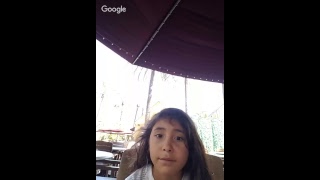
Educator Michael Strong asks six-year-old Alana questions at the San Diego Zoo, guiding her to discover that mammals have fur and are warm-blooded, while reptiles and fish are cold-blooded. Through conversation, she figures out that apes are more like humans than snakes, and that animals can be sorted into families.
Chapters
How are you?
Good, how are you?
I'm well. I understand you're at the zoo today.
I am.
How is that?
It's pretty fun.
Cool. I think the San Diego Zoo is a really good one. Would you say it's a pretty good zoo?
Yeah, it's a really good zoo.
That's marvelous. What animals have you seen so far?
I saw a bear, saw a snow leopard. Um, I also saw a porcupine and a giant anteater. Yeah, and then macaws went in the opening.
That's pretty amazing. What is your favorite animal that I've seen today? Yeah, or in general. Let's do both. Your favorite animal you've seen today and your favorite animal in general.
My favorite animal in general is a tiger, but my favorite animal that I saw today was the bear.
And tell me why the tiger is your favorite animal.
I just love its stripes.
Oh, that's, that's cool. Do you like cats in general?
Yeah.
And tell me why you like, you like the bear.
I think it's pretty calm today, so It was pretty fun watching the bear curl up on its bed.
I see. So do you think that animals are— actually, let's look at bears and tigers versus people. Do you think that tigers are more like people or bears are more like people?
Maybe both. I don't know which one is like people, but probably both.
Do you think all animals are just as similar to people as all other animals?
Not all animals.
So what's, what's an animal? Well, first of all, do you think that mosquitoes are very much like people?
No, I don't think they are.
Do you think that bears are more like people than mosquitoes are like people?
Yeah, maybe, because we, um, have beds. Mosquitoes probably have something that they lay on, but bears Bears have beds like that they can curl on to.
So having beds makes bears probably more like us than mosquitoes are. Is that what you're arguing?
Yeah, but there's probably more to it.
How about fish? Do you think that fish are very much like people?
Maybe they are. In some reasons.
Okay, in what ways are fish like people?
Well, people sometimes swim. Fish all the time swim. That's a little different, but we both swim.
Yeah. Um, and then how about, uh, things like dolphins? Do you know much about dolphins?
Well, sometimes, sometimes humans can be playful. Dolphins are pretty playful.
Mm-hmm. Do you know what a mammal is?
Yes, I've seen a couple.
What's a mammal?
It's something that is still an animal and that has hair.
Okay, mammals usually have hair. Actually, yeah, I think you're right. I think mammals maybe always have hair. Do you know the difference between a warm-blooded animal and a cold-blooded animal?
Maybe I do, but not much.
Okay, so usually, um, I'll give you the simple version. So for instance, snakes and lizards and fish and so forth, when it's warm outside, then they feel very active. But when it's cold outside, they almost stop moving because they can't keep their blood warm on their own. They need the sunshine. That's why snakes and lizards like sun. They need the sunshine to get their blood warm, whereas warm-blooded animals like bears or people or tigers or porpoises, we keep our blood warm all the time even if it's very cold. And so mammals are warm-blooded animals, and a dolphin is a mammal, for instance. So a dolphin keeps its blood warm all the time, but a fish is a cold-blooded animal. And, um, you Lizards and turtles and snakes are cold-blooded animals. And that just means they don't get— their blood isn't cold all the time, but their blood only gets warm when, like, the sunshine or the temperature helps them get warm. Does that make sense?
Yeah.
So you say mammals have fur. That sounds true to me. Do you think that— I'm going back to which animals are more similar to us and which animals are less similar to us. You mentioned, you know, beds in the case of bears. You mentioned swimming in the case of fish. So it sounds like there are lots of different ways that animals could be similar to us and lots of different ways they could be different from us, right?
Yeah, a lot of reasons.
So how about something like a chimpanzee? Do you think a chimpanzee is very similar to us?
In some reasons, yes.
What are the ways in which chimpanzees are similar to us?
One I think I know is that we like— humans do like to climb. Chimpanzees and other types of monkeys like to climb too, climb a lot.
Um, do you know the difference between a monkey and an ape?
And an ape? I don't really know any differences, but yeah.
Okay, so generally the apes are gorillas and chimpanzees. And orangutans and baboons and also people. Do you think it sounds funny to call people, human beings, the same kind of thing as gorillas and chimpanzees?
Yeah, I think so.
So why do you think, but monkeys are different. And so why do you think that we, we think of— what, how, in what way do you think chimpanzees and gorillas— you know about orangutans too, right?
Yeah, I know.
What ways do you think they're more similar to us than, say, fish are?
Well, one, they're both mammals.
Okay.
True, we're both warm-blooded.
Okay, that's true, that's totally true. And by the way, those are all things. How about kind of arms and legs? Do you think it matters that we have arms and legs? You think our arms and legs are more like chimpanzee arms and legs than the fins of fishes?
Yeah, ours and monkeys, different types of monkeys' hands and legs are pretty, and feet are pretty similar. And there's some differences too.
What are the differences?
Well, for a type of monkey, I've seen maybe gorillas, both are Their feet are kind of shaped like hands.
Uh-huh. Um, and is it fair to say that the fins of fish are very different?
Yeah, very different.
I see. Um, and is it fair to say that snakes are very different from us too?
Yep, pretty different.
Well, this— I, I was just actually reading and It says that I was wrong about baboons. It's actually baboons are still considered monkeys, but gibbons are considered apes. And so gibbons— you know what a gibbon is?
No, I don't.
So maybe you'll see one in the zoo today. But biologists are people that classify animals. We're classifying an animal. We're classifying animals into more similar to us and less similar. Does that make sense?
Yes, it does.
Um, so if we, if we included, you know, the apes, baboons— not baboons, I'm sorry, gibbons— and orangutans and chimpanzees and gorillas as similar to us, um, and fish and snakes as not very similar to us, can you think of other animals that are not very similar to us?
Maybe, maybe certain types of lizards.
Okay, so certain types of lizards would not be very similar to us. Do you think there's some types of lizards that are similar to us?
Yes, maybe some species are.
What would make a lizard species similar to us?
Well, for one, they both have arms and legs, but The two differences that I know is that they have scales and they're cold-blooded.
So that would make them different from us, right?
Yeah.
Okay, so do you— how do you think biologists figured all of this stuff out? Maybe by taking a look at these animals, just like, just like looking at them like you're looking in the zoo today.
Yeah, maybe studying them.
Do you like to study animals?
Yes, I actually do.
Okay, do you think you maybe want to be a biologist someday?
Yeah, of course.
Okay, well, since you're at the zoo, I'm going to let you go and learn all— as much— also have fun with the animals, but also learn about the animals and see what you can learn about how— which ones are more like us and which ones are more different, which ones are more similar to each other and which ones are more different. Sometimes biologists talk about animal families, and so reptiles— you know what a reptile is?
Yes, I know.
So what are some examples of reptiles?
Lizards, snakes, maybe fish?
So definitely lizards and snakes. Also turtles are actually reptiles. But also crocodiles and alligators. But fish are a little bit different. So one of the things you might learn about and ask your dad about, what are the different families of animals you're looking at? And start to figure out which families of animals go together. So which part, which are part of the reptile family, which are part of the fish family, which are part of the mammals, and within mammals, who are the apes, who are the rodents? Do you know what a rodent is?
Yes.
What, can you give me an example of a rodent?
Like rats, mice.
Absolutely, those are great examples of rodents. One of the cool things about a zoo is I bet they have rodents. How about gerbils? Do you know what a gerbil is?
Actually, no.
Okay, some people have pet gerbils. They have pet rats and mice too, but gerbils are kind of rodent. And what I was going to say is one of the cool things about going to the zoo is you see all sorts of unusual animals you don't get to see every day. And so you and your dad can sort of figure out which animals are in which categories, which belong to which families. Does that sound like fun?
Yes, it's going to be really fun.
It is, and it'll also be fun to see the animals play and eat and rest and groom themselves and all of that, right?
Yeah, it's going to be really fun to see them.
Oh, I'm going to let you go. Have a wonderful day, Alana, okay? Okay, bye-bye.






