Socratic educator Michael Strong with six year old Alana
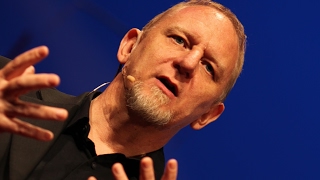
Michael Strong asks six-year-old Alana questions about her school projects, reading upside-down, and the difference between "puppy" and "little dog." They explore mirror reflections, the phrase "Fortune favors the badass," and how confidence shapes her jiu-jitsu competitions.
Chapters
I'm well. What have you been up to?
I've mostly been up to, you know, school and math.
School and math?
Yeah, but only on Tuesdays, Wednesdays, and Thursdays. The rest, except to with my family and stuff.
Excellent, excellent. Um, how— what have you been learning in school?
Well, we've mostly been learning about like how authors do it when they read books because we're making books out of just paper, not really like the real cover. And then when we read a book or when we write a book, we do all these different things that authors do and readers do.
Excellent. Are you writing a book yourself?
Yeah, but our books, they're just like paper and only 3 pages.
What is your book about?
Well, I made literally tons of books right now.
Oh, okay. Um, are they usually stories?
Yeah, maybe just— yeah, just little stories that are just 3 pages.
What's your favorite story that you've written so far?
I think my last one that I made.
What was it? Can you tell me about it?
Sure. So we were reading this book. It's called Wayside Stories from Sideways School. Then I wrote a book about it. I wrote it. I wrote like what chapter we were on. I think we're on chapter 17 maybe.
Mm-hmm.
And then the person we were learning about is John, and he could only read upside down when his book is upside down.
Wow, that's funny.
So when he stands on his head, he can learn the normal way. And so then we talked about it and I wrote in the book that some of us said his mind flipped.
That's funny. That's very funny. Do you think you could learn to read upside down?
No.
Why not?
Well, because mostly you don't know what the letters are. You mostly know that they're upside down and you can't really read the words.
Could you read a word backwards?
Um, maybe?
So you know the word big, B-I-G, right?
Yep.
Suppose you saw the word G-I-B.
Gib?
Yep. Do you— could you figure out what that word would be backwards?
Maybe the word gib? Big gib?
Big gib? How about mirrors? Have you ever seen writing in a mirror?
In and out.
That would be an interesting experiment. With a mirror, do you notice that if you put your hand up— actually, this is like a mirror, so this is my right hand. Are you seeing this hand on your right or your left?
My left.
Isn't that weird?
Yeah.
And I think mirrors do that too. If you try it in a mirror sometime, If you look at yourself in the mirror and you put your right hand up, it will look like it's on the other side. Is that right? Yeah. Is that right?
Yeah. If you put people on different sides, forward and backwards, or just front and back, and you put your hand up, it's like your left or right. If you put up your right hand and they put up their Um, left hand. They're left. They're putting up their left hand because you put up your right hand.
You mean if two people are looking at each other?
Yeah.
Okay, so let's try it. So I'm putting up— because, yeah, I'm putting up my right hand. You put up your hand on the same side. Are you— is your hand up? Yeah. Are you putting up your right hand or your left hand?
My left hand.
Okay, why do you think that is? Why are we flipped around?
It's because we're both on different sides, I think. And then if we're facing the same side, it's like the same hand. But if we're facing each other, it's different sides. But if you put the— if you put your right hand up And then the other person puts the same side up, it's actually their left hand and it's your right hand.
That sounds exactly right to me. And so what I'm thinking of is, you know, when you look in a mirror and you put your hand up, if you were the person on the other side of the mirror, then you would— it would be your left hand.
Yeah.
So in some ways it's like, you know, we are We are crossways. So that's why when you do writing— let's see, I'm going to see if I can put— there's a little card. Here's a little card. Can you see any of the words here?
Yeah, I can see some of the words.
Do you think they're forward or backwards?
Forward.
So what does this word at the top say? This word right here?
Fortune.
And it is coming across forward on your side?
Not really, I don't think so.
Are you reading it backwards?
No, I'm reading it forwards from the tip to the wide base.
Okay. What is this word?
Favor. Mm-hmm.
What is this word?
The badass.
Mm-hmm. So actually, this isn't— can you read the very top word? Can you read this word?
Technically.
Oh wow, you read big words. That's a big word. Um, then what's the rest of it say at the top?
Uh, bravery. It's only the beginning.
What do you think that means? Technically, bravery is only the beginning.
Like, if you're brave, that's only really the beginning of what you're doing. Like, if you're being, like, brave, and that's only the beginning.
What do you think the rest of the flags mean? Fortune favors the badass.
Maybe they're just like flat. They're words that help you get maybe pumped up or something. I don't know.
Okay. What does fortune mean? Do you know what they mean by fortune here?
I actually don't know why they wrote it there.
Okay. Fortune can mean kind of good luck. It can also mean lots of money, but it can be good luck. So Good luck favors, or a good outcome or lucky outcome favors. And do you know what a badass is?
Like someone, if you're like really good at something, they call you the badass.
Yeah, or really tough, really good at it, or really tough. So if this is kind of you know, really good luck or good outcomes favors the badass. What does that mean?
Excuse me?
So I'm trying to figure out what the flags mean. You had thought that maybe fortune favors the badass, those are just kind of words to inspire you. And I'm thinking that in some ways, if you look at this card, technically bravery is only the beginning at the top "Fortune favors the badass," that the words on the flags are a follow-up to the first part. Technically, "Bravery is only the beginning," and then "Fortune favors the badass." And so I'm trying to figure out what you think "fortune favors the badass" might mean.
So maybe it's like, maybe you're being like a good person, You're really good at something.
Okay, you're really good at something. Again, I think the— actually, you want a really big word? Are you okay with learning really big words?
Yeah.
What is— have you ever heard the word connotation?
No.
Connotation means the sort of emotional impact of a word. You know, words can mean something kind of very concrete, You know, like a puppy is a little dog, right?
Yeah.
But I think puppy makes me feel all warm and fuzzy in a way that little dog does not. So little dog and puppy mean the same thing, but for me at least, puppy feels much more emotionally warm. Does that make sense?
Yeah, kind of.
Yeah, you know what I mean? How I think when I think of puppies, I think really cute, really fun, really playful. Wouldn't you?
Yeah, I would think that.
Well, when I— if I see, you know, little dog or young dog or baby dog, then I just, you know, I think a dog and then I think smaller. And so even though a puppy is a little dog, a puppy is a young dog, a puppy is a baby dog, that the word puppy makes makes me think of, you know, those cute little puppies running around. You know what I mean?
Yes.
So that's the connotation or emotional part of a word. And so a badass, the connotation is tough, you know, really, really, you know, in-your-face tough. I bet sometimes at your karate tournaments you've, you probably have had, maybe you yourself were sometimes really tough. Are you really tough in your in your karate tournaments?
Well, they're mostly jiu-jitsu tournaments.
My bad, right, but yes, in your jiu-jitsu tournaments, would you say you're pretty tough?
Yeah, I think so.
Okay, so yeah, I suspect sometimes you're kind of a badass, and so that means you're brave. So technically, bravery is only the beginning. You're brave plus you're really tough and you have a lot of attitude. Is that— you know what it means to have attitude?
Like you have like a serious attitude?
Yeah, and beyond serious attitude is one kind, but also maybe the attitude that you will conquer them. Do you ever have that attitude when you go into a jiu-jitsu match?
Kind of. I mostly feel like it.
Alright, do you think your attitude going into a match has an effect on how you do?
Maybe, I don't know.
Do you prepare your mind psychologically before you go into a match?
Yep, sometimes I warm up or something, sometimes I don't. Sometimes I— sometimes on Saturdays if my competition is on another day, I get On Saturdays at my gym, there's like a competition class that you like get ready. So that's really helping me.
Okay. Well, are you still enjoying all the jiu-jitsu competitions?
Yes, I am.
Okay.
I had one yesterday, actually.
How did you do?
Good.
Good, good, good. Well, what are you going to do today? Are you guys going to go to the beach or do anything fun?
I actually don't know what the day is going to be like.
Okay, well, it's wonderful to talk with you again, and I will look at the— I will look at this, and I will look forward to seeing you again one of these days. Okay?
Okay.
Have a lot of fun, Alana. Bye-bye.
Bye-bye.






