Starting the 24-25 School Year at The Socratic Experience
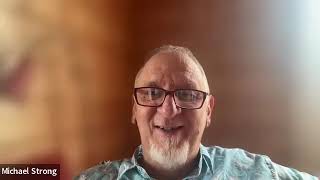
Will, a 12-year-old at The Socratic Experience, finished second in a kids' championship and just completed orientation week. He's taking creative writing and Harvard's CS50, reading The Iliad, Jane Eyre, and four other books, and wants to write novels and poetry on a Substack.
Chapters
Will, good to see you as always. I understand that, well, we had talked after you won that one championship. Yesterday I learned that you got, or Friday I learned you got second place in the other. You want to say a little bit about that?
Sure. Well, the tournament was overall a really, really cool experience. The organizers were trying to make it really special for the kids because this is the first one. Or the first kid championships. It was basically the same format as the adults, except the walkouts were a little different, but it was a really amazing and a really fun experience. I lost the final match by points. You know, now that it's over, I'm not really sad about it. I just need to start working more, you know? But all my competitors were awesome, and you know, since we're still kids, we don't really have any beef with each other. So we're all friends.
Ideally, adults would be that way too.
Ideally, but they might not all be.
Yeah, there we go. Although I'm not sure all kids are that way either, but it's nice that you know what I am.
I try to be.
Good for you. Just before, I want to check in on the beginning of the school year because you're at orientation week last week and first week this week. But first, I realize that some people watching these are confused between the deep Socratic, like when we study a text, when we were working through Kant or Buber or those, and just check-ins. And so I'm explaining to the audience, so to speak, that I think it's important to sort of see your whole world, understand your whole world sometimes, and that's separate from Socratic discussions where we analyze texts. I assume this makes sense to you.
Yes.
Okay, I just had somebody who was watching these comments that, wait, they're all over the place. Like, well, we want to, we want to kind of, you know, be on the same page and sometimes indulge in Socratic. So first, I'd love to hear about last week, how orientation week was for you.
Okay, well, I had, I've been to last year's orientation week, and I really liked both. I really liked all the presentations about online learning and how to be safe and cooperative and all things like that made by the guides. I paid attention and it was very interesting. I really liked how we went into the breakout rooms and had those small Socratic discussions with some other kids that you may or may not have known. I got exposed to a couple different teachers that I've never really been with, so I thought that was interesting and really fun. And then listening to the more senior students and the graduates give speeches just about the new year and how they feel about TSE was really, really fun to listen to too, because I know some of them a little bit and some of them I don't know. So it was interesting to hear a bunch of different perspectives. Choosing electives was really fun because there were a lot of different options. I chose the ones that I really wanted to go into and that would fit my schedule. Oh, and then picture day was fun. That little experience was awesome. I got to connect more then with a couple other of the students that I didn't really have a strong relationship with, and now I do. So I'm very happy about that.
Cool. Marvelous. I mean, I do enjoy understanding the world from someone else's perspective. And of course, not being a student myself, it's hard for me to sort of imagine what your world is like from your side. I am not surprised, but glad to hear that it sounds like in some ways the most memorable experiences were new students and new guides. Is that an accurate summary?
Yeah, meeting— or not necessarily new students, but meeting students that they didn't otherwise know.
Mm-hmm. Very cool. And then tell me about which electives you wanted— you're picking.
So I picked creative writing because I want to start writing a little bit more. I don't really know what that means exactly, but I love writing, so I decided that that would be a fun elective. That, I believe, might have been the only elective I selected just because of the timing. I'm going to continue Harvard CS50, except I didn't— and I asked Malachi about this, by the way— but I didn't sign up for the elective because I might not be able to attend the classes because of the timing. So I'm going to update him and meet with him every week or so.
Got it. And the timing, is this due to workouts, your jiu-jitsu?
Jiu-jitsu, yeah. Yeah, got it.
Yeah, Zulaki can be flexible. No, I'll talk to him too, and we'll make sure you have time to meet with him for Harvard CS50. Thank you. And I'm not surprised that you like the creative writing elective, given that on Friday you were talking about the importance of writing for you. Have you written much since your last book? Or you kind of— since you got your last book done, very little creative writing?
Since I got my last book done, I haven't really started any other projects, which is why I wanted to join the creative writing. It might give me some inspiration to start something Is there anything—
well, go ahead.
Thank you. I was also— I also wanted to— I don't know what the word is. Yeah, expose myself to other kinds of writing. Because mainly, I mean, for my books, it's mostly just storytelling. But I never really write any poems or, I don't know, nonfiction or things like that. So I'm hoping that that elective will give me more room to grow. I think.
And in general, what kinds of— do you have any, any things that you'd like to write or any kind of direction you'd like to explore in particular?
Um, yeah, I mean, I'd love to write novels or more novels. Um, and then poetry. It wasn't really a big, um, thing that I like to do, but I think that I'll start to kind of warm up to it and think, like, like to write it. Um, I wanna find something to start a Substack on. Um, like meeting Savannah, she has a Substack. Um, so I thought that would be really interesting. Um, let's see, you know, I mean, writing novels, poetry, Substack. I'm also just looking for any other ways to expand that.
I mean, did you read any of Savannah's Substack articles?
I haven't yet. I just subscribed and need to look more into it because I'm honestly not sure how it works.
It's very easy to set one up. I've got a Substack. Um, does— do you know Darwin? Darwin Amato? Yes, he has a— I don't know if it's Medium or Substack, but he writes. Have you read any of his writing?
Yes, I'm subscribed to him on Medium.
Okay. Um, I would say he's a pretty impressive writer. Do you like his writing?
I love his writing.
Yeah, he's, he's great. Um, so it's a delight. I think it's great that you want to, you know, do a Substack. Um, going back to novels, do you think they would be similar to your earlier novels or different? And if different, in what way?
Well, I think it'll be a little different, obviously. I mean, the story might be different, um, but the way I write— I think my first book I wrote when I was like 7 or 8 years old And now I'm 12, so I think it's going to be a little different. And especially as I start getting older and writing more, that the style might be different. I'm not sure how, but I don't think it'll be the same.
Would you have the same character, Abigail— what's her last name?
Williams. I'm not sure. I might do a fourth book. I might come up with a good idea for another storyline. I'm not sure.
Mm-hmm. What are you reading these days?
So I have a whole pile for the school year that I'm trying to get through. I got a couple books for my birthday and some I borrowed from the library. My cousin, who's a real bookworm, she gave me a copy of The Iliad, which I'm trying to work through. It's really interesting so far. I started with the introduction, which I don't normally do. I mean, doing that was really eye-opening. Um, I'm reading Jane Eyre. I don't know if that's how you say it, but Jane Eyre. I— my auntie gave that for my birthday, so I just read it at night before I go to bed. Um, my cousin also gave me Tales of the Arabian Nights, which is a thick, long book, but, um, I was in a remodeling of the Arabian Nights for my school play when I was still in school. So I thought that would be really interesting. Um, I borrowed To Kill a Mockingbird, or I don't know if that's the name. Um, I haven't really looked into it much, but from the school library. Um, and then there's a couple other books that aren't too important, like those, like The Girl Who Drank the Moon. I finished that, but I have a few big books for this year. And then more to come.
Great. That's a wonderful reading list. By the way, did you get George Orwell's 1984?
No, I did not. I'll look into that.
Yeah, we talked about it, you know, in the middle of summer earlier. So that can also be on your roadmap. Going back to the Iliad, when you said you're reading the introduction, I take it that's the scholarly introduction before you actually get to the book?
Yeah, I'm not sure if it was written by Homer or the translator or something.
What is it saying? What is the introduction saying?
It kind of goes into the meaning of all the stories of the book, because I guess it's assuming that the reader's heard of the Iliad before, so it's kind of giving it off. But I guess it's kind of going into the philosophy of all the characters and the actions. Um, like Achilles and his beef with Agamemnon and stuff.
Um, and what, what led you to read the introduction this time, whereas you said you usually don't?
Well, I usually don't because, um, I think of— or usually I think of introductions as like kind of long and boring and unnecessary. But maybe that's not the case now that I'm reading this one, so I should probably go back and read it all. The introductions I haven't read?
It's a really, really good question, actually. I find that I usually, at least, I guess I do read introductions more than I've gotten older, but for a long time I had your same perception. They were kind of long, boring, and irrelevant. And occasionally I still decide that occasionally I look at an introduction and it's sort of blah, blah, blah, and I skip to main story. But other times it's valuable. And so I think it's good to be open-minded and You know, so personally, I don't commit necessarily to reading introductions nor to skipping them. I sort of see— maybe I read a few paragraphs and see what the tone is and where it's going. But it sounds like this one is compelling enough that you're going to finish the introduction.
Perhaps maybe not finish all of it, maybe kind of skip from paragraph to paragraph. But yes, it's quite long, so it's going to take me a little while.
Quite long. 10 pages, 20 pages, 50 pages?
Um, back to back, maybe like 50, more than 20, maybe. It's kind of thick, but, and the text is small, which is why I say that number.
So it does sound longish. So I could see why you might not finish an introduction that's that long. Um, so, and Jane Eyre, I, I pronounce it Jane Eyre. How far into that are you?
Uh, I believe like the 6th chapter. I just started reading it at night. Um, but it's— I can follow it all. I can follow along really, really easily. Um, it's really interesting, and I think I'm getting to the good part.
And I, I read it when I was a teenager, so years ago, so I don't remember the details. So remind me what it's about.
So from my understanding and where I'm at right now, it's about this girl Jane Eyre, whose family— or she was an orphan or something, and then she got adopted by this big rich family, but they don't actually like her. The biggest brother abuses her, the mother is like really cold. And so in any case, something happens, she gets sick, and then she recovers, and then the schoolmaster comes over to discuss something with the mother, and she gets sent to school because the mother does not want to take care of her anymore. Um, that's the part where I'm at right now. I want to see what happens.
Got it. Um, and I know it's by one of the Brontë sisters. Do you remember who's the author?
Charlotte, I think.
Uh, and do you know about the others?
No.
So this is really interesting. The Brontë sisters— I'm reading it, I just Googled it— but, um, there's one Charlotte, Emily, and Anne, right? Three different sisters. And so it's kind of, and they're all famous, they're all famous novelists. So, you know, as you go forward, assuming you like this one, you might read novels by each of the three sisters and see how they're similar and different. 'Cause clearly something was going on in that family to have three sisters, all of whom became famous novelists. And I know I've read things by both Charlotte and Emily. Yeah, for sure. I'm not sure if I read anything by Anne, but I've read at least two of them and I definitely, definitely like them. Yeah, I think it's great you're reading that. So, and then Arabian Nights, have you started that or not yet?
I've started it but haven't gone very far. That one is a bit more difficult than the others, to be honest, but Um, I'm looking forward to going into it more because I think it's really interesting.
Got it. Do you look up words if you don't know the words?
Yes, I think this one not— maybe not Old English, but it's not the English that I speak today, so which is why it's a little bit difficult to read.
Yeah.
Um, but yes, I do.
Yeah, I think it's a good habit, you know. Not always. Sometimes you're cruising along and the plot is so compelling you can sort of guess a word from context, and it would slow it down too much to kind of stop and look up word. But in general, I think it's a good habit to look up the word, um, in part because even if we can sort of guess the meaning, uh, when you look it up, you get a more nuanced understanding of the word. And, and that's a great way to develop your vocabulary. And so as you learn about new interesting words in context, um, your vocabulary will expand dramatically. And I think between, uh, yeah, Homer and the Iliad and, um, Jane Eyre and, uh, Arabian Nights, an older version, you will be developing a lot of vocabulary. Um, and those are the three you're reading right now, or was there something else?
There was, um, I believe To Kill a Mockingbird. Um, I haven't gone into that one as much as I have Jane Eyre and the Iliad.
Okay.
But I'd like to read it.
I think that's a great one too. That's very much a classic. Well, marvelous. And just to go back to the theme of the Socratic discussion, you know, when I ask, I'm trying to understand your world. You know, in some ways we want people to learn how to do Socratic discussions with their children or with their partners or anybody, any human being. And so I see it as on the one hand, sometimes we're really trying to understand things rationally. When we decipher a text. But sometimes, I'm just trying to understand your world. And so it's cool to understand your experience of Orientation Week. And then it's cool to understand the books you're reading and what you're getting from them. Makes sense?
Yes.
That's fabulous. Well, I think you're off to an exciting year. I'm excited about, of course, Harvard CS50, and excited about the creative writing. And who do you have for humanities this year?
I'm not taking humanities this year. I believe I'm only taking STEM. I think I have Safiso, and then with her I think is Nehemiah and somebody else, but I'm not sure.
Did you know Nehemiah at all?
No, but now I do.
Okay. Yeah, she's a TSE graduate, so it's a great example of somebody who came through our system coming back. Cool. Well, let me know how it all goes. Have a wonderful first week of school next week, and we'll talk next weekend.
Okay. Thank you. Welcome.
Bye-bye.






