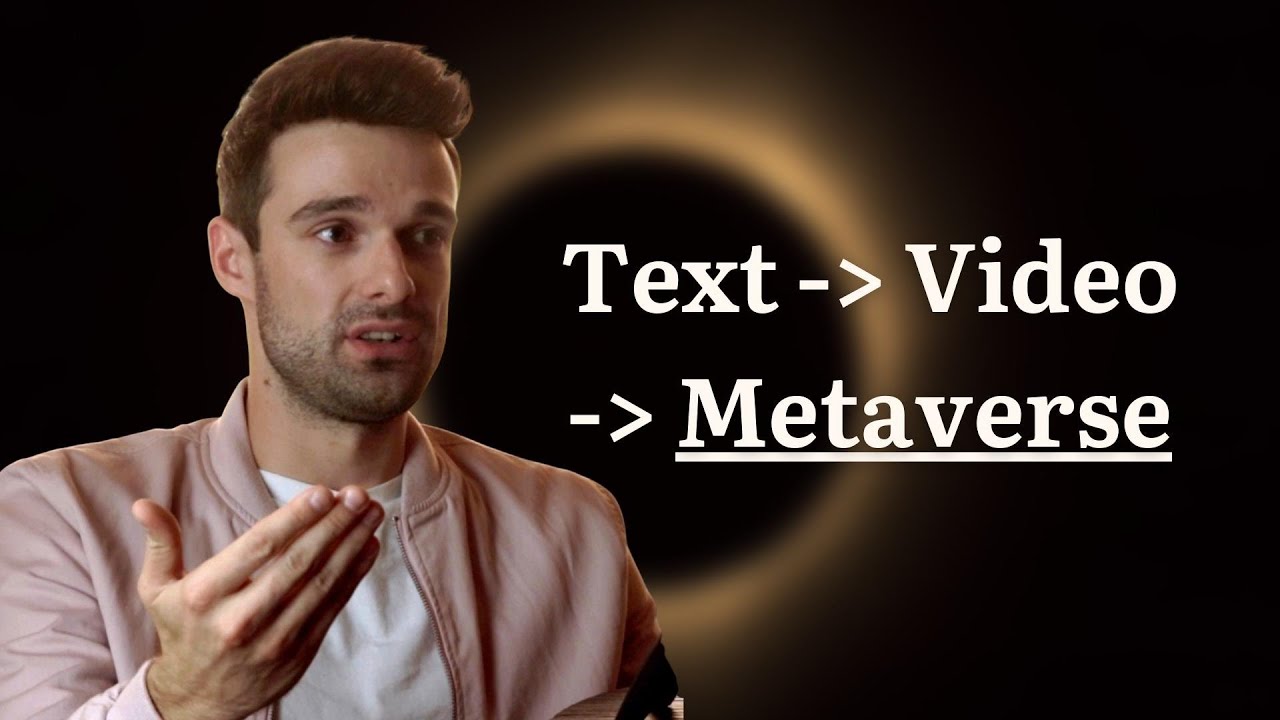
In this interview, Sam Huber, CEO of LandVault, defines the metaverse as a three‑dimensional evolution of the internet, driven by the convergence of two major trends: the rise of real‑time 3D game engines (such as Unity and Unreal) and the expanding use of these engines beyond pure gaming. He argues that game engines will become the next “language” of the web, enabling immersive, interactive experiences that replace static pages with avatar‑driven environments. Huber highlights cross‑industry applications—film production, manufacturing simulations, social networking, e‑commerce, concerts, and other experiential activities—where 3D adds clear value, while emphasizing that not every digital task benefits from a 3D interface (e.g., simple money transfers or grocery ordering). He uses analogies of the progression from images to video to immersive video to illustrate how the metaverse augments, rather than replaces, real life, offering richer digital experiences where appropriate.
Chapters
Metaverse for us is, it's a 3D version of the internet, the next iteration of the internet. We basically, it's the convergence of 2 big trends that are happening right now. One is gaming technologies. So, you know, just like HTML was basically the language of the internet of today, we see that game engines and real-time 3D content created by game engines like Unity and Unreal is going to be the next language for the next version of the internet. And we see that already because the amount of time and engagement that young people spend playing games. This is a much more engaging, you know, it's 3-dimensional, it's a new fabric for communication and interaction.
And by games, what falls into that category? So what do you define as a game?
More broadly, well, I mean, so that's the thing. I think for us, the metaverse is the is the intersection of these gaming technologies being basically used for a broader use case than purely games. So it's it's a moment where gaming technologies are becoming mainstream, and their use case is going to go beyond pure games. We've seen Unity, for example, and Unreal. You know, they're getting into movie productions, or their technologies using for manufacturing and. other types of simulations that are not actually games, but they use the core engine to do these real-time 3D animations and simulations for other purposes. And so instead of having a page with text and images, it would look like a game. You know, you might have an avatar, you'll be able to move around, you'll be able to discover things.
Mm-hmm.
But it's going to be— it doesn't mean that it has to be games. It could be a social network in 3D where you actually get to hang out with people. Or it could be an e-commerce experience where you get to visit the store, try the product.
And why do you think it needs to be 3D? Do you think it's because we naturally are more inclined because that's how we live? Or what's your guess on why you think we prefer it as 3D?
So I don't— first of all, I don't think that everything needs to be 3D, right? I think that if you want to transfer money to a friend, being able to do it by literally saying, I want to transfer $100 to that person, a 2D interface is a lot better.
Right.
If I want to order groceries, I don't need to see myself in a shop and literally put my tomatoes in my bag. Like, that's dumb, right? It's a lot easier to just do it in a few taps. But there's a lot of things that are experiential, like shopping for clothes, for example, or hanging out with people. So, you know, like a social networking experience, or Viewing a video, attending a concert, all these things that obviously are a lot better to do in real life, right? That's the other thing. We're not saying that the metaverse will replace real life. No, nothing will ever replace real life. But the metaverse can enhance certain parts of our digital life, the part that is currently projected in 2 dimensions and that would be better in 3 dimensions.
Interesting.
So not everything would be better in the metaverse. Not everything should be replicated or 3-dimensionalized. But just like we went from images to videos, right? They are, you know, a video can tell a lot more than an image, right? But not everything should be a video. Sometimes it's great to have a picture and sometimes it's also great to have text.
Right.
Not everything needs to be made into a picture. So it's the same. We're taking that one step further. What comes after video? Well, it's basically an immersive video, which is what a game— what, you know, the metaverse really aims to be. It's a video that is interactive where you are actually inside the video in a way.