In this interview, Sam Huber, CEO of LandVault, discusses how Generation Z treats digital assets with the same social and status significance as physical goods. He notes that younger users often value digital items—whether NFTs or simply in‑game assets—without needing blockchain verification, as long as the asset holds meaning within its environment. Huber explains that while a single closed game (e.g., Fortnite) can assign ownership, the true power of blockchain lies in enabling assets to be owned by the user across multiple virtual worlds. This cross‑game interoperability lets users carry items, currencies, and identity from one platform to another, turning the broader metaverse into a unified space where digital belongings are portable, much like physical luggage when traveling. The conversation highlights the blurring line between physical and digital ownership, the practical appeal of interoperable assets, and the vision of a user‑centric metaverse where borders between games and experiences dissolve.
Chapters
So it's really interesting, that dynamic. And, you know, a lot of Generation Z and even younger that were born with the internet, you know, spend probably the same amount of time socializing in virtual environment than physical environment. For them, you know, it's natural to want to, just like you would, you know, maybe buy some branded shoes in the physical world to signify social status, or just because you like them, you know, it's natural to do the same in digital environments. And the lines between the physical and digital are really starting to be blurring to a point where, you know, I talk to my nephews, and for them, whether they have the physical version of the sneakers or the digital one, it doesn't matter, they have it.
Ooh, so they're like, they value it as much at this point in time. They're like, yep, I got the NFT, yeah, it's fine, I've got the NFT. Or not even the NFT.
Not even the NFT in this case, the digital life.
That actually brings up a good point, because in this case, it's not even on the blockchain. It's like, they value just the asset itself within the closed system. So this is interesting, because another thing you said is that your metaverse is just a game if it doesn't have the blockchain component. But at the same time, if people find value within the assets, does that still stand true?
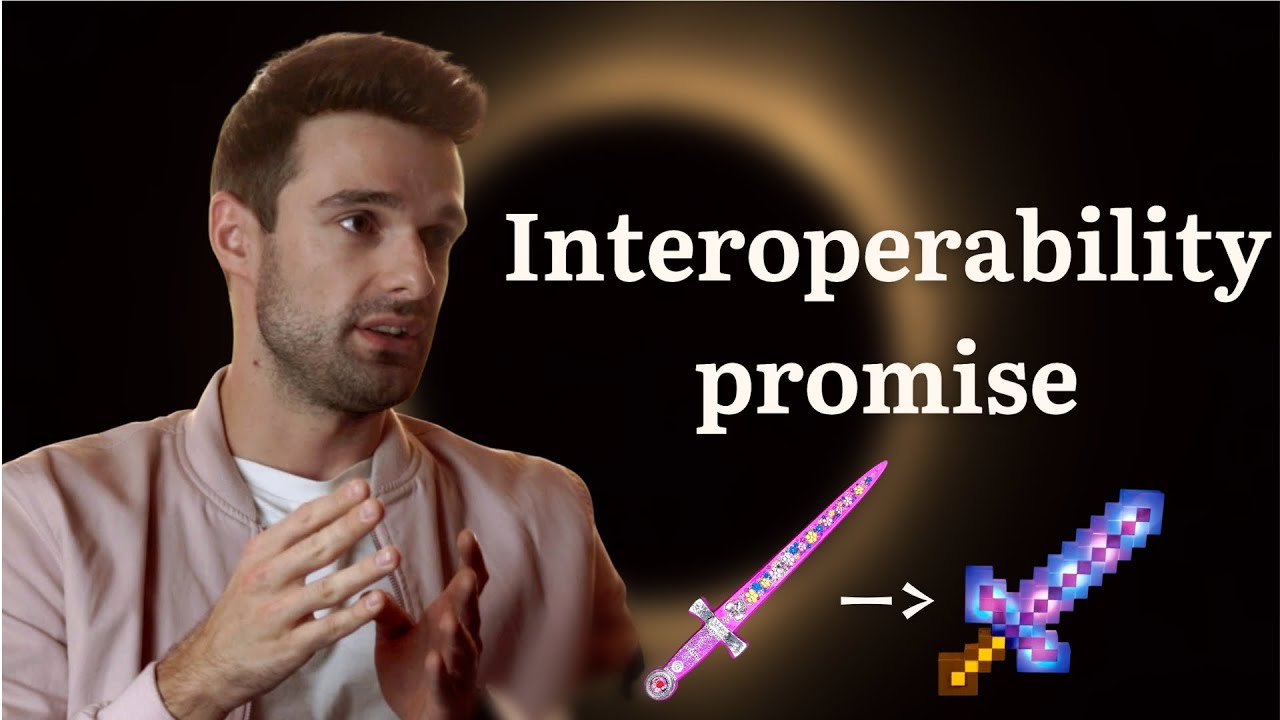
Well, so if you just look at one closed system, like Fortnite, for example, within the game itself, the blockchain, I guess, does have, you know, it adds some utility and some, some, the ability for you to actually own the asset. But the real value of blockchain is when you start considering multiple worlds and the fact that in the blockchain, the assets actually belong to you. as a user. They are part of your wallet and you bring your wallet across these different games. So the asset itself is not part of the game anymore. So if, you know, you play game 1, you have a sword and that game ends up dying, you can still use the sword in game 2. At least that's the promise of interoperability. And so that's where blockchain becomes really interesting because the assets become a property of the user, not a property of the platform.
Interesting. I have 2 thoughts here. First one is like, why— like interoperability, it makes sense to a lot of people from the get-go, it's like pretty easy to understand. But at the same time, if I try to get practical and technical, it's like, why would I want to bring a specific sword from one environment with a specific siloed type of culture that is like you know, a specific platform for a specific game, why would I want to bring an asset from one side to the other? And, you know, how far does this go? Are we expecting every asset to be transferable, or what's your—
Well, I mean, that's the theory about interoperability, that assets should be— you should be able to, just like when you travel to South America, you know, you bring some luggage with you, you bring your laptop, and you bring things that you own, right? You don't just leave that here and then have to buy everything again when you travel. So it's the same concept that when you travel online between those different games, your identity should be the same at a core.
Mm-hmm.
You might want to dress up differently and be seen differently when you go to different games, but you're the same person behind it. And so you should be able to bring what you own, what you own digitally, in those different places as well. And that includes your money. So whether it's, you know, the currency of a game, you should be able to convert that to the currency of the other game, but also your assets, which could be, you know, things that you can use within the game or not. And it becomes much more interesting where you stop thinking about games, but you think about it as just the metaverse, right? Which is more like a general platform where you can do things that are not purely gaming, where you can then bring your assets along with you during the— within those different experiences, which is basically removing the borders of the internet, if you think about it, because you have your profile and you have the things that you own, and you can bring that across, you know, the different properties that you want to visit.