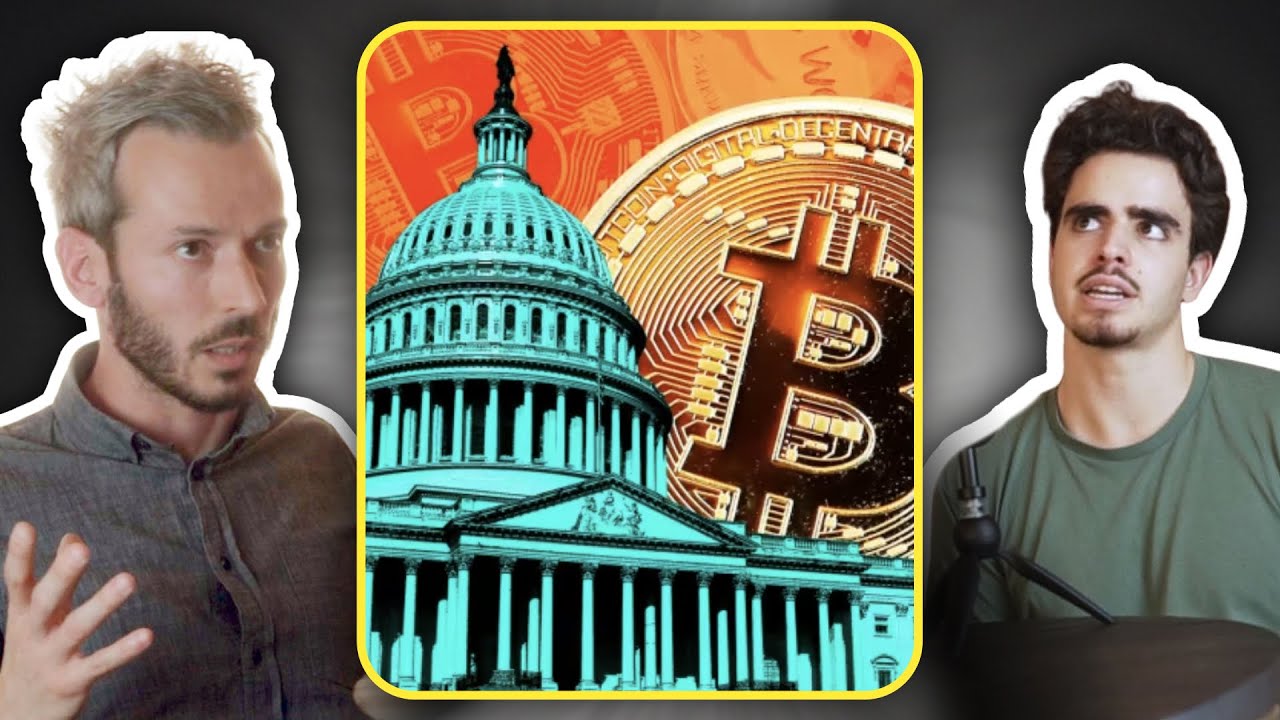
In this talk, the speaker reflects on interactions with regulators in Canada, the US, and the UK, noting their cautious, wait‑and‑see stance that postpones irreversible commitments. While understandable, this approach creates uncertainty for innovators who seek clear rules. The speaker argues that regulators also need better insight into how decentralized digital platforms operate, especially regarding the meaning of various claims. To address this, the speaker’s team at UCL is developing a quantitative metric that gauges the degree of decentralisation of blockchain platforms (e.g., comparing Ethereum, Polkadot, Solana) over time, alongside traditional market data. The project gathers input from innovators, blockchain foundations, venture capitalists, and regulators to build a useful, multi‑stakeholder dataset. However, they encounter data‑access obstacles, such as the difficulty of estimating the number of individual Bitcoin miners and the composition of mining pools, which hampers accurate authority‑dispersion measurements. The speaker emphasizes that overcoming these challenges will help create more predictable foundations for entrepreneurs and investors.
Chapters
What are some other things that from the regulator's standpoint are important to decide early on? Yeah, so I've had the chance of interacting with regulators in several countries, in Canada, in the US, and in the UK over the years. And they're actually adopting a very prudent approach, which is wait, learn, understand, see what's going on, and postpone the time at which you have to make a commitment that's irreversible. And it's understandable why regulators would function in this way. And I think in many ways it is a reasonable approach. Now it is creating uncertainty for innovators, for entrepreneurs, because sometimes they could benefit from having clearer rules written down, clearer guidelines written down so they know what to expect. And this is like the tension that we observe in the industry. But I think regulators would also want to have more clarity about what happens on the digital platforms that are being created, how they function. In particular, they would like to understand how certain claims are made and what they actually mean. So one project I am working on these days is trying to look at the digital platforms that are using decentralization technologies such as blockchain and try to precisely measure just how decentralized they are. And so I could ultimately say, well, you know what, Ethereum is more decentralized than Polkadot, which is more decentralized than Solana, right? And just like assign a metric to each platform that can vary over time so that next to, you know, data on market capitalization, volume, liquidity, number of tokens in circulation and things like that, people could have data on how decentralized the platform is in terms of its authority dispersion. And so always in terms of information and decision-making. So I'm collecting this data and I'm with my team at UCL and that we are trying to like put a very precise metric on that. And we are getting inputs from innovators, from blockchain foundations, from multiple networks. We are getting input from VCs, we are getting input from regulators, and we are trying to create a dataset that people across stakeholder groups find useful and can build upon to better understand what's going on in the industry. And I think this is the kind of initiatives that can potentially help build more predictable foundations for everyone, and particularly entrepreneurs and investors. And while working on this project, we are encountering some obstacles. We are realizing, for instance, that some of the data that we thought would be easy to access because it's supposedly public is actually very hard to access. So for instance, understanding how many individual miners are mining Bitcoin, it's very hard to know. And you would think, okay, we don't know if there's 10,000 of them, we don't know if there's like 500,000 of them. We know that we have mining pools, but we just don't know how many people are part of those pools because not every pool publishes data on that. And so without understanding that particular feature on the size of the pool of individual miners in the Bitcoin ecosystem, it becomes very hard to make a claim about just how dispersed authority is in the network. But we're trying to find ways to estimate those data to provide better metrics for everyone in the industry.