Maxim Perumal, Founder of Unison (Full Episode 4)
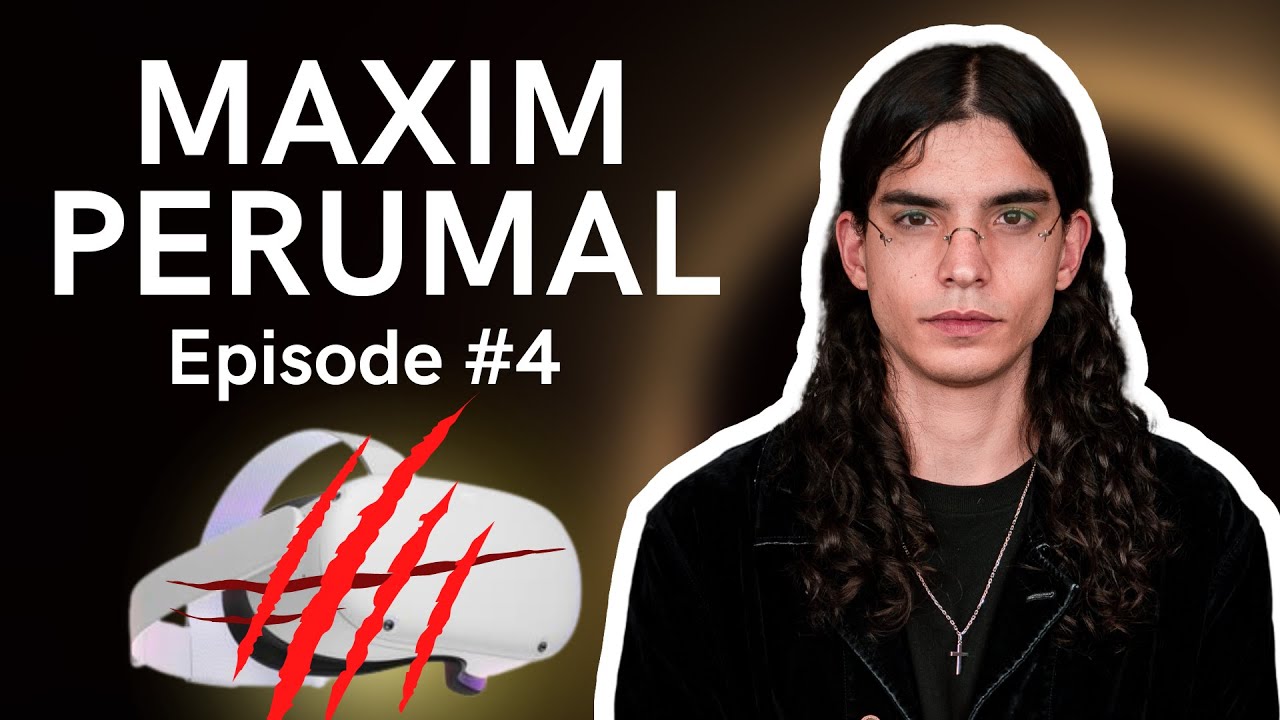
In this interview, host Michelangelo Valtancoli talks with Maxim Perumal, the teenage founder of Unison, about his journey building an open‑source $100 VR headset, his critique of incumbent platforms like Meta, and his design principles for meaningful virtual reality. Maxim emphasizes the importance of understanding the "why" behind technology, arguing that deep purpose drives learning and innovation more than a checklist of technical skills. He outlines Unison’s core product tenets: baked‑in limits to prevent endless feature bloat, an integrated "unus mundus" that blends virtual and physical worlds, and a "Minecraft 2.0" approach that prioritises user‑generated ecosystems over attention‑based monetisation. The conversation then shifts to the role of narrative in tech progress. Maxim likens vision to a boat that carries people to new islands, warning that once a narrative (e.g., the Ethereum merge or the desktop computer era) reaches its destination, a fresh story is needed to sustain optimism. He proposes Mars as the next grand human narrative and calls for a creative director to steer that vision, echoing a conference he helped organise. Maxim also shares his experience with investor Naval Ravikant, praising his thoughtful, rapid advice. Finally, he reveals his personal compass—friends, family, and a broad sense of faith—as the foundation of his long‑term commitment to VR, which he intends to pursue for decades. The interview closes with Maxim’s reflections on his values and his excitement for the future of immersive technology.
Chapters
Welcome to Chaotica, where imagination is the prevailing state of mind. Our aim is to explore the future of human experience as we dive into the virtual age. We seek the interesting and reject the similar. The only constant is to question everything. This is Michelangelo from Stride speaking, and my guest today is 21-year-old hardware philosopher, Maxime Perumal. At 15 years old, from his little room, he built the world's most popular open-source VR headset that you could just build yourself for $100. That led him to a historical trip in Silicon Valley where he ended up impressing, of course, a whole lot of people, including the chief Oculus architect over at Meta. Today he's building Unai. Whilst everybody else is focusing on mass markets and gaming in virtual reality, he's laser-focused on nailing social presence, trying to create the most magical and meaningful experiences so that you can inspire through virtual reality. As always, thank you to the amazing community over at Citizen of Tajikistan, partner of the show. I hope you enjoy the episode and follow the signal. So I want to start by your story. First things first. And I want to— first thing, I want to ask you what the most impactful VR experience that you've had in your life was.
Oh, the most impactful VR experience. I think that would be one of my very first VR experiences. So I was probably 15 years old at the time, and I was building this VR headset, right? And I built it myself. And my 2 best friends at the time were my math professor and this other friend of mine who was also doing math with me all the time and programming. And I built 3 VR headsets, one for each of us, right? And I was trying to build this multiplayer experience, this sort of virtual world. I was doing this in Unity. And I wasn't really good at it, and I was kind of— I kind of rushed it. And so I had no time to implement an avatar system. So we all had the exact same avatar, right? And then we actually go in and test it. And a few of us put on the headset. We're in separate rooms. We put it on, we're in this virtual world, and my math professor just points at something and says something out loud. And me and my friend, we just sort of turn around, look at him, and just start talking, and just as if everything was normal, right? And then we took off the headset and we realized that during this entire experience, we knew exactly who was who. Just based on the fact that our real-life height was reflected in the VR world. So even though we had the same avatar, just sort of instinctively, we knew who was who just based on that difference in height. And I think that's the moment when I realized that in VR, I can— this is a sandbox to dive deep into so many of the mechanisms of how we humans perceive the world around us and the people around us. And I could just— that's the moment I realized I could spend the rest of my life just doing this, basically.
Wow. Okay. So just by the height?
Yeah. The height was enough for the brain to just guess without even us having to think about it, to guess who was who before he even started talking. Just by pointing something, we just knew it was him.
So directly, immediately, you're like, yep, that's them. There was something within your brain that immediately connected it. That's really interesting. But you touched on your sort of your close circle of friends and who you were hanging out with. And I think your story is such a unique one that it's really worth going over.
Sure.
So I would love to start from your origin story and what led you to led you to where you are today?
Sure, sure. So, all right, the origin story. Well, I guess let's start with this. I mostly grew up in the countryside of France, and my dad is an artist, he's a painter, and he lives literally in the middle of nowhere. And so we had this huge house full of books and arts and paintings, but with no one around it. So I was like the only kid in my village. And then we got a computer and I started making friends online. And I started— a huge portion of what I do would actually be going on online. I went deep into Minecraft, started building virtual worlds in Minecraft, essentially building servers, making new friends. And then I randomly came across the Oculus Kickstarter from Palmer Luckey.
Oh, wow. Long time ago.
Yeah, a long time ago. I probably was 14 at the time, 14 years old. And I thought, well, this is the thing that I need. I'm living here in the middle of nowhere in the countryside. I'm making all those friends online. And a good chunk of the things I love doing are happening online. on Minecraft writing Java code to create my custom servers. I'm on Minecraft designing those texture packs, those mods. And we're hanging out with my friends on TeamSpeak, and I don't think Discord was around back then, so it probably was Skype. And with this device, with this Oculus, I could really be with them, and we could spend this time together. And so I kind of got absolutely obsessed with that. And I had no money. I was a teenager. I couldn't afford to buy an Oculus. And so I thought, well, maybe I can build one by myself. And I was extremely lucky. I had this crazy, crazy math professor who also taught me programming. And I told him about this idea of mine of wanting to build a VR headset. And I came up with a bunch of, you know, things I needed to learn in order to do that. Just basic physics to be able to calculate the position of the users, learning how to do compression more efficiently so I would be able to transmit data from the headset to the computer faster. I just came up with all those questions and he gave me math classes and I started just working on that thing. And luckily enough, it worked out. And so by the time I was 15 years old, I had basically built with a couple hundred dollars that my math professor gave me, I'd essentially built the same thing as an Oculus. So I'd built my own VR headset from scratch, same features as an Oculus, built it alone. And then, as I said, playing along, playing with it, spending a lot of time using it. posting about it online. And that's when Facebook at the time, now Meta, heard about it. And luckily for me, David Marcus came across it. I don't know if he still remembers me, but that changed my life. David Marcus saw this and introduced me to Atman Binstock, who was the chief architect of Oculus. And they invited me over to the US. They flew me out to the USA. I got to spend some time with the people over at Facebook, realized how hard it is to build a hardware company. I also realized that as much as I loved what they were trying to build, that my vision for the future of VR was different and not truly aligned with theirs. And so what I did is I came back to France as a 15-year-old teenager, Took everything I had built. So I had built the hardware, I built the software, I built the firmware. I even built pretty bad SDKs. But still, I built SDKs at the time, and I open sourced everything, all of it.
You open sourced everything?
Everything I had built.
Instead of making a company out of it?
When I was in the Valley, I had people very interested in the headset I had created.
Interested in using it, or you mean interested in investing?
Interested in making it go to market.
Okay.
But yeah, I decided that instead I would take all of it, open source it, and see what happens.
Why?
Why? Well, first off, I think that I was very realistic about the fact that as a 15-year-old, it would be unbelievably hard for me to get enough capital and basically to do all the things that I would need to do in order to be a serious competitor Store to Oculus. It was very clear to me that I didn't have the tools to do that at the time. And so if I cannot do that, then the other option is just sell it, right? And although that sounded good, it just came to my mind that another option was actually maybe I could try to distribute the making of that headset. And maybe I personally, I'm not ready to compete with Oculus, but maybe if I can convince a few hundred or maybe a few thousand people to build a headset themselves and build software for it and build tools for it, maybe as a group, we stand a little bit more of a chance. And that was my thesis. I open sourced it, worked pretty well. I wasn't really going to school much at the time, but that really— That put the nail in the coffin and made me completely stop going to school.
And this was, this was high school or uni already?
High school. High school. Although I wasn't really attending.
So you didn't go to high school after a few years? You're like, this is enough for me?
I just came back for the final exam. And that's it. Yeah.
I hope that didn't feel like too much of a chore. The exam itself was like unbearable.
Oh no, that's fine. My math professor did something really— I call him Sensei. He did something pretty crazy for me when we were in middle school. He just told me, hey, if you want to make high school sort of more enjoyable, why don't you do the entire curriculum now while you're still in middle school? And this way you have a lot of free time in high school. So that's what I did. And so regardless, high school was just like a— big playground for me because I'd already done all the stuff with him.
Yeah, no, for sure. That's amazing. I mean, for you to have the freedom within the boundaries of being in a small village in France with no access to really a lot of resources. So the constraints really gave you the freedom to just do whatever you wanted. I like that you You went straight to the masses and you thought, how do we crowdsource this? How do we leverage collective intelligence and make something meaningful out of it? I think that was probably one of your defining moments that still today we look back and it's like, yeah, that's Maxim, right? But there is also another thing that you mentioned that is really interesting that is worth mentioning. What exactly about VR was it that you felt In that moment when you entered the VR world and you saw your friends and you realized, wow, they are as tall and I can— there is something about this that is special. I just want to understand what you saw in that and what felt special to you, because maybe some other people feel that it's special for them as well.
Sure. I think we can start with this. I think the elephant in the room is, for most people, VR has been pretty disappointing, right? It's not something many people are looking forward to. There are very few people that are sort of sitting around and saying, oh, I'm so excited for the future of VR, right?
Yeah.
I think as an industry, we've done a pretty bad job at painting a very exciting future of what using VR might be like. And I think that's something super important. If you look at the desktop computer, if you look at the phone, those movements, at the end of the day, it's not just building technology, it's about convincing those people to buy it and use it every single day. Companies like Apple back in the days, they did an excellent job at painting a picture of why you should be excited about desktop computers. There's this ad that I love from 1987. I think it's called How to Conduct Your Business from Home. And it's just this full this magazine ad where you see someone dressed in a very relaxed attire, no suits, just a shirt. He's sitting there, he has his Macintosh, laying his legs on the desk in his room, in his bedroom. There's a bed. It's this mix of business and casual. And you have this subtext talking about how the future is incredibly exciting because in the future, you'll be able to work from home. You'll be able— all those things that you had to go to the office to do, you'll be able to do them from home. Like, next time an idea sort of runs through your mind when you're in the shower, the computer is just nearby. You can go in there and work on it. Next time you have a big sprint and important things need to get done, you'll be able to get them done from home. And And I think that drove a lot of the adoption for the desktop computer, is that we had those very powerful images of what an exciting future with that tech would be like. And when I look at VR right now, I think the elephant in the room is, if I ask you, hey, what is VR for? Who is it for? Would you be able to answer that? Yeah.
No, no, not sincerely.
Right.
I would be able to give you a satisfactory answer, but I really don't envision the deep application in which we're going to use it on an everyday basis.
And it's not only just using it on an everyday basis, it's imagining something that is genuinely exciting. When Meta comes out there and explains that we're going to be doing all those things in a VR headset, you can kind of picture it, but it does not sound that exciting, right? If I tell you that you're going to replace your Zoom meeting with a VR headset, you're like, okay, yeah, and so what?
Fair enough.
Why do I care? Right? So that's the first thing to recognize. Most people don't have this exciting view of VR. And I think something very important is to collectively build a very exciting idea, an image of what VR should be like. And to me, that idea is very much Well, how I came to love VR, which is, I grew up in the middle of nowhere. I made my friends online, and much of who I am, both in the virtual world and the real one, those things were defined by very intense, meaningful experiences in virtual worlds that I wouldn't have been able to have otherwise. Some of the people I've met in those virtual worlds, some of the design work I've done in those virtual worlds, some of the making money in virtual worlds. That was crazy. You know, I was a teenager and we were trying to monetize our Minecraft servers and learning that, oh, wow, I have the power to make money and trying to organize that and then trying to recruit other teenagers to help me write more modes and create more Minecraft servers. This sort of experience of life, of working with other people, of learning how to manage people, of learning how to make money, that's just one example, but it's an experience I would never have had otherwise. I would never have had that experience without those virtual worlds. And the reason VR clicked for me is that it just seemed like the most intense way to offer those very, very meaningful experiences to people. And I think where my vision of VR and Meta's vision of VR are very, very different is there's basically 3 things I care about. The first one is this idea of limit. The second one is this idea of unus mundus. And the third one is what I like to call Minecraft 2.0. So what are those 3 things? Well, if you sort of listen to the way Meta and all those companies are talking about VR, one thing that they love to repeat is how limitless it is, how you'll be able to do anything in there.
Mm-hmm.
And I think they don't realize how much that does not connect with people. People just don't— if you just repeat to someone over and over, this is limitless, they You know, it's not helping you understand.
Yeah, because they're giving them the just how it looks, but not the substance, what's within it.
Exactly. Exactly. So, and I also think that making it limitless makes it seem vague. And I think people actually don't want limitless anymore.
They're scared?
Hmm?
They're out of scare, like— Yeah, absolutely.
I think people realize that, you know, the limitless feed is just making them dumb scroll Instagram. for 5 hours. No one at the end of the week is like, oh, I'm proud, I spent 12 hours on Instagram this week. So people are dubious of this idea of limitless, right? I think the people that I know that are the happiest, the healthiest, the most creative, the most satisfied in their daily life, they had to put those limits in their usage of their phone by themselves. Of course. They turn off their notifications so they can focus. They are careful with their usage of Instagram to not basically plug their brain into the dopamine factory, right? So I think that idea of limitless isn't that exciting. I think people instead are much more excited by balance. By can you offer a product That brings more balance to your life as a whole. And I think VR can be really good at that, where you can put on the VR headset, experience something very intense for maybe an hour or 2, then put it off, and then you're back to your real life. But you've experienced something in VR that's going to stay with you. One crazy example that happened to me not long ago, I have this employee at my company, he's transitioning into a new role, right? And it's been intense on him, right? He loves it, but it's been a lot of hard work, and I was working a lot as well. So it had been a little while since we really sat down together and sort of talked through everything. And sometimes you do need to do that, right? But we're in different cities, so unable to do it. And we went in VRChat, actually, and we spent almost the entire night together, right? And I know he loves Naruto, the anime. And so I brought him to this virtual world that is a recreation of the anime Naruto.
Nice.
And we just hanged out there for the whole night and just talked through so many things. I think it was a super meaningful moment for him, a very intense experience, probably only 3 hours, but 3 hours of the kind of conversation that when you walk out of that conversation, you just feel great about it. You feel grateful that you had that conversation. And VR is just incredibly good at creating those kinds of very intense, meaningful moments. Then you put off the headset and you're done. 3 hours. And that idea of bringing balance into your life with those very intense, meaningful experiences, I think speaks a lot more to people now than this idea of limitless. Because people, they don't want a wearable dumb scroll device, right? I don't think people want that anymore.
I like that a lot. I think I think maybe people don't like the idea of it, but unfortunately there is a lot of, like, even myself sometimes, it's like, you know, I spend a lot of time on my phone. And so whether I like it or not, I think we're kind of stuck. It's like, it's really hard to break that cycle. And so I'm wondering, you know, are we sure that the narrative is one side, but then the content is another? So what you narrate, Meta could switch tomorrow and try to narrate something alongside of what you envision, but then maybe they deliver a completely different experience that is much more focused on the dopamine cycle that you described. So how do you actually enable those beautiful experiences and not just get people inside and then trick them with Absolutely.
I 100% agree with you. It's not about that narrative. It's not about how you present it. It's about baking in those principles in the design of the device from day one. The first one I talked about is this idea of the limit. The second one is unus mundus, which is this idea that the world is split in 2 parts and one is more, let's say, The world is split in 2 parts, one known world and one unknown world, but they all sort of together, they form something else that is a more complete whole, the unus mundus. And the reason at Unai we love using that image is because that's how we feel about virtual worlds, that you shouldn't— you should just think of them as something to experience quickly, intensively to get something from it and that you can then bring back to your physical life. But you as a whole are gaining from it. It's not like the time spent in virtual worlds, 1 hour in a virtual world is minus 1 in the real one.
Yeah, right.
It's a whole. And it's a positive-sum game, right, where time is not lost. So that's the idea. Now, how do you actually implement this in the product? There's a lot of ways that you go around that. One of the most obvious ones is don't monetize people's eyeballs. Just don't make it an ad platform.
Because then you'll be incentivized to keep them on there.
Then you just become incentivized to have them dumb scrolling in VR or in AR all day long. That's the first thing. Don't be incentivized to do that. Instead, be incentivized to sell them a device that might be more expensive, but that really brings them something, something they can gain from that device. I think it's all about setting those incentives right. Don't build experiences that promote how long people are using them. Don't build experiences where, let's say, if you spend more hours per day on it, for whatever reason, the experience gets better or something like that. You have to design it such that even for a short amount of time, people can get something very meaningful out of it. And by the way, this is also useful because as of right now, the technology of VR is such that It is very hard to get someone to wear a VR headset for more than a few hours, even more than an hour. Comfort, frame rate, headaches. It's just very, very hard to do that. But even when that will become easy, I think most people won't do that. I think most people aren't even interested in that. And so if you really bake this from day one into the way you're building the VR headset and the virtual world inside, Then you just put your focus towards creative endeavors, right? For instance, because when you're having a sprint of creativity, you might design for like 2, 3 hours straight, and then you need a break anyway. So building really, really good creative tools in VR is something super important. It's something where VR can make a big difference.
Mm-hmm.
If you're a designer, just putting on a VR headset and spending 2 hours in an environment that is perfectly crafted to be a sort of moment of peace, of calm and focus, and having and using VR to have like superhuman powers where like you can sort of design the thing with 3-dimensional tools. You can visualize the design much better, especially if it's 3D design. I think that's one example of a very powerful use case.
Totally. So I mean, for me, absolutely. For me, that was one, the one use case. I never painted in my life. Yeah, but for me, that was the one use case that got me me really hooked and that I really appreciated, and it sparked the deep interest within me of the world of VR. So I totally see that. But it was also long to find. I had to browse a lot through the Meta Quest Store and find all sorts of games everywhere before I could get to that Gravity Sketch app. So yeah, it was quite a journey. I like it. And Okay, so what do you think we can do then from a narrative standpoint, bringing it back to the narrative, to actually make it sound exciting? Like, I understand that we can sort of promote this idea of meaningful and intense interactions, but how do you convey that? Because saying it is not enough.
First, you have to do it. Then you can worry about conveying it. I think at the end of the day, it's a consumer effort. You're trying to talk to people and people can tell when something is genuine and when it isn't. And so VR is at, whatever we say, VR is still in its very early days. So you want to attract the early adopters, the people that are true believers, the people that are intense users, that are evangelists. And those people care enough about VR to tell when you're genuine and when you're not. They can tell. So I would say this. First, put a lot of care and energy into building the right thing, and then the messaging will become easier because it will actually be genuine. I think that's one issue with Meta. I think people can just feel that the messaging is not genuine. Everyone knows that this is headed towards being an ad platform. Everyone knows, right? So when they talk about— it's like when Meta talks about privacy, you're not really taking it seriously, right? So people can feel when it's not genuine.
Interesting. Yeah, I think you have a really interesting quote. Which I wrote down, but I can't find right now. Oh yeah, Meta is building the attention casino and I'm building the inspiration theater.
Exactly.
Yeah, that's very powerful. But we interrupted you earlier and you were mentioning the 3 pillars and we arrived to the second one. So I'm curious to hear about the third one.
Sure. So the limits. The first one was the limit, this idea that people understand that if there is no limit baked into the technology, it might not turn out this well, right? Instagram, you dumb scroll. Second one is one world. When you act in the virtual world, there should be something you get out of it that you can bring back to your real life. If you cannot do that, then it's just wasted time and no one wants to waste time. So you have to think of use cases. where people do something in VR and they have something to show for it. They have something they can bring back to their real life. And that third and last principle is Minecraft 2.0. That's how I call it in my head. And it's basically this idea that— One very powerful thing about Minecraft was that There was a lot more power outside of Mojang, the company making Minecraft, than inside. Inside the company, they're just creating this thing called Minecraft. But outside of it, you have millions of kids building servers, building mods, building texture packs, making videos on YouTube, making billions of views on YouTube. This is the most successful marketing campaign ever, and Mojang didn't do anything about it. It's all happening outside of the company. So you're leveraging the people essentially to build a lot of the things that are valuable about your product. And that might sound obvious, but just look at what VR companies are doing. They're not doing that. If you look at what Meta is doing, From the outside, at least, it sounds a lot like the playbook of how the Xbox came around, right? Where Xbox wanted to— was Microsoft, which had this reputation of being a big, boring company making text and word processor software. So they're old and they're boring, and now they want to go into gaming, which seems weird. But the way they did it is, oh, well, they created this this subsidiary, and then they just said acquiring all those game companies and sort of tightly controlling the supply of content and experiences and by buying all those companies and sort of brute-forced their way into legitimacy, right? And you can sort of feel that Meta is doing something very similar where they are this big and boring company, and only your grandparents are on Facebook. But they bought this company called Oculus, and now they're buying all those game studios. And most of the hits on the Oculus are games that are built by studios owned by Meta, and they're trying to brute force their way into relevancy. Right?
Top down.
Exactly. So the power is within the company. If Mark Zuckerberg makes a mistake, It can widely affect the VR ecosystem and Meta's VR ecosystem and their games and their experiences. In the case of Minecraft, if Mojang made a big mistake, it's probably not that big of a deal because most of the energy around it, most of the hype, most of the content, most of everything is actually happening outside of the company.
Interesting. So what's missing? Why is Meta going for this side? Why are you—
because you can control it. You cannot manufacture a success like Minecraft. You cannot wake up one day and say, oh, I'm going to build a game and millions of kids are going to be creating content for it and making YouTube videos about it. You can have infinite amount of money. You cannot wake up and decide to do that.
No, but you can set in place some pillars for that to happen.
Okay, you can set some pillars in place and that's risky. Is it really going to work? And what are the investors going to say? And will the employees get excited about this? And in the beginning, it's going to be painful. In the beginning, there's going to be 10 guys using our Minecraft 2.0, and we're going to look like idiots because we're putting all of this time and effort into it and no one is using it. So we'll look like idiots for 10 years and everyone will make fun of us. Or we buy our way into relevancy. Because we have this huge pile of money and we buy game studios and we go into this strategy where it sounds like it's pretty obviously going to work, right, from their perspective. And so there is a strategy that they decided to enter, and I think it makes sense. You're a gigantic company, you have a huge pile of cash, use it. And also this strategy of trying to build a new Minecraft, If you do that, you're trying to compete with everyone because you don't need lots of money to try to build a new Minecraft. You just need to be really, really good at it. But if you go in the strategy of owning this entire thing, who can compete with you? Where is, like, only the companies that are incredibly rich can compete with you. So you've already sort of, you're playing a game where you have an edge and that's what they're doing. And on my side, I'm playing a game where I have an edge.
Which is engineering the platform where people do feel an incentive and a sense of purpose to do all of those creations.
Exactly. And I don't care if I have only 10 people using it for a long while and we look like idiots and no one understands what we're trying to build, because I've done it before. My first VR headset, no one understood VR. No one understood why you would want to build your own VR headset from scratch. And a few weirdos started building my VR headset from scratch. And those weirdos attracted other weirdos, and we were all a bunch of weirdos being happy altogether. And then we ended up being thousands of people building my VR headset and actually soldering the components ourselves. And I don't mind doing this all over again. I don't mind going through that process from scratch again because I believe that After using VR every single day for over 6 years, and VR is the thing I care the most about in the world, regardless of the company, I would be doing VR anyway. So I think I have a very good sense of how to make it much better, and I think it resonates with a lot of people in the industry. And so we'll just be doing that. And I think I can attract really, really good people to contribute to building that ecosystem.
Interesting. And what are your thoughts when it comes to how you can engineer, or at least incentivize, or have the highest likelihood of success in creating something enticing enough for everybody, or at least some people, some 10 weirdos, to start loving it and start working on top of it? So what do you need to do? in the next few years so that you've set in stone the basics for that?
Sure. Well, you can already see it coming. The first thing is don't build it for everybody. VR is not ready for that yet. Just accept the fact that it is not going to be mainstream, and you shouldn't even try to make it mainstream at the beginning because most people won't get it, and it's going to take so long for those people to get it. That you should just completely embrace a very small part of the population. And the part of the population that I understand the most and that I spend the most time with, and that is, I believe, the most genuinely excited to use VR every day, are essentially the creatives, the people that are writing code, people that are designing, people that are using Figma and Illustrator all day long. People, those people understand how if they were given a much more powerful tool, like you can put it on and be in a place where for 2 hours you have pure focus, you have superhuman tools, or maybe you're completely alone, or maybe you're surrounded with other creative people and see your opportunity to meet other like-minded people, but they understand, I think, the value of that, and they see it, and it's obvious to them, and it's what they do for a living. It's what they're passionate about. So they're willing to spend a lot of money to get that to be better. Some of my friends are 3D artists, and they started using VR to do 3D modeling. And when they experienced how life-changing this experience was, The only thing they kept asking me is, when are we going to see better VR headsets? Because when I put this thing on and I decide to spend the next hour and a half designing something, I feel like I have superpowers compared to being on my laptop. And those people genuinely care. Those people are builders. And those people, if incentivized correctly, will bring some of the things they build into our ecosystem. And you get this flywheel You attract creatives, and those creatives create great stuff that attracts more creatives. One of the designers I'm working with, he runs this design company, and of course, he's very, very busy. And so one of the things that tends to happen when you're managing a dozen people is you get very little time to just Turn everything off and focus deeply. And the thing that he started doing is maybe once a day he's gonna start playing tabletop tennis in VR or ping pong and just put on the podcast and just plays ping pong for like 40, 45 minutes just in VR. And just like a moment for him to escape and sort of be alone with his thought and sort of You know, let the moment sink in and sort of disconnect from the rest. And it's super important to him and the way he thinks and to get dressed, right? And I sort of do something a little bit similar. You know, very often during the week, I have my little ritual where when I feel very, very excited, but I have a hard time sort of focusing my thoughts, Or maybe I'm lacking— I'm in a moment where I feel like, oh, I need a little bit of inspiration. One of the things that I do is I grab my VR headset, I put it on, I go in this black room, completely black. I look around me, there is nothing except this gigantic display, and it plays the opening sequence of the movie Akira. And I just sit there and I'm in the complete dark and I just see in this gigantic display in front of me the movie Akira. And that's my moment to get inspired. That's my moment to refocus and be inspired and be impressed. And I do that for maybe like 25 minutes and then I put off the headset and I can go back to my daily life. That little ritual of myself—it helps me bring balance to my life. It helps me have those moments of of of of of comfort, of focus, of of being with something that I'm very familiar with, and I love it. You know?
And why Akira specifically? Why does the movie mean so much?
Um, that's a good one. Why Akira? I just think it's a it's it's a fantastic. piece of art. I think it's an incredible movie. Um, I love the music, I love everything about it. It's one of the first mangas that I read, actually, Akira. And yeah, I grew up with those movies.
So it's just a well-crafted piece that seems like it's just beautiful. And so—
Absolutely, absolutely. And you know, sometimes that's not my mood at all. You know, sometimes I, I have Sometimes I need to refine ideas, and so I'll go in VR, I'll ask a few friends to join me. We'll spend maybe an hour in VR brainstorming and discussing ideas intensely.
This is really interesting because you already are using religiously VR.
Absolutely. Absolutely.
How many of you are there like this that you think— Not enough.
Not enough. How many of us? It depends how you're counting. I wouldn't want to disclose other companies' numbers, but I would say right now, very, very strong users, the people that I really care about, I would say 50,000 people.
50,000 strong daily users.
I'm talking incredibly strong. people for whom this is really important in their daily lives. Just like if I were to take your laptop off from you, your productivity will decrease, so many things would decrease, right? Those people, you take VR off from them, they really lose something meaningful in their lives.
I love that. I love that. Can you make a manual on how I can be part of that 50,000 and slowly get there? I could really use that because right now I'm exploring it. I don't know if it's like, Those 50,000 are the small few survivors that managed to get their way through. But for me, it's a lot of exploration. It would be really helpful to actually create a pathway to—
That's what my company is all about. I'm not going to tell you how to do it with other headsets. That's fair. It's bad. Just wait a little bit until you get ours and everything will be built in for that.
Okay, that is interesting. And so you want to engineer The experience itself so that VR is seen as a journey instead of just something you slap on?
I don't want it to be seen as a journey. I want it to genuinely be something that people use incredibly deliberately, incredibly deliberately. I want them to really decide, you know what? Now is the time when I put on my VR headset. I want that when they use it, I want that experience to be very meaningful to them. And I want that when they take it off, when they take off the headset, that they really get something back from that experience.
Yes, I get it. It's like, even today, we don't really— the majority of people, I feel like, don't really have that in their daily lives. It's not like they're substituting something that they're doing, like meditating right now, into VR. I mean, that's just very few, but the majority of people, I don't know if I have something. I mean, maybe my morning routine, but it's very rare to find these moments into everyday lives. And so I'm like, this is a new paradigm where we are hoping that we all of a sudden feel the need to have those meaningful moments.
And I think the needs already exist. If you're a creative person, if you're a programmer, if you're a writer, if you're a designer, and you're trying to do things at a high intensity level, you just know that you need ways to balance your daily life, whether that be meditation, whether that be doing sport, whether that be having dinner with friends so that you can express what has been on your mind, whatever it is. I just think that VR is, in many of those use cases, one of the best ways of doing it. And if you actually build that into the product, People will just feel it and then they'll just start choosing it by themselves.
Hmm.
And right now you might ask, well, why don't they already do it? They don't already do it because first of all, the products that are out there are not good enough. As much as I love the fellow companies in the VR space, and I think they are pioneers, when your experience runs at 45 frames per second on average, you're just giving people horrible headaches. I think of one in particular. They are pioneers of social VR, but they're just giving people horrible headaches. So most people already, they logged off after 15 minutes. And headaches is just one part of it. The worlds don't feel welcoming. The experience is bad. Everything is confusing. You're thrown around, random people screaming at you. Many things are wrong with that. And I think we're in a good position to solve those things.
Yeah.
And offer that experience to people. That's what we do.
Why did we all get it so wrong that we wanted to offer everything to everybody? We're like, yes, VR, you can do anything. How come are we so blind that we're like, limitless experiences, you can do it from day one, when everything else was actually off, both hardware, creative output, and input that's already on the platform? Like, what was going on in our minds?
Okay. So then what is— I guess what you're saying is what is the main narrative and where did it fail? And I think the main narrative is limitless possibilities with a device that mixes the virtual and the real. Basically, it's AR, right? The thing most people will say is, I'm not that excited about VR, but I'm excited about AR.
What do you think about that?
Oh, I think they're wrong. Completely wrong. I think AR is a lot easier to understand, but I think on average, people really way overestimate AR. And way underestimate VR. And here's the thing. AR is a lot easier to understand because it's not really a new use case, just a better way to experience, a supposedly better way to experience what we already have. Your phone, your laptop, your Google Maps in AR, and having little visuals mixed up with what you see around you, or it's mostly, it is a better, supposedly better way to experience experiences that we already have. So it's a lot easier to sit down and project yourself and say, well, there's billions of people using their phone. We can make the phone experience better in AR. So AR could be something used by billions of people. But in the case of VR, people don't even know what VR is supposed to be for. So when you ask them, hey, are you excited about billions of people using VR? Of course people say no, because they have no idea what VR is supposed to be for. So I think the reason people are excited about AR is simply because it's easier to understand. It's much easier. But I think this is— I don't actually think that VR is going to be that important. I think the phone is really good at what it does. You know, the Google Glass idea that you would use Google Maps with your AR glasses.
You don't buy into that?
No, I don't buy into that. No, I don't. I mean, I can just, you know, I can just look at my phone and, like, I don't need to have this laid out on top of my visual peripheral. And then Everyone. And I think, do you buy into it? Do you really think you're going to be wearing glasses all day long because, because you need to know if you have to turn left or if you have to turn right? And by the way, you know, this is going to be an— you know, this is going to turn into an ad platform. You know, this is going to be turning into something that tries to grab your attention. So basically you're telling me that, um, every week you're spending, what, maybe 6 hours using Instagram, dumb scrolling on Instagram?
Yeah.
They're telling me you're going to be wearing Instagram on your face every day, all day long. And the reason that you're going to go through all this is such that you can know if you have to turn left or turn right, or little upsides like this that your phone might very well be able to do. I think there are incredibly legit use cases for AR, use cases that I'm incredibly excited. I love AR.
What do you think those are?
Oh, sport in AR is incredible.
Nice.
Sport in AR is absolutely incredible.
So like having the fans all around you or—
Or even doing sport in AR is an incredible experience. You have like a controller, you see the world around you, you see the real people, and you can just throw things at each other that are not real or use virtual objects. That's incredibly fun. But that's not the mainstream usage that people think it is. When people think mainstream AR, essentially what they are saying is, I'm going to glue an iPhone to my face. And I don't think people are as willing to do that as most imagine.
Okay, but then let me understand precisely where AR ends and where VR begins.
Sure.
Because my understanding of it is AR is a layer in front of the existing world. It's not everything blacked out. So it's a purely visual type of interaction. Am I right in thinking that, or is there more sort of maybe tactics or something?
So the way I would define them is, and of course they are mixing, right? Of course, when I say I'm building a VR headset, to some extent, if you really go into the details of it, of course things are mixing, right? But at its core, AR, the value proposition of AR is always-on, carry-on-at-all-time device that augments in whatever way your experience of the real world. And the value proposition of VR is very clear on and off moment. You're putting it on, you're putting it off, and when you're on, you're fully on. When you're off, you're fully off.
And back again at the deliberate.
Exactly. So, for instance, AirPods are AR. You can sort of go into transparency mode. You can blend between your podcast and transparency mode. This is a way to augment your experience of real life. That is one use case that is incredibly successful of AR. Audio AR with the AirPods, that's incredibly big. Right. And some people think you'll also have visual AR, where that's the Google Glasses, right, where you can see direction and Google Maps in AR. And VR is this very deliberate thing, as we talked about, of I decided to put it on and now I'm fully immersed in that experience.
Okay, I understand. purpose aspect, there is a what am I physically doing aspect. Am I deliberately choosing to stop everything else that's going on and focus on the experience, or am I in the rest of my day doing something? And you think those 2 will be different devices, or could it be the same?
Here's the thing. Here's the The way I look at it is I look at the people around me. I look at the young people around me. I look at what trends I'm seeing, and I try to understand why they're doing what they do. And what I see is there's a small group of people, that same group of people that we talked about, those people that have to be creative, those people that have to deliver, those people that are trying to be on the forefront of culture and creation and building things. And what those people are doing is those people around me have the healthiest relationship to their phones. They turn off notifications. They limit their time on Instagram. They limit their time on Twitter. They have very clear moments when they decide, all right, now I'm on, I'm going to reply to my messages. Now I'm off, I'm not replying to them. Notifications are basically an open to-do list, and anyone can just message you and screw whatever you are doing right now and sort of forces you to answer. Well, those people that I know of that are young and the most prolific ones, they don't do that. They decide clearly, hey, today I'm going to take like half an hour, go through my messages, and then go back to focusing on what I have to do. And that's how they get things done. And I think it starts with those young creative people, but I think it speaks of a deeper truth, which is You know, at the end of the day, your brain sometimes needs focus, needs deliberate attention to things. And it starts with those people, but I think it's going to spread to society. And when it does spread to society, it's going to seem very weird to those people that we're telling them to strap a phone to their face. And instead, what's going to seem a lot more natural to them is this device that is very deliberately on and off and has a very clear offering of value when it's on and a very clear thing that you bring back from it when it's off.
So you think even on a timescale, VR is the strongest bet?
Yeah.
Ha! Because I was discussing this and I was thinking, you know, in a long enough timescale, I totally see how VR just succeeds. Long enough timescale, but short immediate application, that is very revealing. Yeah, I think I agree because—
Let me ask you something simple. Do you think you're at your happiest when you are the weeks where you're using your phone less or the weeks where you're using your phone the most?
Depends on what we mean with happy. But I think if I'm honest, it's probably when I use it more.
All right. And that probably applies to a lot of the young people around you, doesn't it?
Yeah.
All right. So if I come to you and I say, you can do everything that is on your phone, but now you can do it better, and it's always on and it's strapped to your face, it probably speaks to you a lot less than there's this device It's like going to the gym, or it's like meditating. You have to deliberately decide that you're going to do it, but when you're doing it, you're really getting something out of it.
So how does that change how we run our days? Do you think we're going to have, like, VR time is off-limits, or where do we experience even VR? Am I going to experience it in my bedroom, or are we going to have spaces in offices? What do you want? Where do we actually use it?
Oh, that's a fantastic one. I think given a long enough timeframe, you'll be able to use it anywhere, and VR headsets are going to become good enough that you won't worry about slamming into objects, slamming into furniture. That's something we worked very hard on. If you are an AI research scientist, if you are an AI engineer, we're hiring some of the best in the world, people that come from prestigious labs and companies. And we work very hard on that, on trying to figure out what room are you in and try to understand that super well so that you don't slam into objects. This way you could use it at home or at your office or pretty much anywhere.
Understood. And do you think in the short term we will use it at home, at the office? How do you think people will use Unai?
So I think in the short term, the very first few people using it will use it alone, either in a room dedicated in their office where they know they can be alone, either alone at home. I believe this is what you'll see at the beginning. I think it will look a lot— I think it will be— At the very beginning, I think it will be a moment of focus for people, and they won't be using it with many people around them. That would sort of kill the purpose at the beginning, I believe.
Interesting.
It's just like if you write a lot, sometimes you just need to get on the other side of the table, be a little bit more alone, not just next to the people next to you that are talking and chatting a little bit loudly. You just need to go into the corner of the office, be in a little bit of a space of your own and say, all right, okay, I'm putting on a timer. I'm going to spend the next 1 hour writing and thinking hard. You know that feeling, that experience?
Yeah.
I think it's going to be the same thing with VR. People are going to be like, oh, you know what? Yeah, I think I need a moment right now to focus or to meditate or to work hard or to get inspired. Let me get in the corner of the office, get a little bit of space for myself, and put on the VR headset.
How, in all of this, how important is sound? Because you were—
Absolutely important. Absolutely important. Something we worked really hard on, which is how do we— how can we suppress the sound and noise around you, but how can we also bring some of it back to VR? If you're completely cut off with no way of knowing what's happening around you, that will make you uncomfortable. So there is— you need to find this balance and to decide that, oh, yeah, for instance, if something very big falls on the ground, it makes a loud noise. If you have the expectation that you won't hear that noise when you're in VR, that creates a little bit of anxiety. So you need to be able—
Mm-hmm.
In VR to actually—
Yeah.
Hear that noise. hear the important stuff when it's happening. Because if you don't trust that you'll hear those things, there's a little bit of anxiety of, what if something really bad happens when I'm wearing the headset and I don't get to hear it?
You think eventually that will change? So eventually we'll train the muscles so much that we'll be like, I know this is safe, I want complete silence.
I think some users will want that. Yes, absolutely.
That's interesting. I can definitely see myself actually wanting to— oh, something's going on, I want to know.
And look, again, technology changes, humans don't change. Okay? I'm not— I just look at what people are already doing. All right? And when my team is in a room, some programmers in my team, they put on their noise-canceling headphones. They put on their hoodie on top, they go into the corner of the room, they slap the door, and they say, I don't want to hear anything. And they want to be in their bubble in pure focus, right? And some of my engineers, they don't want that. They want to make sure that if something bad happens, we'll let them know. We're working on something as a team. If something comes up, I want to know about it. So they don't go in the corner of the room. They stay kind of in the middle. Maybe they just have regular headphones. And they sort of want to keep a little bit of context about what's going on around them. That's the variety that exists among how human beings behave. And you're going to see the same thing in VR. That is not going to change.
I like that. I'm taking a bit of a tangent here. I wanted to— how much space do you think there is for building product in VR? Like literally using VR to build technology.
Oh, I see. Well, in the short term, it is going to be a niche thing because the very best product to build in VR are VR products themselves. It's a lot easier to build a VR product in VR than it is to build an iPhone app in VR, right?
Yeah, because you're— I mean, it depends. Are you creating the experience layer or why would it be easier? Because you're testing it.
Because you're living it as you're doing it, right? And you can actually, if you're trying to build a virtual world for VR and you're already in VR, you can actually experience the thing as you're doing it and experience it exactly like people will. And so you have an edge doing it in VR as opposed to not doing it in VR. But if you're doing a mobile app, people have been optimizing the way to do mobile apps on a laptop for 15+ years. So you're trying to compete with 15 years of user experience improvements and tech for making mobile apps for phones. So trying to compete with that is really hard. I'm not saying it's not possible, but it's not a good way to start. At the beginning, you want to use it to create VR apps simply because you have an edge in doing that. And maybe in the very long run, we'll be doing everything in VR, but it cannot start like this. You have to start where you have an edge.
Right. No, it makes total sense. I was just thinking, because it's like one of the first applications is design, You know, when you're building product, you design it, you try to conceptualize and everything. So, I thought maybe that could be one way, but you're totally right. Especially, you wouldn't want to build mobile apps on VR. At that point, I think you would want to build something for VR as well. So, that makes total sense. So, when I was crowdsourcing sort of interest and tried to understand exactly what I wanted to ask you, one recurring theme is always, inflection point, the iPhone moment. And I want to understand exactly what we're missing and what needs to happen for that iPhone moment that you're looking for.
Here's what I'll say. I have strong beliefs about what it takes for VR to get its iPhone moment, but I think those ideas and those thoughts are pretty destructive to to the process. I think one thing that people really misunderstand is the natural cycle of technology. The way it works is first you build something that is just really innovative from a technological point of view. There's something just better about it, and so much so that the only reason people buy it is for the technology. And so you're probably going to have one person doing the technology much better than everyone else. And so everyone is going to buy that one product. So cars, if you think of Ford, like 100 years ago, whomever makes the best car, the very best car, everyone's just going to buy that car. Because the reason you buy a car is how well is it? What's the range and whatever technical reason you want to buy it for? Fridges. Fridges are something new. We used not to have electrical fridges. Before that, people had to ship blocks of ice. So when electrical fridges come along, people just choose their fridge based on, well, which one is the best one from a technical perspective?
Hmm.
All right. So that's the first step. Then people get used to that technology and they take it for granted. And when they start taking it for granted, the technology itself isn't enough anymore. And so at that point, what people are then looking for is for the product to reflect a worldview, to reflect an opinion, to be opinionated, to be a statement about themselves and how they see the world around them. And that is why these days no one looks at the technical sheet of a car when they're buying it. What people look at when they're buying a car is You know, say I'm an American. I value freedom incredibly. Well, in the US, what has come to become a symbol of freedom is having an SUV, right? It's really— it's— you can go— it's a big car. You can ride it everywhere. You have space on a moment's notice. You can take your whole family, put everything in the trunk, and sort of go anywhere. It's a symbol of freedom. Right. You go to Paris and people have those super small cars. Why is that? Because it's a symbol of being well integrated within the city. I am, I am successful as a Parisian. I am fully integrated with the life of the city.
Right.
And so because it's small, it's easier to park.
But also functionality, right? Like it is smaller. Or you think the symbolism is the strongest?
I think the symbolism is what drives them. People are going to tell you, I think the symbolism here is very, very important. I think those people that have an SUV, they don't actually need an SUV.
Yeah.
They don't need it, but they take it because it reflects their worldview. It reflects that they prioritize this vision of freedom over anything else. And the same thing goes with electric or gas. If you are buying a gas car right now, it says something about your worldview and your opinion. And if you're buying a Tesla, it says something else about your opinion and your worldview. So once the technology is taken for granted, what people are then looking for are signifiers, signifiers of their worldview and of who they think they are, right? And the same thing is true with clothing. Clothing starts off as a technology. How do I keep people from dying of cold? And clothing right now just has become a signifier. When you're buying clothes, you never think of, oh, is that material good enough for protection against water or whatever it is that was the reason that clothing first came around? What you think of is, what does this piece of cloth say about myself?
Of course.
And that is true with how we were talking about your new office. You don't think about the technicalities of the stuff you're buying. You're thinking about What it says about you as a company, but it's still technology. And so when the technology is taken for granted, it becomes a signifier of opinions. Okay, now people are saying to take lots of our digital landscape for granted with the iPhone. Everyone has an iPhone, everyone has a laptop. We're starting to take those things for granted. And so the next wave of hardware is going to be incredibly opinionated because people will need to signify their opinions. They'll need to signify their worldview. They need to signify who they are. You might have some people that are, well, maybe creatives. Maybe the signifier for creative is, oh, I don't have a phone. I'm trying to be clean and not play the attention casino game of Instagram and Twitter, but I have a VR headset because when I put it on, I'm going to my creative mood, I go into my creative focus mode, and that becomes a signifier of who you are and your opinions. And I think that's the cycle that we're going to be entering very soon with hardware, where that's what people are going to be looking for. And so if you obsess over how do I make something that makes a billion people happy, You're going to make no one happy because people are going to be in this stage of their need in digital technology is going to be much more opinionated. And by the way, you already see this around you. I mean, just look at your friends. Some of your friends, they want to get away from technology. Some of my friends, they fantasize about living in a farm with no technology.
No internet.
You're seeing it already. This is a signifier of their opinion on technology. And some of my other friends are doing the opposite. They want to put blockchain everywhere, right?
Totally.
The fact that you have this divide between people tells you that we're going to be entering into that phase where people want product that will signify their opinion. And that makes it just a lot harder to build a product that makes everyone happy. How do you make those 2 groups happy? Tell me how you make a hardware product that makes the I want to live in a farm with no technology people happy and makes the I want to put blockchain everywhere people happy. How do you build such a product? Well, there might be a way, but if you obsess too much over it right now at this stage of the cycle, you're just going to build something that no one cares about. And I think that's what VR has been until now. And I think that's One of the things that we care about is to be ready for that next stage where we're doing incredibly opinionated product for a dedicated group of people, and they love it and they use it every day. And from there, we'll see how we expand, but we got to start there.
So you're saying that there may be an iPhone moment. But it's not now. Now we're entering the age of opinionism, and hence you're going to take a stance and you're going to go for one specific group, and then maybe in one way or another reconcile. That's part of the plan, reconcile at some point.
Yeah. And look, I have strong opinions about what a knife-in-moment of VR might be like. And I know it sounds safer for people if you can give them a precise plan of this is exactly how it's going to play out. And I do have one, and I have strong opinions about it. But here's the thing. Go on YouTube and look for that Steve Jobs lecture at MIT right after he was fired from Apple. And in there, he's talking about his new company, NeXT. And he's explaining to students that, oh, really the big use case of the next computer is going to be finance because people in finance, they need those powerful computers. They need this new operating system that we've built. It's all going to be about finance. And he basically explains how from day one they knew that this is going to change everything about finance. And then look at the footage of when they actually released that computer, they were saying that this computer is made for the education market. And the funny thing is, if you actually look back at the history of NeXT, they changed the story every 6 months of what this computer was built for from day one. And the funny thing is, Steve Jobs in that lecture describes the exact same phenomena regarding the Macintosh. He basically explains that they had never predicted that the desktop publishing industry would be the main driver of the sales of the Macintosh. They could have never predicted that. But when they realized it, they made it seem as if it was the plan since the beginning, and they changed all the marketing and everything around that.
Of course.
So here's my heuristic around it. If Steve Jobs couldn't figure out exactly how going from extreme intense enthusiast to going to mainstream was going to be. Maybe there is something about that bet being a risky one and a hard one. So I do have my very strong opinions on how we're going to go from crazy small enthusiast to big mainstream, but I have no upside sharing it publicly. We'll try to execute on it, and when we do get there, we'll pretend as if that was our— and maybe my plan is right. And in that case, I'll say everywhere that, oh, I knew right from the thought it was going to be that. And maybe my plan is wrong, but we'll pretend it was right from the beginning. There's no upside in sharing that.
I respect that. I don't want to go there then. I think it's totally fair. I guess I'll just have to see and wait.
Exactly.
Observe. Good. So, okay, well, without going into all of that, let's think right now you're building the whole stack.
Yes.
Tell me why you're building the whole stack and how that changes pretty much everything.
Okay. Well, one thing I like to say is the hardware is the message. And it's a play of words on the medium is the message, which is this idea that if you truly want to change software, the best way to do that is to change the hardware. And when the medium, the hardware becomes standardized, the content that is produced for it, the cultural phenomena around it, they become standardized as well. You would have to be crazy to think that going from a world where artistical expression is mainly happening through books, theater, opera, cinema, um, and radio, let's say— so you have all those different mediums— and to a world where most entertainment is all happening on your iPhone, that has like, everyone has the same display, same display ratio, same audio. To think that going from that world to that world doesn't profoundly change the nature of culture and art and how we experience the world, right? So, yes, totally. The individual artists have a lot of influence, but not as much as the medium. The medium is the thing that really defines an era. And the current era that we're in is defined by the iPhone, right? The reason we're going full stack is I cannot just build the kind of experience and vision I have in the future, for the future, if I don't build the hardware for it. Building this new hardware is what enables— this is the new medium that enables those new software. And then if I build the hardware and just pray for other people to build the right experiences for it, I could wait a long time. I don't want to bet. I've decided I was going to spend the next 70 years, 60 years, we'll see however long I live, dedicating myself to VR and virtual worlds. I'm not going to bet all that time on just praying that someone else is going to do the content on top of it, right? So instead, I'm going to do the hardware and I'm going to do the content at the beginning myself to make sure it's done right. I'm going to allow everyone to do it. I'm going to allow everyone to build their own software on top of it. But at the beginning, I trust my team and my people, the absolutely talented people, to be able to build that right experience that I believe is needed.
Of course. And what does that software look like? Is it even software, or does it look different? Especially now I'm looking at all that crypto, and so I'm like, are you thinking also in that framework, or is it literally software that plugs into the mechanical?
Okay, I see. Um, you have a few things. So there are 3 things. You have the operating system of the device itself. So this is your macOS, your Windows, your Linux, and in this case, the operating system we're building for the headset. So the things that actually define what you experience when you're using the physical product. What happens when you turn it on? What's the menu? And all those things that are the operating system. And that's really built hand in hand with the hardware. You have to build those things together. Then on top of that, what you have are the protocols. How do you allow other people in a permissionless manner to build content for that VR headset, to build content Maybe that you can access with any type of device, right? What are the protocols that enable that? Just like, what is your equivalent of the email protocol for virtual worlds? And lastly, on top of that, you have the actual content itself. So people using those protocols that are going to be run on the operating system used by the hardware, And that are going to create maybe my Acura room in it. Or maybe they're going to create a completely— an animated film in VR that you're going to want to experience. Those are your 3 different levels of experiences: operating system, protocols, and content itself. And we're doing all 3, and we're also going to be opening that You're doing content too? Absolutely. It's necessary. It's absolutely necessary because if I don't, who's gonna— who are gonna be the first people, you know, making something useful for my protocol?
So your VR product is gonna look completely different?
Oh, absolutely. Because I think it has to. You need to do that.
I've been imagining something, you know, along the lines that we thought, but now you're like, I need to design the content, otherwise people will misunderstand what this is. Absolutely. Absolutely.
You know, I put on my VR headset sometimes and I use those games and I'm like, well, you know, the way you animated the eyes is not right. That's not how a human eye works. And you might think that's a detail, but, you know, the first thing you do when you meet another human is look at their eyes.
Yeah.
So much so that In VR, if you don't have light reflections in the eyes of people, it makes you feel very bad. There's an uncanny feeling attached to it. And one of the theories for that is that us as humans have evolved to look for light reflection in the eyes because the— unfortunately, the first thing that happens when you die That your eye, they dry out. And so it's just, it would be, it's a theory, an evolutionary mechanism to quickly evaluate someone's health. If I'm looking at you and there's no light in your eyes, you're probably dead, or you're really sick, but something is going on. And that's just one of the mechanisms that is baked into your brain. And so if you mess up that mechanism, if you Create the very best hardware in the world, but everyone has dead eyes, no one is going to use your thing. And so do I— and I spent my entire life, that's the only thing I care about. I spent my entire life studying those hundreds and hundreds of mechanisms. And do I trust someone else to implement all of them one by one and making sure that every single detail about what it takes to create a great VR experience is going to be implemented on my hardware?
No, I don't.
Maybe later, but at first I want to do it first, set the example, and then I'm going to let everyone do it. And by the way, I'm going to open everything. It's all going to be completely permissionless. Everyone will be free to create their own experience protocols on top of it, fork it, modify it. But I want to set the example.
What I'm trying to understand So the reason I decided to do this in person is because pretty much every podcast right now is leveraging the internet and they accessing amazing guests and just interviewing them on their content. But I deeply feel that there is a frequency that is important to capture and anything transpires and people feel something special has happened, both the guests and people watching. So I think there is something magical about in-person, and that may be a combination of those little details that you described. But there may be also not a combination, and it may be something a bit more transcendental. I don't know if you want to go there. Do you think it's just a mix of these details that summed up? Is enough, or is there something more?
I think what you're calling transcendental is care, is caring. What you call transcendental is, I was in this cafe and we had this fantastic conversation. Everything was flowing. I don't know why. Well, the reason is because someone spent 100 hours doing the interior design of that cafe. And actually, when you're talking inside that cafe, the sound does not— there's no reverb. It's like there's no echo. So it feels great talking in there. And the light, it's perfect. It's super soothing, right? Actually, they also designed the table so that the table is at the right height. You feel super comfortable. You're in there. You like it.
A bit different from this one.
Yeah, not like that one. That one sucks. And the drinks, the drinks were right, perfectly fine, because the guy making the drinks, he's studied how to do that for thousands of hours. And that person you're talking to, your brain for hundreds of thousands of years has learned to pick up all of those little signals about human beings, right? Like the light in the eyes, the movement of your eyebrows, the movement of your hair, the movement of your body. And maybe that person in front of you, they have beautiful clothes on, and you like those clothes. It makes you like, oh, that— I'm— I feel, I feel like I can relate to that person. And someone spent hundreds of hours crafting those clothes and, and putting in the effort, and the texture is right. And just, there is something in your brain that likes it. You might not know what it is, but trust me, someone spent hundreds of hours doing that thing. And when you're together in the real world, all this care, all this energy that's been into your surroundings, you can feel it. And sometimes some places just hit the— are just perfect for that. And maybe for a reason that you might not understand, but really the thing behind it is how much care was put into it. And that's why in-person works a lot better. And your brain cares a lot more, and I can see all those details about you and your And you can absolutely recreate that in VR. But the thing is, what's happening right now, people are going to go into those VR apps that most of those worlds, the vast majority of them, look terribly bad. Very little care has been put into it. Very little care has been put into the audio. Very little care has been put into the avatar. Very little care has been put into any of this. And people are going to talk and And the avatars, they're not actually behaving like real humans. So your brain is trying to pick up those signals, but you don't see those signals. And maybe sometimes you even see anti-signal, like movements that just don't seem very human.
They're unnatural.
Exactly. And then people are going to be like, oh, in-person feels different. Well, of course it does. Of course it does. But it does not have to be. If someone goes out there and puts all of those efforts back into VR, You're going to have wonderful and fantastic experiences in VR.
Wow. So you're suggesting that this feels— that real feels like it feels not because it's natural, but because it's more cared after. Hence, is there space to design something that is even better? Where, because we're not bound by the physicality in the sense that we had to source this tree, we had to put it here and everything, in VR, it's It's probably easier. Yes, it will become easier to plant this here. Right now you would have to design it, but then someone can just copy and paste it. Does that enable more care at scale, hence actual more connections than real world?
That's an interesting question. For specific use cases, VR is definitely going to be much more powerful than real life. Some things are going to feel like an accelerated version of real life. Some things are going to feel like a slower version of real life. My accelerated version of real life is when I go into VR, and sometimes I do that. Sometimes I open up Slack emails and a bunch of stuff on virtual windows in VR. I'm surrounded by work and I'm just like, all right, I'm going in there for 2 hours and I'm just going to just go into it and nothing else exists than that. And I'm just going to try to do as much as I can. And in those moments, life feels accelerated. And sometimes it's just I need to think through ideas. I'm going to put on my VR headset and meet with the right people and just intensively talk for an hour and get all of these ideas out there. In those moments, life really feels like it's being accelerated by VR in a way that nothing else could. And in other point in time, it's the opposite that I want. I want a sort of calmness that seems almost impossible to get in real life. Sometimes I just literally log into VR and I go into this place which is just water and a blue sky and there is nothing else. And I'm just sitting there and I'm just trying to take it slow and calm. And it would be incredibly hard for real life to compete with that. Again, it will be about the balance. You won't get everything that you want and need from VR, but The few times that you will, maybe it's an hour per day, maybe it's 2 hours per day, maybe it's 3 times a week. But when you put on that VR headset, you'll get something that would be really, really hard to get otherwise.
I like it a lot. I'm not going to add anything there. So we are getting into the CQ. Do you know what CQ stands for?
Tell me.
Chaos Questions.
Okay.
So Chaos Questions is our— the chaotic way of interpreting fire round questions. It's not about how fast you answer actually though. It's about just me being able to go on more tangents and not really necessarily follow a specific path. I'm gonna jump from one thing to another. And I also crowdsourced like half of these from the very, very amazing community of Citizens of Tajikistan, which is the partner of the show. Which helped me so much try to collect my thoughts about this episode. And they spent hours studying you all over. Okay, so, okay, I'm gonna start with this one. How has growing up in the age of multiculturalism, unlimited internet access, and globalization affected you and our generation?
Oh, it's enormous. In my case, I was super lucky. My mom is from Guadeloupe, which is an island nearby Puerto Rico, nearby Venezuela. So that's where my mom is from. And her parents are from everywhere. Like my family tree, some of them are like from South America, some of them come from India. That's why I have an Indian family name. Crazy, like, mix over there. And my dad is French. And so I grew up, like, mixed into so many different cultures. And I grew up as everyone who was my age in what I think is the peak era of globalism. Right. And what I can tell you is I think globalism peaked in 2020. I think in 2020, we sort of globalized absolutely everything that we could. We globalized, that's it. We had realized the dream of the personal computer. All of us were connected through Zoom. We globalized personal communication. We globalized trade. We globalized supply chain. And what I mean by global supply chain is that we found the one place in the globe where it was the cheapest to produce hardware, Shenzhen, right? And we just all got it produced over there. And that's how we globalized supply chain production and internet. We just all became all connected through Zoom. But we even globalized viruses, right? That worm virus appeared somewhere and then spread absolutely everywhere else. And I think this was the moment where I think this era of globalism kind of peaked. And now I think we're going to go back to an era of much more localism, right? Wars are already breaking out and there might be more of them. And COVID also showed us where the limit of globalism is, where globalize too much and one disruption somewhere can disrupt the entire world. And so I think what's going to happen soon is sort of people like us that have grew up with globalism are, I think, are starting to see the cracks. Like maybe it's not such a good idea to produce everything in one place. And now we're experiencing shortages and we can tell that maybe this wasn't the very best idea. And maybe going back to a little more of localism and producing maybe products that are consumed in the US, maybe they should be produced in the US just to have an overall system that is less fragile, such that if something happens in one place, it doesn't spread all over the globe. And I think us who take globalism for granted will be in turn striving for sort of going back to localism.
Wow. I never heard before that localism peaked, that globalism peaked in 2020.
I think people haven't realized yet. I think they just didn't realize.
We're going back to community. We're going back to like, to sort of more hubs-like type of relationship.
I think we're going to still— I think it's just going to be more balanced, right? We had an era of extreme localism and then we went all the way Towards globalism in 2020. And now we're sort of going to try to adjust and find the right balance between the two. But I can certainly tell you a lot of it is just not sustainable. It's not sustainable to produce everything in one place. It's not sustainable to have— a lot of those things are simply not sustainable. And that is why we won't continue doing them.
That's interesting.
And by the way, same thing with culture. Like, the reason I mentioned my parents being from all over the world and my grandparents being from all over the world is I got to witness in real time how the globalization of culture destroyed, like, sort of destroyed some of the heritage of different parts of my family, right? I got to see that firsthand. And I think for the first time, In my cousins and myself, we can see that we know much less about some of the specific cultural important piece of life of our ancestors than our ancestors knew about theirs. And we can see that. And I think being the first one to actually experience it from such a young age, we can sort of take a step back and say, well, Wait, maybe all culture, all movies, books, piece of content shouldn't all stem from one city in the US. Maybe that's a bad idea. Maybe culture and art and all those things should be more localized because that's how you can keep some of those things that diversity is actually precious. So I think it's going to be true in production. I think it's going to be true in culture. I think it's going to be true everywhere in that 5 years from now, people will look back at 2020 at that moment during which globalization peaked.
Do you think there is a scenario in which we haven't peaked yet?
I might be off by a few years, but I just don't see how that is sustainable. I just don't see how it is sustainable.
Yeah, but it's just not sustainable.
What are we going to do when there is another virus that spreads all over the world? Are we once again going to stop producing everything? Maybe we're just lucky. Maybe next time we won't have any chips, and if we don't have chips, we cannot build cars and planes and anything. So what happens then? The only way that you're not wiped off the next time that it happens is if you can localize production. And the same thing is going to happen with culture. If for too long culture all stems from one place, it starts degrading in other places. And if you don't want that culture to be wiped out, you will need a relocalization of culture.
Yeah, I mean, culture degradation leads to then misunderstanding of reality, and then of course, You have super polarized views all of a sudden. So, I can totally see how that's unsustainable. Never really dawned on me that it seems so inevitable, like we're constantly heading towards a oneness, right? Decentralization of means, of tools. And you have crypto, which is the maximum decentralization, and all the cultures are mixing. And I never really gave a thought to the possibility that That could not be the way forward. Interesting. Who's your favorite artist?
Well, that's a tough one. That's such a tough one. Who's my favorite artist? It's such a tough one. I won't be able to tell you who's my favorite artist, but I can tell you who's been inspiring me recently. And recently I've been very inspired by Takesada Matsutami, who's a Japanese artists living in Paris, fantastic artists, visual artists, and Miró, which is of course the famous painter. And recently, you know, I have those books of like their collected artworks, beautiful books, beautifully printed, and they sit in my bedroom, enormous book, and I just glance over them a little bit every day and sort of get a little high of inspiration just looking at those pieces of art. Nice. Great.
What does your dad think about that?
About what? About those 2 artists. Oh, it's so funny because he actually had his work Shown in galleries next to those two artists on separate instances, but randomness happened. It happened. Yeah. I won't speak for him, but I think he really respects them. But they're probably not his favorite.
Okay. Okay. What does a good engineer look like?
Like visually? No, because that one I can pretty much tell you there's no pattern. But if the question is, how do they think about things? Let me think about that one. The greatest engineers that I've had the luck to work with, I'm really grateful that those people are giving me the chance to work with them. Fantastic engineers. What they have in common is they really obsess over the goal and the why before they get into anything technical. I'll be talking to them, I'll be trying to explain, and I have a little bit of a technical background, so sometimes I am biasing them. Sometimes I'm like, oh, what if we built that feature and we can do this and this and that? And the very good ones that I work with always take a step back, like, whoa, wait, all right, let's take a step back. What are we really trying to build here? And they don't want to hear it from me. They want to get to a point where they personally understand it themselves. It's not just that they memorize what I say, that they personally understand it. And when they do understand it, then they just go out and they build it. And when they build it, they just work very hard and they're willing to learn anything.
I appreciate it. I was expecting technical skills or sort of a set of skills instead of just understanding of the purpose, the why, but it makes total sense.
And if you work really, really hard and you're willing to learn anything, well, if you deeply understand the why, you're probably gonna eventually figure out something. Just given enough time, you're probably going to figure out something, but you're going to be the best technical mind in the world. If you kind of half know why you're doing what you're doing and you kind of slightly miss the point, it doesn't really matter anyway what you're building because probably very few people are actually going to use it or see it come to light. Right? Totally.
I have a quote from you. I have forced all my friends to think about hardware and Mars. Now hardware, I think we covered.
Yes.
What about Morse?
What about Morse? I do force all my friends to think about hardware and Morse. And I have to give a shout out to Eugene Angelo and Reggie James on this one. Many of the things I talked about, actually, I should have been giving them shout outs. They made this conference called This Could Still Be a Movement: Why Mars Needs a Creative Director, where they argue that just like iconic companies have creative directors that set the tone of the art and the creative direction, Mars should have a creative director.
The planet?
Yes, the planet. And here's, here's what I meant by that. By that Mars and hardware thing. What I meant by that is people underestimate how much of technological progress is actually achieved by having very strong vision of what needs to be built and very strong images that we are all excited about and then finally getting there. And when you get there, you need a new one. You need a new inspiration to anchor your thinking in. And we talked about this already. I think with the desktop, we had a super strong one, like '80s, '90s, '70s, this idea that you'll have your computer and it will make you so much better at conducting business. And you had these very strong images, and that creates optimism that drives people. And then we got there in 2020, and now people have Zoom anxiety.
Right.
Now, working from home, now people want to do the opposite. They want to escape working from home and they want to come back to the office. Once you actually get to that image, once you get to that vision, you really have to move on to a new one to keep progress going. Right. And I'll give you 2 examples of that. The first one to me was my mainstream friends, not tech people, and the Ethereum merge. Before the merge, they had something to look up to, right? You can talk about Ethereum and you can have that vision of, well, it does all those things and very soon—
It will merge.
It will merge and you're going to see this dramatic improvement in efficiency and you're going to see this drastic decrease in energy consumption. You have this vision that you care about and that gets people excited, that creates optimism. And then the merge happened and there's no narrative replaced the merge narrative for mainstream people. Of course, all my crypto friends are going to tell me, no, there's this and this and that. Okay, sure. But most people don't know what the next narrative is for Ethereum. What's the next big thing for Ethereum? And without that, without that next big thing, people just Optimism starts decreasing. And it's like Eugene and Reggie puts them very well. A vision, an image is like a boat that gets you to an island. All right? And once the boat actually arrives to that island, if you stay too long on the island, you're going to use all of its resources and sort of ravage the island, right?
Mm-hmm.
So you quickly need to get on a new boat and get to the next one.
Ah, yes.
That is my view on, for instance, Ethereum. And that is the entire point of the Mars conversation. The Mars conversation is, okay, we reached— globalism peaked in 2020. What is the next big thing? What is the next big project of the human race? Okay, as a human, as a human race, we got to this point of globalism. What's the next big thing? And maybe the next big thing is Mars, and maybe that's can be the thing that channels optimism and that channels enthusiasm and that gets us to, as a species, move towards something.
I love that. God, what was your experience with Naval?
Oh, fantastic. If you can get him as an investor, get him as an investor.
I mean, I'm not going to turn him down, that's for sure.
Oh yeah, he's fantastic. He's incredibly helpful. He's incredibly thoughtful. Whenever I needed something, I would just text him and he would text me back almost right away with useful, actionable, and very thoughtful in general advice or actionables or whatever it is that I needed.
Awesome. Last one. Who are you and how are you changing?
Who am I and how am I changing? I'm Maxim, and there's this joke that I have with my friends that there are 3 F's. That I care about: friends, family, and faith. And when I say faith, it's like faith in the very broad sense. I'm not talking about religion here. And what I mean by that is my family is here for me to give and receive love. And super important to just being a happy and healthy human being. My friends are here to inspire me, to sort of push me to work harder and do more things. Sort of put me sometimes in very uncomfortable situation where on the other side of the situation, I get something out of it. And faith in the broad sense, that could be, I don't know, maybe you're religious, maybe it's self-confidence, maybe it's beliefs about the future, maybe it's a thesis. As for myself, the thesis that VR is going to become very big and that I could play a role in that, and I'm convinced that You know, that's what I'm going to dedicate the next 20, 50, 70 years towards. That last one, faith, is here to give you a direction to then channel this energy. But the 3 things that truly— friends, family, faith. And yeah, that's what I do. That's what changes me.
Great. Love it. Thank you so much for coming on.
Sure. It was my pleasure. Awesome. It's a wrap. I'm so happy. Cool.
This is it.
Okay, let me stop this.










