In this interview, Sam Huber contrasts the traditional Web2 creator revenue model—exemplified by YouTube’s 45% ad‑revenue split—with emerging Web3 tokenized economies. He explains how Web2 platforms create misaligned incentives because the platform and creators compete for a larger percentage of the same revenue, a dynamic described by the a16z “attraction‑to‑extraction” framework where platforms gradually increase their take as growth slows. Huber then shifts to Web3, using The Sandbox’s SAND token and land‑owning NFTs as a case study. By issuing a native token and allowing users to own virtual land, the platform and its landowners share ownership of the same asset, aligning their interests toward increasing user activity and asset price appreciation. He acknowledges that this alignment also concentrates risk: when token prices fall, all participants lose together, leading to higher volatility. Finally, Huber frames Web3 as an “ownership economy” that replaces the current “attention economy,” where user attention is sold to advertisers, with a model where users can own and financially benefit from the digital assets they help create, even though they also bear the downside of market crashes.
Chapters
Web 2 business model, like let's say, let's take a creator platform like YouTube, for example. So on YouTube, as a creator, I think you get 45% of the ad revenue that you make, which is, you know, people say it's a scandal, but I mean, the platform is also what makes them successful. So I think 50/50 is not necessarily a bad thing. I think the bad thing is because it's a percentage. And therefore, if one makes more, the other makes less. There you go. So their interests are never going to be aligned, right? And there's a moment where YouTube, you know, the user growth of YouTube goes down. So how do you make more money? Well, you increase your revenue per user. And this is when, you know, that famous article from a16z where companies move from attraction to extraction, right? It's a mode where initially you want customers, so you're like, the revenue share is very much in favor of the customers. Let's bring them in. Then eventually the growth kind of slows down. Okay, how do we make money? Well, let's take a little bit more. Instead of 5%, let's take 10%, and then 15%, and then 20%. And because they control the business model, they could literally go up to 90%. Like, there's no— the creators can't stop them doing that.
Yeah, massive monopoly, like in the sense, control the market.
Exactly. And so the incentives are never aligned because They're both fighting for their percentage to be bigger. But imagine now the Web3 concept where you have the concept of ownership. So the platform, The Sandbox, has a token, which is SAND, which is their currency.
Mm-hmm.
And then the landowner, people that invest in, in the land also would basically own, they would basically own NFTs, right? And so their interests are now aligned because Both of this platform and the landowner want the price of the assets that they own to go up. And so for this, they just need more users in the platform. More users in the platforms mean more activity, mean more buyers, and the price of SAND, you know, would go up. And the same with the landowners, by getting their land utilized, by having the ability to monetize the audience, their value also would go up. So by offering tokens, right, basically the platform that owns the token, issues the tokens, and the investors in that token, their interests are aligned because they own the same asset. They both want it to go up.
Right.
So it's a really interesting way to align incentives between the different participants instead of having this game where one of them is always gonna get more than the other.
Right. But it's also, that's also one of the reasons now that I'm thinking about it is like, okay, everybody's incentives are aligned. it means that there is very little— you don't have to think about the trade-offs, which means that that's probably an enabler of the high volatility that we're seeing right now. Because it's like, you know, we're just all going to focus on this. All of our incentives are aligned. Nobody's losing on the back of it. But then someone is losing.
Well, everyone can be losing at the same time. So if the market goes down, everyone goes down. And this is why, obviously, you know, right now we've seen with the crypto prices going down, all the token holders have less money than they used to have, right? So it's not like it can only go up, but at least everyone's in the same boat. So that's, I think these are 2 different things that we should really separate. There is definitely volatility. There is a lot of risk in doing so because it's an investment. But at least what to me, what the big difference between Web2 and Web3 is that in Web3, you know, users are becoming owners in the platform. If you create content on YouTube, you don't, unless you own shares of YouTube, which is, you know, basically not something that everyone can do, right? It's complicated. You need more money to do that. You need to be an accredited investor potentially. You don't own anything. You don't own the platform. You don't control anything in the platform.
Right. I mean, it makes total sense. I'm just thinking how funny it is that it's like, We didn't like the business model of just the creators and the underdog being ripped off when shit goes wrong. And so we're like, we all go down. That's the alternative.
Right.
Like, if it goes down, it all goes down. And that maybe suggests that in the metaverse, or like a few years ahead, if there is a crash, it's a crash for everybody really, because it affects all of these sort of actors in the ecosystem. It's a bit of a long shot. I don't know if, I mean, There is probably a lot of other factors that come into play in this, but it does suggest that right now is like, whenever there is a crisis of some sort, there is always someone better off and someone worse off, et cetera. In the future, maybe there is a world in which we all really crash.
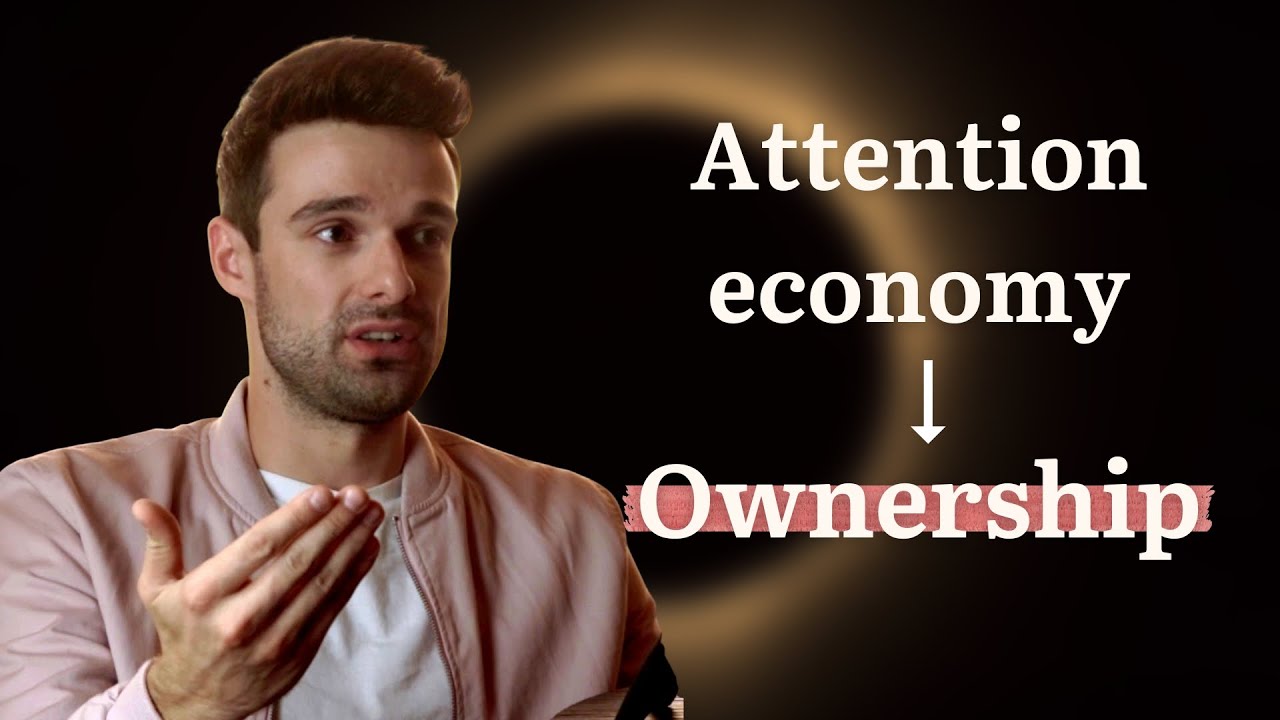
Fuck the economy going down, right? That's exactly what Web3 is about. It's really creating a new economy in the digital world, which we called the ownership economy. The— on the internet right now, we are very much in an attention economy. Attention of the users is basically the currency of the internet, because this is what gets monetized, right? In a website like Facebook or YouTube or all of the ad-driven business models, basically the attention of users is what gets sold to advertisers.
Right.
So the attention is the currency of a lot of those of those, you know, of those properties on the internet. On the metaverse, it's a little bit different because again, users, yes, they have to commit with their attention to be part of those environments, but they also get rewarded. They can invest in the token, they can invest in land, they can invest in various assets. So the real currency is about what they own. It's about the ownership in those assets. The users that are building the world by creating this content becomes owners in that, in the world as well, and therefore financially benefit from the growth of these platforms. And if the platform goes down, they also go down. It's part of the risk of being an investor. But at least again, the incentives are aligned and the main currency of that new economy is ownership as opposed to being attention.