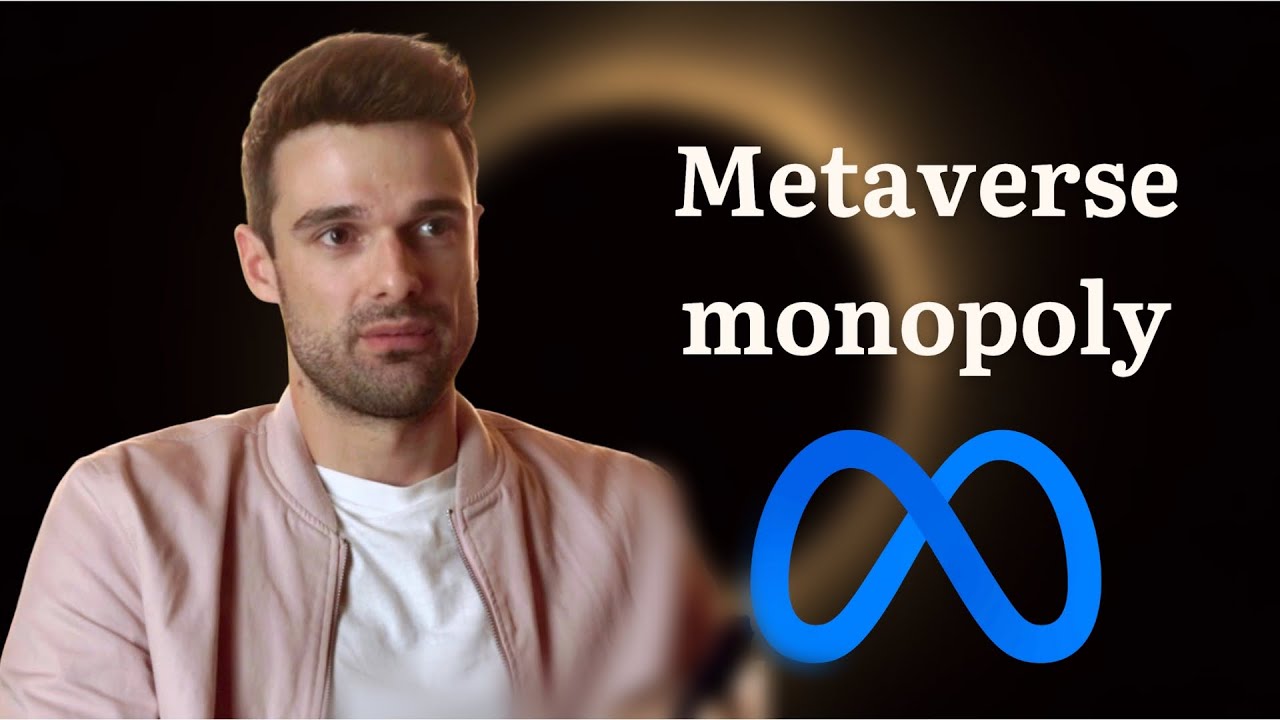
In this interview, Sam Huber, CEO of LandVault, outlines the practical obstacles to achieving an open, interoperable metaverse. He explains that differing graphical fidelity across worlds—such as voxel‑based platforms like The Sandbox versus more photorealistic environments like Decentraland—makes transferred assets appear out of place, and that converting assets between many platforms adds technical complexity. Huber argues that dominant platforms (e.g., Fortnite, Roblox) have little incentive to open their ecosystems because billions of dollars are at stake, leading to fragmented standards and limited cooperation. He predicts the metaverse will evolve into a tiered ecosystem resembling social media: a few large, agnostic platforms that attract mass audiences, followed by niche, contextual platforms (sports, music, etc.). Consequently, interoperability among the top platforms becomes crucial. Huber describes LandVault’s role as a platform‑agnostic construction company that builds on any metaverse, leveraging Web3’s decentralized architecture to enable cross‑platform development. He emphasizes that the convergence of gaming technologies and blockchain creates new digital‑ownership business models, allowing borderless transfer of assets and heralding a new phase of the internet.
Chapters
Well, no, I was just describing what interoperability is. I actually think that practically it's something that will be very difficult to put in place. There's 2 reasons. One is the graphical fidelity between worlds will be different. So someone like The Sandbox, which is one of the metaverse worlds, is a voxel-based platform, which means that You know, it's basically built with like cubes, like Minecraft. And then you have a platform like Decentraland, which is slightly more realistic. So even though you can bring a certain item from A to B, it will look pixelated or voxel-driven in a more photorealistic world. So there will be a problem in the way that things look, right? Even though, you know, the blockchain enables you to transfer assets from one place to another.
Right.
it will look out of place. So how do you solve that? That's a big problem.
Some really strong API.
Yeah, right. There's companies trying to convert assets, you know, from one to another, but that becomes complicated when you have a lot more platforms. So that's one problem. And then the other problem I think is the problem of incentives where I just, you know, learning from the lessons of Facebook and what happened and, you know, all the big platforms, when you become the dominant force, what's the incentive of opening your ecosystem to all of these smaller players. Of course, the small players want to be compatible with Fortnite. They would want to be compatible with Roblox. But from their perspective, why would they make those assets? You know, it's obvious that the other platforms are going to siphon some of the audience that they have, and they have very little to gain. So I think as the big platforms become bigger and bigger, the incentives to be interoperable are going to be limited, and everyone will want to enforce their standards. not work on the basis of common standards. So there are a few like groups, you know, pushing for interoperability and you can see companies joining it, but nothing is really coming out of it yet. There's no standard for interoperability. I just don't see who has the real incentive to make that happen. There is obviously this, you know, this great vision to make that happen. But we know when billions of dollars are in the balance, It's likely that this will take over the grander vision. So I think, you know, practically speaking, full interoperability might be difficult. But the good news is that the blockchain, which is the second component— when I talked about the convergence of 2 forces to create the metaverse, is gaming technologies that are going to be used for use cases beyond games. And the other one is the blockchain. The blockchain creates this new business model. this new economy, I'm sure we'll talk about, that enables ownership of digital items and basically to transfer assets without borders. And if you layer these 2 things, this is what really creates this unique moment in time with the convergence of these 2 forces that will lead into the next phase of the internet.
I love it. No, it makes a lot of sense. Where do you stand when it comes to platform monopoly? So Like, what's— if we had to guess, you know, we push ourselves a few years in the future, let's not think about the timing yet, but where do you think we'll land realistically? What's your guess? And then what can we do to sort of make, like, sway from one side to the other?
I think metaverse platforms are going to follow a distribution that would be fairly similar to social media, in my view. So you'll have, you know, your Facebook and your Instagram and your TikTok, which are like the big platforms that everyone pretty much uses. And those would be fairly agnostic, you know, platforms that don't necessarily have a specific use case, but would be very good at just attracting people. And then the network effects will form. And then if all your friends are into one, you're more likely to get there. The audience will attract brands, brands will bring a new revenue stream, and so on. And it's just kind of, you know, snowballs from there. And then I think you'll have your second tier of platforms as well, which might be more contextual. So you might have, you know, a sports metaverse, a music metaverse, which caters to that audience better and therefore attracts, you know, more like very close-knit communities, but maybe less people overall. So I think, you know, there's still gonna be a big dominance in only a few, a handful of metaverse platforms, because at the end of the day, it's like, It's like, you know, it's like the internet or social media platforms. Like the value is driven by the people that are there and people are not going to be part of 30 different platforms. So yeah, that's the way that I see it. And this is why I think interoperability between the top platforms is going to be important.
Interesting. Interesting. So are you fighting for a specific narrative? Are you trying to, you know, be one of those platforms that suggests It's how it looks like, how we should behave, etc. Or are you fighting for the interoperability aspect?
Well, at LandVault, I mean, we are— the good news is we are not building the platform itself, right? We are basically a construction company that builds on top of those platforms. We haven't talked yet about why that is possible in Web3 and not really in the previous phase of the internet. Basically due to the way that those platforms are decentralized and the different layers of creativity that they enable. But by being agnostic to the platform, you know, we can build anywhere. We are basically builders of those worlds. So for us, you know, whether it's 2 platforms or 10,000 platforms, it just adds a bit of complexity. But the business is pretty much agnostic to that.