The Entrepreneur Blueprint with Mike Milligan (Ep. 64)
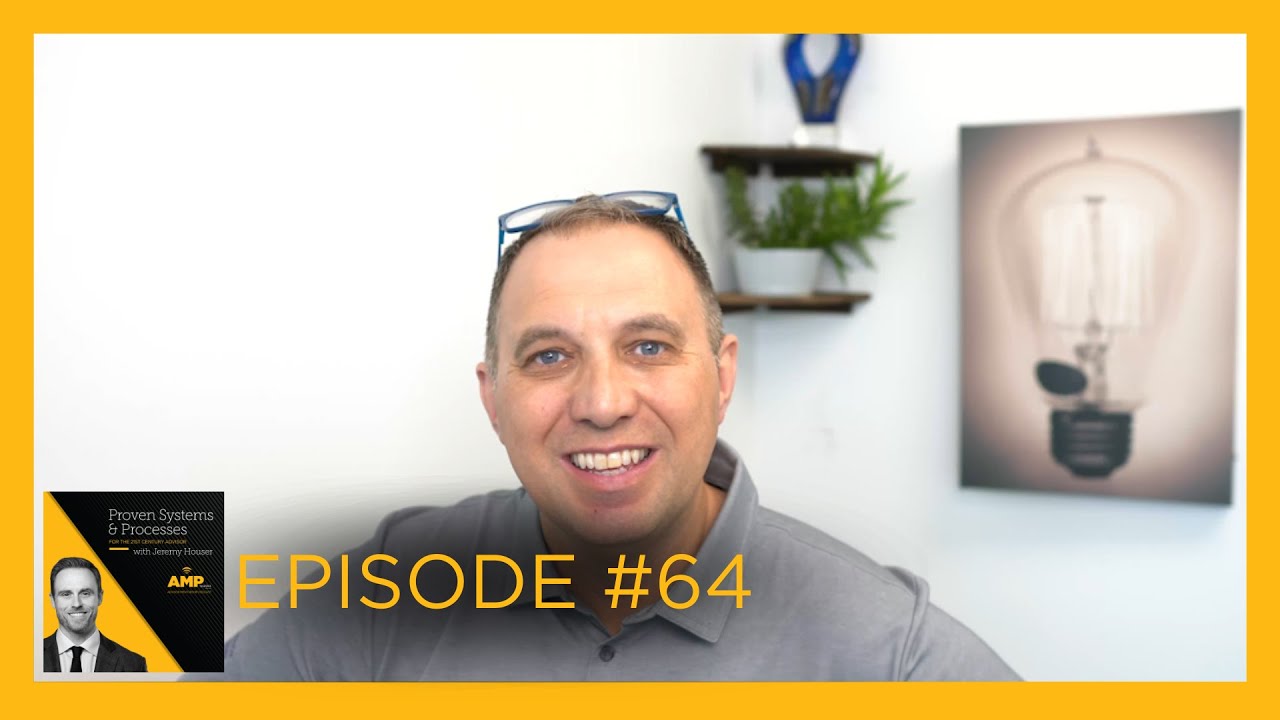
In this episode of the InsurMark Advisor Mentorship Podcast, host Jeremy Hauser interviews Mike Milligan, CFP and founder of Ideas by Mike, about his journey as an entrepreneur in the financial‑planning industry. Milligan explains his mission to reshape retirement planning by serving clients who don’t fit the traditional advisor mold, leveraging a 100 % virtual practice that reaches clients in all 50 states. He shares personal inspirations—from his grandmother’s small‑scale entrepreneurship to icons like Jeff Bezos, Steve Jobs, and J.P. Morgan—and how those stories shape his business philosophy. The conversation covers the post‑COVID shift toward nationwide, digital client acquisition, the use of social‑media platforms, webinars, podcasts, and a rules‑based investing approach designed to remove emotion and anxiety from portfolios. Milligan discusses team building, citing Dan Sullivan’s “Who Not How” framework and the importance of hiring diverse talent from outside the industry to sustain growth. He also highlights common challenges faced by business owners—overwork, under‑payment, and resource constraints—and how a clear mission‑vision, strong culture, and competitive benefits can attract top talent. Throughout, Milligan emphasizes adaptability, the impermanence of business models, and the need for continuous innovation to capture the $170 trillion wealth transfer expected over the next decade.
Chapters
Systems work, people fail. Welcome to InsurMark's Advisor Mentorship Podcast with Vice President Jeremy Hauser.
What good is an idea if it is never implemented? Welcome to this week's episode of the Advisor Mentorship Podcast. I'm your host, Jeremy Hauser, and today we are going to chat with one of the top entrepreneurs in the financial service industry. He is an entrepreneur that is a certified financial planner who runs a 100% virtual practice to help people all throughout the country with their retirement planning needs. Our guest today is Mike Milligan, owner of Ideas by Mike. How are we doing today, Mike?
I'm good, Jeremy. How are you doing?
I'm doing good. Well, we just had a tornado come through Houston, but outside of that, we are doing all right, to say the least.
Well, I see that you adapted fastly this morning.
Yes.
In order to get in order to make this work. So, I appreciate that.
Yeah.
So, looking forward to our time together today.
Yeah. And that's what we'll dive into the topics. So, definitely want to do a great conversation around entrepreneurship and being flexible, literally living through this right now here in Houston. So, one thing that for the audience to know, we actually had a conversation a couple years back. So, that's why I'm very excited to have you back on as you continue to grow your business. First time we were chatting roughly 2 or so years ago, a little over 2 years ago, I believe at the time you just hired a couple people on staff. So, you went from a one-man shop to 2 people to then 3 people. And now, you'll probably give us an update of where you're at today. So, why don't you share with the audience a little bit about the mindset of an entrepreneur and what drives your business?
Well, I, I think an entrepreneur sees problems as opportunities. I know that's very cliché. Right. And that's something that we all, you know, have heard before. But an entrepreneur doesn't get trapped in conventional wisdom when it comes to solving problems that are out there. They believe in their mind that they see a new way to take things that are complex and make them simple. You know, I am a financial planning professional. A certified financial planning professional at that, right? That came through the banking world to eventually work in insurance companies. And then as a financial advisor to now where I consider myself a business owner with a mission to be different. My life mission from this point forward, as it has become very clear, is to change the financial planning industry.
Mm-hmm.
My team wants to work with individuals who don't fit the mold of traditional financial advisors and financial advisory firms who have a mission to do what's in the best interest of their shareholders, you know, and do, you know, do it the way they want to do it versus what the clients need. But the other ways I want to change the industry is I also teach at Old Dominion University in the financial planning field. We're, we're creating the next generation of financial planners. And I also coach newly licensed people that have been in the business for about 5 years. I coach them on what it takes to kind of be exceptional in this field and to think different. I do. I really do all this, Jeremy, because I want Americans' retirement to be different than what it currently is projected to be. I want it to be secure, and I want them to live without fear and anxiety in retirement. And so, yes, I am a certified financial planning professional, but I am an entrepreneur at heart, looking to kind of change what's going on in this industry.
And I mean, incredible how you give back, obviously, to the to those that you're trying to help? I heard a lot in there with vision. Obviously, that's a huge vision because financial service industry was well around before you and I were born. So, that's a big vision. So, who are some of the folks that you actually try to emulate when you're growing your business?
See, you know, when I first started in this business, you know, I saw like my peers, right? Other financial planners, other financial advisors is who I wanted to emulate. And over 25 years in this business now, I, I feel like I've gotten, I've gotten toward the top of the financial planning field. I think that, you know, I get asked to speak at events. I get asked to coach new, new folks that are not even with our company. You know, getting asked to teach at Old Dominion, you know, I feel like I'm at the top of the field. So, like, now I've had to look outside of our field. To try to get inspiration, and like so there's most people look at you know some people as success stories. You know visionaries, right? Think of like Jeff Bezos. He was you know the the creator of Amazon. He was a banker that turned into a hedge funder who turned into the founder of Amazon with the initial mission. of being the best book club on the internet. That was his mission, right? Steve Jobs was a dropout from college, and he did that so that he could be a video game designer. And he spent time in India in pursuit of, you know, like his calling in life. And, you know, he created the most innovative company, in my opinion, the most innovative company still today after his death. You want to talk about a legacy? That's a legacy. And even if you look back even further, J.P. Morgan was one of the men who built America out of the Panic of 1893. That's the one we never talk about, right? We always talk about the Great Depression, but the Panic of 1893, he turned around and turned U.S. Steel right, into the first billion-dollar corporation. See, Bezos wanted Amazon to be the Earth's most customer-centric company. Jobs wanted— he came up with this campaign when he came back to Apple the second time called Think Different, right? That was both for his employees and customers. And JPMorgan said, you know, through his time, like, his vision was, Like, if you have to ask how much it costs, you probably can't afford it.
Right.
See, those are people that I think about now. But, you know, real entrepreneurs, they see those as inspirations, right? And then they start looking in different industries for people to compare themselves to and compete against because winners like to compete. Entrepreneurs like to compete. They're winners. But then they also have something that's very personal. Right. And I have 2 very personal stories, one that centers around my grandmother having to turn a life of tragedy, right? You know, when she found out the love of her life for over 50 years had cancer, who had been the primary breadwinner, she had to become an entrepreneur at the age of 64. And she grabbed a little 11-year-old middle school snot-nosed kid, which was me, and brought me along for her entrepreneurial journey. Like selling collard sandwiches. And I got to walk through the journey with her hand in hand on how to grow a business to survive, not to thrive. Right. My, my grandmother was never trying to thrive. She was just trying to survive. She was just trying to live. So I saw that entrepreneur spirit. And then through other tragedy in my life, like my brother passed away in a car accident. It's been almost 3 years now. And to see the impact my work as a financial planner impacted his life. So, like now, I am on a mission to change the industry because it's personal. But I do have heroes and inspirations that are outside of the financial planning business and the entrepreneurs, because Bezos, Jobs, and JPMorgan, they were entrepreneurs. They started something from zero. I'm not ever saying, Jeremy, that Ideas by Mike is going to be the, you know, the most client-centric company in the world, right? I do think that we think different inside. But, you know, I love the comment from Morgan, like, if you have to ask how much it is, you probably can't afford it. And it's one that I use in our business often. So that's where, that's where I try to get, you know, my inspiration for growth. It's from, it's from, you know, Mount Rushmore people in business, but it's also my grandmother in how I, in how I grew my business.
And you, so you mentioned, so 25 years of doing this and looking outside the box, outside the industry. It's incredible. Actually, I didn't know that, to be honest with you. I'm kind of ashamed. I didn't know that about Bezos, that he was actually a hedge fund guy. But knowing that, so for 25 years and the fact of where he's taken his business, where have you seen the financial service business when it comes to innovation over the last 25 years? Where do you think the financial planning business is today and where all have you seen it As it evolves?
Well, you know, I think people have gone away from being local. It's not, it's not just about like the people, you know, of Norfolk, Virginia, or Nashville, Tennessee, or Houston, Texas, right? I think people have looked broader. I think COVID forced us to look broader. You know, I, and they're looking broader for the best solution for their situations. And they're turning, they're turning from advice, you know, from taking the word 100% of advisors and looking to be educated about what their money is. I mean, I think we're entering a time, I mean, this is my, and I think that, I think surveys and, you know, academics are are pointing us in this direction. This has happened. I think the younger generation of workers are going to continue to evolve and change. And what we know, Jeremy, what you and I know, and what we tell people all the time is there's like $170 trillion of money that's going to change from one generation to the next over the next 10 to 12 to 15 years. And we also just saw like this YCharts article, remember, that we saw from 2023 that showed that You know, almost 50% of folks in 2023 changed advisors, and there were more, even more looking to change advisors. Because I, you know, what I think is happening is people are starting to realize that the guy down the street is not necessarily, or is not necessarily the person who can help me because that name that's on the door, when it's not their name, They're not as invested in my future as they are invested in the pay plan and comp grid of the company they're working with. And so, you know, I think it's really about finding a strategy for long term that people can deal with. And in our company, you know, we are looking for innovation that fits the needs for our clients. We, we look at rules-based approach. I know that, you know, in a podcast here soon, you're going to have some rules-based approach. index guys that are that we use a lot in our business. But we we use that to take emotions out of investing, and we help people get guarantees and protect what they have because I think that's what people really want is they want to alleviate fears and anxiety. That's what coming out of COVID I think was the biggest thing is they you know they they want to make sure that when that happens again in whatever that is. that they don't have fear and anxiety like they felt from February to, you know, really that whole year, right? That this world has changed forever. So, that's what we do. That's how we're trying to innovate. We're looking forward and not trying to do the exact same thing that this industry has done for the last 100 years.
Yeah, and you actually mentioned something. We just had, it was a monumental episode, but we had 2 experts in academia on the previous episode. It was Robert Shiller, Nobel Prize winner, And economics in 2013, and one of the things he discussed in there was talking about how the evolution since COVID for the last four years now, how people nowadays, especially when it comes to their work, he sees the foreseeable future. People are going to be living 100, 180 miles away from where they actually worked back in 2020, and that's just the reality of where people are. Siegel, Jeremy Siegel from. Wharton as a professor there. He talked also about having home real estate and wanting to work from home, slash people want to buy homes with houses. So there's a lot of things that continue to evolve each and every day that I think people nowadays also just are creating their own standard. So I know you talk to people across the country, like all over the country, so all 50 states that you're actually speaking to. Which is pretty remarkable for in the financial service industry. So what are some of the common challenges that you're seeing from, let's say, business owners that you talk to in different states across the country?
You know, what I, what I see is a common theme, right? You know, I, Jeremy, one of the things that I do is I feel like I talk to people different than what the media talks to people and what like most financial advisors will talk like. I just see things for how they are. And, you know, the goal is, is if we can take the reality and just make it better for somebody, like, you know, we're going to have interactions with, you know, in our company, we're going to have interactions with thousands of people this year, if not 10,000 people, to be honest. You know, we're going to have interactions with tens of— we're going to pop into their life. Some of them are going to be clients, some of them are not. And, you know, the goal is to help make their life better. But one of the common things we see is that business owners are overworked, underpaid, and under-resourced. And it's no different really than employees of like the federal government or people who are in corporate America. See, many business owners are putting in 70 to 80 hours of work per week. Right. And they do it because they love it and they feel like they can change, change their slice of the world in some way. And I applaud all the people because, you know, I put in, I put in work in our business, right? I'm spending time with clients. I'm spending time building up our team, which is up to 12 people now. And then the people we deal with outside, you know, we have probably another 100 to 150 relationships with people outside that we can, that are not even clients, that are, that are business owners trying to grow. See, it's one thing. It's one of the things that I struggle with because when you're a true visionary, Business owners see those problems that they know they can solve. I mentioned that earlier, and they really feel that it's their mission to solve it. And I feel no different. And there's people who are— that are solving real-world problems, right? Or really problems people didn't even know existed, right? To make people's lives better. And that's what business owners are seeing these days.
And innovation. I mean, I mean, yeah, to, to your point, you mentioned a lot about resources and that's one thing for business owners too, is it's not about, although there's, we talked about, uh, an Amazon, so there's Bezos, people know about him.
Yeah.
But it's not just Bezos, it's a team that's behind him and hiring the right people. So how important is the right team for today's entrepreneur when it comes to staffing and having the right people around you?
Most, most business owners are big personalities, right? And I'm— you laugh at that, but it's 100% true.
They—
business owners come with an ego. They come with it's my way or the highway. And they also see the company's money as their money, right? Which in reality it is. I mean, the IRS sees, you know, you know, a sole practitioner's money as, you know, the individual's money or their LLC is their money. But like, you have to get out of the context of like, you know, my way is the best way. You know, it's all my money because it's not, you know, it's— you have to, you have to get into a growth mindset that there's other people there. So, Dan Sullivan, we, you and I know Dan Sullivan. He wrote the book, Who Not How. And one of the— it's one of the biggest transformational books I ever read. I— it got me out of the way of wanting to do everything myself or even really wanting to know about every detail of my company right now. I hire really talented people, right, that I can express vision to. That they can catch. And I continually put the vision in them that we are going to be a dynamic financial planning company that are going to— that's going to break the mold of traditional financial advisors when we're going to help our clients to have an impact, right? I say that vision over and over again. And then we have a motto in our business that everybody has to know, but they have to live, that we create One of a kind financial plans for our clients. One of a kind life because there's nobody at everybody we talk to. There's nobody average, right? And when we have mission and vision on those two things, and everybody gets it, and you get the right people in place, you can go. I on the last podcast you and I did together, we talked about how you can how you should build a team. You know, how I found Caitlin and how I found Kelsey, because just like I'm trying to be a dynamic financial planning firm, and I'm looking for inspirational leaders outside of our business, you have to, you know, you sometimes have to get outside of your industry as a business owner to find other thoughts that can help solve your problems and help you get out of the way. And so, you know, I, I believe that strong people who are successful doing other things like Caitlin was in the court system, like Kelsey was in serving the retirement community as an activities director, as Liz was in client management in a totally different industry, as Katie was in concierge mortgage.
Right.
And I can go on and on about our team. But just as they brought— bring those, those shared skills into our company and then they catch the mission statement and the vision statement, then we can really change this industry. I mean, I'm not trying to be— I mean, I'm not just saying that just as some, you know, just something to, you know, as a rallying cry. I really think we can change the industry, but it's about having the people to do it. And I know that we're going to have to grow. I know that, you know, if you There becomes a point in everybody's business that growth, that sometimes you grow just because, right? You have no reason to grow. But when talented people come along who can influence one of your, you know, can influence your mission or your vision, you have to create room for them, right? You have to give them some direction, but you create room for them to expand your business. Jeremy, you're a father. And I'm a father.
Yep.
And we've had multiple kids, right? And like when I had Zach and you had Patrick, our first kid, right? We, we just got this amazing love like right away. But then like when we had Grace and you had Olivia, you don't— you didn't love Patrick any less and I didn't love Zach any less. The love just grew, right? And that's, and that's kind of like in your business, right? We've got this great capacity individually. Like to where love just, just grows when a new person comes into your life that changes your life. It's the same in your business, right? Your business can grow when you bring somebody that's really talented into your business and let them do the things they're passionate about with the vision and the mission that you've put in place.
I completely agree with that. I'd say when Olivia was born, It was definitely a different experience because it's a, it's a little lady that you're bringing into the world. And I think kind of to do the correlation of the business as it grows, you really look internally and, um, as the business grows, you really start to focus on what you can control and that's you individually. So I think as businesses grow, people evolve. So that's, uh, yeah, that's very, Interesting perspective you just put there.
Same. And I'll agree with you about Olivia because like when Zach was around, right? I mean, he was like, he was like my little homie, right? We would go out and we would ride bicycles and if he would fall, I really didn't.
Yeah.
He's just like, get up. Right. And then when I saw Grace for the first time, right, it's interesting. You had a boy, then a girl. So did I. When you get this girl, right, it's like a whole new reality. Yeah. Right. And it's like that in business too, by the way, right?
Mm-hmm.
Because like when you go from like 2 employees or 3 employees to 12 and you see that payroll number every 2 weeks come out, you're like, oh my gosh, this is a reality, right? You know, when you all of a sudden see your payroll number on an annual basis be 7 figures, right? You know that you've got a thriving, growing business. When you see the end of the year profit, be 7 figures, you're like, whoa, we are creating something internally, we're creating something special. And then when you look at like what your clients are saying about you, like on, you know, like on your reviews, right? You know, internally, when they're, when they're referring their friends and family in, you're like, wow, we've really got something here. Now, just like a family, right?
Yeah.
A business, a business can always clean up some things, right? You know, in the, you know, in the family, we could eat out less, you know, we'd have more time with our kids and all that. In a business, right, we can become a little bit more profitable. You know, we can do things a little more efficiently. Right. But you don't want to lose kind of like—
Yeah.
What I don't want to lose in my business is the ability for each individual member to shine. Right. To bring their creativity. I don't want to squish them. Right. I don't want to squish their growth. You know, I want people to come to my business and try to hire my people. Because that means they're really talented. Now, what I have to do is I have to compete. I have to offer superior benefits, a great work environment, you know, you know, top of the level pay, right? I have to show them that our mission and vision is being hit and that they are part of that, right? It's not Mike. It's called Ideas by Mike, but it's not Mike doing this, right? The goal in my company is to create a business so powerful That if I am not here, it can continue on, right? And it can continue on and grow from that point forward.
And for— and that's one of probably the biggest challenge I would say in most fields, if not all, is getting in front of the right ideal client in the advisor world, outside the advisor world as an entrepreneur, always looking to enhance your marketing and resources to get your name and brand to people. So how have you actually seen marketing or what have y'all done to switch up things? I mean, 50 states that you're marketing in. So I take it it's pretty challenging to try to catch the consumer. So talk a little bit about over the last couple of years what y'all are doing and how people can find you on, on the marketing front.
Well, so like if you were, you know, 5 years ago, pre-COVID, right? advisors were doing in-person seminars, right? Or they were getting referrals from existing clients they were meeting at their conference table, right? See, see, like you're, you're literally, Jeremy, right now we're talking and you're at my conference room table right now.
Mm-hmm.
You know, I tell people that, you know, I'm in your home, right? I'm in your office, right? This is the new way we communicate. So, you know, you, you know, 5 years ago, pre-COVID, right? That's the way everybody was operating. They were operating on a conference room standpoint. They were trying to meet people organically, locally through referrals, maybe paying some people to teach them in libraries, right? You know what I— what we do is in this kind of post-COVID world, and I know people always hate to hear that, but that's where we are. That's the reality. And the further we get away from it, we're still in a post-COVID world, right? You have to realize that behaviors, behaviors, when something that traumatic happens, in the world, behaviors forever change. Now, there's going to be some people who fight them and want to go back to the old ways, and there'll be a small people that are successful in doing that. But we have forever changed how we operate and do business, not just Ideas by Mike. Everybody has, has, you know, the consumer's needs have changed. They have totally changed. And so, and so one of the things that, you know, You know, one of the things that in this, you know, we're, you know, the financial services business has been around even before the Great Depression, right? But, you know, it's evolved tremendously over the last 100 years. But we just had that transformational change in COVID. So one of the things I see is, just like before, you met people where they were, right, or where they wanted to be met, we do the same thing. Now, we meet them through social media engagement, right? We meet them through website engagement, we meet them through referrals of people in the neighborhoods. One of the things that we tell, you know, I'm giving away some secret sauce right here now, Jeremy, for people that are actually in this space or trying to aspire to be virtual advisors. One of the things we tell people over and over again is that a lot of the clients we meet who don't meet the traditional mold or don't fit the traditional mold of financial advisors have their money in their company plans like 401s, you know, thrift savings plans, or even IRAs that they self-manage. And we're meeting them in a spot where they don't want people that who are their next-door neighbors, or people they go to church with, or people they run into the grocery store to know what they have. You know, that, you know, the famous book, you know, Millionaire Next Door, that's probably 20 years old now, talked about that the average millionaire drove an F-150 truck and, you know, you know, had their money in the corporate plan. I tell people that, you know, working with us, we meet you where you are, but it'll it'll allow you to maintain your privacy.
Mm-hmm.
So, nobody in your community, right? Because I meet people where I am. You know, I'm in Norfolk, Virginia today. You know, when I'm in Houston, I meet people there virtually. When I'm in Nashville, I meet people there virtually. When I'm in Paris, I meet people virtually. They don't know where I am. If they ask me, I tell them. But we meet people where they are. And one of the things that's interesting is we tell them that privacy is important to you. Because you haven't gone out and sought advice locally before. But you're going to come to a point, whether it's today or in the future, that you're going to need help with your finances. You're going to be mentally slower, physically slower. You're going to want to take care of the people that are important to you. You're going to take care of the charities that, you know, you've impacted. And part of that is we'll go on the journey with you. The journey is just not this call today. The journey is for the rest of your life and beyond. Right. And so we have to, we have to show people that through this post-pandemic shift, that there's people who are ethical, trustworthy, who can, who can deliver for them, and who want to build a plan, a financial plan that goes for their life. It's not a transaction. It's a plan. And that's what we're, that's what we're able to accomplish. That's why, that's why we look at like, So, we look at Amazon so much and we look at Apple, like in their business models to compare our virtual models because those really are 2 virtual companies if you really think about it, right?
Right.
And in those virtual companies, they've been able to build brand loyalty and brand identity that's different than any other, you know, financial company per se or any individual financial planner has been able to do on a large scale. And that's what we're trying to do. on a large scale, build identity. So when people come and see us, you know, we, we do that. That's why it's so important, like our tools, our YouTube webinars, Instagram, Facebook, and forgive me, Jeremy, TikTok. Those are, those are our tools, right?
Yeah.
Or, you know, we have a podcast called Ideas by Mike. We use all of these tools to be able to get people to understand us, understand who we are. Because ultimately, every, every future client to us is a stranger to us right now, somebody we've never met. Every future client is a stranger. And, and what we know is that those strangers who eventually turn into clients have done all of their homework on us.
Mm-hmm.
They've Google searched us. They've watched multiple videos. They've attended multiple webinars. They've looked at Instagram. They've looked at Facebook. They've looked at our website. They know my story and what I'm going to talk to them about before. And think about the time efficiency that allows, Jeremy. I mean, it's just, it's an amazing, it's an amazing time efficiency saver. Yeah.
And I'm not— that's where really for the entrepreneur, and it's just, it's convenience as well too. It's on their time. They're not having to jump into the car. Um, I mean, being able to operate at Basically, your timetables is, is pretty efficient. And then, like you mentioned, I, I think the fact that your office and your operations can leverage what you're doing and constantly communicating with your, your people, it really sets the bar a little higher for Ideas by Mike's competition because a person who maybe just found you randomly on a webinar or on YouTube or wherever it may be, they can listen to hours and hours of you talking about what's going on in the financial space, real stories, and the fact that they can now jump on your calendar and they don't have to necessarily get in the car and go right down the road is pretty convenient. So, and wealthy people want convenience and wealthy people want to be efficient. So it makes sense. That's what made Amazon. Amazon is just very convenient. So that's why people don't leave it.
Amazon is, Amazon is pandemic-proof. Right?
Yeah.
You know, they are, they are global financial crisis-proof. You know, they are, you know, they're— if 2 countries decide to get in a war, right, you know, up until this time, they are, you know, they still earn money, they still make money because they're providing that the best client-centric experience on earth. And that was, that was his original, that was his original timeline for— or that's what he wanted for Amazon. He just started in the book business, right? But he— because that was the easiest, that was the easiest way for him to make an impact the quickest. But like when you see, you know, originally wanted to be the greatest client-centric business on earth and look where they are now. Do you think you— do you think they're done with their— with that vision, though? You think they're done with that vision?
Right.
He's not. He didn't say, you know, best in Washington State or the best in the United States. He said on earth. And I think if you were to ask them, they're not done by any stretch of the imagination. And they're, and they're at the top of what they do. I can't even imagine who they, you know, who they think their competition is. I mean, because it's not, right?
That's a good question. I'm not sure who that would be.
You should bring him on your podcast and ask him that, that one question.
Yeah, Jeffrey. Yeah, if you're listening, you're welcome. So, very good insight. I love the— there's so many nuggets here that we've chatted about. As we're wrapping up, is there anything that we missed out on or anything you'd like to share as we're closing out here?
I mean, the only thing I would share is that, you know, nothing is permanent, right? We try to grasp onto, you know, where we are at this point in time and, you know, where we try to grasp onto a saying, right? And make it a permanent, forever statement. And if anything has taught me, like, through my experience, right, through studying, you know, some of the greatest entrepreneurs, through building an aspiring, really great business— we're not there yet, but, you know, we're aspiring to be great. And we're aspiring to make an impact. If I've learned anything, is that nothing's permanent. You know, you have to be able to— you have to be willing to make organizational changes when you're with really talented people because you never know what they're going to bring to the table. And you have to be— and growth is just— it's a mindset that is, that is, that, that when you have a vision is far greater when you bring those talented people around you. So, I mean, I, you know, people can reach out to us on any of our socials. They can reach out on our website, Ideas. Everything is Ideas by Mike, @IdeasByMike or ideasbymike.com. Everything is that. And if you ever, like, if anybody's listening, wants to just reach out with a question that, you know, I can answer or my team can answer, you know, we're here. We're, you know, we're here to serve. Because at the end, our mission is, is, is three-pronged. You know, we're a dynamic financial planning industry that wants to help people that don't fit the mold of traditional, you know, traditional advisors. And the third one is the most important so that we can make an impact together. And if we can help anybody impact retirement planning space, or impact operational efficiency, or impact, you know, just clients, right, if there's clients who need, you know, something different than what they're currently given, We're here, right? We'll tell you if what you've got is good for you. And we do that quite often. Because if we're not here to take business or help people who have really good advisors, that's not our role. Our role is to help those who don't fit the mold of traditional advisors. It's not to take people from really good advisors. It's to help those who don't have really good advisors. So, I mean, That's how I would, that's how I would end.
And study shows in 2023, 54% of people did not like their financial advisor and they chose to go elsewhere. So I think that's a good market space. I think that's a good one.
I do too.
So appreciate your, your time, uh, obviously, Mike. Thank you very much for sharing your insight as an entrepreneur. Um, definitely very insightful, huge vision for y'all's company. Thank you also to the listener for tuning in and make sure to subscribe on your favorite listening device so you do not miss out on Any future episodes, follow us on LinkedIn @JeremyHauser and also subscribe to our YouTube channel, which is at Jeremy Hauser Amp. Make sure to check out those post clips. We usually post those on LinkedIn, YouTube from previous guests and upcoming episodes. You won't want to miss that. And as you share this podcast with a friend, and as we wrap up, remember, in a world full of betas, be an alpha.
More from Mike

How to evaluate AI growth stocks (Nvidia, Oracle, CoreWeave) beyond market hype

How to evaluate AI growth stocks (Nvidia, Oracle, CoreWeave) beyond market hype






