Customer Service HVAC Technicians 2
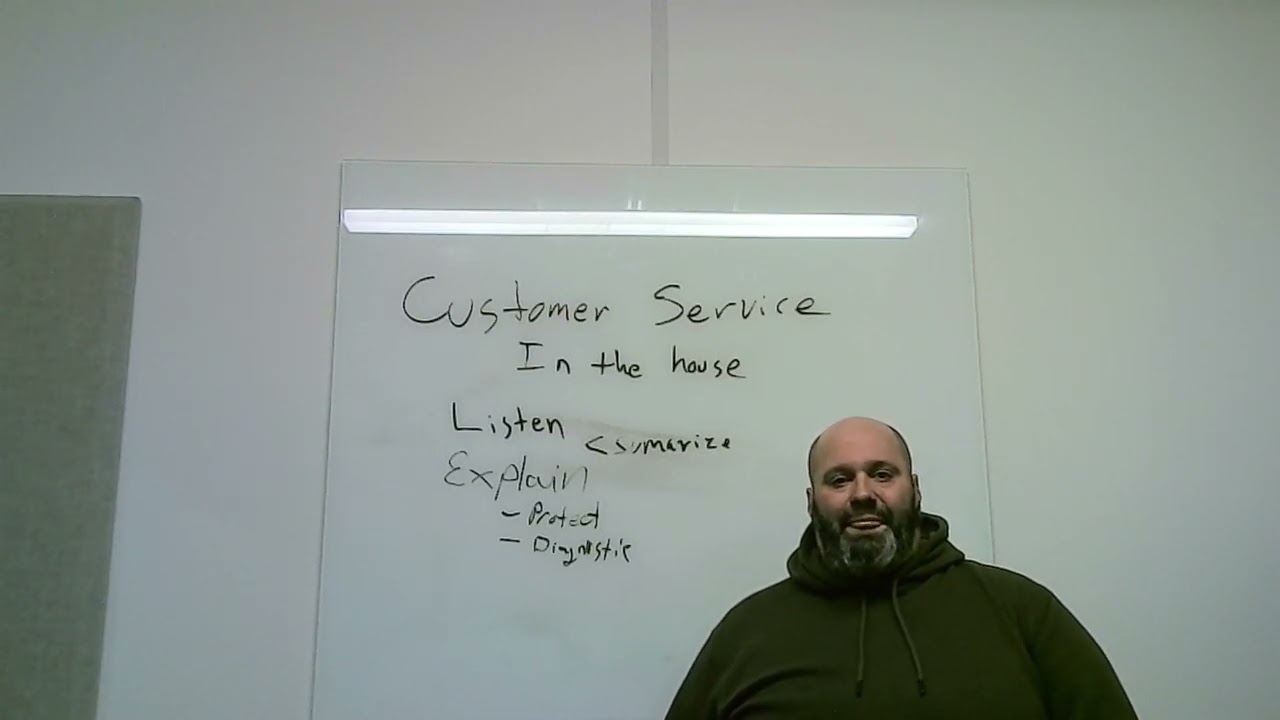
HVAC technician Mike Plezia walks through a six-step service call: ask open-ended questions, listen and take notes, summarize what you heard, explain your diagnostic plan, invite the homeowner to watch, and deliver clear findings with cost options. He warns against pushing unnecessary work and stresses that good communication builds trust.
Chapters
This is part 2 of our customer service lesson. Hi, I'm Mike. I am happy to be with you today and appreciate you tuning in. I'm just going over some helpful tips for you newer techs or for those of you who've been in the field for a while. So once again, like I've said before many times, I don't have it all figured out by any means. I'm just happy to share what little I do know with others. So if you appreciate this video, feel free to like and comment down below. And if you have suggestions for future videos or other topics that you'd like to learn more about, don't hesitate to go ahead and either put that in the comments or send me a private message. So in our last video, we talked about The things that you do to prepare for the day. Okay, before you even get to the customer's house, you have got to be thinking about how you're going to make your day successful. So what you're going to— and we also talked about what you're going to do before you get to the door, what you're going to do, how you're going to enter the house, and what you're going to do when you— If you haven't seen that video first, by all means, you're welcome to watch this one to its completion, but it might make more sense if you were to go back and watch the first video. So anyway, to continue, customer service for the HVAC technician is usually a bit different. It's not like when you go into a retail store where somebody's going to help you get the pair pair of shoes that you need, and they're going to be courteous and they're going to be polite, ideally. You are in somebody's home, okay? They've invited you into their sanctuary, into their safe and secure space. And, you know, that's a privilege. That's not something that I take lightly, and that's not something that you should take lightly either. When somebody invites us into their house, we are We are quite, quite literally treading on sacred ground, and we need to always respect that. So we've already gained entry into the house, uh, we've gained permission to enter the house, I'll say. Um, what is the first thing that we're going to do? Well, we're going to ask the customer, what's going on with your system? The purpose of this question is not so that we can tell them our wisdom of, you know, HVAC and what we can— what we're going to do to fix it. The purpose of that question is simply to listen. So when we listen to our customer, we're taking notes in our mind or possibly on an actual piece of paper. I highly recommend every technician carry a little spiral notebook with them. I carry these little ones that fit in my shirt pocket. And they're great. I love them. The first thing you're going to want to do as soon as you ask that question, what's going on, is you're going to listen. You're going to listen for some key points and some information that might be telling about the system. You know, was it working fine until today? Was it working fine until yesterday? What— at what point did it make any noises? Was there any, you know, anything unusual that happened? before the system stopped working? Has the system kind of gradually been just, you know, on the downslope declining? Those are all clues that you can use to diagnose the system. The other question is, you know, how does the air feel coming out of the vents? Both a heating or cooling call, you know, does the air come out strongly or hardly at all? Does the air come out nice and hot in the winter? Does it come out nice and cold in the summer? And, and what changed, and how long ago did that change? You might also want to ask them about their maintenance. Have you been getting an annual service on your furnace? Have you been getting your AC condenser coil checked every year? Do you know if when your condenser is checked, are they measuring by temperature, or are they actually hooking up gauges every year? How long since your system Has been installed? Is it original to the house? You want to ask good questions. Again, as technicians, a lot of what makes a good question, we will kind of figure that out as time goes on. You also want to listen to those who have been in the field for a long time. After a while, you will learn to key into those good questions. Obviously, you want to ask relevant questions. You don't want to be asking about your air conditioning system In the middle of January because that's probably not the system that's giving them trouble. But you want to listen. Listen to what they said. Listen to how they said it. If there is a hesitation, is there a, you know, I'd stop and think about this, maybe there's a clue in not just what they said but how they said it. You're going to listen and try to really kind of hone in. On everything that they're saying. Listen for keywords. Listen to key points. The other thing that you're going to do then is you're going to explain. Okay, now here's the thing, guys. If you walk into a customer's house and just brush past them, go straight for the basement and start digging in, you're gonna have to— you're basically starting from square one. For one thing, The first place you should be going is the thermostat anyway, not the basement. Secondly, if you had stopped and listened to the customer, they might have clued you in on where to go. Instead of starting from square one now, you could be gravitating toward a particular area or section of the system. So we're going to explain now, okay, well, thank you for that information, and actually In between here, we're going to summarize. We're going to summarize what the customer said. Okay, so what you're telling me is that the system worked fine until early this morning. You noticed that it was blowing cold air and that the temperature in the house was in the 60s, but it was fine when you went to bed. So now suddenly it's blowing cold air, and now it's blowing cold air continuously and it won't stop. So, you know, that's going to guide me in a different direction. But by summarizing that, one, again, that shows respect to your customer. That shows that you have— that you're thinking, that you have your brain turned on and you're actually analyzing what they're saying and taking it to heart. One thing that customers hate is when they try to go over what's been going on and the technician just brushes them off and they start their diagnostic process. Without even listening. So, um, which by the way, again, I've been guilty of that 110%, especially end of the week. You're exhausted, uh, you just want to go home. Just, just shut up, customer, and let me, you know, do my job. Get out of my way. But we gotta slow down because again, we're in their home. They're trusting us to fix something that's broken. And if we need to respect the privilege that we've been given to go into somebody's house, okay? So we want to summarize what's been said. We want to summarize the symptoms that they've, that they've named. And we want to explain our process from, from here on to the rest of the visit until we make our diagnosis. The The explanation should be short. So, I'm going to protect your home by— I'm going to lay down a mat or some kind of a tarp or something to protect surfaces. Now obviously basement floor by the furnace probably isn't a big of a deal, but if you're upstairs and maybe the furnace is in a closet, you know, and there's some hardwood floors outside, I mean, you might want to put down, you know, a drop cloth or something just to protect the floor. But yeah, I'm gonna, I'm gonna put down a cloth to protect your floors and stuff from, from my tools and things, and I'm gonna go ahead and check, you know, this system and that. I'm gonna start with the thermostat. Let's go ahead and do— let's go ahead and set that, uh, on and calling. And, um, you know, we're gonna make sure that that's actually doing its job. And then yeah, we're gonna go through the system step by step to determine what the nature of the problem is. And then you're going to— so in that you are explaining your diagnostic steps. I have no idea what that says. I think it says diagnostic. Sorry for the hieroglyphics. But yes, you're going to kind of explain some of your diagnostic steps and go through what it is. You don't have to go super in detail. You're not writing a book. Just let them know, you know, I'm going to test this. I'm going to maybe take an amp draw reading on the blower motor and on the inducer. Um, you know, I might put my gauges on the, uh, condensing unit. I'm going to check to make sure the coils are clean. I'm going to check your filter and, and just kind of go over the system and see what the, what the nature of the problem is. Um, you're going to let them know where you're going to start. And for me, The first place is always the thermostat, as I said before. Okay, so where I'd like to start is I'd actually like to go ahead and see the thermostat and double-check that that's working and doing its job. You may see me pulling the thermostat off the wall and rewiring some things. That's a normal test just to verify that the system works, that the problem itself isn't, isn't the thermostat itself. Because sometimes, for the customer, seeing, you know, you ripping things off the wall and then a bunch of wires hanging out, I mean, that can be alarming. They don't understand what's going on. What's going on. So just let them know, like, hey, I may put some jumper wires on the wires behind your thermostat, you know, that kind of thing. Just let them know, like, hey, here's what you can expect. Um, so here's where I'd like to start. And then you can let them know, hey, you know, and again, brothers and sisters, I know some of us do not like it when Johnny Homeowner is breathing over our shoulder. But to be perfectly honest, one thing they appreciate is being involved in the process. So I always invite them. Hey, um, you know, I'm good. I don't really need any assistance, but if you want to watch, that's just fine. I'm just going to go through some diagnostic steps. It might not be terribly interesting, but, um, you know, if you want to hang out, that's cool. It is your house. You do as you please, and I'll, you know, I'm just here to help you out. But I like to invite them, and you know what, probably 9.5 times out of 10, they'll hang out for 2 minutes and then they get bored and go away anyway. So really, what's it gonna hurt just to say, hey, you know what, if you want to come on, that's fine. The other cool thing is sometimes you have some pretty neat conversations with people. I've gotten to know some, some kind of cool people and have had some awesome conversations about cars and some other things that, that, you know, I really— it was, it was nice, you know. And sometimes we don't get to talk to too many people when we're out and about in the field. So, you know, you might just actually have a nice time visiting with the customer while you're going through the diagnostic steps. The, um, the final thing that you're going to do is you're going to summarize what the problem is. Okay, so Mr. Smith, I, after going through your system, I have found that there is definitely a problem with the inducer motor. So you're getting a pressure switch fails to close error code. So when I tested the inducer motor, you know, it's, it's very high amperage. It seems like it's hardly even spinning. So I'm thinking that the inducer is probably bad, or maybe it's the capacitor if, if your inducer has capacitor. Um, The you know my recommendation is this. So, so that's the point at which now the customer has to make a decision. Am I going to go forward with this or am I not? Usually before I get to the summary part, I've gotten my parts list together of what it's going to take to complete this this repair. Repair, and you know, what the customer is seeing is dollar signs. They want— they, they're just thinking, how much is this going to cost me? So this is the point where— at which you want to let them know, like, okay, so you know, your inducer motor with today's visit and labor, um, is going to be, you know, $500. So I can get that done today, or I might have to order parts and come back. I would have also at this point checked with my local supply houses to see, is this motor in stock? Or I'm going to check my van, do I have this motor? You know, if it is one that you have in stock, boy, that's great. So hey, I can— and you know, 9 times out of 10, if I can get this fixed today for you, it's going to be $500 and you know, it's done. You don't have to think about it anymore. I don't put it that way, but I'm just— between me and you. Yeah, it's great when you have the parts on your truck. Or I can get the parts locally and the cost is going to be $500, and, you know, I'm gonna have to run to the store real quick. I can come back and get this thing back up and running for you. Usually at this point, this is where things get a little nervous, not just because the customer knows, okay, now I'm gonna have to spend money. But there's also the— what I like to call the used car salesman effect of HVAC. Okay? So that is going to take us to our next video. When we return, we're going to talk about the used car salesman effect, and we're going to have a very frank discussion About the state of the HVAC trade and why it's so important that we as technicians remember that we are primarily mechanics first, and we are here to help our customers so that their systems work properly. We are— well, I'm not going to go any more into that until the next video, so please join me for that. Hey, if you have questions or comments or anything you'd like to share, feel free to add that in the comments. If you appreciated this video, or if you hated it, you know, feel free to send me a thumbs up or a thumbs down. Either way, it's the same. It's all interaction. Definitely share it if this is going to be helpful to somebody else. And, you know, I look forward to hanging out with you guys on the next one. Have a great day for now, and goodbye. Bye.









