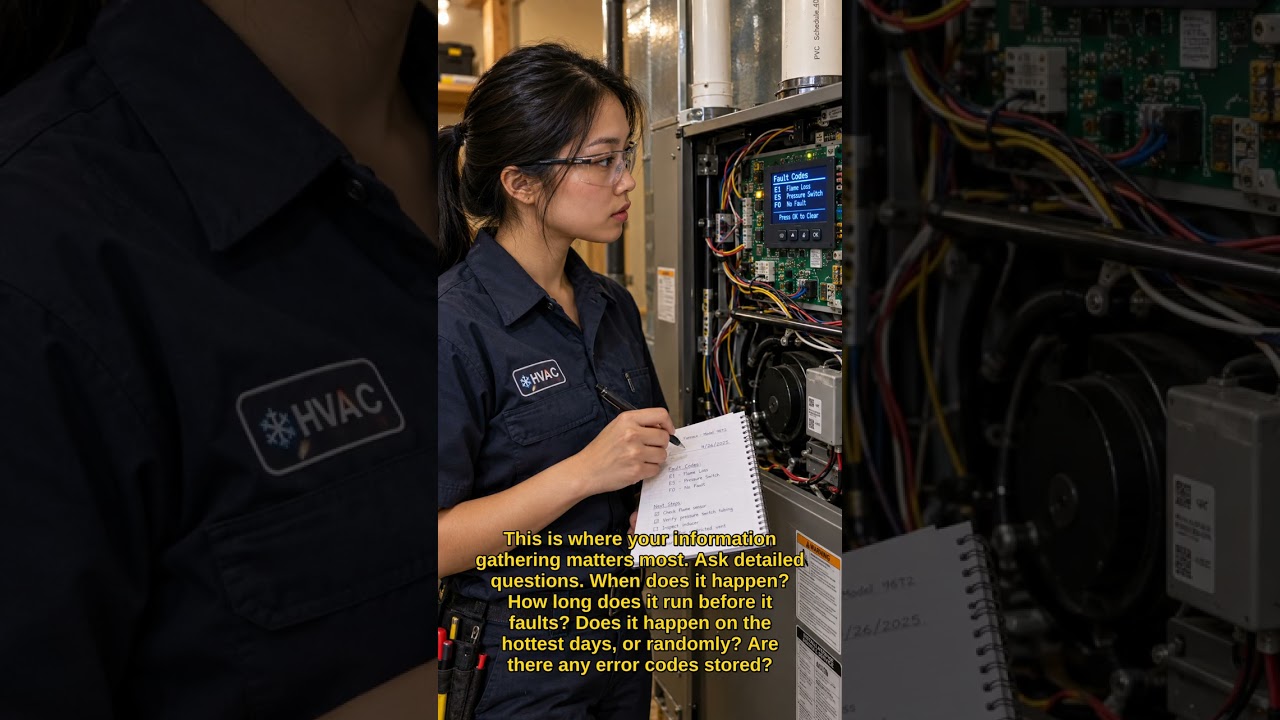
Intermittent faults vanish when you arrive. Ask the customer detailed questions about timing, conditions, and error codes. Check fault history, loose connections, and components like contactors that fail under load but pass cold tests. Document everything.
Chapters
Hey, are you new to the trades? Here's something you may not know about intermittent problems, the ones that aren't happening when you arrive. An intermittent fault is one of the hardest things to diagnose. The system is running fine right now, the customer says it fails at night. Nothing looks wrong. This is where your information gathering matters most. Ask detailed questions. When does it happen? How long does it run before it faults? Does it happen on the hottest days or randomly? Are there any error codes stored? Check for fault history in the control board. Look for loose connections that could open under vibration or heat. Check contactors and capacitors that are marginal— they may pass a cold test but fail under load. Don't clear codes and call it good. Document everything. If it comes back, you want a paper trail. Now that you know, you can help someone else know.