In this instructional video, Mike addresses new technicians, apprentices, and students in the trades, offering a beginner‑friendly overview of Ohm’s Law and its relevance to HVAC work. He explains the historical origin of the law, defines the three core variables—voltage, current (amperage), and resistance—and describes their inter‑relationships without heavy mathematics. Mike illustrates how to interpret real‑world measurements, such as low voltage and high amperage on heating coils or air‑conditioner contactors, to diagnose problems like corroded contacts or coil degradation. He introduces a hand‑drawn visual analogy of a tunnel to help viewers picture how voltage pushes, current pulls, and resistance squeezes the electrical flow. Throughout, he emphasizes safety, the importance of respecting electrical rules, and encourages learners to study the basics, ask questions, and share the video. The tone is conversational and supportive, aiming to build confidence in troubleshooting electrical circuits within HVAC systems.
Chapters
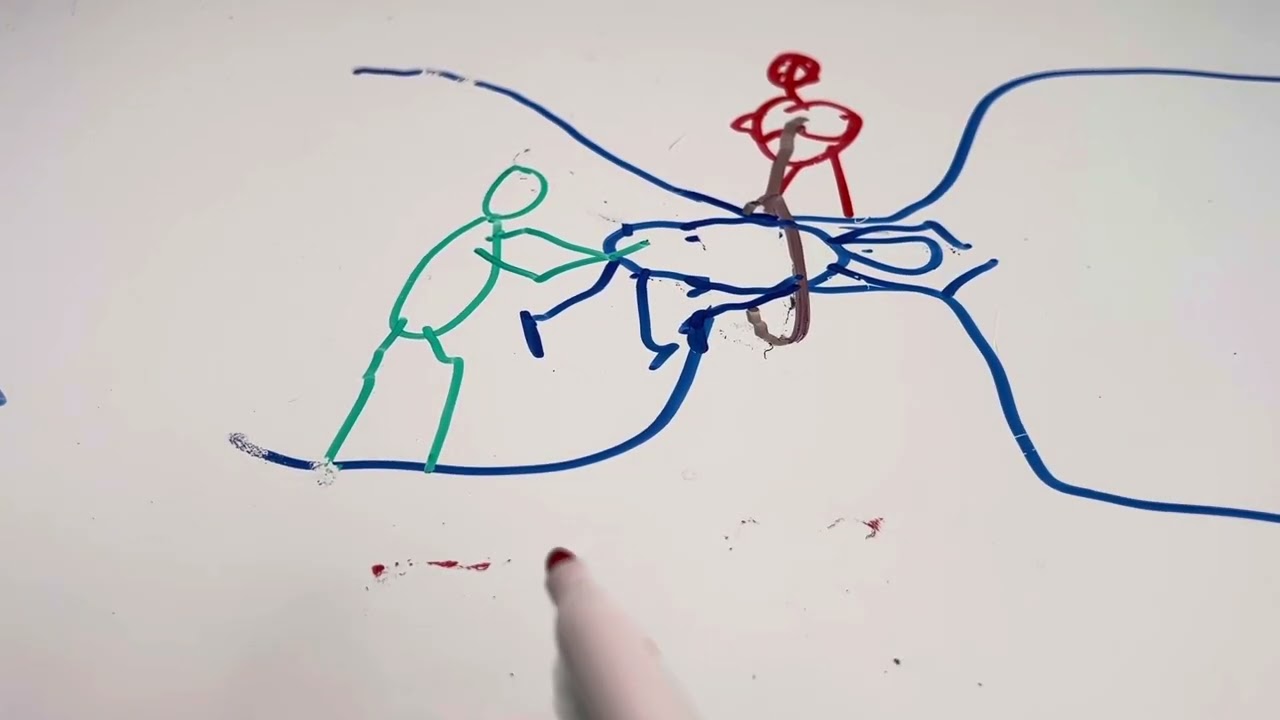
Hey everybody, it's Mike here to give you basic tips and helpful advice for new technicians, apprentices, students. If you are new in the trade or are thinking about a career in the trades, this is the video for you. Uh, by no means do we have all the answers, but you know what, we're gonna share what we know. And together we'll figure it out. So today we're going to be talking about a very important principle called Ohm's Law. Ohm's Law is important because it describes the relationship between voltage, resistance, and current flow, otherwise known as amperage, within an electrical circuit. Ohm's Law was first developed or written about by German physicist Georg Simon Ohm. Basically, his wording is that current flow through a conductor is directly proportional to the potential difference and inversely proportional to the resistance. While this seems a little bit heady for me and no doubt a bit confusing, especially if you're new to the trade, you might be wondering, well, why does this matter? Understanding the way that current behaves and flows through a circuit is absolutely vital in properly diagnosing and troubleshooting a system. Whether you are working on a lighting system, a walk-in cooler, a home air conditioner, or a meat slicer, all electrical current is going to follow these rules. So, Here's the thing about electricity. We don't make the rules. George Ohm did not create the law by which current behaves. Instead, he is the first one known to have written about it and to have discovered it, but we, as I've said before, we cannot ever really master electricity. The best that we can hope to do is to learn about its rules and the parameters within which it functions and understand that. If we obey its laws, then we can work safely with electricity and use it to perform useful work and to make our lives a little bit easier. Where we run into trouble and where we get sometimes injured is if we do not respect its rules. So Ohm's Law is really a compilation of 3 different formulas. The first that I want to go over is voltage. Voltage equals resistance— or excuse me, amperage times resistance, or intensity of current flow times resistance. So as voltage rises, the current in resistance will also drop. It's got an inverse relationship. Relationship with current and resistance. Likewise, current and resistance have a positively correlated relationship. As voltage drops, current and resistance rise. So Ohm's law is not one— we're not going to go too in-depth into the formulas and the mathematics behind it, but it is important that we just understand that as current increases through a conductor, resistance also increases. And as the current and resistance increase, the voltage is going to drop. So let's say you have a 120-volt heating coil that you go to and you measure. Let's say it's a 20-amp coil. So you go and you measure that it is at You know, 19.5 amps, so almost its full load. Voltage is actually measuring in at 82 volts. So that tells you that there's got to be a problem with that conductor. There's got to be a problem with the, with the coil. In other words, it's probably breaking down, and there might be some pitting or corrosion on the coil which is causing high High amperage as well as, uh, low voltage draw. Same thing across the contactors of a— or rather, across the contacts on an air conditioner contactor. Let's say you've got 240 volts coming in, but you— and the contactor's closed and the system's running, and you are measuring 40 volts on the output side. Well, clearly that means that there's a problem. You should have 0 volts read across a closed switch. So if you're reading voltage, then that means you've got potentially pitted and corroded contactors. You're also going to be experiencing high amp draw. So whatever your, your rated amp draw is on your compressor and fan motor, added those— add those together, and if your total amp draw is higher than, than what the rating is, then obviously you've got a problem. You've got high amperage. Uh, and low voltage, that means that there is something inhibiting the current flow. So this triangle is great for giving us an idea of how to formulate and how mathematically to work out Ohm's Law. But I don't know about you, but as a technician, I have never sat there kneeling beside a system calculating out voltage, uh, voltage, amperage, or resistance. Instead, I think of it More visually, kind of something like this. If you were if you saw on my TikTok, I shared this well a similar graphic. Obviously, I hand drew this. You know, I'm sorry that this is the height of my artistic ability, but I can draw a mean stick figure. Really, in the graphic that I shared, if I if it had if I had it up to me, amperage would have actually been over here pulling the guy. Through the tunnel. But voltage is over here squeezing through the tunnel while amperage is pushing it through, and resistance is pulling a rope squeezing the tunnel closed. The reason that amperage is increasing as resistance increases is because it's actually creating It's actually requiring more energy to push the electrons through that load in order to get to ground. So remember, as we've talked about in other videos, electricity isn't really, you know, in and out. In, here's your load device, and then back out, you know, the neutral, because there really is no neutral. Everything is heading back to ground. Instead, while directionally that may be the way that, you know, say a— A a light socket or a motor is hooked up, really the truth is that from the electricity standpoint, it's one straight path, okay? It's going from the source through the load and onto ground. And as it goes through the load, it is encountering resistance, and that's what's causing us to get the light or the movement of the motor or whatever it is. So, so back to our graphic up here. As we are— as voltage is able to go through, we have a potential difference. Let's say this is 120 volts, okay? Right here as it is, we've got a potential difference of 120 volts. If this— well, I'm sorry, if this is not being squeezed right here by resistance, we've got a potential difference of 120 volts. We should have no problem getting this guy through this hole. Now, if we squeeze the hole in the tunnel— We're going to require amperage to push harder, okay? But really it's pulling because it's the lack of, of energy at ground that is pulling the current through the load. So the potential difference then that we talk about with voltage is the difference between the power on this side of the load and the power on that side of the load. So obviously if we're encountering resistance, There should be some sort of a voltage drop across the load, which is why if you say you measure voltage from source to the motor, you will get whatever the source voltage is. Let's just say it's 120 volts. You'll get from the source to the motor, you would get 120 volts, but then through the motor Now that it's encountered resistance, you're going to experience a voltage drop. It might only be a couple of volts, but because that resistance has— or rather, because that current has encountered that resistance, it has now dropped the voltage. So Ohm's Law, again, is just the relationship between current, amperage, and resistance. It's not a Super complex mathematical formula, but it is kind of tricky to wrap our minds around. But when we understand Ohm's Law, it can give us a better understanding of what can be going on with our load devices, with our switches, our controls, and our safeties. Help us to understand what might be the source of a malfunction within a system. Ohm's Law is not something that was created by a man, but instead is the, uh, parameters under which electricity was already working since way before any human being walked the earth. It's important that we understand that electricity follows these rules no matter what type of a system, no matter how big of a system or complex of a system, it is still following the same rules. So as we continue to grow together, we're going to find that we always go back to our basics. So it would be helpful to you students to understand Ohm's Law, to take some time to read up on how Ohm's Law works and how it relates to the HVAC trade. Again, this is going to help you in having a better understanding of your diagnosis and troubleshooting of the systems that you're working with every day. So this has been Mike with, you know, tips and help for apprentices and students. If you have any questions, feel free to leave them in the comments. And of course, suggestions on future topics are always great. Hey, and definitely appreciate any likes you can give and shares. These videos are not made for any monetary purpose, but merely to help. And if you have a friend in the trade or a friend who's an apprentice or a student, feel free to share. Thanks, Mike. And if there's any way that I can be of further assistance, don't hesitate to reach out. Have a great day, guys. Happy learning and be safe out there. Bye-bye for now.