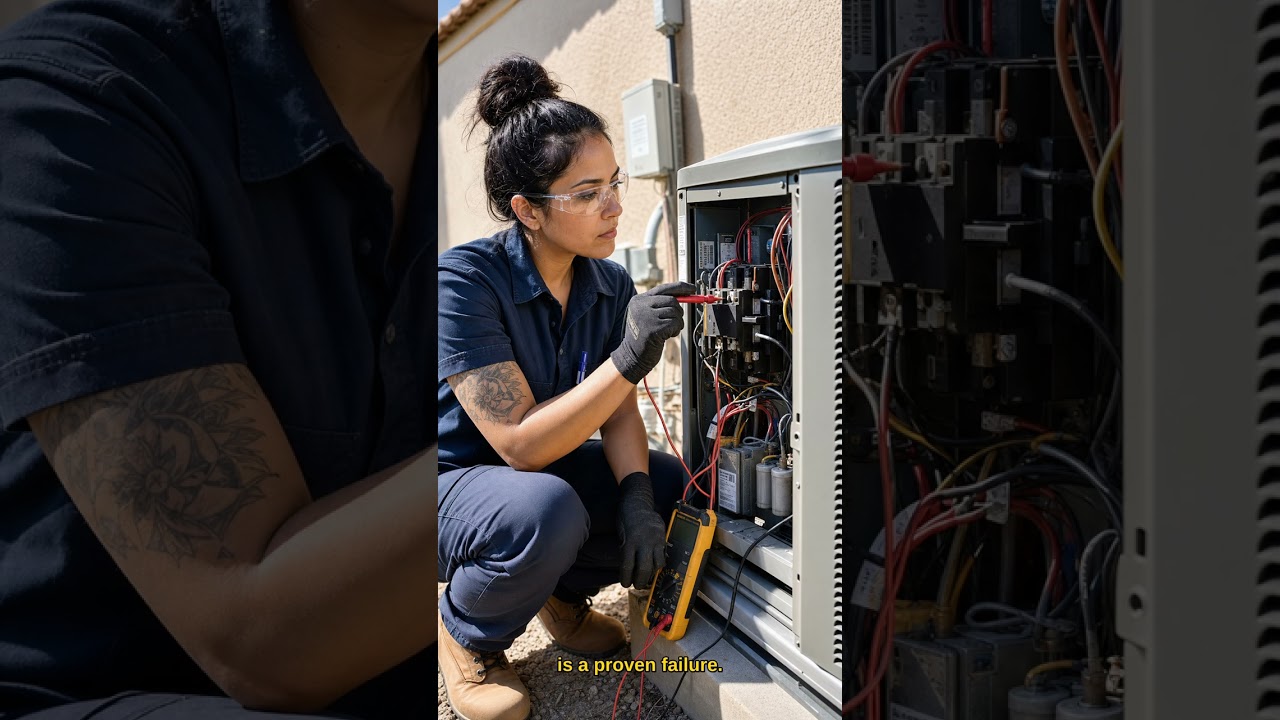
HVACR technician explains why you must test before replacing parts. Swapping a contactor without confirming 24-volt control signal, safety-switch status, or wiring continuity wastes time and money when the same failure happens again. Measure voltage, test continuity, inspect burned terminals.
Chapters
Hey! Are you new to the trades? Here's something you may not know about replacing HVACR parts. A part that is easy to blame is not always the part that failed. Maybe a contactor will not pull in. Replacing it without testing could miss the real problem: no 24-volt control signal, an open safety switch, or a broken wire. The new contactor will sit there and do exactly what the old one did. That costs the customer money and costs you time. Worse, it teaches a bad habit: changing parts until something works. Evidence beats guessing. Before you replace a part, ask what it needs in order to work. Does it have correct voltage? Does it have the right signal? Is it mechanically damaged? Compare what you measure with what the circuit should do. A meter reading is evidence, but so is a failed continuity test, a burned terminal, or a control that will not respond when its inputs are correct. A strong technician does not need to sound certain before testing. She gathers proof, explains the failure clearly, and makes one repair for a reason— test. Don't toss parts. That habit protects your customer, your company, and your reputation. Now that you know, you can help someone else know.