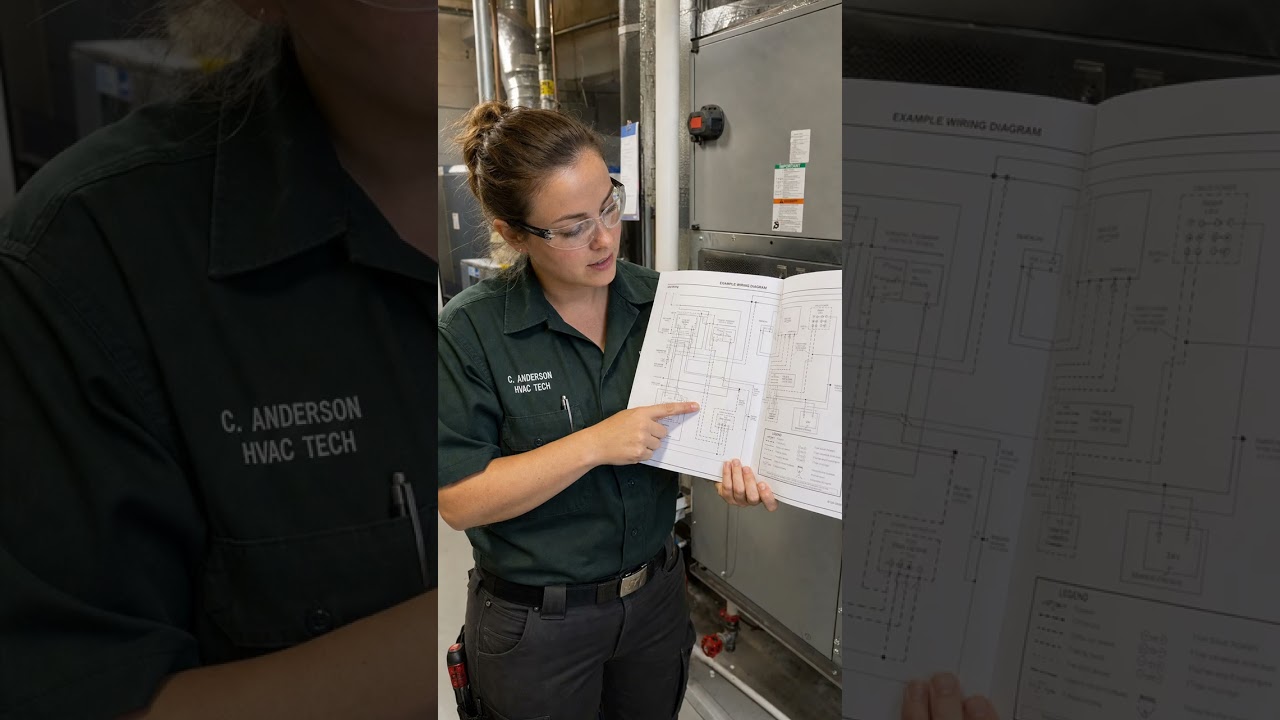
HVAC wiring diagrams use solid lines for factory-installed wiring and dashed lines for field-installed wiring. Faults on solid lines usually mean internal component failures, while faults on dashed lines point to installation problems like miswired thermostats or loose splices.
Chapters
Hey, are you new to the trades? Here's something you may not know about factory versus field wiring. Pull any manufacturer's wiring diagram— Carrier, Trane, doesn't matter— and you'll notice 2 kinds of lines. Some are solid, some are dashed. This isn't random artwork. Solid means factory, and dashed means field. Solid lines are wiring the manufacturer already did before the unit left the plant. Dashed lines are wiring you, or whoever installed the equipment, were supposed to run on the job site. Thermostat wire, power whips, accessory hookups. Here's why this matters when you're standing at a unit that isn't working right. If the fault traces to a solid line, you're probably dealing with an internal failure. A bad component, a board issue, something inside the box. But if it traces to a dashed line— Dashed line problems are usually somebody's install. A miswired thermostat, a loose field splice, a wire nicked during a duct install. That one visual cue tells you almost immediately whether you're troubleshooting the equipment or the installation. Get in the habit of asking which side of that line you're on before you start pulling anything apart. Now that you know, you can help someone else know.