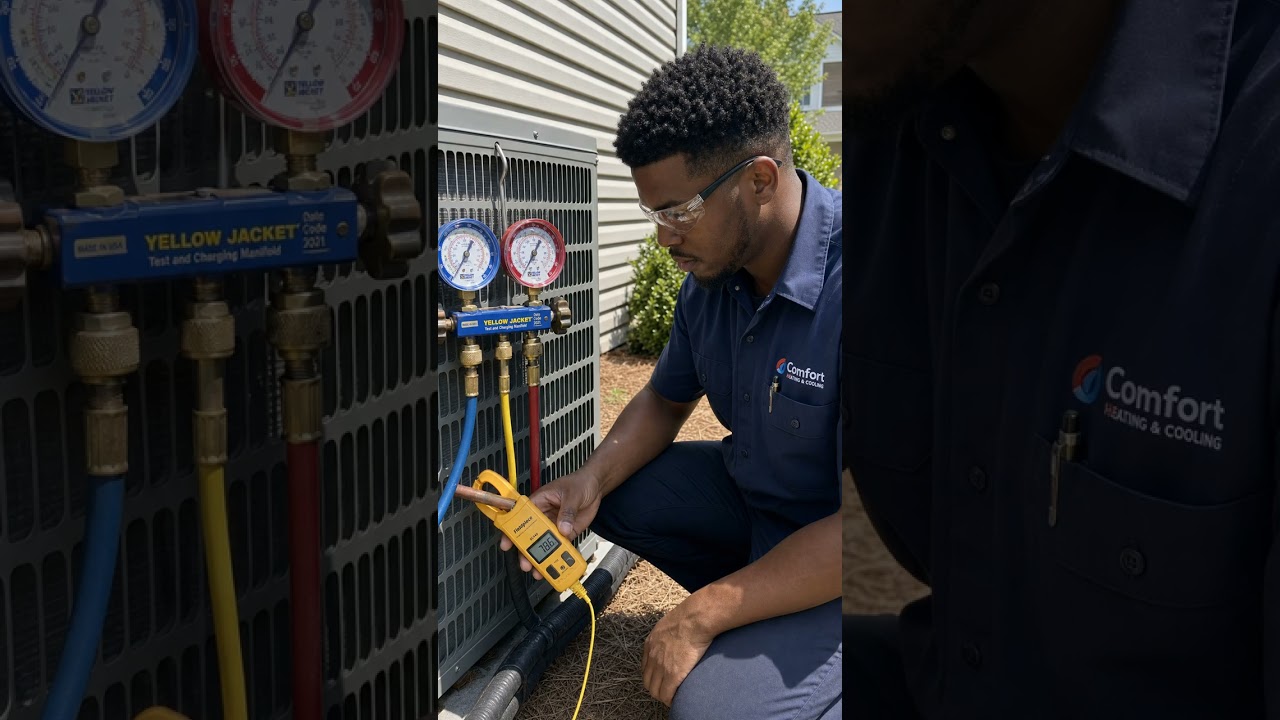
Subcooling is when refrigerant cools below its saturation temperature after condensing, protecting the metering device from flash gas. Measure it by subtracting liquid line temperature from saturation temperature on a PT chart. Target 10 to 20 degrees F; low subcooling means undercharge or restriction, high means overcharge or condenser backup.
Chapters
Hey, are you new to the trades? Here's something you may not know about subcooling and what it protects. If superheat protects your compressor, subcooling protects your metering device. Here's the idea: refrigerant vapor enters the condenser, gives up its heat, and turns back into liquid. Once it's fully condensed, any more heat it loses just cools that liquid down further, below its saturation point. That's subcooling. It tells you the refrigerant leaving the condenser is solid liquid, no vapor mixed in. Why does that matter? Your metering device needs a full column of liquid to work correctly. If vapor bubbles sneak into that liquid line— we call that flash gas— the metering device can't meter properly. It's designed for liquid, not a liquid-vapor slush. Measuring it is simple. Take your high-side pressure, find the saturation temperature on your PT chart, then subtract your actual liquid line temperature. That gap is your subcooling. Typical target? 10 to 20 degrees, depending on the system. Too low and you're likely undercharged, or something's restricting flow before the metering device. Too high and refrigerant is backing up in the condenser, often overcharge. Check subcooling and you know exactly what kind of liquid is showing up at the front door of your metering device. Now that you know, you can help someone else know.