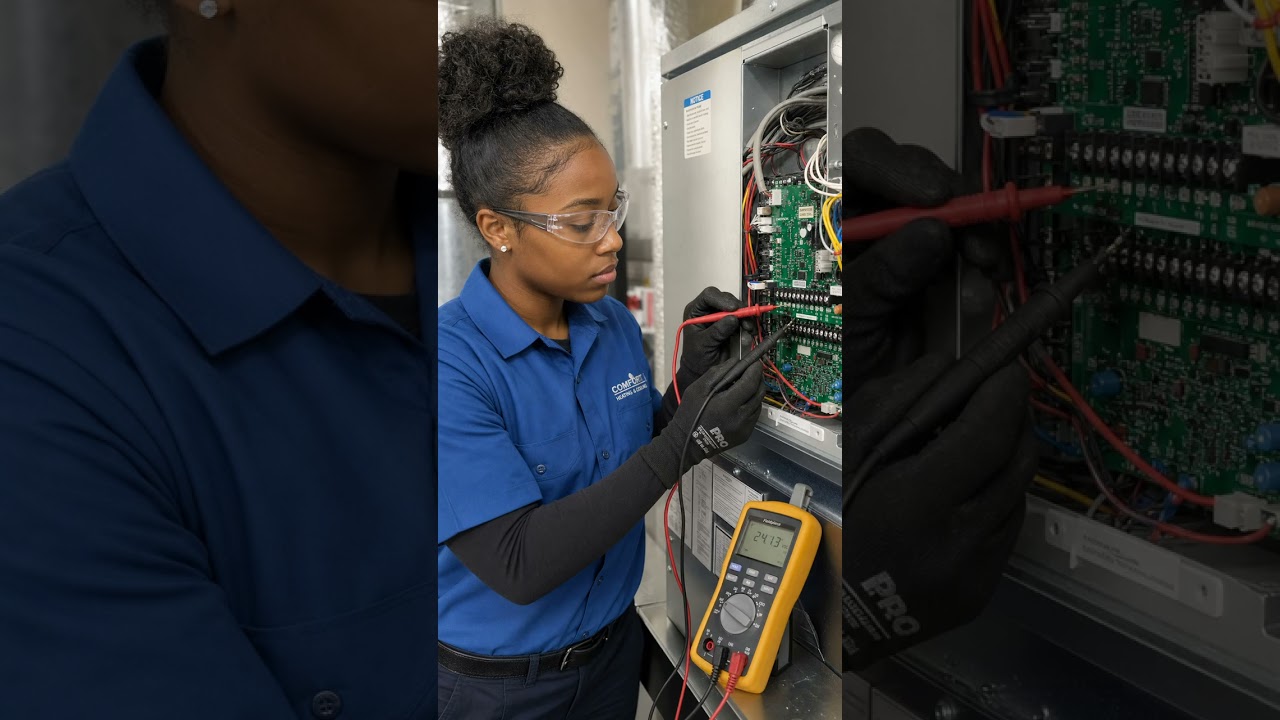
Voltage is the electrical push that moves electrons, like water pressure in a pipe. HVAC systems use 24 V for thermostats and controls, 120/208/240 V for compressors and motors. Always know the expected voltage before probing, keep your fingers behind the probe guards, and compare your reading to what it should be.
Chapters
Hey, are you new to the trades? Here's something you may not know about reading your multimeter. Voltage. On the dial, you'll see a V with a wavy line next to it— that's AC— and a V with a straight line and a dash— that's DC. Most meters let you toggle between them with a button. So, what actually is voltage? Think of it like water pressure in a pipe. Voltage is pressure, It's the push that moves electrons through a circuit. No pressure, no push, even if everything else is ready to go. In HVAC, you'll see AC almost everywhere: 24 volts for your thermostat and control circuit, 120, 208, 240 for line voltage to compressors and motors. DC shows up mostly on control boards and ECM motor signal wires. Here's the safety part. Red lead in V omega, black lead in COM. Fingers stay behind the guards, always. And before you ever touch those probes to somethin', know what you expect before you probe. Expecting 24 volts? If you see 12, something's wrong. Expecting 240? If you see zero, there's no pressure at all. That's the whole game. Compare what you see to what you should see. Now that you know, you can help someone else know.