Voltage Testing: Find Where the Circuit Opens

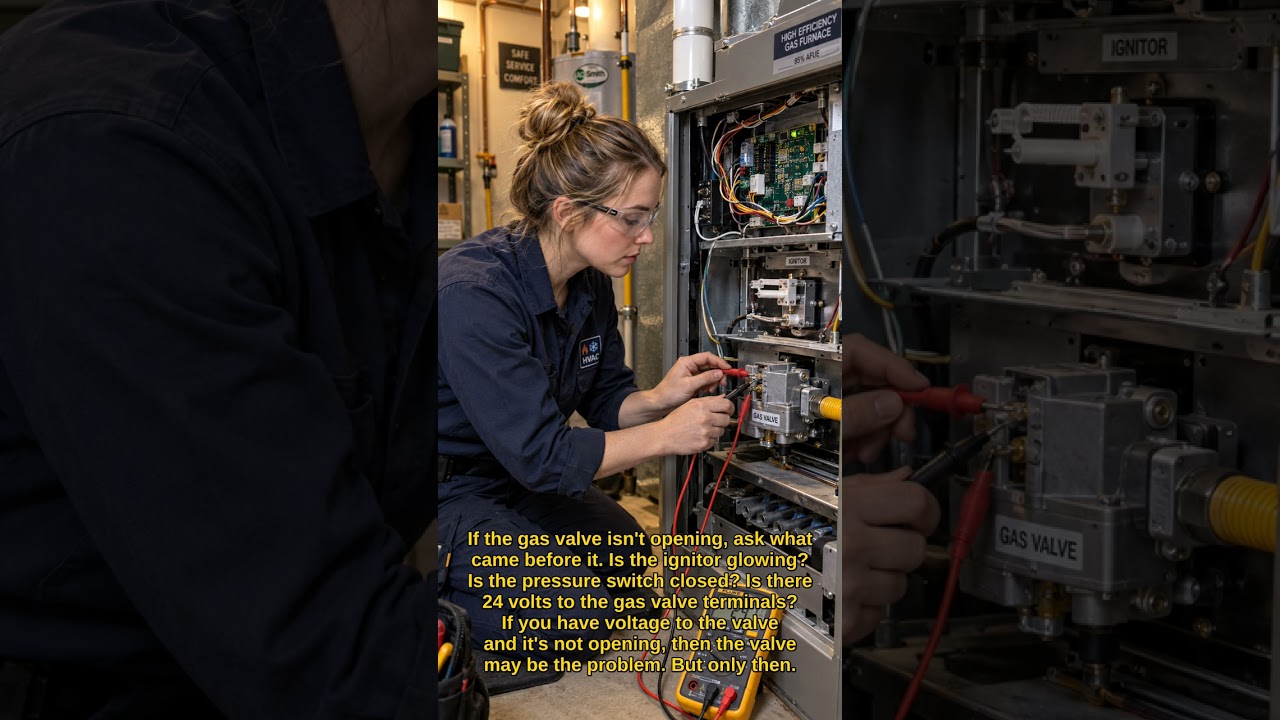
In this short instructional video, the presenter addresses newcomers to the electrical trades and explains a systematic method for diagnosing a non‑functioning load in a control circuit. The technique—voltage drop testing—starts at the load and works backward toward the power source, measuring voltage between the load terminal and common. If voltage is present, the load itself is faulty; if not, the tester moves the probe to the next upstream component (contactor coil, safety switch, thermostat output) and repeats the measurement. The point where voltage disappears marks the open circuit. The speaker emphasizes that this method is reliable, faster than testing each component individually, and useful for helping others troubleshoot control circuits.