The Impact of the Need to Protect Your Intellectual Property on Outsourcing Decisions
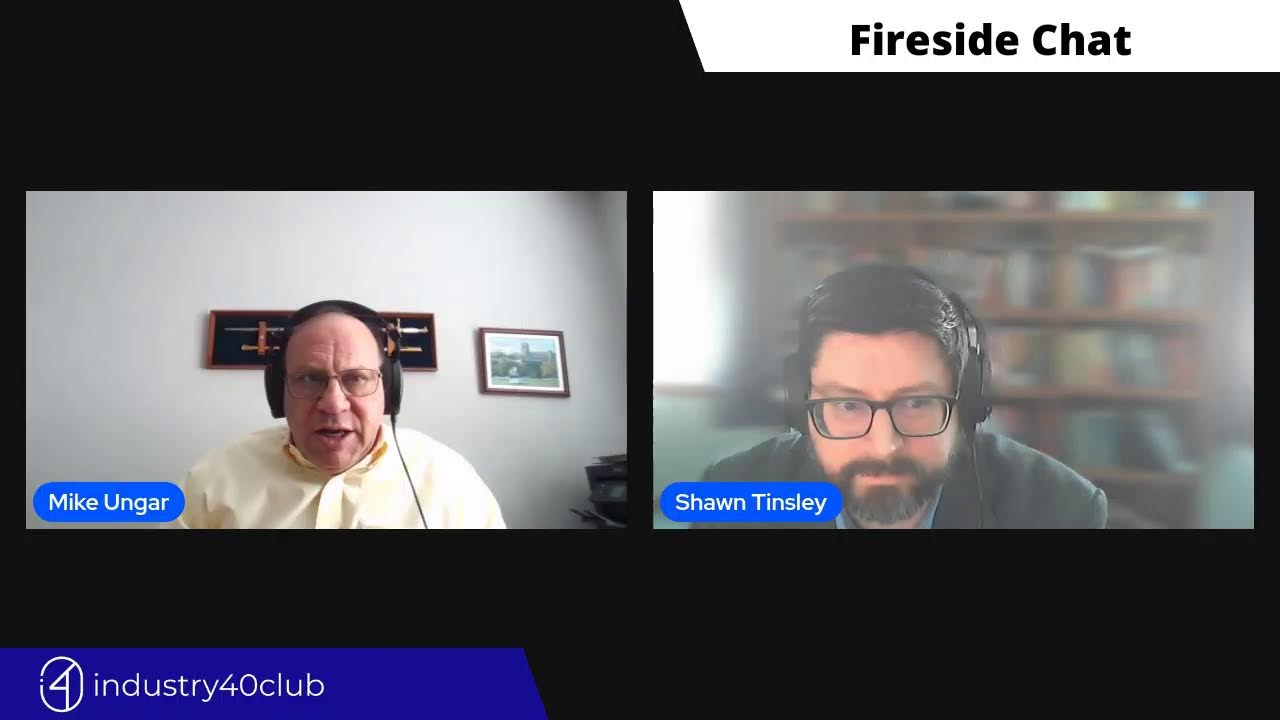
In this 30‑minute Industry 4.0 Club fireside chat, host Michael Ungar (CEO) interviews Dr. Shawn Tinsley, Senior Director of IT at Dell Technologies and emerging scholar on managerial cognition and knowledge‑asset outsourcing. The conversation explores how concerns about protecting intellectual property (IP) shape outsourcing versus reshoring decisions across manufacturing, technology, and pharmaceutical sectors. Key points include: the limits of NDAs and the importance of supply‑chain control; real‑world examples of IP leakage; the role of managerial cognitive biases and intuition versus data‑driven analysis; a proposed “experience score” that blends empirical success data with gut‑based expertise; a strategic‑value matrix for scoring assets on IP sensitivity, market differentiation, and cost‑saving potential; cultural and organizational differences that affect what is deemed sensitive; practical recommendations for building a systematic asset‑governance framework; and a call for participants to complete a short survey to enrich the research. The dialogue underscores the need to balance experiential insight with quantitative rigor to reduce risk in outsourcing decisions.
Chapters
Welcome to the Industry 4.0 Club's fireside chat. The club's purpose is to engage the power of diverse worldwide talent to accelerate the global evolution to Industry 4.0. We accomplish this by hosting and supporting respectful, thoughtful, and interdisciplinary open conversations and creating quality content on wide-ranging Industry 4.0 topics to expand the reach of our community. My name is Mike Ungar, and I am the CEO of the Industry 4.0 Club. I have over 40 years of leadership and management experience, most of that in manufacturing at Michelin. Today's topic is titled The Impact of the Need to Protect Your Intellectual Property on Outsourcing Decisions. To help us understand this topic in more depth, we're joined today by Dr. Shawn Tinsley, who's a Senior Director of IT for Dell Technologies. A little bit about Shawn. So Shawn is an IT executive and emerging scholar whose research examines the critical intersection of managerial cognition and knowledge asset outsourcing decisions across manufacturing, technology, and pharmaceutical sectors. His current study reveals significant insights into how personal experiences and intuitive judgment influence strategic outsourcing choices, particularly in intellectual property-sensitive industries. With over 20 years of experience leading large-scale IT initiatives and a $20 million P&L responsibility. Dr. Tinsley brings a unique blend of academic rigor and practical industry expertise to his research on digital transformation and knowledge management. Welcome, Sean.
Thank you.
So just before we get started, I wanted to mention anybody joining us on LinkedIn, if you'd like to ask a question of Sean during our conversation today, feel free to put your question in the comment box, and we'll do our best to get to it. So let's get started. You know, first of all, Sean, this topic, I guess I find with my experience in manufacturing, is really relevant since when we talk about Industry 4.0, for many, many companies, in fact, most companies do some outsourcing in terms of being able to implement. So I'm excited about getting into the discussion with you. So just to get us started, what sparked your interest in in this kind of research?
Yeah, so I'm kind of an industry veteran, right? It's 20-plus years in management consulting, IT consulting, and so really that was around knowledge assets. And so there's just always been this disconnect between academics and business, right? So what I was looking to do was kind of bridge that gap between academia, where they have lots of great models, lots of great solutions, but they don't always filter over to you know, the business world. So I'm trying to bridge that gap and have a methodology and an approach that will allow us to have a better understanding of knowledge assets and how we can move them around and what makes sense. Really, at the end of the day, we're de-risking that transition and that outsourcing or reshoring to try and bring the greatest benefit to the corporation.
Did you have in your background, did you have to face this sort of decision yourself and Do you have any real, real experience that you had to deal with a few years ago?
Yeah, definitely. So basically, you know, kind of at the heart of management consulting is really going into a client and getting a sense of what their IP is, what their process and procedure, and what's vital to their business operations, and then determining, you know, what goes and what stays. So one of my clients was a you know, a very large aerospace engineering company. And so it was to go in and determine, you know, for instance, do we take flight systems, we take core IP systems, and do we outsource that, or do we actually reshore that because it's considered critical IP? Some other studies we've seen, like Airbus and some of those companies, actually bring that kind of IP back in because I think it's a market differentiator, and also it's of core strategic value to the business. So maybe more mundane or things that can be manufactured in larger scale are pushed, you know, either overseas or offshore to another location, possibly in Europe or something like that. But we really want to retain that core IP.
You know, just to kind of continue that, that thought process, I mean, I know most companies will quickly enter into an NDA with anybody, right, that they're going to work with. Is that sufficient in many cases just to protect the company, do you think? Or is it— is that not— does that just get— gets us skin in the game, so to speak?
Yeah, so I think that's skin in the game. I think it's not a bad thing to do. Um, we do see sometimes that there can be intellectual property theft, or at least, uh, copying of that intellectual property in some manner, replication of it, especially in the manufacturing space. And so I'm seeing a new thing where I would say almost having that capacity and that supply chain to produce this in mass effect is almost as important as an NDA. That's real practical impact that the product is out there on the market, right? And so all the NDAs in the world don't matter if your competition has in effect copied or used a very similar product as a substitute for your product.
Yeah, you're fading out a little bit there. Your voice is just— if you can lean in a little bit.
Thanks.
No, it's interesting you talk about that because in my experience at Michelin, I remember one time we had a contractor working on a new process. And before we know it, even though we had an NDA with the contractor's company, well, the individual who was working for them had stolen the intellectual property and had You know, transferred it off to Never Neverland. So, um, yeah, even if you put those controls in place, it's risky, I think.
Yeah, I mean, and again, a lot of this is, is just de-risking that, that calculation, making sure that it makes sense for the company. Um, but yeah, once you exfiltrate that data, then that data is gone, right? So, you know, I always make that recommendation that not only do you need to understand what's your strategic value and strategic assets, But also what happens when they're gone, right? And how are you going to adjust to that? Because that's going to drive your risk score on it.
Yeah, that's a great point. So I'm going to make a phrase here. And maybe this— maybe you can explain what this means first and then talk about it. But your research suggests that managerial cognitive biases significantly impact outsourcing decisions. So first of all, what are managerial cognitive biases?
Sure.
And can you explain how these experiences and beliefs influence decision-making across different industries?
Sure. Okay, so for a very long time, outsourcing was all about cost reduction and in theory risk mitigation. But we see as people got more experience with this and COVID really impacted a lot of supply chains, so we went back and sort of had our intuitive sense or intuitive rule of thumb. Well, this worked for me in the past, so I'm going to keep going with this, or this didn't work for me, so I'm going to reshore it. As we look at the portfolio of the assets, we're seeing that more and more executives are actually being more risk-averse with their assets and actually bringing them home or home-shoring, or at least bringing them closer to their home shores. And so that's tied up in this concept of managerial cognition, which is nothing more than people are going to make decisions based on their past experiences with this event. So outshoring or reshoring and the success of that event. Right.
Gotcha. And so, um, with that in mind then, so I guess the— our challenge is looking at every decision. I mean, you can't look at every decision independently though, so you've got— you do have to take into account your experience. So how do you blend? How do you make sure you don't— you're not influenced by what would be, um, um, an uninformed bias, if you will? Sure.
So there's lots of different ways, but key principles in doing that really are: one, look at your track record. So some empirical data, right? We know that this particular thing, very similar, similar industry, similar product, what its success factors were in outsourcing it. 2, don't throw away the experiential data, right? Your base understanding, your gut check, your rule of thumb. Understand that that has value too. You know, if you've been in an industry like you have for so many years, you have a really good sense of your industry and what works and what doesn't and what's important. So my advice is just bake that into the calculation. So we have a balance between empirical quantitative data and then your own experience. I almost call that an experience score. And you want to add that experience score into the calculation that you're making in terms of outsourcing or reshoring.
No, it's, um, I guess the other thing I think about in our, in my background at Michelin, and it's interesting, is that every 3 to 5 years, in many cases, we, we change, we change out leaderships, leadership leaders into different roles, right?
So definitely.
Um, how do we ensure consistency, or is that, that important? Because what one leader did before, another leader may look at very differently. Even though it's a very similar situation, how do you keep a consistent approach to this within a company that leaders evolve?
Well, so one, it's a recognition that the situation evolves. I think part of the problem with academia is that we've had these models for so long and they really haven't evolved. They haven't really responded to that supply chain disruption like we've had with COVID and things like that. Be aware and alive to the idea that things will change and should change. 2, always base it on some sort of semi-informed basis, whether that's empirical data, whether that's industry-level data, so you have an understanding of where you are. And then the last one really is understanding the value of your assets and where they are in your strategic portfolio. If you have those 3 pillars, I think you can pretty much have a good sense of direction of where you want to go. Now, you may revise that. 3 to 5 years, but understand that that was your best sense and your best position at that point to de-risk.
Fantastic. So thinking about your research thus far, what has surprised you the most about the relation between intuitive decision-making and knowledge protection concerns, particularly in manufacturing?
Hmm, well, I think that If you looked at the literature, right, it was very empirical, very quantitatively driven. And then the data that I've gotten back so far, it's that there's actually much more of a rule of thumb or experiential data in these decisions than has actually ever really come out in the literature itself. And I think you've been around corporation for a long time. That really probably isn't a concept that surprises you. But when you go from the academic outlook or academic lens to the really practical business lens, you see a lot of differences there.
It's interesting because, you know, we being— having worked for a mature company, we tried to write all this stuff down, you know, and create processes around this. And so, you know, we have different approaches for deciding what is shall we say, protected and only a few people should know it in the company, to what is something that can be public. And we rated all that, we rated all of our information and basically we rate everything in terms of 4 categories of sensitivity, if you will, and define really what level of sharing can be done based on each level of sensitivity. of sensitivity. And then the challenge, of course, is to not let that get stale. So, yeah, because sometimes, you know, what was deemed to be sensitive, you know, 5 years ago is maybe no longer sensitive based on the market. And so I think that's kind of interesting because I, you know what, you know, and the other part of it we've run into sometimes is is cultural differences. In other words, what may be sensitive in one area of the world isn't in another. Are you seeing— do you see that same thing? Are you beyond North America in your research, or just worldwide?
So I've done worldwide research and strictly North American research. But I would say you're going to see a tension between large companies and small companies. Small companies just by the nature of what they're doing, can sometimes be more agile in their approach.
Mm-hmm.
And I think that is really something that could go toward a large corporation. I worked for some, you know, Intel and Dell and some really big companies, and they have everything really well planned out, really well executed. But I think sometimes that agile iterative cycle coming in and taking a fresh look at some of these classifications is really important for a large company. And then consequently, having that process, implementing more of a structured approach, I think is actually good for a smaller company that maybe flies a little bit more in that agile space. But, you know, as they mature and go up that S-curve cycle, that, you know, from nascent to well-established, that they want to bring some more of that process in.
So we're talking about that, then how do we effectively, at the end of the day, balance our cognitive impulses with data-driven approaches when making these sort of outsourcing decisions? And again, as we talked at the top of the hour, we do so much of that Industry 4.0 and outsourcing. This is really, I think, a very important and relevant topic.
Yeah, so I would say you're going to want to look at strategic value of assets, what your protection needs are in terms of IP, your market access, Or your differentiation in the market? And then what cost savings should you derive from this event? So I think old school way of looking at it was ROI. I know when I go into a lot of clients, they're like, oh, what's the ROI? Like, what benefit am I getting from this? But when we do that, we're, you know, divorcing or separating the people from the decision and just saying, well, we're gonna look at these numbers. But, but one, having a really good sense of your strategic value. It could be Tesla's battery, it could be Toyota's production process, extremely important assets that need to be protected in some way. And it's risky to put them out there in the wild. In terms of production, maybe it's a pharmaceutical formula for a new drug.
Right.
Also really high score, needs to be protected and kept in-house. That's not something that you're going to outsource because it is a differentiator for your market. And so I would say then probably the last thing is understand that, that cost savings and outsourcing or reshoring for that matter, there's only one very small element of the risk profile. Much more important is the strategic impact to the company. Right.
That's, that's, that makes a lot of sense. That's really cool. You mentioned some examples there, like we'll speak about Toyota for a second. It's quite interesting because Generally speaking, Toyota has a pretty wide open door policy. In other words, they host people in their plants all the time, and they're willing to do that and willing to share anything they do, because what they know from experience is that it's very hard to duplicate their culture. So you can see the practice, but the practice, absence of culture, doesn't do much for you. It's the combination that really makes a difference. And so it's interesting when you talk about Toyota's production process because they've been quite open. So can you talk about the different thoughts that might go into something like that? Because it's interesting, they could easily close their doors and say, you know, in the auto industry, it's a differentiator for us, we don't want to share. Right. How do you think they got to that point of being so open?
I think they have an amazing culture and cultural alignment. And I think it's all about process improvement. So rather than be a negative, if someone's come in and copy part of it or reference a part of it, then they realize that that's another point of innovation. And because they're so good at innovating on that process, it's just a net win for them. I see that as a total win because they're going to take that input, even if someone takes some part of their idea, and they're going to improve upon it. And that's really how they've maintained that that status for decades.
Yeah, I think too, you know, on top of that, it's almost a great market strategy when you think about it in terms of, you know, that transparency and that showing how good that they are at producing a vehicle gives the buyer of a vehicle confidence that when they buy a Toyota, they're— that they're getting a process that's pretty, you know, a car that's made really well. You know, there's no secrets on that transparency. Even though it could be a little bit sensitive, it's, it's actually really— they've made it quite a competitive advantage, you know.
Well, so if you look at that, again, call it a strategic value score, their protection needs might be a little bit lower, even though that's core IP. But it raises the profile in the market so much, it makes them such a differentiator that it's a win-win, right? There's no risk for them there. There's no downside, in other words. Because of their positioning. Now, if you are more a startup or something like that, then obviously your protection score might be different based on that and your position within the market itself. One thing I will say too is I see culture being also a major factor in this. So it doesn't matter whether it's a large company or a small company. You know, there's innovation at all levels and all sizes of companies. companies. So it's really tied also to their, their culture and what they value as strategy and strategic assets and, um, what they say— see as risky in the market. So there's no one-size-fits-all, but it's understanding what you've got and what you see as, as the play that, that's really important.
Well, that's really neat. So you, uh, you're, you're well into this research. I know you're still in the process of it, but what you've seen so far What practical recommendations do you have, or would you give companies developing knowledge about asset governance right now?
Oh, okay. So we're getting kind of to the heart of it, right?
Yeah, just, I mean, so just a couple tips, I think.
Yeah, sure. So implement a strategic framework. It doesn't have to be, you know, this whiz-bang super thing out of the box, but you need some kind of systematic framework where you're looking at what you've got, And have a systematic way of assessing it. And then I would say, understand where you are on that strategic value matrix. You know, are you going to focus more on the market part of it? Are you going to focus more on the strategic value or the IP value? So manufacturer might be far different than a pharmaceutical or even, you know, an IT company like a SaaS company or something like that that has much more of their value put into the process and the IP as opposed to just general— You know, production-level qualities.
Yeah. Okay. That makes a lot of sense. So one of the things we talked about before we got started here is that you're still in the process of doing research. How can people help you with that?
Oh, thanks for mentioning that. So I'm going to actually have a survey link off of my LinkedIn site. And that's going to go right there. Thank you. And so that'll take you to a survey. If you could spend 5 minutes just going through the survey, entering the information in, and sending that off, that would be an amazing help to my research. I'm trying to gather, you know, as many responses as I can so I can have a good understanding of the market and, you know, what you as a middle manager, senior manager, executive see as important to your company and the way you do business.
Thank you. That's great, Sean. And 5 minutes is all it'll take for the For the assessment or for the— to answer the questions?
I certainly hope so.
Okay, so it's pretty quick.
Pretty quick, pretty easy. It's about 10 to 12 questions. It should be pretty quick for everyone.
Excellent. Well, I just want to remind anybody, we're— we've been talking to Sean Tinsley, who's an IT executive and emerging scholar with Dell Technologies. And we're talking about the impact of the need to protect your intellectual property on outsourcing decisions. And though, for those listening in on LinkedIn, if you would like to have a share, share a question with Sean, you know, please put your question in the comment box and we'll try to get Sean put up on the screen. We'll let Sean answer that question. Um, so Sean, as we, as you kind of, I don't know, you've been doing this research now for a while. Um, any early conclusions you can draw or you wouldn't want to hasten to kind of to get to that point yet?
Ooh. I don't want to be quoted, but I think the finding that manufacturers— sorry, and executives in manufacturing and certain industries like pharmaceuticals rely much more on their intuition than actual science and data is completely different than what the literature tells us. And so, from a social experiment, I think that's really great to understand where the rubber meets the road and what's happening in practice. For me, the biggest gap is what do we do in academia and then what do we do in the real world. And so my goal is always to bridge that and bring that informed perspective. And so I'm seeing much more intuitive understanding of these industries, and part of that goes to the culture and the fact that they know their company and their business. So it's a really great finding and something that, you know, We're going to develop the survey further, hopefully with a lot of good responses, and then we can even draw some more parallels and greater distinctions depending on what that data brings back.
Well, that's very interesting because in smart manufacturing, we drive for a data-driven company. We want to make our decisions about our process and the market based on data. Now you're talking about intuition as driving some of this. So it's really quite interesting to, you know, sort of think about it. What maybe what's good for others isn't good for me. Is that kind of what maybe could be going on?
So I think that there was always this experiential element. It was just not ever noticed or, you know, never given space at the table, but it was always there. And it was in the back of people's minds. And it was, it was, you know, driving their behavior, but it was never actually acknowledged as part of being the process, right? The process is, oh, I have an ROI, I have numbers, I have quantitative statistics that I can put out there. But people are people, and they're going to be driven by their culture and by their own biases and informed or uninformed opinions.
Well, that's really good. But you're absolutely right. This area of unconscious bias extends well beyond this particular subject as well.
Absolutely.
We have our biases, we have our ways of doing things. And I think the other part that's really important here, it sounds like, is being conscious of those biases and having enough objectivity to be able to question or challenge yourself to say, hey, am I, am I doing this because it's a bias I have, or is it really what the facts tell me?
Yeah. I mean, my, my blanket advice there is always check your blind spots and if possible, check them with someone else because you don't always know what your blind spots are.
Yeah, that's so true. As we get ready to wrap up, do you have any final thoughts for our audience today just as we begin to wrap up our time together?
Well, one, please submit the survey. That would be really helpful to me. But 2, I think we don't ever want to break away or divorce ourselves from that experiential element. Add that in, understand that the value you bring is that experience and that culture to the equation. So don't shy away from that, but make sure that it's balanced by, you know, facts and figures and quantitative data. So this is not just, you know, Sean's feeling about what we should do. It's really backed by science and by data as well. And I think that really taking those things forward in a world where there's a lot of noise helps us to center ourselves in our decision-making. And ultimately have a less riskier decision.
Yeah. Thank you, Sean. I appreciate the insights. It's been really helpful. So for our audience, we've been speaking for the last 30 minutes or so with Sean Tinsley, and I'd like to thank him for joining us and sharing his experience and his current research with us. As Sean mentioned, he's looking for volunteers to help him with his research. So please reach out to him. It's an interesting— we have one more comment I want to just share with someone shared. I think it's interesting to kind of wrap us up on this. Okay. It's kind of interesting comment here.
Hmm. So it's an interesting question. I got into this question with someone who's trying to produce a new product. In the music industry, right? So a new headphone. And their take was NDAs don't matter. What matters is the person with the biggest supply chain and the ability to get that product out the fastest and swamp the market. So I think NDAs are important, but one, if you can swamp the market, then at least in this person's take, it doesn't matter. But 2, NDAs are only as good as the legal system and the recognition of that system. So some jurisdictions may not even recognize it. So maybe less about the legal framework, but more about the partner and the fitment with the partner, and then also their relationship. When you have that strong relationship with a partner like that, then, then there's a little bit less worry about the legal ramifications.
Excellent. Thank you. So thanks again, Shawn. I wanted to kind of then close it by sharing that the Industry 4.0 Club would like to encourage you to take action to advance the deployment of Industry 4.0. You can do that by reading an article, attending a workshop, or developing a smart manufacturing roadmap for your plant or your company, and even challenging your organization to move forward in the deployment of Industry 4.0. We'd like to know what those actions are, so reach out to us on our website or our LinkedIn page. We routinely host conversations like these on LinkedIn and YouTube. If you'd like to join us on a future broadcast, please let us know. Our website is www.industry40club.com and follow us on LinkedIn. I'd like to thank Sean and everybody who's joined us today and wish you a good rest of the day and a good rest of the week. Thanks, Sean.
Thank you.










