Can Women's Health and PTSD Find a Path to Healing?
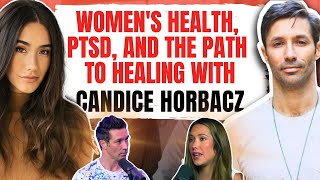
In this informal interview, host Mike and guest (Speaker B) discuss the emerging field of psychedelic‑assisted therapy—particularly MDMA and psilocybin—as a potential breakthrough for women’s mental‑health issues and PTSD. They critique the FDA’s committee process, suggesting it is delayed by big‑pharma interests, and note that the committee’s lack of psychedelic expertise undermines the approval timeline. The conversation cites MAPS‑run trials showing roughly 70 % remission rates for treatment‑resistant PTSD in veterans, and contrasts these results with the high suicide rates among veterans and the limited efficacy of long‑term SSRI use. The dialogue shifts to gendered patterns of burnout, describing how many female clients adopt “masculine” over‑exertion habits, leading to exhaustion that can be alleviated by psychedelic sessions that often induce a calming, sleepy state. Mike introduces the concept of four energy quadrants (emotional, mental, physical, spiritual) and argues that Western culture over‑emphasizes exertion without renewal, citing elite athletes (Tom Brady, LeBron James) as models of structured rest. Speaker B shares a personal health journey, detailing a Graves’ disease diagnosis, years of ineffective medication, a self‑directed cessation of thyroid drugs, and ongoing autoimmune challenges. Mike links unresolved trauma and PTSD to a heightened risk of autoimmune disease, recommending intensive NAD⁺ optimization (twice‑daily NMN blend) to support cellular metabolism and potentially reverse fatigue and brain fog. Throughout, the hosts emphasize the importance of safe, supportive therapeutic settings, the need for legal access (underground movements), and the transformative potential of psychedelics for both individual couples and broader veteran populations. The episode ends with a call to action for viewers to follow the series.
Chapters
Welcome back to part 2. Be sure to like, subscribe, and share with a friend. 60% of my women clients are really exhausted, and they are— they're also— their life patterns looks a little bit more like masculine. They're burning out, they're grinding instead of receiving and flow. And if you're on the edge of burnout, like a lot of my feminine clients or female clients, when the medicine kicks in, it's almost like they want to take a nap.
Yeah.
And I think you had a little bit of that too. Yeah. Blow dart. Yeah.
I guess when it comes to like a depression that deep and like a wound that deep that you try to take your own life like several times, And then you see this medicine or this drug that works, right? When we were seeing it in trials, it works. And I've now experienced it and it works. And it's one dose. It was one dose. Like my biggest thing is I have like a mild headache and my jaw hurts. That's it, right? And I sweat a little bit. That's it. Then you have pharmaceutical companies pushing these SSRIs that have black box labels of violence, and suicide. You have someone who's already suicidal, but that's okay. But we made this other thing. If you take this other thing, you go to jail. It doesn't make sense. And then with that bill that's getting passed, wasn't it rejected, or it was like tossed back?
Committee— well, yeah, it's a misnomer. The committee, um, basically gave a recommendation. Now, the committee experts, um, that were on that committee, even the FDA director, in the, in the middle of the session— so you're referencing a committee recommendation on MDMA-approved therapy that they were expecting to still vote on. They're still voting in August. So it wasn't the actual vote, but it was a committee recommendation. And now the appointees of the committee are not psychedelic-informed, so they don't even understand the drug side. They also don't understand FDA trials very well. So I just listened to a podcast with another neuroscientist and MD that's in the space. Apollo Neuroscience founder, and they talked about how the FDA director was even getting frustrated in the middle of the committee because they were just— it was like they were in a pissing contest to figure out who could throw the most holes in the study, even though Lycos had worked hand in hand, or MAPS had worked hand in hand with the FDA to design the study, and they were throwing out objections around like the therapy side. Well, FDA is not supposed to regulate therapy. So it's just really a bogus kind of most likely set up by big pharma to delay. It's only going to delay, it's not going to stop it.
Okay.
The approval.
You think the approval is going through?
I don't know if it's going to happen in August. It's probably 50/50 versus it looked like a near certainty. And so it's a headline grabber. So now everyone's like, ah, all these scary things, it's not safe. And it's like, But these big pharma drugs, like I had a girlfriend after college who walked home on her roommate who was on an SSRI and shot herself in the brain. Whoa. Done, right? So that stuff happens all the time. Your odds of committing suicide are just as high on SSRIs typically, on most of them. I'm not a scientist, but I've seen data around that. And they can help in certain cases, but you don't want to be on them long-term. And most of the time, like, I have clients that have been on like Lexapro for 15 years. And why? Yeah, like, that's not a solution. That's a band-aid.
So do you think when people see that headline, do you feel the general consciousness is like, that's bullshit? Or do you think that there's still a lot of hesitation?
And yeah, I think people that don't really understand it No, it's total— or the people that don't understand it will be like, oh, I guess it's not going to pass. I guess it's, you know, but people that are really in the know, the neuroscientists, the therapists, the organizations I'm aware of, the leaders, you know, all the biohackers also too, the people that have experienced it, they know it's BS and it's ultimately going to get passed. Even the FDA director They're— they— yes, they are funded by Big Pharma because all the trials goes to FDA, right? They have to pay the FDA millions of dollars for all these trials, but the evidence is overwhelming. It's the greatest breakthrough. Psilocybin and MDMA are the greatest breakthroughs that we have in mental health. And Veterans Administration is desperate. 22 veterans a day commit suicide. Well, this— this— I think it's 70% of veterans that were in the study, if I remember correctly, about 70%, they were, they had been labeled treatment-resistant depression and treatment-resistant PTSD, meaning the other stuff wasn't working. And so MAPS, if I remember correctly, chose the most difficult participants to participate. And 70% of them got full remission. So like went from no hope, you're stuck, you just have to manage and cope with your symptoms the rest of your life. "this is all we got," to "you're fully cured," based on, you know, a year later, still no symptoms of depression or PTSD. So, and I see that with my wife, I see that with most of my clients, essentially all my clients, we will get them to the desired outcome if they stick with the process. Sometimes it's one session, sometimes it's two or three.
Did you see that headline? It was in Canada where it was a veteran that was having mental health issues and he went in trying to get mushrooms, like psilocybin. Yeah. It's legal up there. And they wouldn't give him that, but they offered him MAID.
Yeah, yeah, I heard your interview with the person that was—
Kelsey, yeah.
Yeah, Kelsey, insane.
So when I see that, I feel like there is, that's not by accident in some nefarious way. It's like, that's very anti-life and you have both that are at your disposal, then why aren't you helping this person with something that could save their life versus, like offering like a death pod. That makes no sense to me at all unless you don't want that population to get better because the way that we treat our vets is disgusting.
Yeah.
And we have the capabilities. We're one of the most powerful nations, and so is Canada.
Yeah.
In the world.
And the cost, the cost of the drugs themselves for a single treatment is like $30 or $50.
Right. So why aren't we just— it seems like there's something else, like there's something missing in it. To me, where my mind goes, 'cause I'm often like, what is the worst thing anyone could want? And it's like, these are really powerful people. They're powerful, they're patriotic, they're protective. So they are a threat to big government and they're a threat to big power. And I think it's intentional. Like, we want to use you and when we're done with you, we don't want you to turn on us if ever there's a situation. So now you're disposable. You know what I mean? 'Cause why else would we let them be homeless? And I think the number, I think the number is higher than 22. I want to say it's in the 40s a day, which is crazy. There was that graph of Afghanistan. It showed like all of the wars and then the suicide, and they were just leagues apart from each other. That's not by mistake.
No. Yeah. And it's crazy to think too, like we denied veterans, like Vietnam veterans, that they had a major issue basically for years. And then finally they, with enough lobbying and organizing, they created the designation of PTSD. That didn't happen until 1983. And it was really because so many Vietnam veterans were showing so many just erratic, difficult symptoms. They weren't coming back into normal life and we didn't understand it. Now we understand trauma and PTSD. So, I mean, we've had like 100 years worth of breakthroughs in the last 10 years, but we still got a lot to unpack and a lot to understand.
So do you think, like, what's the next phase I guess it has to be legalized for it to scale technically.
Yeah, yeah, pretty much. So that will hopefully, if it doesn't happen in August, will hopefully happen next year. But in the meantime, there's underground movements and experiences and it's just growing, it's mushrooming because people are desperate for change. When as more and more people like yourselves, like you just had a beautiful breakthrough, your nervous system is recalibrating. Than what— like, a lot of my clients, I don't— just for safety's sake, I do not dose or supply the medicine, so that protects me legally. But my clients, when they experience a breakthrough, because I can sit with them, there's no law that says you can't sit with them, well, then they end up referring me 4 or 5 other friends. And because everyone knows someone that's suffering with depression or PTSD, or their marriage is in a crisis, or They're just stuck, emotionally stuck. And one session, I can get them unlocked usually.
Yeah, yeah, it was wild. And again, as a self-proclaimed skeptic, and I had a ton of reservations, um, it's like once I felt safe— and I think that was like, again, when we talked about the divine masculine, how important it was that it was you there— is, um, like I didn't feel under attack at all or judged, and I just like felt held. And I think it's so important that if you're doing this, that you find someone that you like really— like it's a full body yes with that person. And with you, when I even just met you over the phone, like FaceTime, it was like, like a yes immediately. Um, like I just felt safe. So I think that's so important. And if like you want to do testing, if that makes you feel safe, like never let someone make you feel bad about that. You know what I mean? And that's also what kind of happened with my other situation. And then you're gaslighting me and you're like, I have two kids. There's nothing I'm going to do that is gonna put my life in jeopardy. Like, even if I have to go through the rest of it like more dull and maybe not as happy, like, yeah, I will do that before I risk my life because those boys need me. And if that's a $20 test to make sure that it's clean, give me a break. You should be like, that's fine. So it's like, whatever you need to do, whatever protocol or testing or person do that because you have safety and the feeling safe is, is the number one thing to have a good experience, I think. And again, once it hit, it was like, man, I— the closest love that I had experienced like that was with my children. I've never experienced that with Eric in my life. Yeah, I just haven't. And it was just, again, it's like, this is like a new feeling. Yeah, it's a new state.
Well, and what's cool for you guys is it was there the whole time, but you know, your body didn't feel physiologically safe to let it in. And he also felt unsafe to extend that love fully and be that heart open because he's like, "Is she gonna run? Is she gonna abandon me?" And because he had his abandonment wounds, right? And so, because I could see, like, at the beginning, you guys sat on almost opposite ends of the couch. And I was like, "Oh, there's something interesting here. What am I gonna do here? Okay." And then, like, When he got up to use the restroom, then he sat even further away. I was like, okay. And I was like, I'm not going to ask them to sit closer together, but I'm going to see if there's something happening. Yeah. And then after that, you guys were just all over each other. And the affection, like, because he felt— you literally see him feel so much safer with also loving you and extending his love because he's like, I'm not going to be abandoned. And the— for his attachment style, if he feels unsafe, then he's gonna withdraw. And then if you don't feel safe, you're not gonna invite him in. And you gotta control things. You gotta be in your masculine, which is not a great feeling, and you get tired. So many women are in their masculine, and they just are effing tired. A lot of— probably 60% of my women clients are really exhausted. And they are— they're also— their life patterns looks a little bit more like masculine. They're burning out, they're grinding instead of receiving and flow. And if you're on the edge of burnout, like, uh, a lot of my feminine clients or female clients, when the medicine kicks in, it's almost like they want to take a nap.
Yeah.
And, and I think you had a little bit of that too.
Yeah, just a blow dart. And I'm like, again, how is this an upper? That's not my experience. And it's like, is there just so much happening that I need to work on that I— that's not available to me, or I don't know.
Well, so if I look at the communication channels, so it's like heart, body, mind, and spirit. Well, we open up your, your body to connect and your heart to connect a lot more because you've been so in your mind, and Eric's so in his mind too, which is predominantly Western culture. We're like, get in your head, you know, we're in our head all the time, but get in your head and you're dead. And so then your body finally had a chance to speak and basically say, I'm tired and I want— I need to surrender in and let go. And you were out and you even kind of wrestled with it throughout the evening of like your conscious mind was trying to control again. And we had to invite you back into your body and back in your body. But that just means your life patterns are leading to burnout. And you can re— and you were probably on a masculine train track and how you're working or Or you just went through, maybe it's sometimes, I don't know, do you feel like you've just never had a period to regroup and restore your energy after children, work, family life, whatever?
Yeah, I feel like I've always guilted myself even when I took some time off work. I'd never, even though I wasn't working, I was berating myself for not working. So it wasn't the same as recuperating or being still or present.
Yeah, so it's not real time off, right? Yeah. So, um, I read a book, Powerful Engagement, and it's from sports psychologists, and they talked about a lot about the four energy quadrants: emotional, mental, physical, and spiritual. Foundation of it is physical, and they talked about Olympic athletes, and they coached a lot of like pro tennis players and Olympic athletes, pro athletes, corporate execs, and they talk about how we got to do we exert really well, but it's two rhythms: exert and then renew, exert and renew. But in American culture, it's like exert and then how do I exert more? How do I get more done in less time? How do I work harder, longer, faster? Instead of, oh, I need to restore. But if you look at Tom Brady, why didn't he play until he was 44 and win a Super Bowl in his 40s? He had such a deep renewal pattern. LeBron James, how many hours of sleep does he take a day? 10 hours, 8 to 10 hours usually. He has such a deep restoration plan. Um, but us in Western culture, it's just all exertion. And so like for you, and like what I do with a lot of my clients, then I would— we're gonna work on recalibrating the, the energy. And then usually 2 to 4 weeks. I have one client, she just got a massive breakthrough in her career. We, we did our first session End of April. She almost fell asleep in the first 30 minutes. Like, you didn't pay me all this money and fly me to Washington, D.C. to fall asleep. I was like, uh, what am I going to do? And that's the first time I had a client, like, basically falling asleep on me right as the medicine was kicking in. I was like, crap. And she's 42, very successful. And I was like, all right, let's go outside in the sun. And then I was like— her name's Yaz. I was like, Yaz, you're really— 'exhausted, aren't you?' And you've been around, and she's like, 'Yeah, I've been just running.' And she was on the edge of a nervous breakdown. Wow. And then now— and then I had her recalibrate afterwards. I was like, 'Now you got to start listening to your body because your body is telling you.' She also has autoimmune disease and other things. I was like, 'You— we've got to recalibrate you.' Um, and, and 2 weeks later she sends me a text. She's like, 'Mike, am I reverse aging?' I feel freaking amazing. And it was— we had— I got a rest. We started focusing on rest and supplementation, NAD, a bunch of other things, and got her right back. And now she, she just had two huge breakthroughs. I won't share other details to protect her identity, but it was massive. Wow. Yeah. And then one other thing I should mention for you is feminine. Yes, you are about 3 times more likely to get an autoimmune disease.
I already have one. So that's— I was gonna ask, did hers— is she— does she still have it, or is it improving?
It's improving for sure. Yeah, and it can improve. What's— if I may ask?
Yeah, yeah, I'm open book.
Yeah. Yeah.
Um, so I got diagnosed with Graves' disease in my early 20s, and I almost died from it because no one knew what it was. I get diagnosed, I get put on medicine, and this is like Western meds for you. I get put on this medicine, I gain so much weight.
Yeah.
And I, I'm yelling at my doctor. My doctor fires me because I'm like, you're putting me on the wrong medicine. I'm just blowing up. So I get fired. I find a new doctor. He puts me on a different medicine. But I've been on this medicine, or I was on the medicine for like 10 years, and they didn't want to taper me off or like see what was going on. So I felt low and I kept telling them like, I don't feel hyper anymore. Like I feel low. Like I feel like it's not enough. I can't, I can't really lose weight. They're like, you're in the normal range. I'm like, that doesn't fucking mean anything.
Yeah, normal's not healthy.
Right, everyone's so different. So I decide to listen to myself. I'm like, I'm just gonna stop taking the medicine and see what happens. I cold turkey go out, and this is not advised because you can go into like thyroid storm if it's bad. But for me, that's what I wanted to do. So I did it. I think it was like months. I feel really good. I started to lose a little bit of weight and I go in for a checkup and he's like, oh, so you're still doing the 5 milligrams? I was like, no, I don't take anything. He's like, what? And he's like, start panicking. He's like, we need to go do labs. You could do a thyroid storm. And he was like really worried for me and it was still in normal range. And I'm like, I still feel like it's a little low. So then I hire another specialist and she's like, oh yeah, let's take a look. And now I'm way low. Basically I have no thyroid at all. And my antibodies are still high. So in a weird way, I feel like I got rid of the hyper part, but now I'm hypo, but I still have antibodies. So I'm wondering, I'm wondering if this will like make my markers go down, like my body attacking itself.
Or, uh, so you're 226% more likely to get an autoimmune disease if you have stored trauma and PTSD that has not been dealt with. I can't remember the exact link in the study, but, um, um, chances are your nervous system will recalibrate, and people do start mysteriously healing because it's hard to prove the exact cause of most autoimmune diseases. Um, but trauma is definitely a link for the majority of them, uh, for a high percentage of them. So I would say your nervous system will start recalibrating, your body will start to heal itself and knows how to heal itself, and then we'll get back in equal— like, why is it attacking itself? Yeah, because it's in pain. It's in suffering, and it's remembering something that was really hard that it hates, right? Or it has self-loathing or self-judgment or self-hate. Um, I would add another thing, probably for you to add, is really do some heavy NAD optimization, because it's— NAD is, um, uh, you know, it's involved in 500+ metabolic processes. Um, almost everything our body does, all cellular processes almost, use NAD. And if you As we age, we naturally get depleted, but if you've already been through some autoimmune and you're suffering from any level of fatigue, you probably have an NAD deficiency.
So do you like taking NAD at a specific time of day or with or without meals?
I take it twice a day, in the morning and then mid-afternoon. And you don't want— I do the powder and it's an NMN blend with some— it's from Genfinity, but that blend is really, really effective. It's probably the most effective one on the market. IV drips help on the plasma level, but not on the cellular, the inside of the cellular nuclei. And the nuclei is more important for aging and disease prevention.
Oh, wow. I would have guessed the opposite because of just the price. And I'm one of those suckers. I'm like, if it's more expensive, that's definitely the better thing. And I did the IV a couple, yeah, I guess 2 years ago. And it was like an elephant on my chest. It was really hard to get through.
Yeah, I had an IV clinic. Oh, did you? And that's part of, I discovered it because it was really powerful for addiction, but also for depression. NADs? Yeah, yeah.
Oh, wow.
So if you think your brain is 3% of your body weight, but uses 25% to 30% of your body's energy, well, NAD is the primary fuel source for your cellular, all cellular activity. So if you're deficient in NAD, naturally your brain is not going to be functioning right. You're going to have brain fog, you're going to feel tired, you're also going to be more likely to get Parkinson's as you age. All those things, well, if you boost your NAD, like my NAD levels now are the equivalent of a healthy 12-year-old. And so it feels great. And I've like played more basketball than I did in my 30s. I'm 45 and I feel younger. I'm sharp. I can go all day. Like I don't get tired. Like I used to get tired at 5 or 6 o'clock at night. Like I wasn't tired at midnight last night and I feel good.
Yeah.
Yeah. Thank you for watching part 2, and be sure to like and subscribe for part 3 that's coming out.
More from Michael




9 Powerful Tools to Regulate Your Nervous System (And Stop Living in Fight or Flight)



