Healing Trauma: Expert Advice from Harvard Psychiatrist
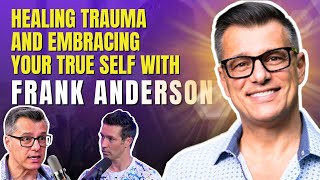
In this interview, psychiatrist and trauma expert Frank Anderson discusses the origins and purpose of his memoir To Be Loved, describing how the pandemic‑era publisher suggestion led him to write a personal narrative about his childhood trauma. He explains the evolution of his writing process—from an adult‑voice draft to a first‑person child perspective—highlighting how reliving painful memories can be both therapeutically risky and narratively powerful. Anderson shares his long‑term journey toward self‑love, revealing that his desire for external validation from his father drove much of his early achievement, and that genuine self‑acceptance emerged only after he felt love from his dad and acknowledged his own harmful actions. He connects self‑love to a solidified identity, describing how this shift enables honest acknowledgment of both strengths and flaws, and argues that leading with love and compassion is the most effective leadership style. The conversation moves to how trauma is often unrecognized, especially in childhood, and how symptoms typically surface only when life “falls apart.” Anderson recounts his mentorship with Bessel van der Kolk beginning in 1992, learning from pioneers like Janina Fisher, Pat Ogden, Gabor Maté, and Stephen Porges, and now mentoring the next generation through his Trauma Institute. He emphasizes the importance of healing trauma to prevent its transgenerational transmission, noting his own PTSD’s impact on his children and the need for parents to repair after disruptions. Throughout, Anderson contrasts healing (addressing root trauma) with merely managing symptoms, advocating for nervous‑system‑focused approaches over mindset‑only work. The interview weaves personal anecdotes, clinical insights, and practical advice for individuals, parents, and leaders seeking to understand and heal trauma.
Chapters
My reactivity, my PTSD was impactful in a negative way for my kids, and I know that, okay? Every time I got activated by my history, they lost their safe parent that they needed. They did. And I have a— like, with both my boys now are 20 and 16, and I have apologized.
So, Frank, so excited to have you on the show today. And I'm curious, why this book at this time, To Be Loved? Why did you bring this forward?
It's a great question. I didn't really bring it forward. It was brought forward for me. Like, after I wrote my second book, Transcending Trauma, right, I met with the publisher like, like 3 months after the book came out. And I really thought they were gonna like go over the stats of the book. Yeah, I had worked for 4 years on that book. And I was like, ready for a break. I really was like, all right, those are the details, aren't they? Right? They're gonna tell me and my family was ready for a break. Let me tell you, during the pandemic, I spent a lot of hours on their couch typing away, right? They were like, Frank, we think you should write a memoir. And I'm like, are you crazy? Like, what do you mean? Like, I had— I never, never thought about that at all. I never thought of myself as a writer. Yeah, always speaker, a teacher, right?
So, well, I'm a big fan. I was drawn into the book and wanted to continue to the next chapter, next chapter. So you developed some good storytelling skills along the way somewhere.
So it's interesting, you know, I, because I like speaking, I'm, I feel like I'm a natural storyteller speaking. And it is a skill I've learned. I said to my husband, I was like, I'm becoming a good writer. This is happening. I could feel it because I didn't feel like that was a natural talent of mine. But you know, you write 3 books now and you learn how to write, right? You learn. So, and I did love writing non-technical things. I have to say that was really great. It was like, this is about my view, my perspective, not about what has to be scientifically accurate and correct. You know what I mean? Exactly. So it was awesome. I mean, it was awesome and it was incredibly healing in a way that I would've never figured out. I have been in therapy forever, but to heal so much through writing was such a shock for me.
Yeah, that's, that's what I was curious about for you is like with the trauma that you endured.
Yeah.
I felt, I was sensing that as you were writing the book, it was like almost anchoring in.
Yeah.
That I have healed, I've moved in this, I've transformed, and I'm past this trauma that I went through as a kid.
Well, yeah, you know, in the book, so it's interesting that you say that. I, I thought before when I started writing this book that I had healed. Like, I really had this belief system like, hey, you're good, you know. Sure, I could write about this. And, you know, you can't write about undigested trauma so authentically because you're too in it. Yeah, right. When people have not healed enough, it's premature. So by and large, I was like, I'm in a good space to write about this now.
Yeah.
But I was shocked, especially in the last 4 chapters were written in real time, you know, and that was an incredible experience. I didn't understand how much more work was to be done.
Yeah, when it was unfolding, I could feel that. I could feel it, like the closure in the, the wholeness being restored as, as we headed towards the end, especially in your relationship with your dad. Totally. Yeah. Um, I'm curious, what did Like, as you were writing this, did it— because it also can be triggering for some people to go back. And that's one of the things people don't understand about trauma is like, oh, if I go back and revisit that memory, I can reactivate those same feelings. Did you have to battle that some as you're writing this book?
Unfortunately, yes. So the first— it was interesting, the first version I wrote in adult in my adult voice. And my husband, I was like, what about this? What about this? He's like, you know what? It's kind of missing something, Frank. Like, I'm not in the scene with you, is what he said to me when he was like reading snippets. So honestly, I went back and rewrote the whole book in first person as a kid.
Wow.
So I would, the whole thing was like, I'm running through the house, I'm in the, garage, I'm running into my bedroom, I'm up in the crawl space. Like, I wrote, you know, I'm walking down the aisle with my wife, you know. Like, I wrote the whole book in first person, which was very intense, and it was a version of reliving that wasn't great, but I feel like it captured— it brought people in with me, right? And so then the third version was a combination of both. Yeah, you know what I mean? But that was very— I did, you know, as a— to know how to heal trauma, reliving isn't useful. Yeah, we know that from a therapy perspective, you know. But I don't regret reliving it from the storytelling perspective because I do think there was an immediacy that is impactful from a story perspective, which is different than healing. If I was not healed as much as I was, it would have been worse, but it was still pretty intense.
Yeah. Let me ask you this too. When, you know, I read your, your journey and studied and researched you a little bit more as well, and I'm curious for the listeners in the audience, like, what drew you into this quest to understand trauma and to understand psychology What, what drew you into this, this massive undertaking that has now defined your life in a lot of regards?
It's, it's a good question. You know, I, I sometimes I'll say my brother— like, I became a trauma expert, my brother became an avid hunter. Okay, he kind of kills anything. Yeah, yeah, that he can with a gun that's legal, let me say that. Right. And I think. And now, honestly, Mike, I can say I'm great. I am truly grateful for my dad and my mom because I would not be here today without them. I kind of feel like I chose this family. It's my belief system to learn about trauma firsthand and to be able to teach people about it. I don't know. I, I had this constant striving for better even as a kid. I, I call it resilience, but I don't know all of what goes into resilience, to tell you the truth, because it's, it's complicated. But I've always wanted to be better and do better, be better and do better. Some of it was to be loved, like the title of the book.
Yeah, honestly. And I think it's so interesting how you went deep into the psyche of your innate quest, but I think it resonates, and I think your book's gonna resonate with so many people where that deep yearning that we have to be loved, as you say. That's right. And one distinction that I picked up, I loved how you talked about your journey towards self-love. And truly knowing yourself. And that was it. And I'm curious, how does someone finally arrive at self-love? And why is that so important? And why is it so hard for us to get there too? I'm curious.
That's a good, it's great. You're asking great questions. I appreciate the thoughtfulness and kind of what you've put into this because you're like zooming right in on these really kind of powerful, powerful learnings for me, honestly. Like, self-love took me a long-ass time, I will say that. Like, probably honestly 3 years ago is when I truly felt self-love, you know. I was striving to be loved all my life relative to my father. I didn't even really know that was going on. All the A's that I was getting, getting into Harvard, all of the success was all driven by this desire to be loved, right? Because I never felt loved by my dad. I never did. Most of my life I hated him and felt hated by him. So for me, there was something in wanting to be loved externally first. I ended up liking myself and feeling good about myself. Like, I was doing good things. I was helping people. I felt good about myself for a long time, but it wasn't until— and I can get teary about this, like, just thinking about the moments when I felt love from him for the first time, right? That opened the door for me to truly feel love for me. You know, it's like, I do think for kids it has to come from the outside first before we can feel it inside. That was my personal experience. So once I felt love from him, I was able to truly feel love for myself. But the, the thing that shocked the hell out of me was I couldn't feel love for myself until I acknowledged what I had done harmfully.
Wow.
So this was— I was not expecting that. Like, you know, once I felt love for my dad, I felt his humanity, the good and bad in him, and then it opened the door for me to feel the good and bad in me. And I was not expecting that at all.
Yeah, and I'm curious, how did your identity shift as you started experiencing self-love? And then how did it shift how you relate with others?
I had like the bad— the confidence was like, like, I was like, like, I know who I am. I know what's good and bad about me, and you can't tell me otherwise anymore, you or anybody else. Do you know what I mean? So it's like, this is what— this is who I am, the good and the bad, honestly. So like, you tell me I did something harmful and mean, I'm like, yeah, you're right, I'm really sorry, I did. Like, that is true, you know what I mean? So I was much more able— I am much more able to truly acknowledge the good and bad in me. And so I'm— if somebody says something about me that isn't authentic and isn't true I don't take it on anymore. My identity is much more solid. It's like, this is who I am, both the good and the bad, like I said. So I own the good. You know, people say, oh my gosh, you're so smart. I was like, yeah, yeah. I push it away, push it away. Like, was afraid of too much attention because my dad was so critical. Like, I'd always downplay my successes as well as downplay my my faults. It was like both of them I shut down. Now I'm like, yeah, I am a nice person. Yes, I am smart. That's true. Am I the smartest person in the world? No. And I don't need to be. I don't need to be, you know. So I'm, I'm— it's more, I'm more accurate in an honest way about both the good and the bad.
And, and I'm curious, why is that so important for us as leaders to get to self-love?
Yeah. Yeah, I think, and you know, I'm gonna do everything in my power to lead through self-love because I think that is the best way to lead. A lot of people talk about power and having hard conversations and standing up to people. Like, there's different ways to lead, You know, sometimes you need to just be a disruptor in order to be a leader. Like, I hear all this stuff around leaders. I'm holding the most effective way to lead is through love and compassion. You know, even your enemies. And I've had this happen. I've had a couple people, leaders in the field, not be so nice to me. And the response is to stand up and fight back. I'm not doing that. I'm not doing that. I'm like, I'm gonna lead with love.
Love that. And when you get to that point of self-love, is that when you know, is your identity feel like rock solid and you're just like, hey, I'm not deterred. And you feel probably more whole, I'm guessing. And the reason I ask that is I'm almost there. I don't think I'm all the way there yet at that deep levels of self-love. I'm working towards it.
Right.
Yeah.
I'm not there either. I don't think anybody's ever fully there. Like, it feels powerful to love someone who's harmful to you. Like, there's power in that. Like, I've risen above it so that I can love you even if you've been mean or nasty to me. Like, that is powerful. I'll just say that. I'm not there 100% either. I don't think anybody ever is. I was on a call a couple of weeks ago with kind of a big Hollywood type. And boy, did I lose my center. And I was like, I watched myself. I was like, why are you, why are you proving yourself here, Frank? You don't need to prove yourself. What the hell are you doing this for? So I saw myself lose my center in this call with him, you know? So I don't know that I'm going to be there 100% of the time either, but I recovered quicker. I was able to get back to center faster. Do you know what I mean? I don't know that— I don't think trauma is ever 100% healed. And I don't think we're ever 100% in self-love either. I think we move in and out, right? That's my sense.
I like that distinction. Um, I would resonate with that. And then I'm curious, like, how did you know that you had trauma? And how does one recognize trauma or PTSD? And then how does it affect the people that they're close to, like your partners and people in relationship, you know? And I asked, you know, as I was going through it with my wife, and she's a 3-time suicide survivor, and we had massive levels of trauma that were activated from very abusive childhood. But I'm curious, it took— I didn't recognize it. It took me a year and a half. I'm like, what the heck's going on here? But what would— how do you pick up on the patterns of that?
It's a good question because it's very hard to recognize, especially for children. Because you grow up, this is your normal. You have no frame of reference that it's abnormal. It's what you know, it's what you grow up in. So most kids don't recognize it as such. They just don't. It's what, it's what it was, your normal. So took me a long time. It's— people usually start putting the pieces together when they start falling apart, when they get symptoms. I failed a relationship, I can't be intimate, I can't, you know, Are you drinking too much? I'm— you got to have a problem in order to start looking at the origins of it. That's the— that's been my experience. So we don't— nobody comes into therapy, Mike, it's like, I want to work on my unresolved being childhood issues. Like, no, they're like, they want to work on the problems, and then you find the root of it. So it wasn't until I was in my residency in psychiatry because I was so overwhelmed by working with clients that had trauma histories. It totally overwhelmed me that I started seeing my own trauma history. So I was adult, you know.
And was that when you were working with Bessel van der Kolk?
Yep, that's exactly right.
And I'm curious, you know, he wrote The Body Keeps the Score, amazing book. What did you pick up? And I think as I was reading about your journey with him and even like PTSD wasn't even diagnosed until 1983, if I remember correctly. Yeah. Uh, what— I feel like our culture is so unaware of trauma, and we're more aware now, but like, when you were working with Bessel and he was your mentor, like, that was early days still of our trauma awareness. What did you learn from, from Bessel and your experience there that shapes how you work with clients and how you coach and mentor other, you know, young rising stars in the, in the world of trauma healing?
I feel so fortunate. Like, I've been working with Bessel since 1992. Honestly, I've stumbled upon him because his trauma center was at my residency training program. So I was lucky enough to have that connection, you know, and I learned everything I know about trauma from Bessel from the beginning. And he is a disruptor. Judy Herman, for those people who know her, Judy Herman was in Cambridge, Bessel was in Boston, and they were these two founders of trauma as we know it. And my best friend Amy worked with Judy Herman and I worked with Bessel. And it was like, I was so fortunate. I grew up with all, like Janina Fisher, Pat Ogden, Gabor Maté, Stephen Porges. Like, I knew these are my friends. I was so lucky to grow up when trauma— like, Bessel had to fight to bring trauma to the forefront. He really did. He was a disruptor because nobody was hearing it. You know, when he was— the false memory syndrome people were coming after him and trying to attack him because he was like putting it out there too much and they were getting all threatened by that. So, you know, I've been in this world for a long time and I feel so fortunate to have known all these model leaders, really, you know, it's been really great. So I've learned everything from them. And it's interesting now I'm, now like, it's interesting to be full cycle. Now I'm mentoring people. I was like, all right, Frank, it's your time. Right now I have all these people coming up, they're like, oh my gosh, you know, so you know Stephen Borges, you, them, see, you are friends. Wow. You know what I mean? So I'm, I'm at my age, it's like it's time to give back, you know. It's one of the reasons I started the Trauma Institute. You still look really young, so I don't, I don't know the, uh, everybody says this. I have, I'm 60 years old.
You're 60.
60 years old and I don't look 60. I know that.
You got some Asian genes in those Italian genes?
I don't know. You know what? You know what? It's healing. Yeah. That's what I think.
That's true.
I really do. Like, my husband gets pissed at my Italian genes. He's like, "Ah, you damn Italians look so young." And I'm sure that's something to do with it. But I do feel healing Trauma energy is oppressive.
100%.
And so the more I release it, the better I feel and the younger I look, I think. I mean, I don't know what else to say.
Well, the metaphor I've been using when I explain with some of the leaders that I work with that have some PTSD, it's almost like your nervous system is working twice as hard because it's working in the background of the hypervigilance and all that. And then I've read research that shows you're 226% more likely to get an autoimmune disease if you have active PTSD.
Yes, yes, yes, yes.
And I'm curious, how have you seen it show up? Like, why is it so important to heal your trauma and to become aware of it, to heal it, to move through it? And I loved— it felt like you believe that while no one's ever 100% totally healed, but you can get to a state where you feel healed.
Yeah, that's exactly—
versus some people are like, you can just treat and manage the symptoms. And I was like, when my wife was in the depression battle, I'm like, I'm not accepting that.
That's right.
My daughter has to have her mom. We're going to find a solution. That's kind of how it felt.
You're right. Yeah. I am a big fan of healing. I'm a big fan of healing. I'm a big fan of releasing. The energy that doesn't belong to you and doesn't serve you.
So good.
Greater good, right? And so I'm constantly striving for healing, not managing. Our instinct is push it away and repress it, push it down. That's our instinct. Push the pain away. And I'm saying this is hard work, but if you move toward it, you can release it. And that's what the book— that's one of the main purposes of the book is like, look, this is possible, people. I can do it. You can do it. I really want people to know that. And the thing you said about your wife is really important. And I feel this way too. And I feel bad about this relative to my children because one of the biggest indicators of problems for kids is growing up with parents who are symptomatic around trauma. Okay. And that was very— there's a couple of studies out there. I can't quote exactly who did the study now at this point. Point, but I was very attuned to that because my reactivity, my PTSD, was impactful in a negative way for my kids. And I know that, okay? Every time I got activated by my history, they lost their safe parent that they needed. They did. And I have a— like, with both my boys now are are 20 and 16, and I have apologized and taken responsibility for that. I'm like, I am so sorry. Yes, my— like, when they would fight, it freaked me out because I got so terrified of the violence. And I'm using violence in quotes because that's what got activated in me, was like, oh my God, this is violence. If I did what they're doing, I would have gotten beaten I have to stop them from doing it. Do you know what I mean? And I lost my calm center as a parent. So that's one of the big reasons. One of the huge reasons is to heal is to prevent the transgenerational transmission of trauma, because trauma gets passed down through generations for sure.
Yeah, 100%. And my wife and I have been very conscious of that. You know, we have a 3-year-old, almost 3-year-old, and like we can tell when we fight.
Yes.
If we fight in front of her, her energy, and she'll literally, right, 18 months old, would shout at us, stop it.
Yeah, right. Kids intuitively know because they feel the energy. They feel the energy. They do. So, I mean, it's, it's, repair is important, right? Repair is important. Disruption's inevitable, but I'm going to do everything in my power to minimize it. We're not going to be perfect parents. I don't think that's even the point.
Yeah, I would agree. And one of the things that I had to learn, like, I was into peak performance psychology and leadership and all these other modalities that were very helpful. But when my wife was in a trauma state, I was caught off guard and I couldn't understand. It didn't meet my model.
Right.
And all the normal peak performance psychology stuff did not work.
Yes.
I was like, right, F you. Yeah. And, and then I had to realize it's not about the mindset in those scenarios when you're dealing with real trauma and real PTSD. It's really about the nervous system and how do you rewire the nervous system.
More from Michael




9 Powerful Tools to Regulate Your Nervous System (And Stop Living in Fight or Flight)



