How Burnout Is Silently Holding Women Back! | @HighPerformance_Health
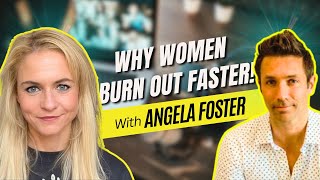
In this interview, Angela Foster discusses the disproportionate societal pressures on women that lead to burnout and outlines a female‑centric approach to peak performance. She highlights the unique hormonal lifecycle—from birth control use, fertility, pregnancy, postpartum, perimenopause to menopause—and argues that understanding these cycles is essential for optimal health. Foster advocates regular hormone testing, menstrual‑cycle‑aware training, and continuous monitoring of autonomic metrics (HRV, ECG) using medical‑grade devices and wearables (Oura, Whoop). She describes her coaching methodology for identifying bio‑individuality through genetic tests, chronotype questionnaires, and real‑time data, then tailoring micro‑recovery interventions (nature walks, breathwork, meditation). Her personal recovery stack includes daily exercise, meditation, present‑moment focus, and short sessions with BrainTap, red‑light therapy masks, and a FlexBeam device targeting the vagus nerve. Throughout, she emphasizes empowerment, bio‑individuality, and the need to shift cultural expectations that place women last on the priority list.
Chapters
I think society puts expectations on women that are really quite unreasonable. They need to be this incredible parent, you know, a mother, and they also need to be incredible at their career. And by the way, they also need to look 20 years younger than they really are. It's just kind of crazy.
Tell me, tell me about your vision of how you want to impact and deepen women. And then I'd love to break down, like you talk During this journey, biosyncing.
Yes.
And, and your biohacking went a lot deeper because you're like, I got to reverse engineer how I got to this place and how I— so I don't ever go back is what I pick up on. But let's break down the bigger vision of like how you want to impact and serve women and then the peak performance biohacking pieces that you, that you dove into during the season.
So when I look at women, right, I think that we have never been under more pressure than ever before. So I think it's been incredible the way that we have had success in the last few decades in our careers, but we're still the person who's primarily looking after the children. And even if we're not, and you might have a stay-at-home partner, reality is you're carrying everything in your head. You're the one that's worrying about whether they've got something emotionally. Exactly. You're always going to— even if your partner gets up at night, you're still switched on because you're like, my baby's crying, or whatever it is. Yeah. So, um, I think for me it's about how can I impact women so that we truly can have it all in a meaningful way and in a way that takes care of ourselves instead of being last on the list. Which is, when you're last on the list, you're so vulnerable to burnout. And I think that we just so easily beat ourselves up. I think society puts expectations on women that are really quite unreasonable. They need to be this incredible parent, you know, a mother, and they also need to be incredible at their career. And by the way, they also need to look 20 years younger than they really are. It's just kind of crazy.
A sexual vixen.
Yes.
In the bedroom all the time, even if they're whatever, 40 or 50 or what.
Exactly.
What's, what's different about women's recovery and women's like biohacking that's different than men? Because I've, I've seen some other stuff like women should approach intermittent fasting differently or different elements that I don't think we have enough respect for the differences between our, our hormones, our nervous systems, how they operate differently. And I know like most drug testing is done on Caucasian white males, so we don't even know how drugs interact with women, for example, or Latinos or African Americans. You know, but when, when you think about coaching your women, what do you do differently than you would do if you're coaching a man or where are some of the cultural mistakes around this peak performance and health optimization that are really geared towards men but not sensitive to women? Yeah.
So with men, right, their testosterone is really high in the morning and then it kind of dissipates across the day. So it kind of follows the same rhythm as cortisol and motivation is high. And I'm not saying stress is bad because stress is good, right? Stress is what leads to growth. But I think it's about understanding the female body is different. And that our hormones are changing across the month, but they're also changing across the seasons permanently. Right. Because if you look at the life cycle of a woman, she spends the first part going, I don't want to get pregnant, I don't want to get pregnant, and doing things that actually are now shown to be not great for your health, like taking birth control. And then it's like, now I want to get pregnant. Like, I'm hoping this is going to happen straight away. Exactly. Turn it on. And then you are like, you have a child if you want to have children. Not all women do, right? And if you're lucky enough to see you have a child, then you're postpartum, then you're like, say you're like prenatal, then you're pregnant, then you're postpartum, then you might repeat that like I did a few times. And then you kind of come out with that and you think, oh, things are coming down, the family's under control. And then, hey, you hit perimenopause and now there's all this disruption again. And then it's menopause, postmenopause, right? So it's very, very different for women, I think. And we need to embrace that, our female physiology, and understand how do we work with it so that we can have high performance and optimal hormonal health at the same time.
Okay. And so when you think about women optimizing hormonal health, should they get, you know, hormone tested regularly? Should they consider testosterone or progesterone treatments as often as men? Because it's popular for men. Yeah, but it doesn't seem to be as well known for women, for example, at least in the States.
Yeah, I think it's— I think it's growing now. And I think that all men and women, right, should be tested ideally and no one really tells you this, test early on in your 20s when you're in your prime so you know your baseline and then you can go, okay, this is like kind of quite a lot lower than, than it used to be rather than waiting and then you have no baseline. But I do think testing is important and I think it's also understanding what's happening as a woman, you know, like in your 40s, the first thing is going to drop off is progesterone and that can cause anxiety, it can cause poor sleep. So maybe a bit of progesterone at that stage is optimal. You know, you have to consult with your doctor. But I think understanding your hormones and when we're taught in school, we're taught about the menstrual cycle, but not in much detail. And we're taught a little bit about pregnancy, but there's nothing that comes after that. So even women don't fully know, you know?
Yeah. Speaking of menstrual cycle, do you, do you recommend women like during the menstrual cycle pay attention to that and then kind of pay attention to their exertion, to their renewal, to like because what I, what I'm picking up on from others, but I haven't heard someone break it down as succinctly, is like, um, you really need to pay attention to your menstrual cycle so that you know the days, and then you don't stack an enormous amount of work on the roughest days, and you don't go and do a hardcore workout on the roughest days, and you give yourself grace for what your body's actually naturally doing. But what do you, what do you know? I'm not a woman, so I I don't know, like, this is your, your journey.
Well, for not a woman, I think you summarized it very well. So I think it's like, it's a combination, and I think it's about looking at your individual recovery and like what we call the allostatic load, right? How much stress is there elsewhere in your life? Because for some women that can feel, you know, that there are some, uh, some advocates of like, okay, this is what you can do in the first part of the month, and then by the way, if you're going to give a presentation, do it around ovulation because you're much more outwardly spoken and all this. Who has that option, right? And just go, hey, we can't do it for another 3 weeks. I just, I can't book my calendar because, you know, I'm not ovulating, guys. I'm not ovulating. Uh, let me just check my schedule. Um, so it doesn't always work really. And then in the luteal phase, when you should be adding more recovery, I absolutely agree. But, you know, sometimes that can be perceived a bit disempowering because we are strong at any time of the month, and I want women to feel empowered. I think what you can look at is we know that when you cross ovulation, your body temperature is higher. We know that you're trying to optimize here for progesterone production, right? Well, we're less resilient than we are in terms of the early part of the month. And we see differences in things like HRV. So it's a case of looking at it. You can't say, like, as a lawyer, I couldn't have gone, we're going to have to hold the deal because we can't get it through because I'm in my luteal phase. There's a fast route to get to that.
Is that astrological? What is that? I still don't know what luteal phase is, but—
So it's like the second half of the cycle. Oh, okay. So it's after ovulation, second half. So like follicular first, then we have ovulation, then we have luteal. Sorry, I should have explained that.
Oh, good. Well, you thought I was more aware than I am.
But you summarized it so well. So I think you're right. In that situation, let's say you've got a deal going through. You're not sleeping as well. Your body temperature is a bit higher. Maybe you're not going to go and do a really intense HIIT workout, but if you feel good and it actually improves things for you, then do it. But work in more recovery. No, it might not be ideal. I think you need to work— that's why I always talk about bio-individuality, is figuring out what's right for that person. Because exercise for me was one of the key things in my mental health journey that has allowed me to stay and actually transition off that medication. So I think it's, it's like very individual.
Yeah, tell me about your process with, with some of the women that you coach and that you mentor. Like, how do you help them navigate this? Like, walk me through the whole process. You know, you talked about biosyncing, uh, HRV. Do you have, like, how do you assess and identify your bio-individuality and all the things? I'd love to understand because this is newer to me for the female side.
Yeah.
And I coach a lot of women, so I need to learn more.
I love that. So essentially there's some things, right, that you could genetically test or you can take questionnaires like what's your sleep chronotype? And some of it's behavioral. But I think also we see evidence, right? Matthew Walker talks about this. There are early morning types. So I think the more in sync you can be with your own rhythms, and part of that is the menstrual cycle if you're in your menstruating years and understanding you know, that resiliency across the menstrual cycle. We use heart rate variability as a metric because, uh, you don't have to constantly look at labs, which are just giving you like a snapshot on that day. What we can look at is how's it changing and intraday, what's your capacity look like and are you building adaptive reserve? And so we will take measurements with, uh, ECG-grade medical device. And then in between those measurements, people might be tracking with an Oura or a Whoop strap. So it's in the background monitoring their data overnight. We use a combination of both. And what the, the actual physical— the assessments allow us to do is to see like how sympathetically driven are you across the day and how is that affecting your sleep and how is that impacting your recovery? And then how can we introduce micro recoveries? Like what is it for you that puts you into that deep relaxation state? Is it a nature walk? Is it some breathwork? Is it meditation or is it on different days, it's going to be something different. Do you see what I mean? And that's the really bio-individual component.
That's one thing I see a lot in both men and women right now is we need those. We need a lot more focus in recovery, especially us as Americans. Like, and then women have a different parameter of like, not, I'm not going to say blanketly, but like paying attention to your body. Everyone's different. But also I think there's, you know, in your life cycle of the month, what's happening. And I wish— it's one thing I do a lot of work with my clients, even as we were talking, another corporate attorney that I'm coaching, she was so on the edge of burnout and she wasn't aware of it. The medicine kicks in, boom, she realizes, hey, I'm really tired. My body finally has space to speak and it has equal voice right now. You've been— it was like she's been suppressing the voice of her body. And, and, but I'm curious, what do you do for, for your own recovery? Like what's, what's Angela's recovery stack look like? You know, we talk about supplement stacks and we talk about all our fancy devices, but what's your recovery stack look like for optimal performance?
Yeah. I'll, I'll explain that. You know, what's really interesting with that, that I think you, and you were talking about how her body was speaking. I just want to pick up on something there. Is that I think as women, because from a very young age you have a menstrual cycle and you might get period pain and you get these things, you're taught to just carry on regardless, right? And then as a mother, you have to do that. And I think it's so easy to just keep going, I'll be fine, and just keep carrying on, carrying, carrying on. And that's maybe why we see higher rates of burnout in women, because also, also juggling so many things. For me, I still have to kind of discipline myself to do recovery. That's why I say it's always like all of us are a work in progress. Some of the things that I like to do, so exercise is a daily for me, but again, that, that balance has to be right, right? So, because you can overtrain. So some of it has to be more like recovery style exercise, which are the days that I'm not so much of a fan of because I like pushing myself, but they're in there and I make sure they're there. Meditation is a good one, but then also I find present moment attention and not constantly like flitting and task switching so that I can be present. And making sure that I create like transitions between what I'm doing so that I can bring the energy I want to in one situation. And if it requires a different energy, I've got that. So these sort of micro recoveries to me are like gold. They're really, really important biohacking-wise. Like, I mean, one of the things that I love doing at the moment is like meditating with my BrainTap and like a red light therapy mask on. And then also this device called FlexBeam, which is a red light therapy device that you can put anywhere. So I put it in the center, so it's kind of on the vagus nerve and it creates this lovely warm feeling. And I'll meditate and or do some breathwork, makes you feel quite floaty. So, and these things are like 10 minutes long, do you know what I mean? They're not— they're easy to fit in, but they make a world of difference.
Love it.
More from Michael




9 Powerful Tools to Regulate Your Nervous System (And Stop Living in Fight or Flight)



