Is Bio-Syncing the Secret to Female Success?
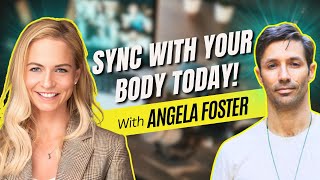
Angela Foster explains Bio-Syncing, a framework that aligns women's goals with their physiology and bio-individuality. She tracks burnout through cortisol, sleep, and heart-rate variability, recommends wearables like Whoop to catch early warning signs, and outlines bio-hacking tools under $1,500 including red-light therapy and neuro-stimulation devices. Client case studies show metabolic age dropping from 15 years older to chronological age in four months.
Chapters
Biosyncing is— it's evolved over time essentially to what we've now sort of trademarked as a concept, which is how do you sync with your future self? So your goals, your dreams, your values, which is really important. How do you sync with that bio-individuality? And then how do you sync with your female physiology?
Tell me a little bit more. I want to go back for a second because that edge, finding that edge of burnout, like what are the signs? Like one of the things I want to hit on is like, what are the signs that you're heading the edge of burnout and you might have a problem so that maybe you can catch it before you fall off the cliff of burnout? Like in your research and your examination. Yeah.
Yeah. There's, there are quite a few, I think, if you're observing them. So if you're not tracking, we'll come back to when you track data, how it can make a difference. But if you're consistently waking up in the morning, the, the stage pre-this is where you feel heightened state of alertness, right? So you're waking up at night, you can't sleep, you're going over things in your mind, and cortisol's high, and you can maintain that for a bit. But after a while, the body goes into more of a shutdown, and it's going to defend itself. And so if you're waking up in the morning and your cortisol rhythm's all out of whack, you might feel like, I can't get out of bed. Or I need caffeine to wake me up, or I need to go and do a high-intensity workout because I just can't get things into gear, or maybe it's a combination of them, then your adrenals are probably needing support. Like, that would be a sign that things have got really— I'd rather you didn't leave it to that point. They're getting quite bad here and you're really quite vulnerable. I think in early stages, like, if you're not able to focus and then like get really good sort of power productivity, right, and creativity, and get deep work done, should I say, and then psychologically unplug and detach. Again, there's a vulnerability here that you're going down, you're slipping down that slide, because you tend to— what I've noticed is do more and more, and you almost haven't noticed your own inefficiencies. So it feels like you're having to work all the time, but really it's because actually you're never achieving the productivity that you want to. And then there's also, you know, your irritability with your family, for example, is another one. You feel really, really tired in the afternoon. There's so many different ones. But I think that if you're tracking heart rate variability, that actually will give you an idea. Because if you start to see heart rate variability dropping, which for people who don't know what that is, the heart doesn't beat like a metronome. So if your pulse was on an average 60 beats a minute, it's not going to be 1 beat every second. The variation is not going to be like 1 second between each beat. There, it shouldn't be higher variability. And so when we see that higher variability, that's a good sign. The key thing is, in general, unless there's a problem, right? But the key thing is not to compare yours against other people's because yours is individual. But if you start to see your heart rate variability dropping, that's a good sign that you are now overreaching to the point that you're not creating adaptations. And I think, you know, when we look at, uh, athletes, right? We know that a small amount of stress creates adaptations, just like when we lift weights or we run faster. Uh, and that's really functional overreaching. But then you can have another stage where you're doing more, but you're not really seeing results. And now it's nonfunctional overreaching, and that precedes overtraining. Overtraining syndrome is like burnout for corporate, for the corporate athlete, right? And so that's a hard ship to turn around, as we were saying. But what if you start to realize that you're non-functionally overreaching? Well, here you've got a wandering baseline, right? You're always a little bit underslept, you're always a bit overstressed, you're maybe undereating or overeating, or both can happen. Um, your nervous system isn't reacting like it was before, you know, you get agitated at the flick of a switch and you're not really succeeding in any one area. Uh, that can be a sign. If your cortisol's high as well, preceding, when you are sort of non-functionally overreaching, so preceding that state where now you're finding it hard to wake up, if cortisol's high, quite often you might see abdominal weight gain because you're going to have a poorer way of managing your blood sugar. But also from an ancestral perspective, if the body thinks there's some kind of threat, the first thing it's going to do is thicken up the torso because it needs to protect the organs. So now you start to see weight going on the tummy, but also women will claim it's like called the back veranda, right? They notice this fat coming on their back around their bra area. This is thickening up. That also can be a sign of, of high cortisol. So I think there's lots of different things you can look for.
So is this where some of the concepts around biosyncing came from? Tell me more about biosyncing and the evolution of that, because it sounds like you You're, you're, as you're really talking about right now is like getting in alignment, paying attention. You can measure and tune yourself to what your body really wants, the optimal range, or you can just blast through and not pay attention and lead, go right down the road of burnout. Yeah.
And BioSyncing is, it's evolved over time essentially to what we've now sort of trademarked as a concept, which is How do you sync with your future self? So your goals, your dreams, your values, which is really important. How do you sync with that bio-individuality? And then how do you sync with your female physiology? It's really like a three-pillar approach. And I think that checking in with yourself in this whole process is really important. But as you come in sync, your physiology responds positively as well. So if you're in sync with your highest values, what we see is heart rate variability, or if you're doing an activity, right, that you value. So it could be spending time with your kids. We can see heart rate variability increases. So biosyncing is, as you say, helping people come into sync. So they're kind of coming home to themselves, right? And then it's much more effortless. And I think one of the things for people to think about here is they hear a lot about zone 2 training, right? But really, with like exercise, what we want is to create polarity. Because that polarity is what's creating adaptations and flexibility. So, um, if you, you might sprint occasionally, right? And those are like intense work periods when you're looking at work and you're doing deep focused work, but then you need to also switch out of that and do low-level activities that let the brain recover. So it's always output matched with a period of recovery to bring you back into sync, and ultimately you get results faster.
Yeah. Love that. And how does that shift like your future self on the conscious or subconscious level as you get yourself more and more in sync? What do you notice in your clients?
The biggest thing I notice when I'm working with people when they first set goals is that they have these big goals, right? But then old programming gets in the way and their belief system makes them— is there that they might think, maybe I can't achieve that. So they already adjust it before they write that down. So I always think, like, the first look that we get, it's like, is that really what you want, or do you want something bigger? Like, don't be afraid to dream big. And then when you do that, it feels like out of reach at first, but it feels incredible. It's excited, right? So I call it— that's your goosebump goal. Then it's a case of thinking, who is she or who is he who achieves that goal? Because if it was you as you are now you would have that right now. So some things have to change, right? And what parts of you do you need to get go of, and what are you into embracing the new? And that's really stepping into your future self. And I think that, you know, Dan Sullivan and Dr. Benjamin Hardy did some great work around this, um, around this idea of 10x. There's a great book, 10x Is Easier Than 2x, because if you 2x, you're just kind of doing more of the same. That is the road to burnout, right? You can just double up on what you're doing. You can work out harder, you can work harder, you can deprive yourself of sleep. Whereas if you think 10x, it's like this requires a whole new level of thinking. Like, I would have to become maybe extremely productive. I'd have to say yes only to the right things that really move the needle. And so that's all part of that.
Yeah, love that. And, and where are you going deeper right now on your biohacking, learning about this peak performance side? Where, where are you most curious with your clients? Where are you seeing the most promise, the most intrigue, for your own curiosity, the next evolution of Mayangela?
The next evolution of me. I think for me, it's like really understanding the sort of the spiritual connection that we have with ourselves and with source and just seeing the implications of that on our ability to achieve our goals and allow the art of allowing the universe to sort of co-collaborate with us and the way that that positively impacts our physiology and health. I'm just so like— I find it so fascinating that when you bring that into sync, now you have health, you have high performance, and you're also like optimizing for longevity insofar as not like living to 160, but living a life of, you know, that's fun, filled with joy because you're in great health. And so that for me is a a real area of interest because it's magical when you see people come in sync and they get those results.
Yeah. Love that. What books do you find yourself giving the most or recommending the most in any of this area of peak performance, biohacking, the spiritual component? I'm curious what would have been the most meaningful ones for you?
That's a good question. There's so many, right? So I love like Neville Goddard's work. I love Wayne Dyer's work. I mentioned that book, 10X Easier Than 2X, and Be Your Future Self Now is another great book. So many books like in relation to health. I guess I'm just like an avid reader because when you start bringing these things together, and as you know, right, Mike, also the amazing thing is when you have a podcast, you get to see advanced copies of books that are coming out. You get to interview the authors. And really understand like what's behind it, that, that's just amazing as well.
Yeah. Well, that's what about what when you think of the most essential devices, like let's say I have a budget of $1,500 to do biohacking, to do like, you know, all the gadgets and stuff for testing, monitoring, what would be in What would be at the top of your list to invest in with that $1,500?
That's a great question. So I'd say if you didn't have any money, you could do everything I'm talking about by becoming more in tune with yourself without spending anything, right? Because all of these things are free, right? So you could optimize your circadian rhythm, get access to early morning light, really upgrade your diet nutritionally. That would have a bit of investment. Move your body. All these things, I think, they don't have to have. But if you were going to invest in something, I think something that allowed you to understand your nervous system would be a good thing, whether that's a wearable, whether that's, you know, using something like we use to take assessments. Something like Whoop, I think is amazing. I interviewed Kristen Holmes, the head of performance science. I think it's an incredible— I have, you know, affiliate or relationship with— I just think it's an incredible device and the technology that they're developing and the studies they're doing. In terms of really understanding your stress and your physiology and the strain of your workouts and things. And that's inexpensive, right? I think that in pounds, I think it's probably like £250 for the year. Uh, so that's inexpensive. Yeah, I think, um, that's probably the same in dollars, right? I think that if you can do some lab work, that's helpful, some blood work annually. Um, I think people can go down the lab route, and unless you have a really big problem. I think it— you might then just go down this rabbit hole spending a ton of money, and when you get all the things we're talking about in place, it's going to start to optimize all this stuff anyway. Um, for me, I think having— investing in something that you just enjoy and helps you unplug. So again, you could do this for free. You could listen to music, you could dance, you could go for a nature walk, you can meditate on your own. But if you wanted to upgrade that experience, then I think using something like Sensate or Apollo Neuro or BrainTap, for example, I love. I have a future self meditation on BrainTap, right, that I recorded. I think, you know, things like that can help you really visualize and help you dream and take you on that journey so you can live your best life. A journal, so you can basically journal your thoughts and access your higher self, I think is also something else. And then, you know, depending like we probably haven't even got to 1500 yet, to be honest, depending on how, how expensive bloodwork is where you are.
Yeah.
Then it's a case of like, what do you want to add on? Like, I think red light therapy is pretty incredible when you live in the Northern Hemisphere because we just don't get enough access to light. So I think something like red light therapy or a sauna, if you're on a budget, you could do a sauna blanket. Helps you detoxify, you know, is amazing for health. Those would probably be some others.
Yeah, love that. When I, when I lived in London briefly, I was there during the month of October, for example, and we had one day of sunlight, and it was really like 3 or 4 hours in the afternoon. And I was astonished. I just— it was— and it was still like 60 degrees, so it's still pretty freaking cold, but women and men were stripping off their clothes, their work clothes, stripping down to their undies and just popping on little patches of grass in the middle of the street in the middle of the day, like 2:00 to catch this little bit of sun. And I was like, what the heck is happening here, guys? It's so cold. What are you doing in your underwear in the middle of the street?
It's always gonna be the Brits or the Germans that are gonna take the sun loungers on holiday, right? They're gonna be down by the pool. But I think, yeah, I think that's the thing is we know how we, how much we are deprived and that's the thing. So I think if you can have something in the winter. Um, you know, but yeah, that's a very British thing. The first bit of sun, let's just bear away.
Yeah, yeah, it was astonishing for me. Um, let me ask, um, as well, what are— one of my last questions— what are some of the results that women see when they work with you to basically resync their nervous system, to get it back operating, their, their body, their health, their mind? What do you see? What are some— tell a story or two of some of the beautiful changes you've seen in the women you work with.
So there's intangible changes in terms of how they feel so much more connected, right, with their sense of purpose in life and where they're going and just also what's possible. And then the kind of things they attract in, in terms of their businesses, their growth, or their kind of promotion, all these sorts of things, right? Which is more on that mindset manifestation side. On the physical health side, improved mood, improved sleep, reduction in hormonal symptoms. You know, many women that come to me in the beginning, they've got menstrual migraines, they feel really anxious, they're not sleeping well, they might have heavy bleeding, and those resolve. So they feel so much better, but also just a much higher functioning metabolism, which again feeds into energy. But also then you end up losing excess body fat, right? When we're working together, gaining more muscle, you see a big reduction in metabolic age. I mean, when I'm thinking like examples, I had a client recently that I worked— I'm still working with because often people like— people never turn around to me and say, Angela, I'm just feeling so good and so healthy. We've got to stop. When did anyone say that ever? Do you know what I mean? So there's always another level. But, you know, when I think back to her, the first 4 months we looked at her metabolic age testing and it was 15 years higher. And within 4 months she's back down to her biological age, her chronological age, sorry. And now we're working on like reducing, reversing that even more. So pretty dramatic results. And then that just affects everything, right? It affects your relationships, affects your family life. You've got more energy, it affects your job and how well you're doing. And yeah, very different.
Wow. Love that. Well, where can people find out more about you and the great work you're doing? Obviously, you've got a phenomenal podcast, but tell us more. Where, where can we go to find out more about Angela Foster?
Thank you. So, uh, podcast is High Performance Health, which, uh, we have an episode with Mike coming out. If you're— I'm not sure when this will air, but very soon, which is very exciting. Um, it may even be out when you listen to this. Um, and then if you are kind of inspired to get a like a free snapshot of where you are right now and understand the mechanics of shift that I was talking about, we have a free quiz you can take and then we will send you your scores with a personalized report and some videos to help you start taking action. And that's over at yourtotalhealthcheck.com.
Love that, guys. Definitely go there. Can I do that even though I'm a guy? I know you can't. It's not for me necessarily, but I would have found out.
You might, you might receive some very female-specific emails coming your way.
You're paying attention to your menstrual cycle, Mike.
Yeah.
You're like, very important.
Last time I looked, I didn't have one. Yes.
Yes. Well, thank you for being on today and such a pleasure and, uh, love what you're doing in the world. I think it's really important. I think, um, anything that brings rejuvenation and helps people energize and, and shine at their highest level. And obviously you're doing some really amazing work that's pretty comprehensive. Like, this is one more comprehensive aspects of helping women get to their, their best state. And so I love what you're up to and honor connecting with you today, Angela.
Thank you, Mike. It's been an honor to come on. Thank you so much.
More from Michael




9 Powerful Tools to Regulate Your Nervous System (And Stop Living in Fight or Flight)



