Why Reliving Trauma Is Holding You Back from True Healing with @BrandonEpstein_
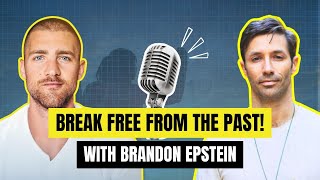
In this interview, Brandon Epstein explains his evolution from traditional trauma work that revisits painful events to a present‑moment reprogramming approach that targets the "scar tissue" – the limiting beliefs and emotional patterns that persist after the original incident. He illustrates how this method applies to a range of traumas, from relationship betrayals to combat‑related PTSD, and how he measures progress through baseline testing, check‑ins, and the client’s sense of presence and safety. Epstein also discusses how high achievers often self‑sabotage when they reach new levels of success, describing the need to "acclimate" to a higher frequency and to reprogram any hidden beliefs that deem the new status unsafe. He outlines his toolkit—NLP, hypnosis, timeline work, somatic techniques, and other modalities—and explains how he validates change. The conversation shifts to recommended reading, highlighting books such as Power vs. Force, Biology of Belief, the Kabbalah, and works by channeler Paul Selig, all meant to raise personal vibration. Epstein then addresses psychedelics as a next‑wave performance enhancer, emphasizing the importance of set‑and‑setting, trusted guides, and careful selection of substances (MDMA, psilocybin, caution around 5‑MeO). Finally, he shares his future focus on deepening one‑on‑one coaching with elite athletes and executives, promoting his book Program to Fail and his online presence for those seeking his methods.
Chapters
I don't need to go back and relive that with them. I have to see, okay, if you got cheated on and now you believe that all men are cheaters, we just have to change that programming. Otherwise, you probably won't have a good romantic life the rest of your existence.
I'm curious when, when they step up into this manhood, and they own it, then they're probably, I would imagine, pretty grateful for you for having called them out. Because like, uh, the best of the best, they want to be called out. Like Jordan, you know, Phil Jackson used to talk about how Jordan wanted to be coached. He loved being coached. He's actually pretty coachable. And I would imagine that you probably see that with a lot of your best performers, man. They are— they may resist sometimes, but they are hungry to be the best, hungry to be coached. Have you found that to be true? Yeah, for sure.
I mean, that's why they end up in my frequency, you know. I think we probably both are on the same page, like we're operating at a frequency, so someone else finds us in that frequency. There's a reason they're ready for that work. Otherwise, yeah, two ships passing in the night, we would never get together.
Yeah, I'm curious. So some of the work I do, like I very specifically, my core domain expertise is primarily, or one of the main areas I focus on is trauma and PTSD. And, and so I imagine that some of the work you do, you're actually working with some trauma and PTSD around an injury. Like, you know, I was listening to another one of your episodes and you were talking about like, hey, after coming back from injury, you're trusting your arm again, you're trusting your knee again, whatever. And there's some trauma around that. What, what do you do to help an athlete or a leader and business executive that you work with move through some negative emotions and move through that trauma to realize, hey, I'm okay, I can handle this again.
Yeah.
And I can trust myself again.
Yeah. I'd say this is how my work has evolved a lot over the years, because what I used to do was go back and heal the event with them in a way. Emotionally, energetically. And now I don't really touch the event at all, and I just deal with the scar tissue in the present moment, which is the programming that came from the event. And so I just do the exact same workout talking about specifically as it relates to whatever trauma it's there, right? Whether like they had someone close to them commit suicide, or they went through sexual abuse, or whether it's just like a traumatic injury, or maybe they got cheated on by a husband or wife, whatever it is, like, I don't need to go back and relive that with them. I have to see, okay, if you got cheated on and now you believe that all men are cheaters, we just have to change that programming. Otherwise, you probably won't have a good romantic life the rest of your existence. So I always deal with the program, and I hate to sound like, uh, just a broken record, but these tools that I'm using around reprogramming, just, they really work for just about everything I've encountered so far. It's like, especially PTSD. I've worked with a lot of guys who've been in war and it's like, I don't need to go back and relive the war with them. I can just deal with like the fear that lives in them right now and the programming that lives in them right now. Yeah, it's not safe. I have to be on guard all the time. Okay. Let's just rewire that to make you feel safe in the present moment. If we do the reprogramming work, like, you're free. We don't have to go back and say those things didn't happen. The job is done. Yeah, I love that.
Uh, so good. What about when, when you get to unfamiliar levels of success? Like, I remember you talking about this in another episode. Basically, when you get to that unfamiliar— like, you just got to a new height, you just like had your best career career season or whatever, or you're making more money than ever and your body is starting to wig out, starting to self-sabotage. What do you do to help someone move through that scenario?
Yeah, we talked about this a little bit. The governor turns on where it goes, hey, it's not— this isn't okay to be here. And it's like, whoa, you start vibrating. It's like, this isn't okay, man. Part of it is just acclimating. To being at that altitude and just sitting into the tension. Sometimes the answer is do nothing. Sit into the tension and don't self-medicate by drinking, smoking weed, eating sugar. Just sit into the tension of acclimating to this new frequency you're living in. So that's part of it. And then we have to also see like, okay, is there something about being here in this new level of success that doesn't feel safe? Or do you believe that something bad is going to happen if you stay here? Because if you do, then we need to reprogram that. Otherwise, you're going to find a way to sabotage yourself. And we've seen this, right? So many athletes and business people and artists, they get this rocket ship success. They're riding that lightning, and part of them, their identity doesn't agree with it, doesn't want to be there, doesn't feel safe there. So they take the rocket ship right back down. And so we have to make sure that you acclimate there. Part of it's sitting in attention, part of it's making sure that there's no conflicting programming with where you want to consistently live.
When you're doing that, you're helping them remove the programming. I would imagine the tools you're using— NLP, hypnosis— what, what else are you using to help them? And timeline therapy or timeline meditations— I've heard you talk about that.
Yeah.
What else are you using to help them reprogram that? And then when do you— how do you test and see that that program has really changed?
It's just a feeling, you know, when I'm, when I'm showing up with them in these sessions consistently. Like, I always take— I do a lot of baseline testing, I do a lot of check-ins, testing, see how they feel. If they're able to just— if they feel good and they feel present, they feel clear, then the job's done, it's working. If there's some resistance in their body, then we deal with that, we see what that resistance is. And so sometimes, yeah, things come back, you're like, whoa, Hey, we kind of dealt with that, but there's actually a bigger issue here, so we need to go a little bit deeper into it. And so, yeah, it's just a feeling. Are you present? Are you free in the, in the present moment? All right, job's done.
Yeah, cool. I love it. Good word. And what about, um, for someone that wants to go deeper and understand this, let's say they're the casual, you know, young 20-something, they can't hire you as a coach, um, they're not an athlete, they're like, I want to learn more about getting this edge and reprogramming myself. Obviously they need to pick up your book, Program to Fail. But what else? What would be the other 3 or 4, 5 different books that you'd say this should be in your stack? These have really helped me. These should be in your stack.
I have this right over here. Power vs. Force is a great book. Yeah, it kind of— so good.
I love Hawkins.
Yeah, just to explain frequency so it doesn't seem like a woo-woo thing, just understand we talk about living in a high frequency or low frequency. It's inner vernacular, you know, it's like, oh, that person is low vibe. So we understand it at some level, but like, what does that really mean? I think it's really important to understand that we're all moving towards the highest frequency, which is in Western civilization, you call it Christ consciousness, you call it enlightenment, whatever you want, but it's just like full expansiveness and surrendering to the present moment is really what that is. So that book does a great job sharing some of those principles, some foundational stuff. Biology of Belief by Bruce Lipton, another classic. Just talks about—
I haven't read it, but I need to get it. Yeah, sorry, my bad.
Yeah, it talks about epigenetics and So much of that's being now, you know, the book's been out for a long time, but it's all being confirmed now in the most recent research looking at our DNA and just understanding, wait, it's actually, you know, most of our DNA does not determine what health issues we have or how our life turns out. 99% of it is like the, the things we're interacting with, the stress our body is under, the environments we're in, the way, what our beliefs are. And so in that book, he talks about how our beliefs actually affect our biology, which is really cool because he's a scientist, he's a biologist, he's a doctor, gets into a lot of the more nitty-gritty versus a lot of my conversation in the book is more bro talk, which is fine. That's just like how I talk. It's who I am. So it's like going to these more, these other, I think Dr. Hawkins, obviously a doctor as well, going to these more scientific sources will give you a deeper understanding of the work that we're talking about here. The Kabbalah. That's a good book. Have you read that?
Really?
Kabbalah?
I haven't read that one.
It has a lot of universal laws that you start to read through it. Edna Huff. Yeah. Hermetic philosophy. And what I find in these books is that they say things that we feel, we feel and we know in our body as like truths. Right. As above, so below.
That's one of them.
And so I think it has a lot that you can find in most religions. It's just like kind of like has all the best stuff in it. I also really like— are you familiar with Paul Selig?
No, I haven't.
He's a channeler and he has guides that he channels and they write books through him. And it may sound funny, but I feel like they give the best advice because they're not really coming from a human form. They're coming from a more enlightened space. And so again, we talk about frequency. When I read those books, I just feel the frequency in my body. It's like programming me to live at a higher vibration. So he's— I mean, they've written a lot of books through him. Really big fan of those. Those are the ones that I like to listen to or I like to read before bed because it's like setting my subconscious up to be in high vibration because it's all good stuff. It's like, yeah, Stop judging people, you know, see, see the God in everyone. It's like universally good for everyone to consume that type of nutrition mentally.
Yeah, I love it. What about one of my last questions? Because we're both fans of psychedelics.
Yeah.
And I'm curious, like, I just saw your Aaron Rodgers video about, you know, his transformation. But I'm curious, why would a pro athlete— why should more pro athletes use psychadelics as a tool, and then how should you approach using them safely and effectively?
Yeah, I think this is the next wave in like peak performance. Obviously we see some guys talking about it more than others. Because a lot of guys I'm seeing like are connected spiritually, a lot aren't. So if you believe it's all on you, there's just so much pressure right? You have to surrender to something greater than yourself. So even one amazing psychedelic experience where you get to fully surrender just gives you a visceral anchor point to come back to of like, yeah, there's something greater than me that's running the big show. So this moment, I can handle it because it's not just me. I'm going to do what I can control and let's surrender everything else. So that's one reason I think it's really beneficial. Additionally, I think in the same ways that it was good for me just to become aware of my identity and all my programming, these things kind of, they soften you up, if you will, to where someone who's more rigid-minded will be able to kind of get some perspective and see their own programming, you know, see the trees from the forest, if you will.
Yeah. Yeah. I've noticed in my work with high achievers too, we can do so much more work so much faster.
Yes.
When we're utilizing that tool because it just creates this beautiful opening and your neuroplasticity is surged. And, and then I'm like, it, it, it also, like some of my work where I've studied like IFS and, and, but I've come at it more from the trauma side. Um, because my wife's a 3-time suicide survivor. And so like, this was the tool, this and NAD optimization and somatic psychotherapy, or what, what really pulled her out of a deep depression, complex PTSD spiral. And what I noticed with MDMA and psilocybin, but especially MDMA, it's like your protector parts relax and then you can go right in and do the programming. Because sometimes that memory is too overwhelming. But I don't use 5-MeO yet. I use primarily the MDMA, which is much gentler than 5-MeO.
I don't know. I don't know if 5-MeO's role, um, medicinally long-term, because it's a lot. It's a lot. It's a lot to come back from.
Yeah, it's intense.
Yeah, it's an intense experience. I wouldn't necessarily recommend it, you know, blanket for anyone. There's other things I think that, like, we talked about this too, right? Like, set and setting are very important. So if you have the right guy, you know, like I said, like, I have a peak performance psychologist that I recently did a really nice therapy session with, uh, plant medicine therapy with. It's like, have someone who could hold the space for you that you trust and that has experience and has a skill. Those things are all really important.
Yeah, yeah, I would agree. And make sure you do the right medicine would be the other piece that I see, is like, not every medicine is right for everybody, and you got to really know the safety. Is this safe for you or the, the person that's sitting with you? Understands that and helps protect that. And then the source and the purity. But you said— and setting is huge, and, and making sure that you feel ultra safe with that person as well. But dude, let me ask you this: what, what's next for you? Like, if you look at the second half of the year is around the corner, what's, what's, what are you— what's the mountain that you're climbing? We'll kind of end with that and then go into, you know, obviously where everybody can find about find out all about Brandon Epstein. But what's, what's the big mountain for the second, second half?
Yeah, I think it's just going deeper into this one-on-one work, just continuing to transform lives, the one-on-one. That's what just feels so good for me, you know. I know in our space, yeah, so many people are trying to like rush ahead and like create a business about coaching where like you teach other people how to coach and and you try to scale it. But for me, like an athlete who's playing the game they love, like, I just love to one-on-one coach. So if I could just do that at the highest level, that's what I'm calling in, bro. Just the seekers of the world who are already experiencing high levels of success, who want to go even farther, even further, get an even deeper, richer experience of life. I'm calling them in to meet me to do this one-on-one work. And I believe if I do that, everything takes care of itself, right? Like, everyone who's around great athletes, like you read their books, it's like, well, you're just telling your story about how you just did your thing with a great athlete. So I just got to do the work. And so that's what I'm calling in, bro.
That's right.
More of that. If some people buy my book along the way, that'll be cool too.
Well, you've already got like almost 100 mostly 5-star reviews, so you're doing pretty good.
Yeah, I'm very active on Instagram. So Brandon Epstein underscore, you guys can check me out there. Shoot me a DM, say what up. Obviously the book is on Amazon, Program to Fail. That gives my story in the first part. It's a quick read, easy read. You probably read it in one sitting. The second half of the book is a playbook. So if you're like, man, I'd love to work with this guy, seems really cool, but I'm not ready for coaching yet. Yeah, check out the book. Start going through the exercises. A lot of simple exercises that I'll take you through and you get a feel for this work. And I guarantee you're going to get a lot of results just through these simple exercises that are in the book. So that And if you are interested in coaching, uh, hit me up on my site, thebrandonepstein.com.
Sounds great. Well, guys, definitely pick up Program to Fail and follow Brandon on his YouTube channel. He's also got a lot of great content there on Instagram, uh, all the other sites. And, uh, thanks for coming on today. Such a pleasure connecting, man. Love what you're up to. I can tell you really know your stuff, and, uh, it's a joy to connect.
Thank you, brother.
More from Michael




9 Powerful Tools to Regulate Your Nervous System (And Stop Living in Fight or Flight)



