Why Rewiring Your Nervous System Feels Impossible?
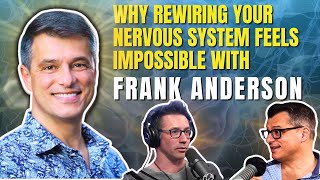
Trauma expert Dr. Frank Anderson explains why rewiring your nervous system after trauma feels stuck, and describes a three-step process: witnessing the memory, creating a corrective mismatch experience, and releasing it. He connects this to IFS, EMDR, and emerging tools like MDMA and ketamine.
Chapters
You don't become the president of the United States for nothing. Excuse me for saying that. Like, these driven people are driven for a reason, you know? And I was driven for— I didn't get into Harvard because it's interesting. I got into Harvard because of my trauma history.
And I'm curious, you know, as you're a trauma, PTSD and trauma expert, world-renowned, why, why is it so hard to rewire the nervous system is my first question from what you've studied and what you've seen firsthand. And then second question, what's the, if you had to name a perfect recipe for the right combination of like environment, neurochemistry, et cetera, whatever you would label as the right recipe? Because I started realizing with my wife, it's not going to be a silver bullet. It's going to be I got to figure out what the right recipe is. So that's two-part question.
Couple of things. So, yeah, it's really important. Like you said, a lot of the things don't work when you're dealing with trauma. So I love that. Sorry. And love that you had that experience. Okay. Both. Right. Because The— what people aren't aware of is when people get activated in trauma, they're in a distorted perspective because their past is coming into the present. So when you talk to people as if they're in the present, you're missing the boat. You know, trauma has distortion attached to it. So you have to have that awareness that her view when she's activated is a distorted view because it includes the past as well as the present. It's not just the present. When you're interacting with her as if it's the present, you're missing half the story, right? And that's the nervous system piece, right? Every time somebody is activated by their trauma, they are reinforcing the trauma neural network. They are reinforcing the trauma. The more you use it, the more encoded it gets. So we're always trying to have people be with it instead of in it. With it instead of in it, which is very difficult, right?
So with it, is that almost like looking at it from above?
Yeah. Yes. And observing from having the perspective, like, wow, what I said to you earlier when I was in that call with the Hollywood type. I noticed that I was off center. It's like, Frank, what are you doing? Like, I had an awareness versus I'm just in the experience without any awareness. So that's a super important piece when you're talking about the right combination. Like, I think that is one of the keys. We need to be with it instead of in it, because when we're in it, we relive it. I think we have to have compassion for our responses. Not hate them. Whether it's critical or suicidal or yelling, we have to appreciate the intention because the intention is protection. You know, the parts of your wife that were suicidal in those moments, they were trying to protect her from overwhelming pain. So we always have to appreciate our trauma responses. And then for me, there is a healing there are steps to healing which are neuroscience-informed, right? Yeah.
Tell me more about those.
Yeah. And this is some of the work of Bruce Ecker in memory reconsolidation, which I really love his work. He didn't come up with it as much as he brought that neuroscience to the field of psychology. Memory reconsolidation says there are certain key steps that need to happen in order to rewire the trauma neural networks. Okay, and there's basically 3 steps. One is there's a witnessing or sharing the experience. Okay, there's a sharing of the experience, and this is not just the story, it's the thoughts, the feelings, the physical sensations. What was it like? A part of us holds that. This is also IFS-informed, by the way, Internal Family Systems, right? So there's a witnessing and sharing. The part that went through it needs to share it with me, with you, with someone. Next, after the sharing of the experience, there needs to be a corrective experience. Neuroscience calls it a mismatch. I'm loved, I'm seen, I'm valued, I'm not alone. So the part that holds the trauma needs to have a corrective experience in some way, then release is possible. Then we can let go of the trauma. So there are step— there's— there are key steps that are important here.
So, so in other words, memory recon— how did you say it?
Yeah, memory reconsolidation.
Reconsolidation, witnessing and sharing, and then release.
Yeah, yeah. Well, it's like, so memory reconsolidation describes how we rewire the nervous system. Okay. And for me, there are 3 steps. One is witnessing and sharing. The second is the corrective experience. And the third is then you can release it and let it go.
Yeah. And it goes back to an old adage I picked up. It reminds me of an old adage of, like, we are meaning-making machines.
Yes.
And so when those memories are encoded according to feelings, which is the meaning. And then if it's a metaphor I've been using is like, hey, if you change the way you feel about an event in the past, then you've changed the past, which changes the present and changes your future destiny.
Yeah, that's exactly right. And you have to acknowledge what it was before you can turn— change it into something, because most people try to change it into something new without acknowledging what it was in the past. You know, there's all of this forward, forward stuff, but you're bypassing what it was. There has to be a recognition and an acknowledgment before release is possible.
Yeah, so, so true. It's, it's the— I've been thinking about it almost like, it's like I got two glasses of water. One glass is filled with dirty water, one glass is filled with clean water. Yeah, well, if I put a little bit of the dirty water in that glass because I didn't clean it. I didn't get rid of it. Now that clean water is murky.
Yes, yes.
You got to get, get that out before I can mix them together. Mix them.
You can't just pour new water in there and expect it to be okay because it doesn't work. That's the bypass that a lot of people kind of do in a way that I want to help them not and know that it's possible to do it differently.
And, and with IFS model, if those exiled parts aren't integrated, yes, then your nervous system is almost like freaking out and like, hey, I got this thing over here, it's still here, it's still—
it ain't going away, it ain't going away. You know, I talk about this, it's interesting because therapy can be too past-focused, coaching can be too future-focused. Yeah, the reality is, is both. It's like, yes please, to both, right? It's like, I— we need to go back, but we don't want to get stuck there. And we need to move forward with incorporating and releasing the past, right? Not just jumping forward. So it really is, we got to bring these worlds together instead of you know, one side focusing on one and the other side focusing on the other.
I agree. And, and when you— and they enhance each other when they're dancing together.
Yes, 100%.
So, um, I'm curious, how did IFS help you heal your PTSD? Uh, I'd love to explore that a little bit more.
I've— like I said, I've been in therapy a long time, and I did a lot of therapy in my residency training program that was more like psychoanalytic therapy, which was very useful for awareness, but it didn't help me heal, right? I had all the awareness of what was going on, but I wasn't able to change. So when I, when I really was introduced to Dick Schwartz and IFS in 2004 is when I first met him, um, it was a game changer for me because, as I had said, I had worked with Bessel van der Kolk for many years. I was a psychiatrist at the trauma center for him for years, and I knew how to work with trauma. But we— and I'd done— I had done EMDR training, so EMDR was very powerful. I did sensory motor psychotherapy training, so I learned how to work with the body. IFS had a way for me personally, getting these parts out of the past, releasing what they're carrying, and bringing them into, into the present was huge for me because I, even though I had all this awareness, I was still so susceptible to being triggered. And I saw that when I had my kids. It was so painful to have my trauma show up again with my kids. It was horrible. That's when I was suicidal, really, was the moments that I was kind of perpetuating the trauma with my kids. And IFS helped me release it and heal it. In a way that has been much more long-lasting. It was a game changer. It's why I devoted the last 20 years of my life to it, because it made such a huge difference for me. It was like I wasn't carrying it and I wasn't being activated, um, in the same way. So, you know, I started a foundation for Dick Schwartz. I created his trauma curriculum. Like, I dove all in because it had a profound effect on my life. Now, I don't think IFS is the only model for healing trauma. I think they all contribute important things. But, you know, different models work for different people at different times.
Yeah, I agree. But I think one of the cool things about IFS— I mean, you're far more expert than I am. I'm not even trained and certified fully in it yet. But it's what I see from it, understanding the human psyche, is like creates that integration of your different parts and the overwhelm and the pain and the suffering. So it moves through you and it has capacity to release and be reframed and re-encoded in your nervous system.
Yes. In the way that— you know what? It's interesting. We think about IFS brings you back to the integrated state pre-trauma. Trauma causes the fragmentation. Trauma causes the fragmentation. It's releasing the trauma that allows you to go back into your states of integration. Do you know what I mean? So it brings you back to a state, um, where you were before the trauma occurred. So it's very powerful, and it's, you know, super popular model. People are trying to get into the trainings like crazy, you know. It's, it's a paradigm for living. More than it is just a trauma treatment modality.
Yeah, I'm curious, um, what else are you excited about in this emerging— what's emerging in the field of mental health and healing trauma? What are the most exciting modalities for you, or tools, or science that's coming down the pipeline, since you're on the forefront of that?
Yes, so much to say about that. So one is, I really, um, I started this trauma institute because I want to integrate trauma treatment. I think many models have been created, which has been super helpful for our field, but I think they need to be put together. I really do. So one of the reasons I, you know, I have a lot of advisors from all the different models. I'm like, we're creating a course in the fall called The Arc of Healing, which is putting these models together. So I think integration is super important, and I think we haven't done enough of that. From a teaching perspective. So I want to do more integration work around the different models using some EMDR, using, using, putting them together, using cognitive behavior therapy, DBT, put them together because we need— nobody needs only one model at all the time. So I think that's a huge piece of what's exciting. I also have another— I think the psychedelics world is going to be a game changer. I think it's doing something for people that don't have access to self-energy or their wisdom that helps them. Um, when it's done thoughtfully, that's going to be really powerful and important. I mean, some people are doing it not so healthily, and other people are doing it very thoughtfully, right? So I think—
I agree—
psychedelics are going to be a huge shift for, you know, there's but trained in ketamine. And I haven't become a trainer yet in MDMA. A lot of my friends are. I love MDMA for what it offers, for sure. So I think that's going to be a game changer for a lot of people. And then the third thing is I have another company that I started. I'm so busy at my age. Trauma-Informed Media. And I want to bring trauma content to the media because so much of us get exposed— so many of us get exposed to trauma content through media, whether it's social media, whether it's movies, you know. And I feel like we can do better as a culture and society to educate people through the media with trauma content, not trauma dumping. Or not causing trauma because of the way it's portrayed. That feels important to me. So I'm really working at changing the messaging.
Love that. I think that's really important because it gets into the cultural narrative and how people identify and also if they're feeling shamed or if they're feeling embraced, accepted.
That's exactly right. Yet to normalize it, not sensationalize it. Yeah, right. And not downplay it. I— some people are like, I don't have trauma, I'm tough and strong, not me, you know, that doesn't happen to me. And other people are like, oh my God, I sneezed, I have a trauma, you know what I mean? So both sides are not helpful. Like, let's come up with common languaging and a narrative that's actually supportive of identifying and healing trauma, because Lord knows there's enough of it around.
Yeah, no doubt. And I feel like, you know, I wasn't into trauma really at all, very trauma aware 3 years ago, and I was thrust into it. You know, my wife battling depression and suicidal ideation, and I'm like reading trauma books in the middle of the night while my wife and daughter are sleeping. I'm on my Kindle in bed trying to figure this out because what the heck is happening? But it also started I started putting things together and connecting the dots and then also started recognizing trauma. Now it's like I can see it pop up in the space I swim in. There's a lot of leaders and entrepreneurs.
Yes.
And I think we're— for me, what I see is Type A leaders and entrepreneurs, we're kind of oblivious to it. We're just going to grind and grit through it. Um, but what do you see from your work, from your therapy work that you've, you know, guided, you know, I'm guessing thousands of people through, and you see another perspective that I don't see of like, do Type A's and high achievers handle and process trauma differently than the, the normal person, or is it the same?
Yeah, it's a good question because like, as a, you know, known trauma expert now, I tend to get a lot of the, the hardest cases, and nobody can help this person, like all that kind of stuff. I've worked a lot with Dissociative identity disorder, old-fashioned multiple personality disorder. So I tend to see at this stage in my career a lot more extreme cases, if you will, because I have this reputation as an expert. Um, so those, those, that takes a long time. And those are people, you know, the more severe the reaction, the more severe the trauma. But don't underestimate these powerfully successful people who are Type A achievers. And you know what I've said before, you don't become the President of the United States for nothing. Excuse me for saying that. Like, these driven people are driven for a reason, you know. And I was driven for— I didn't get into Harvard because it's interesting. I got into Harvard because of my trauma history.
Yeah.
So Sorry, but it's true. So driven people use achievement as their main coping mechanism. Driven people use their intellect as their main way to cope. It's different than, you know, you can have the same trauma, but you're choosing substances as your coping mechanism or food as your coping mechanism. You know what I mean? So don't downplay some, some coping mechanisms get rewarded by culture and society, and others don't. Do you know what I mean? So I think trauma is trauma, and there are different adaptations. I don't know why I chose school instead of liquor, but I did, and I'm grateful for that. Do you know what I mean? Both are coping mechanisms. Both are— sometimes the driven people, high achievers, are harder to work with because they're so embedded in their, um, embedded in their defense.
Yeah.
And you know what else? I see this in Hollywood a lot. Interestingly enough, Hollywood is loaded with people with trauma history. As I'm working in that field more, you don't spend your whole life being someone else because it's fun. Like, acting is all about being some— somebody else, not being yourself. And you know what's fascinating for me is a lot of actors are terrified to do their work because they're afraid they're going to lose their livelihood, right? If I can't be somebody else at the drop of a hat, I may not be able to be successful. So they're afraid to lose their defense, right? So successful people are almost a harder sell for healing because they have more to lose in their mind by, you know, breaking down those walls.
Yeah, it's funny. The biggest objection or fear that I encounter with the CEOs or the entrepreneurs that I work with is like, before they sign up and before they do a session, they're like, they won't voice it. They don't even want to. But I'll ask, so just so you know, you're not going to fall into a sobby mess and have to deal with this for like months. We're gonna do a lot of work in one day because of the power of the MDMA and all that.
Yeah.
And then I can go in and do the IFS NLP, heal the trauma, integrate the stuff. And, and so they're like, they just give it back, right? They're like, I got a company to run and they got— I got people relying on me and I can't fall apart and unravel for 600%.
That's right. And that's not the goal. Yeah, yeah.
Yeah. So I'm curious also, one of the last few questions on the cultural side, what do you, what do you hope changes? Where do you see there works to be done in our cultural understanding, narrative, receptivity, awareness around trauma and PTSD? And then how do you, how do you hope to change that?
Yeah, it's, it's, I'm, it's a really important topic. I, and I do feel like we have more of a discussion about it than we ever did before, so I'm really grateful. Systemic trauma is a thing now. People can talk with the Me Too movement, with Black Lives Matter. There's a way that we have an increasing awareness of the systemic effects of cultural, racial, you know, societal trauma, whether it's sexual orientation, whether it's disabilities, medical trauma. You know, I'm so glad that that's entering the conversation because I don't think we can heal trauma globally unless we look at these cultural systemic issues also. I think, you know, I work with an organization now called the Center for International Experiential Learning. They travel all over the world to look at how countries deal with trauma and war and violence. And I feel like we need to have change at the systemic leadership level also, as well as at the grassroots bottom-up level. I think of trauma as top-down and bottom-up, and I think the only way we're going to really change this is working at it at both levels. So I'm really grateful. It's hard, you know, it takes a long time. I was in Cambodia this, um, 6 months ago, and they were decimated by what happened there with the genocide. And, you know, but they're educating kids differently, they're offering more opportunities. Like, it takes decades to recover from systemic and global trauma, but it's doable, you know what I mean? So I think I'm so grateful that it's part of the conversation now in a way that it wasn't before. And I think it's necessary to cross the divide that we are so entrenched in, the us and the them. That's not going to heal trauma. We have to change that narrative.
Yeah, I would agree. And last question is, where are you most curious? In the next 10 to 20 years of like unveiling, studying like the next frontier that you're really specifically, not just what you're seeing in the broader landscape, but where's Frank saying, Dr. Frank Anderson saying, hey, I want to go in deep on this. Like you went deep on IFS, you went deep on, you know, EMDR. I'm curious, you know, what, what are you exploring?
My— and I already, I already know what my fourth book is going to be.
Oh, tell me.
So, and I was like, damn, already? Give me a break, I need a break, right? I, I am focusing on bringing trauma healing to the general public. Like, I really— my passion right now is it— I, I think therapy is limited Yeah, I think it's necessary, but I think it's limited because there's not enough people to do the therapy and there's not enough economic resources for everyone. Yeah. So like, I'm real— and this is one of the reasons I'm, I'm really grateful for all the kind of the social media influencers that are rising up because they're getting this global message out in a different way. Like, my— I wanna— I would love to have a talk show someday, a talk show on trauma, right? Like, what about that, right? I want people to know that healing is possible, and I want people to learn how to do this outside of the therapy office. You know, I think AI is going to be— if it's done well, just like psychedelics— is going to be incredibly helpful compared to harmful. It can be harmful. Psychedelics can be helpful and harmful, but so can I. Yeah. And I really hope to utilize that in a way. But I want the average person— like, I did a course recently called Write to Heal, W-R-I-T-E. I want people to learn how to heal through writing, through journaling, right? So for me, it's got to be global in this next phase because too many people don't have access and don't even have awareness of what trauma is. So that's what my passion is right now, you know, new discoveries. I think psychedelics again, I think that's— yeah, that's the, the future for sure from a biological perspective.
Yeah, you know.
Yeah.
And I think what I've noticed for— I mean, it was truly a godsend for my wife with the psychedelics, but it was the psychedelics with the therapy. Yes, not the medicine alone. It's the trauma-informed therapy where you can go in and do years worth of work in a single session and create that transformation. And then we literally got our life back in one day.
That's right.
I mean, my wife walked out of that session feeling like she was totally, essentially cured of depression.
That's right.
90% cured of her PTSD. But it was both.
It's the integration. Prozac doesn't treat trauma. Either does ketamine or MDMA alone. It's a therapeutic benefit. And incorporating it with the right kind of treatment is a game changer. Yeah.
And I love where you're going to. I think the narrative, our culture is so much more receptive now to learning about trauma. We're more aware. And obviously the pandemic accelerated some elements of mental health and challenges around that. And, um, I'm excited to see what happens for you with your, your media company, with all the speaking and teaching, and your fourth book. I can't wait to read that one as well. Um, so let me ask, where should, where should people go to buy the book? And then, uh, where should people follow you and find out about Dr. Frank Anderson?
Absolutely. So the book, Book to Be Loved, is out. It's going to be out May 7th, you know, and I don't know when the podcast will be released, but the book will be out May 7. You can get it on Amazon, you can get it on pessi.com, you can get it in bookstores. Like, this is— I was like, I cannot wait to go to the airport and see my book on one of those bookshelves, I'll tell you. So most all bookstores are going to be selling it, which is great. Um, my website has, you know, you can certainly get it on my website. It's already being internationally translated, which is so exciting. I'm so happy about that. So website, frankandersonmd.com. You can certainly get the book there. And I'm on all the social media places. The biggest, probably the most active for me, is Instagram, which is frank_andersonmd. But I'm on TikTok, I'm on LinkedIn, I'm on Facebook, I'm on, I'm on all of those. And I, you know, I love the fact that people are getting a lot of content for free now through all these social media plan, you know, platforms. So, um, stay in the conversation. You know, what you're doing is helping people just like I'm doing. And I think if we all join together, this is what's going to tip things in the right direction.
Yeah. Well, guys, can't recommend this book enough. Pick up To Be Loved. And then if you're in this trauma and healing space, uh, get Transcend— uh, I'm sorry, Transcend to Transforming Trauma. Transcending Trauma. Sorry, it's a great book And it's my next one to read as well, guys. So, Frank Anderson, thank you for being on the show. Honor to connect with you and look forward to seeing this book hit the bestseller list.
Thank you so much. And thank you for having me. It's been really great.
More from Michael




9 Powerful Tools to Regulate Your Nervous System (And Stop Living in Fight or Flight)



