Cracker Barrel CEO's Downfall: A Masterclass in What NOT to Do
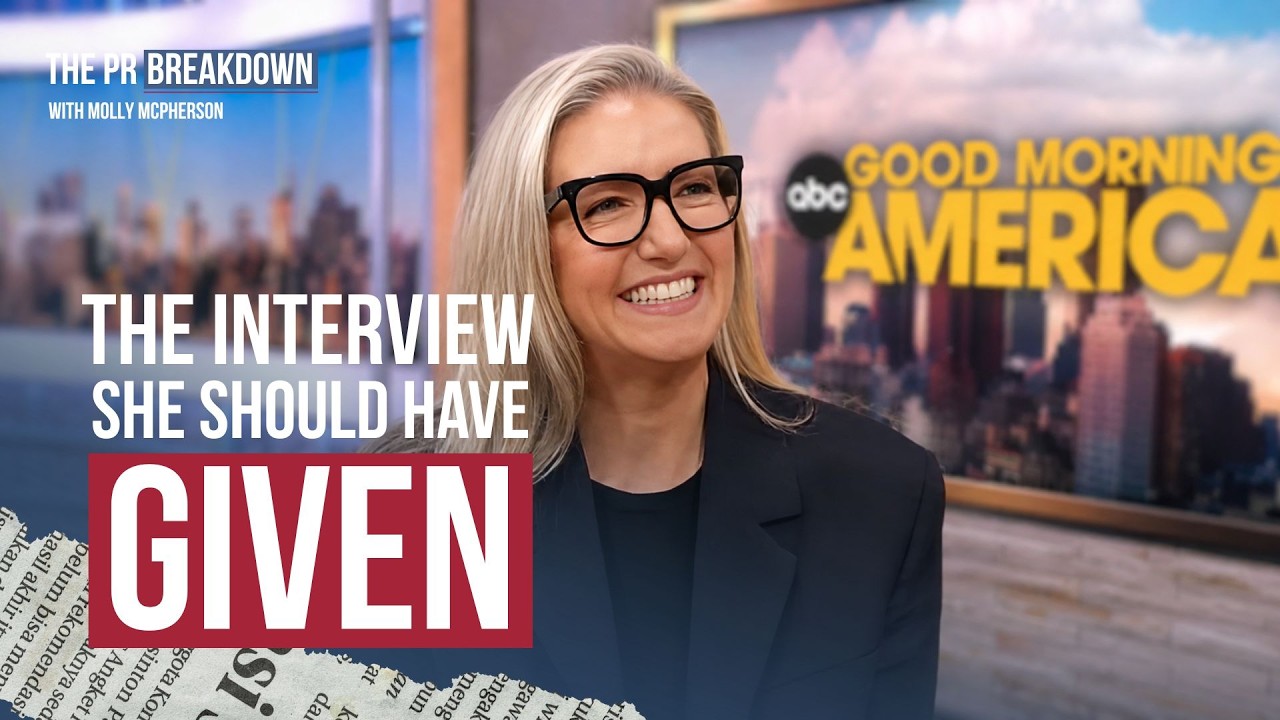
Molly McPherson breaks down why Cracker Barrel CEO Julie Fels Messino was ousted after a $700 million rebrand. Messino focused on logo changes instead of what customers actually complained about: uncomfortable chairs and booths. In interviews with Glenn Beck and Michael Strahan, she delivered scripted, data-heavy responses that ignored what people cared about.
Chapters
The most expensive words in crisis communication are the words that speak to the CEO's pain and not the pain of the stakeholder. The CEO of Cracker Barrel found this out the hard way this week when she lost her job. Now, it was a year ago, if you remember, the big Cracker Barrel backlash brouhaha happened. I remember it, of course, because I had a slew of phone calls and emails from the press asking me to comment on the logo backlash controversy. Now, the data point for the media— this is from Muck Rack, my media database partner. You can see the bookend of the press spikes a year ago and where we are now. The spike is when the backlash happened. Now we have reports that the CEO, Julie Fells Messino, was let go, and she learned a very critical crisis communication lesson the hard way. And it was unfortunate because she did not necessarily need to lose her position over this. And let me tell you why. Now, the whole backlash happened, if you remember, when Cracker Barrel took a human figure, the old-time guy, We had the barrel, took the old country store language and stripped the brand of this identity. And when the entire product is nostalgia, when you strip that from a brand, there is going to be problems with it. Now, when this happened last year in the cultural era that we're in, the political actors out there amplified it. It created a lot of news. But the objection underneath was a lot deeper than the political. Now, a month later in September, the CEO stood in front of investors and said, and I'm quoting her, "There is a lot to be optimistic about." The logo was coming back. The remodels were paused. And the way that she told it, the hard part was over. They were moving on from that crisis. And now here we are almost a year later, and she's out of a job. Here's what makes this story worth your time. This is not a story about a dumb company doing a dumb thing. This is a story about a company who was right about almost everything. They were right about the numbers. They were right about the strategy. It was a business case, and it was a case for changing things up. But they walk straight off a cliff because they missed the one thing that a spreadsheet can't show you. And it's one thing that I mention to clients all the time, and I mention it on the podcast all the time. So let me add one more podcast to that list. This one. Let me explain more. I'm basing this podcast on another bookend, two media interviews that tells the complete story. One media interview was GMA, the CEO of Cracker Barrel sitting down with an interview with Michael Strahan. There was another interview that they did 8 months ago where the CEO sat down with Glenn Beck. In those two interviews, we see precisely what went right. Now, before we get into the interviews, having watched them, Julie Fels-Massino, the CEO, she seems like a genuinely likable person. As I was watching her, I thought, okay, she seems about my age. She seems like she would fit in perfectly with my friends. I could see her on our Martha's Vineyard summer trip every year. She would fit right in. She's very relatable, very easy to talk to. She doesn't wear CEO on her sleeves at all. But when I was watching her in the interview with Glenn Beck, a couple things that I noticed. One, she was very, she was very empathetic. She spoke about people. So that made me pause the interview to figure out, okay, where did she go to school? What is her major? Like, she's not a typical finance person. Come to find out something I could have predicted, she's a comms major. She went to Miami University in Ohio. She graduated around the same time, so I was right about the age, in comms. Now, I believe that comms is one of the most undervalued areas, majors, but also in business, comms people are completely undervalued. That's one of the first mistakes just that a lot of companies make. They treat comms people almost like admin sometimes and staff. That they never have a seat at the table when they should. And I feel that, from the interviews, that if Julie went with her gut, but also stood by her gut, and had people support her, they would have gotten through this. Because her ideas were sound, because they were based in the strength of being a comms major. Comms people understand people. We communicate for people. That's the whole point of our job. So whether you're in PR, whether you're in marketing, whether you're in advertising, whether you're in journalism, which is kind of part of that bigger landscape, all of the work that they do is based on people, people's perceptions, people's understanding of something. Compare that to finance, your finance bros, uh, when you see them in their majors, and I call them finance bros because a lot of them are predominantly male, where in comms and journalism you get predominantly female. I can't give you a hardcore number from that other than being a comms major and seeing my journalism major kids and who makes up their major. But when you're looking at finance and you have someone with a strong financial acumen, that's where we make these decisions based on numbers only. And so much of the Cracker Barrel decisions were made for the right reason. And I think a lot of that is because of the CEO. Julie Messina, I think she made a lot of right decisions. Here are a couple of them. Okay, but I'm gonna go back. But I think she's being overruled in a lot of her decisions. I don't think she had as much strength as she thought. Case in point, the interview with Glenn Beck. Within 30 seconds of this interview, if Julie was my pal and we're all in the same group chat with all my friends, we'd say, hey girl, let's have a chat. Watching this interview, we're gonna let you know We don't know when, we don't know how, but you will be fired. You will be fired because she is sitting in this interview with a guy. She's not in the interview alone. It should be just her. Now, part of the win there, so we have Glenn Beck. So, you know, senior leadership is sitting around thinking, okay, who do we, we need to bring our CEO to the masses to explain the story. I will show you the GMA video in a bit, the interview, but they probably thought, uh, you know, the one with Michael Strahan didn't go so well, so we don't wanna do morning television. Let's do business. Should we do CNBC? No, that's, that's, that's too, uh, woke-ish. That's the, you know, should we do CNBC? No, that's going to be too neutral, maybe more liberal. We need to go hardcore here. We need to go Fox. No, let's do Glenn Beck. Honestly, I can get behind doing an interview with Glenn Beck. You're speaking to the conservatives and Glenn Beck. Okay, honestly, do I sit and watch Glenn Black— Glenn Beck? No. Um, but this interview I did, once you wade through the ads that are very conservative leaning, uh, Glenn Beck is also about Glenn Beck, but he's very blunt in his assessment. And in these types of crisis kind of breakdowns, the postmortem, you need that. So it was actually a setup for a very good interview. So I support her sitting down with him, but here are the nos that would have been a hard line in the sand for me, or if I was representing Julie, or if I were Julie. One, you are not going to sit me down next to the senior vice president of store operations, Doug Heisel. There shouldn't be two of us here. Now, this is not to knock Doug Heisel because he's actually— or could be Heisel— he's actually a really good interviewer. He's very personable. He knows the data points, the historical data points. So maybe that's why they had him there, because he could speak to the history of the brand. But having The senior vice president of store ops sitting next to the CEO— unnecessary. It diminishes her greatly because in the beginning of the interview, it's all him. It's all the historical, and it's all him with all the sound bites, all the quotes— him. While Julie is sitting there for the second part that I think is a huge mistake. They're sitting in a booth, a remodeled booth in Cracker Barrel. She is wearing— I love the casual look. She's just wearing a blouse. She's She has different glasses on in her GMA interview. She's wearing almost the identical lens here. She has different kind of Jennifer Aniston type frames, little more subtle, but she's wearing a beige blouse, kind of a bone colored blouse, and she just fades into the background. Now granted, she doesn't wanna come out wearing teal, but she didn't stand out enough. I mean, she, you could not— she was the visual description of milquetoast. Like, don't even pay attention to me. That's exactly what it looked like. That was the other miss. The third miss, and this was a huge one, they're sitting there eating breakfast, they're eating meals. She's sitting eating on camera. That is a hard no every single time. Who decided to do that? And whoever decided to do that, whomever the person was that said, hey, let's have our CEO eat in front of Glenn Beck, didn't want her in that job. Because she's eating there, food is falling out of her mouth while she's sitting there eating because she has to show, look at, we love Cracker Barrel. Where the, um, you know, where the food tableau of sitting and eating and chatting look good is when they're sitting there with coffee. But I also noticed in this interview— watch— like, when Julie starts speaking, Glenn Beck goes to get a cup of coffee. Like, it's like he's already like, I'm dismissing you and getting my coffee. The optics on this interview are absolutely awful. And this is where you know she's going to be out the door at some point. But let's move on to the parts that I think work. When the senior vice president of ops is speaking, what works for Julie here is he has one of the best worst quotes I've ever heard for why they're in this mess. Look at what he had to say. Okay, so be a media, be a media analyst right now and tell me what you think of this quote. They were throwing Velcro balls against the wall to see what would stick. Okay, points for being visual. Points for being honest, relatable. And that's when quotes work really, really well, when you're like feeling that pain and where we're just trying. But oh my gosh, what they're saying essentially is we had no idea what we were doing. We were just taking anything to see what would stick. Yikes. Yikes. So it's a great soundbite for Glenn Beck, but it is a horrible soundbite for Cracker Barrel. So it's a good thing it didn't come out of the mouth of the CEO. But she should have known the second she slid into the booth that her days were numbered. Here's the part that she actually got right, and even Glenn Beck caught it. So they talked about the numbers, the drop in relevance, how the restaurant industry buckets them next to Denny's. That was so powerful because Glenn Beck even said it. Like, Denny's is kind of like, what? Like, it's, it's kind of like a really old kind of treaded brand. You know, people aren't like running to Denny's, but she's saying no, that's how the industry categorizes us together. That's a good data point right there. Then she also mentioned the average check, the amount. She said Cracker Barrel is $15, where the rest of the industry is closer to $27. That's a data point that shows a discrepancy in profit, in operations, in profit, in the revenue that you need to stay afloat. Another piece that they talked about was COVID and how damaging COVID was. It wasn't just Cracker Barrel, but was a lot of the industry. But then they start talking about the food and why people come to them is for the abundance of food. And they have to make a lot of food. And they point out the number of people in the back. I think they said in this interview, like 50 people are working in the back. That's a lot of people. So now contextually, a person listening to this interview can say, wow, in order for me to get a lot of this kind of home-cooked, yummy, comfortable food, there's a lot of people in the back room that who they have to pay. To bring me that food and sustain it. And especially if you're just off the highway there, you have to stay in business. So we have to keep these people employed in order to get food on the table. Now the number crunch makes sense. So then we have the abundance of food, the comfort, the memory, the feeling, the aesthetic. They don't wanna change that, but they do have a money problem. Now, the mistake that they made here is they focus so heavily on the money problem. But I don't wanna overlook one really good thing that she did as well. So she's sitting in the new booth, which is part of the new branding. If you remember back to a lot of the interviews, they talked about the remodel. It's like a HomeGoods store. You know, everything was whitewashed and it felt like all the old nostalgia was gone. You know, and even saw that in the videos. But here the CEO is explaining like, no, it's, it's not about painting walls. It's about taking out these tables. And putting in these comfortable booths. And she's sitting in the comfortable booth and she actually does this. I mean, that, that was wonderful. She's showing how comfortable it is. And I'm engaged, like, listening to her. It's like, oh, now this makes sense. And then she also tells a story about, as a new CEO, she's learning that there's a customer coming in who brings in stadium seating, like the cushion you would wear at, like, a college football game. And they asked, why do you bring that in? He said, because the chairs are so uncomfortable. Like, oh, We're learning about comfort here. Another interesting data point about the customer. And okay, bottom line up front, we're talking about the customer's pain. You have heard me talk about crisis managing and crisis comms and the customer's pain. I mean, it's literally what, right there. It walked in, their comms plan, crisis comms plan walked through the door when they said it hurts to sit in these chairs. So Julie, the CEO, says, okay, part of the remodel, booths. Which makes sense. Then she tells a story about, well, we have a Bible study group that comes in. Like, oh my gosh, that's another piece of their pie there, of the people who come in. You're getting a sense of their customers. But then this was the genius. She starts talking about the booth and the table, and she runs her hand around the corner, the smooth corner of the table. And she said, we asked our customers for feedback, and the customers were saying the hard corner of the table was painful to walk or to move around or scoot around. It was painful for them. That's your pain point. And even there watching it, as I'm watching, I thought, I've written a talking point right there. We cut corners only where it matters, in our tables. So when you slide into our new comfortable booths, you won't get hurt on the corner. Something like that. It's so easy. And she did most of it right there. But instead, the $700 million rebrand focused on the thing that wasn't broken— the logo. And it's when people are so consumed about Gen Z and Gen Alpha, and they don't like this, and they can't see this, and they can't see that— they're so consumed that they miss the obvious. The obvious is always the pain. It was right there. That could have been their logos— their logo and their slogan. When it comes to the whole rebrand, It's not about colors. It's not about removing things. It's about improving things. There, that's another good one. The only corners we cut are the corners in our brand new comfortable booth. Something like that. But that is gold. When she's talking about the Bible study group, she's talking about her built-in audience. I mean, it was perfect, perfect, perfect. So that's why if Julia's sitting there in the strategy meetings and talking about it, I'm believing in her. I'm believing in her as a CEO. And I'm saying, you are doing a great job. Now contrast that to the GMA interview. And this is where I think in the gap between the two interviews, you could see why she's no longer with the company. This interview with Michael Strahan, and Michael Strahan, let's just say this, if there was ever an archetype of the softball interview, it's gonna be a photo of Michael Strahan. All he does is lobs softballs, softball, softball. This former football player, that's all he lobs to people. And here the Cracker Barrel CEO had a chance to address— what is it— the pain. Instead, we almost got the whitewash remodel version of Cracker Barrel that everyone thought in her media interview. Listen to this quote. Um, what if all the customers, um, are coming at you hard enough about the look of the restaurant and they want to go back to the old way?
Would you do it? Honestly, the feedback's been overwhelmingly positive that people like what we're doing.
Couple things here. She keeps going back on the feedback. Now, instructionally, from my job right here, this is something that I notice that happens so often. They'll do focus groups or you'll get these consultants who come in with their media surveys and they'll tell me, well, the reason why we can't mention that the prices are going up or the rates are going up or this is happening or this is happening because our customers are saying they don't want to hear that. So that's why we're not going to do that. Then they come up with these bland marketing talking points. I mean, they're not, they're not PR or crisis management talking points. They're marketing talking points. And the survey isn't wrong, but the problem is they're not asking the right questions. They're only asking, what, what could we do to improve? So now they're telling what they could do better, but what they're not asking is what's the pain point? What is it that you don't like? Like, the survey questions need to be as close to the pain point as you can possibly get. So that's one piece of it. So in this interview, she didn't talk to the pain at all. Nothing, nothing. This interview, you can tell in this interview that Massino was media trained within an inch of her life. I mean, listen to what she says.
Honestly, the feedback's been overwhelmingly positive that people like what we're doing. I'll give you another sound bite.
Here's another sound bite for you because she's sitting in that interview, she's probably memorized soundbite, soundbite, soundbite, soundbite. And then Michael Strahan gave her a softball, and she said, oh wait, I have my own soundbite that's coming off of my own head. Here's your soundbite. Oh, that is so bad. It is her sitting down scripted. Julie Massino should not be a scripted CEO. She's a very good off the script, which you never want to be off the script and riff necessarily, but she needed to be herself and she needed to speak to the pain. If she went on GMA and talked about the corners of the booth and the table, that would've been a winning soundbite. But instead, too much of the soundbite was, we're good, we're good, everything's good. Our customers, everybody's telling us we're good, we're great, everything's fine. Backlash?
What?
And this is where GMA should've been a little bit more hard-hitting here and said, talk to us about the backlash. But sometimes in these morning interviews, they don't wanna step on toes, you know, with big companies and advertisers and whatnot. CBS is notorious for this, so they kind of dance around it. But what a great opportunity for Cracker Barrel to come out with a statement and say, listen, we missed the mark. And you don't have to— you don't have to grovel, you don't have to apologize, you don't have to like walk on broken glass for people, but say we missed the mark. And then instead what they did is they undid everything. We stopped the remodel, we stopped this, we went back to the old thing. Like, oh my God. You created this, these, these amazing smooth corners to address the pain points of your customer, and now you've stopped it. Now you stopped it. The other mistake that she's making in her quotes, and she's talking about her own pain and her own experiences. For example, the experience at the meeting. Take a listen.
I actually happened to be in Orlando last week with all of our managers. We bring them together and, uh-huh, once every other year. And the number one question that I got asked, Michael, was, How can I get a remodel? When can I get a remodel? How do I get on the list? Oh, really? So because the feedback and the buzz is so good, not only from our customers but from our team members, they want to work in a, in a wonderful restaurant. So we're doing everything for our guests and our team members.
The feedback data point is someone within Cracker Barrel is coming up and giving her feedback. How do you know that is not a manager saying, I got to talk to the CEO, I want to look good in their eyes. What could I say? Oh, I know. When can we get our new remodel? Like, it's such a bad data point. You want to speak to customers. You want to get to the people and say, this, this is why we go back to the corners of the booth. We talk— that would have played so well on morning television, honestly. And maybe they're worried saying, oh, we don't want our, our official response to be about, about cutting corners, but I'm telling you, it 100% would have worked. Because the interview came off instead like a values blind spot. And the blind spot was how on earth did no one in that company not see this backlash coming with the logo, the $700 million rebrand, which is not just handing that over to, to a firm, a consulting firm, but how did they not see that there would be backlash? Did no one pay attention to Bud Light? Did no one pay attention to the LA Dodgers during Pride Month? Like, no one paid attention to any of this? They should have asked the interns. They should have gone to the social media staff. They're the ones who are online. They know the people. What do you think of this? Oh my gosh. Ask someone who reads a newspaper every day. Like, it's— this is not going to play well if you get rid of the old-timey guys, especially where we are right now. That whole rebrand touched the third rail. They got into values. And then it wasn't just about getting rid of all the old-timey stuff and giving Trump a talking point of they went woke, they went woke, they're a horrible company. But then online, everybody, you know, you get into that conservative political actor world, and then they're bringing up screenshots of rainbow rocking chairs and every instance of DEI in Cracker Barrel, which by the way, what did Cracker Barrel do? They quietly stepped back on DEI as well. So they just, they took the bait. They took the bait. It's one of the biggest traps in crisis management in PR is when you are so worried about cancellation and backlash due to values that you completely retreat. And then, okay, you might make the conservatives satisfied, but you're not gonna win anyone back. And the conservatives aren't gonna come back either. They're just gonna, they're just gonna go, woo woo, we won. But the business is always the loser. And here's where I land on the CEO, Julie Fells Messino. I do not think we can fully blame her. I think she was probably a great CEO who was going to make great decisions there. Because everything she said about the decision to change was sound and it made sense. All these headlines about her getting fired deserve an asterisk because the asterisk reads like this: she did a great job trying to save Cracker Barrel. The business case that she presented was real. The instincts were mostly right. She just missed the mark on the public. And as the person at the top, it's her job to speak to the pain. Now, behind the scenes, she could have known this. But she was overruled. But the takeaway, the lesson here for anyone in business, brands, logos, PR, crisis management, the customer was never mad about a logo. The customer never cared about a logo. They were mad because a place that felt like was theirs, a place where they felt comfortable, was changed without anyone asking. No one asked them. No one in the public had a problem with the logo. They had a problem with the chairs. They had a problem that their Bible study group couldn't sit there comfortably. The fix was in one sentence. We rounded the corners of the booths so your whole family can fit in. That is not a PR skill. It's a human one. And when someone you care about tells you something is wrong, you do not answer with a data point. You answer with pain first. The reasons come after. That order is the whole game. If you wanna prevent crisis management, mitigation, always plan, brand, talking points, understand pain, speak to the pain. When you do that, the context is set and you will be able to get through any crisis. The goal is never to get around it and to fold. It's to get through it. Own it, explain it, promise it. It's a lot easier when you remember the people on the other side of the deal, which is the reason why you're doing all of this in the first place. That's all for this week on the podcast. Thanks so much for listening. Bye for now.








