Did Taylor Farms Handle the Crisis Correctly? Here's What Happened
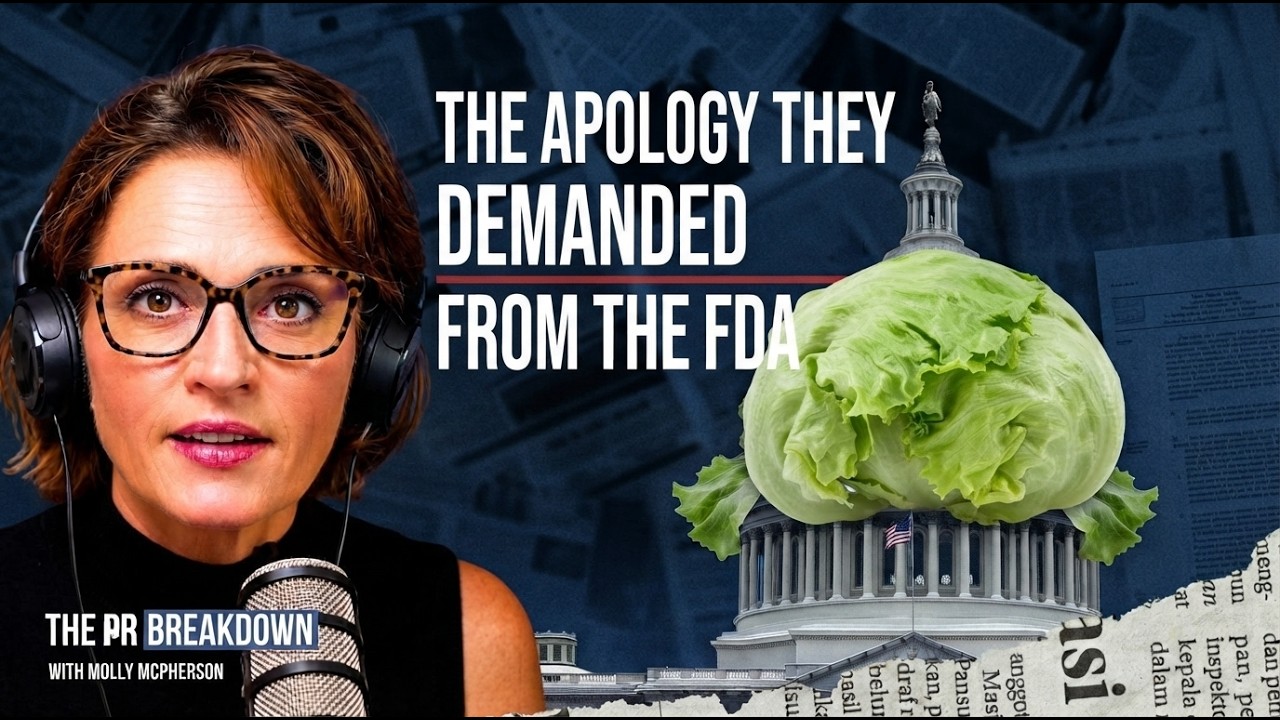
In this live session, PR strategist Molly McPherson reviews two high‑profile crises from the week of July 24‑27 2026. First, she dissects Taylor Farms’ response to a massive Cyclospora outbreak that sickened over 1,600 people across five states. McPherson highlights how the company’s public statement focused on vindicating itself against the FDA rather than centering the victims, used vague language, and turned the communication into a “pissing match” with the agency. She presents media‑coverage data, word‑clouds, and sentiment scores showing how the story spread to Taco Bell, Walmart, and the FDA, and how the false‑positive test narrative shifted public perception. The analysis underscores core crisis‑communication lessons: prioritize the people harmed, own responsibility, and avoid legalistic deflection. Next, McPherson turns to the controversy surrounding Amy Griffin’s memoir The Tell. She outlines the book’s promotional backing by high‑profile figures (Oprah, Reese Witherspoon, Jenna Bush Hager, Gwyneth Paltrow) and the subsequent lawsuit alleging stolen personal anecdotes. Griffin’s PR response—attacking the press, filing lawsuits, and deflecting blame—mirrors the same playbook observed in the Taylor Farms case. McPherson draws parallels between corporate and celebrity crisis tactics, noting that aggressive legal posturing rarely restores credibility. Finally, McPherson promotes upcoming Substack training series aimed at medical content creators and education professionals, offering category‑specific AMAs and one‑on‑one consultations to help these groups navigate PR challenges. Overall, the session provides a step‑by‑step critique of flawed crisis messaging, data‑driven impact assessment, and actionable guidance for better PR practice.
Chapters
So, okay. So everyone join me today. It's Friday. Let's all look at the hit list for, for the week. I want to bring some PR fires that I've seen during this week. The Cyclops Spore outbreak. So it's impacting the entire food industry, but so let's just look at that. When it comes to the crisis, this is what breaks down. This is the reason why the crisis is a bigger problem because it's one. So we have a single outbreak, but it is a huge outbreak. It's the biggest single outbreak that we've had, over 1,600 illnesses across 5 states. And now here's what's important. This is where the word that I was using that they did not use in the interview. It's, it's muddled. The messaging is muddled. The response is muddled. The science got a little muddled. The testing got muddled. So what we, what we had is Taylor Farms is the largest produce company in the country. Okay. But it's grown in central Mexico. That's where the FDA traces back the outbreak. However, The test that they did on one portion of the lettuce was read as a false positive. Here's where the PR goes off course, because instead of focusing on X, they focused on Y. And why you wanna focus on X is because this is where you build the most trust. Let me show you the statement that they had, and we're gonna— you're, you're gonna read along with me where you can see what the issue is. Here we go, everybody. Okay, great. We have our statement. Here we go. Today, FDA apologized to us. Yesterday, FDA informed Taylor Fresh Foods that one of its iceberg lettuce products from Central Mexico had a con— a quote, confirmed positive test for cyclospora. Today we're informed that FDA made a mistake and this was a false positive. To be clear, at this moment FDA has not identified a single positive product test result for cyclospora. Acting on initial information provided by health officials, in an abundance of caution, we completed a voluntary recall of iceberg lettuce from Central Mexico. Recall product was limited to iceberg lettuce grown and processed in Central Mexico. All other Taylor Farms products, including all other Taylor Farms brand products, are not involved in the recall. Our thoughts remain with everyone who has fallen ill in this outbreak. We are committed to working with public health authorities as the ongoing outbreak investigation continues. If we look at this statement, let's point out the flaws in this statement. Play along with me. What are some of the challenges? Let's call them mistakes. Let's call them like we see them. What are some of the challenges with a statement like this? The first sentence. Today, FDA apologized to us. Um, how ma— also, how about not starting, and the only time we speak, we just say FDA instead of writing it out. We have to know that it's food that we're talking about. So that's number one, but it's the headline. It's really the headline more than the first sentence, Bright Sunshine. I think this is what you meant, the headline. This is a message of Taylor Farms asking to be vindicated. Does Taylor Farms have a right when it comes to business to be vindicated? Absolutely. Absolutely. Anyone would want that right to, to do that if they were wronged by something. However, the margins are so thin in that, okay? They're very, very thin. The entire statement rests on one false positive. But if you go into the statement, so again, they say now they, they're doubling down. FDA, not the FDA, FDA has not identified a single positive product test result for cyclospora, but acting on initial information, they recalled the product in Central Mexico. The specifics of the case is there's still an outbreak and the outbreak was still all roads point to where it is, but the one test that they had was a false positive. So the mistake here is, is to go that asking for vindication. They're making their statement a pissing match with the FDA. Now, I know a lot of people probably have a right to have a pissing match with the FDA for a lot of other different reasons, but to have a statement be company v agency is never the way that you want to go. And then we have in the last line, And someone said it here. Um, you know, Elizabeth was, was pointing it out in the very last graph. Our thoughts remain with everyone who has fallen ill in this outbreak. Let's break that statement down. Our thoughts remain with everyone who has fallen ill in this outbreak. That is, uh, okay, who's in the room? Tell me right now, everyone, who is in the room while this statement is being written? We don't know them by names. Tell me who is in the room with this statement. Anyone? Anyone? Anyone? Our thoughts remain. So we have an outbreak where 1,600, over 1,600 people are being blown out from all, from all ends. That is such lawyer speak. And the lawyer speak is, we are going to dismiss the impact of potentially what our product has done. And not only are we going to only say it's just our thoughts, prayers and thoughts, thoughts and prayers, we are going to put it in the last graph of the statement. Can you imagine the redlining in that room and the back and forth that was happening there? Let me show you now the trajectory of this crisis. Before we get there, the fatal flaw of the statement, the missing piece of it, or I'm just saying the piece that was diminished is the— in the piece that wrapped up the statement is the piece that should lead with the statement. And that's people. This isn't a lettuce crisis. This isn't a Taylor's Taylor Farms crisis. This is a crisis about over 1,600 people getting very, very sick, explosively sick due to a product. And what this statement does is it not only forgets the people, well, it diminishes the people to thoughts, but it really, it forgets the pain. Always talk about this in crisis management. Always, always, always. And it came up on two of my calls this morning. You always have to speak to the pain. Now, it doesn't mean that you have to say, "We're sorry that people had explosive diarrhea on our watch." We don't need to say that. But you need to address this because also think about it. And I go down to this level. I always think about the people, think about the stakeholders. Someone eating the salad, like this salad could have been at a party. This salad could have been on vacation. This salad could have been at a rehearsal dinner. For a bride and a groom. This salad could have caused a lot of problems for people. And if you're just reading this, you're kind of missing it. And they are going so hard in not having responsibility. And that's why this statement is a pissing match. But it's still unclear exactly where the outbreak is coming from. But we, we know, I mean, because this is, uh, this is a health emergency and no surprise at all. The statement was removed, 100% removed. So what does that tell you? We don't need to get into the details of the pain, but when— think about this story, like, even polling you all, like, following the story right now, if we had a word cloud for our own word cloud for this, what would it be? To me, a week ago, it would be lettuce, Central Mexico, Taco Bell, diarrhea. That's it. That's my word cloud. Now, speaking of word cloud, I want to show you, because you know I love going back to, to the rack, to the muck rack, I want to show you some of the numbers here. Okay, so right here we can see, so this is my muck rack. These, you know, Mark Marak is my media partner. They always run the numbers for me. I love them. Kate's asking, isn't part of the PR crisis that so many doubt the false positive because of the over $1 million that Taylor Farms has donated to Trump? Well, Kate, oh my gosh, can we bring in the politics of it all. Like, it almost feels like almost any story out there right now has that undercurrent, doesn't it? And even when you have FDA, when you have RFK Jr., when you have anything associated with it, you're absolutely right. We never know where backlash comes from, and we never know what's driving it. That's why I like to look at numbers, and this is what we're looking at right now. If we're looking at— so here's July 6th, and this is coming up to like July this week. Okay. I would love to say this spike is my NBC News appearance, uh, but it is not. So here we have the articles over time. So this is what we're running. FDA, Taco Bell, Taylor Farms, but also Walmart. This is kind of the story right here. So we're looking at the articles. Walmart, Taco Bell, FDA, Taylor Farms. Look at Taylor Farms. Look at FDA. But my goodness, look at Taco Bell. This became a Taco Bell story. And Taco Bell, what did Taco Bell have to do with it? It's just where lettuce ends up. And it also happens to be a restaurant that has a lot of lettuce in it. Now, Taco Bell, since then, this past week, they have been promoting meal items without lettuce in it. That's part of the way that they responded to try and have a recovery because the foot traffic dropped at Taco Bell. That's another reason why the statement from Taylor Farms is the wrong statement. The pissy match statement. That's what we'll call it. It's the wrong statement. You are not speaking to the people. You are not speaking to the harm that was caused. What's the outcome? People aren't walking into Taco Bell anymore. Now Taco Bell is taking your hit. So when you're looking at these stories, the sentiment about the story, Walmart, look at the negative sentiment in Walmart, Taco Bell, FDA, Taylor Farms. Positive unknown. Now here's the FDA word cloud. Cyclospora right in the middle. Health officials, shredded iceberg lettuce, Central Mexico outbreak. Do they have the same one that I do? The D word? No, it's not parasite. Ooh, positive. That's for false positive. Okay, so that is our— okay, let me— I gotta, I gotta scroll up here so you guys can see this. Now we have Taco Bell. Look at this. Cyclospora outbreak. FDA, health officials, lettuce, parasite. Imagine you are working for Taco Bell and you're in marketing, you're in PR, you're in operations, you're in finance. This is your word cloud. This is what everybody is associating with your, or in this case, the press, but with your brand right now. Taylor Farms, aptly colored, again, Cyclospora. Lettuce, food, iceberg. And in this, in the Taylor Farms word cloud, Taco Bell. That's bad for Taco Bell. That's a very bad thing. And then Walmart, we have them in here as well. Uh, we have right in the middle iceberg lettuce, uh, cyclospore parasite, July 17th cluster. Taco Bell is in the Walmart word cloud. So this is why this is a bad PR crisis news story and also verifying why pissing match is not the right move. Now we want to get into— look at this— poisoning, 32,000 articles. Okay. Now let's talk about the false positive story. So now we have the FDA coming out with the false positive information, but what's being lost in the details? A false positive doesn't mean it's not Taylor's Farms. It's just that one test. So we have the sentiment comparison. The negativity is 68, and then after the fall, uh, the false positive goes down to 30%. So that's one piece. Now let me share. Does this go over? Okay. Now let me stop here. I'm gonna stop sharing. Now I'm, I'm gonna go to a new one. A number of the restaurants out there started proactively talking about their lettuce, either where the lettuce was sourced or that they weren't serving lettuce, which I think is a smart move. And I just— the call that I had previous to this is about, is about this idea and about this topic is that when a crisis happens, no one wants to associate it with that at all. So they don't even discuss it and they don't even want to talk about it. But if you're in a restaurant or just like the guy, you know, at the supermarket, you know, next to me, lettuce is lettuce. Lettuce is lettuce. Now you're just not eating iceberg lettuce anywhere. It causes much bigger problems. And this is why crisis response, like what I do and what we all follow, is, is so interesting. So now let me share the evidence here. Here we go. Before false positive. Okay. So here's another breakdown. If we look at the numbers here before the false positive information right here, once again, Taco Bell getting slammed in this story, absolutely slammed in this story. And let me see, uh, and I will hop over to one more. Once the false positive, after the false positive, here's the numbers now. So it, so it definitely decreased there as well with, uh, Walmart coming in at 1,700, um, articles. So with this type of a base term, what we see here is just the importance also of the correction and what the correction does. And not to be afraid of the truth. Louise is bringing up, you know, I have questions about the FDA's quality control processes. Well, you know what? I don't know. It's maybe it's just me, but anything having to do with the federal government or agencies, we cannot forget the Doge of it all. What happened? I am dealing with a matter in front of an agency, a federal agency.. And the answer given to me was, well, we used to be able to call someone to get our answer, but now we just have to wait because they fired all the— or let go of all the people who used to answer all the phones there. So now, now I just have to wait months and months and months. So that's part of it as well. I mean, that's certainly part of the issue, you know, that happens there. Okay. So now moving on, I wanna jump on this one just for the sake of time here. How many of you are following the Amy Griffin and the Tell story? Is anyone following that story? Amy Griffin and The Tell. Did anyone read the Amy Griffin book? So she wrote a memoir called The Tell. It came out last year. For me, I classify The Tell by Amy Griffin as a DNF. I did not finish that book, and it lost me at the point in the crisis where we in right— that we're in right now for for this story. And I'll give you a background on who she is, but I just stopped reading the book. And now that everything is kind of catching up with this book, I thought, isn't this interesting? Like, in, like, subliminally, intuitively, the story lost me. And I don't think I could put my finger on it at the time, but I can put my finger on it now. It lost credibility. The book lost credibility for, for all the reasons that are out right now. And it's not me saying, oh, I'm, I'm some soothsayer, like I could predict that there was going to be some crisis here. But the problems that I had with the book in terms of credibility is what is bleeding out now. So there are people here who are doing a lot of coverage on this. Now, why this popped up on me is I saw it come up in the New York Times, and then, and then the New York Post, uh, Page Six did a little blurb on it, but So Amy Griffin, this book came out last year. So if you all remember, who are the people whenever there's a book? Who are the people now that we tap when it comes to these types of books? We tap Oprah. We tap Reese Witherspoon. And I've mentioned this before. I did an interview. I don't remember the media outlet, but it was about the book publishing industry. And so I was looking at the numbers. And you just always assume that Oprah and Oprah's Book Club and the power of Oprah behind the book is still just this machine. Anyone remembers back in the '90s watching Oprah. It's not. Reese Witherspoon dwarfs Oprah Winfrey when it comes to authority in books. So Reese was behind this book as well. And no surprise, Jenna Bush Hager, who I haven't measured this, but I bet you anything Jenna Bush Hager has more credibility or authority in, in the book biz than Oprah. And when I say authority, what I'm looking at, who do publishers go to to get books sold? I mean, Jenna, Jenna Bush Hager has the Today Show behind her. Well, all the morning shows do, but I, I don't know. I found that interesting. But also Gwyneth Paltrow was behind it and Amy Griffin. And you don't really recognize it in the book for those of you who read the book, cuz the re— the re— the book really starts out. Poor girl, Amarillo, Texas, good student, became a D1 athlete. I think she was a runner, went to Virginia. And so you're just kind of, you follow into the story and it has the feel of Belle Burden's book. Did anyone read Belle Burden's book? So she was the woman who came out with the book. It first started as a story in the New York Times. Which I remember reading about how her husband, you know, they went to Martha's Vineyard for the pandemic. Strangers. Thank you. Thank you very much, Amanda. Strangers. Uh, during the pandemic, she went to Martha's Vineyard and that's where they were kind of riding out the pandemic. And so they were a New York family, you know, they had money and you kind of knew that in the beginning. And then the husband just says, yeah, I'm leaving. I'm outta here. So that first was New York Times, uh, Modern Love, I think. And then it ended up in a book. But it's the same trajectory that Amy Griffin does. It's like you, you, they bring you into the personal story of it and you're wrapped into it and you're not supposed to pay attention to these, the fact that these women have tremendous resources and money. So both books are kind of going through the same thing, but bigger than that. So Griffin doesn't tell you in this book that her husband is a billionaire. And now Amy Griffin is a billionaire independently. They both are. He's a hedge fund guy. He's, he's a hedge fund founder. So that's why there's big money there. But the book, now that there's a lawsuit, but I'll, I'll shortcut it. Uh, if you didn't read the book, she goes through life, challenges through life, get married, married to this great guy, but has these blocks, can't understand it. But then she discovers MDMA and does the psychedelic kind of therapeutic experience. And then she uncovers in her mind that when she was a student that she was abused. By one of her teachers. Now, here's where it gets messy, is the stories she was uncovering, she reached out to a former classmate and friend, and the friend ended up telling the story back to Amy Griffin's team. And now the friend has sued because she said, "Wait a minute, Amy Griffin, that's my story that you're using." So it's getting messy and convoluted. So that's my long way to bring us here, of course, into the PR. To the PR of it, because there is a PR piece to it. So, the former classmate, who you can find her name, but she doesn't want to be named in anything because she's still under a pseudonym, said that most of the anecdotes, like the heroin anecdotes that are found in her book, The Tell, came from this friend's life. And we're talking about the topic of what's happening with that type of abuse from a teacher— teacher-student level. And if you've read the book, it's pretty horrific what they talk about. So now fast forward, we have— I'm going to share this— we have movement on this case. Now, Amy Griffin has been dealing with some kind of like shaky PR there because, you know, all the people who hyped her in the beginning, you know, with this book, everybody who was hyping her All of a sudden they're gone. They are gone. So now the New York Times comes out. I wanna show you this story. This is what bad PR looks like. Okay. The photo's beautiful. Look at that photo. Beautiful. The billionaire, the psychedelics, and the bestselling memoir. These types of deep dives can be incredibly devastating to a brand when they happen. Kind of feels like, remember, it's kind of a throwback. To Blake Lively. It's the same type of feel to it when, you know, December of last year when Blake Lively used The New York Times to bring down Justin Baldoni, and I kind of could see through this. It feels like Amy Griffin is lobbing the same grenade at The New York Times, saying, "This is a hit piece, but it's unfair." Amy Griffin wrote a book based on recovered memories of childhood sexual abuse. Oprah Winfrey and a slew of celebrities promoted it. Then questions arose. So this talks about the beginning, how big, and explains the book. But then, oh, here we have, oh, Mariska Hargitay. I forgot. You know, she's someone, by the way, we all have our doppelgangers, right? You know, if you were to ask content creators online who they get asked about the most, who people look like. This is who people constantly tell me I look like her. I don't, I honestly don't see it, but, um, but it's not bad. It's not bad at all. I'll take it. Okay. But now here we go. But increasingly readers have raised suspicions about The Tell, including in online reviews. Some have questioned the reliability of decades-old memories unearthed during drug-assisted therapy. Others have wondered how such abuse could take place in public school without any adults picking it up. And can I tell you? This is when the book lost me. This is when it lost me because it was a head scratcher. I'm like, wait, what? Okay. And many of you probably followed Maureen, Maureen Callahan. She was, she was with the New York Post. No, no. Was she with the New York? She could have been with Page Six at one point, but I know she was with the Daily News, but now she has her own podcast called The Nerve. So she's doesn't, she's not afraid to say it. This is a book that has been swallowed whole by the media industrial complex. She added, there is on the other side of it a guy who doesn't have Amy Griffin's money, power, and resources. So she's referring to the teacher. But, uh, this classmate sharing the accounts, it's, it's— everything is plausible in terms of, of the lawsuit, what's being said. And I'm gonna honestly, because like intuitively I kind of felt it in this book anyway, but here the problem with this takedown that is in the New York Times is Amy Griffin is blaming the New York Times. So instead of, okay, so here we go, I'm going to show you this. Instead of getting into the facts of the matter, Amy Griffin is doing this. Bestselling author of The Tell lashes out at New York Times in a suit against women who said her stories were stolen. How often have you heard me say The biggest tell that your story does not match up is when you attack the press. New York Times also came out with a piece, I think it came out today, explaining why, like breaking down why Graham Plattner's campaign started to completely disintegrate. And where I called it there is when Graham Plattner owned it, owned it, owned it, owned it. That guy is not me today. Works. It's working. It's working. It's working. I blame the press. I blamed the press, and then it went down from there. And so this is what— so this is what she's doing. It's a deflection. When instead of— in— look at here, quote, Amy Griffin's accuser had every opportunity to set the record straight. This lawsuit's purpose is to make the truth known. And Amy Griffin has now filed a lawsuit as well. So she is going all in. And can I tell you, that is another tactic as well that I see all the time. When there is, whether it's full culpability of guilt or just some of it, when you don't want to fess up or own it, what you do is you send out the attack dogs, you send out the legal dogs, and you do that for a threat to threaten. Amy Griffin is a billionaire married to a billionaire. The other piece of the story that they don't mention, that MDMA and that use of psychedelic drugs They're investing in a product to do that. So it's messy at best, it's dirty at worst. And that's why we are seeing this media play in action. We're not gonna own up to anything. We're not gonna explain anything. We're not gonna reach out to this classmate to discuss it. What we're going to do, we're gonna sue that classmate. We're gonna, 'cause even though the classmate sued, we're gonna countersue. And then we're going to blame the New York Times and bring the New York Times into it. And, and that's the through line in, in our, in our live today. That's the through line in my take here is we have the same tactic. We have lettuce and we have lettuce talk about MDMA with Amy Griffin, but both of them have the same tactic and the same playbook on display at the same time, at the same time. And that's why it doesn't work. It doesn't work at all. So Friday, July 24th, those are the two big stories that stood out to me this week. The, the tell was a really good book, but the tell in there that this isn't gonna work for Amy Griffin, in my opinion, everyone has abandoned her. There's no Oprah, there's no Jenna Bush Hager, Gwyneth Paltrow. Nobody really publicly is standing behind her. And also, when you're the big guy and you are suing the little person, You know, both of them, and it is possible that both of them experienced this with the teacher there in Amarillo, though there hasn't been any lawsuit against him or any, anything or any action taken against him. It is that big bully tactic coming into town and it does not work. And I'm going to give you an example of that. Uh, and there's a lot of them out there, but the one I keep going back to is Lizzo. Uh, that's Lizzo did the same thing. Like, okay, I'm horrible to my dancers, but what I'm going to do is I'm going to sue them. Okay, you sue me. Okay, I'm going to sue you and I'm going to bring you down and I'm going to send my attack dog lawyer against you. And it did not work. So Amy Griffin has to look at what happened to Liz. All right, last wrap. Uh, we're on Mitch McConnell watch over on our account here, over on our PR Breakdown page. There's other Mitch McConnell watches out there. Uh, I'm not a medical professional. We are PR professionals and we are people who follow PR professionals and we follow PR every day, day by day by day by day. All we saw was one photo for that proof of life that came within 12 hours of Lindsey Graham's death. The Washington Post claimed they checked all the metadata and said that it was a real, that it was real. Uh, but others could not confirm that it was real. But we, we still don't have, we still don't have Mitch McConnell. So again, that's the COVID and the COVID never works. The COVID is the tell. All right, everyone, I wanna thank you for joining me, uh, for this week. I do wanna mention as a last promo out there that's coming in the fall, it's coming in September, I will be conducting very specific trainings for categories. We're gonna, because Substack technology, albeit they didn't today, has improved so much to be able to bring community together and people together in a learning environment. I am going to go like by categories and we're gonna do, uh, trainings and like an AMA. So I do one-on-one consultations. We're now gonna do it. If you're in a category, we're gonna jump into it. So two of the categories that I'm definitely doing, one, medical content creators, doctors, medical professionals who are jumping online to become content creators, uh, and then they run afoul and they get in the crosshairs. We've talked about about some of them before. I'll be doing a very special, like, a training of that in September. And then another one is going to be education, and that includes town boards, school boards, also teachers, schools, principals. I did a poll on Instagram yesterday. I was asking people, give me your category where you get the most clapback, and the number one category was, was education, followed by health. And medical after that. So, uh, now, now that Substack has caught up with, um, the kind of the technology and the community here, I thought that would be a great way to do it. So let me know if there's categories you want me to jump into. I will definitely do that. And we'll just, because I want to bring more, I don't want this all to be about following, you know, headlines and celebrity and all that. We want some real learning in here as well. Might as well transfer it from my clients to you all. All right. I hope everyone has a great, Friday. Thanks so much for joining me. If you want a replay of the entire, uh, live today, you'll be able to find it in the PR Breakdown. All right, everyone, have a great weekend. Bye for now.








