How the ADA Turned a Handout Into a PR Crisis
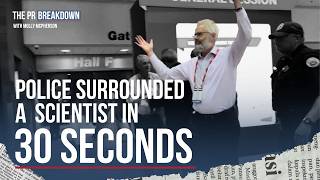
Molly McPherson, a former ADA communications director, breaks down how the American Diabetes Association's removal of five scientists at its New Orleans conference turned into a PR disaster. The ADA's apology blamed members instead of the organization, and leadership chose policy defenses over accountability. McPherson shows where the response failed and what genuine recovery requires.
Chapters
Hello everyone. It is Wednesday, June 10th, and you are joining me live on the PR Breakdown. Thank you so much for being here this week. Uh, if you're new, welcome. And for my returning, uh, people in our Substack, thank you so much. Quick housekeeping note. I mentioned a few weeks ago that we are doing these lives here. They're a little more substantive. Than they typically are. Typically, I would just riff on the top stories of the week and, and we would all chat. Now we're doing a little bit of a format change and these lives are serving as my podcast. So I am diving into either topics or one topic where we're going deeper. I certainly don't want to abandon the live chat aspect of it. But I'm going to segment, segment, uh, the content out so we have more, uh, of a cohesive flow instead of being kind of bouncing all over the place. But, uh, to my members of the Vault, we will have more of our ongoing riffings coming back as well. So this topic is about something that came up over the weekend, and I have to be honest, I missed it. And it was thanks to a follower who was attending an event in New Orleans that alerted me to it. And it's an event that typically I would be all over it because we have an association, we have members, we have the medical community. We also have a crisis and we have video and we have a petition and we have the administration. And when you mix all of that into one, it becomes very combustible., and then it eventually spills out online, which it did. And this involves the American Diabetes Association. The other reason why I mentioned is that it's something that would, that would resonate with me is that I have been donating, uh, to the ADA. And the reason why is because in 2021, my son, who was a teenager at the time, was diagnosed with type 1 diabetes. For anyone who struggles with it or has a loved one who struggles with it, you know that it is a disease that is life-changing and incredibly all-encompassing, not only for the person suffering from it, but also if it's a younger person, the caregiver, but also a spouse, you know, if you happen to, you know, be with someone. So it affects a lot of people. And I want to know in the chat right now, is anyone joining us today that hasn't been here before, but they're here because of this particular crisis? Are you someone who follows the medical story or following this story in particular? As I mentioned, it was a follower who was at this event who alerted my team to it and let me know about it. And I know I've had some people reach out to me who wanted to join this, this chat as well that typically aren't on. So it tells me that there are people within the industry. So is there anyone here who attended the event? Or was just following this event because it's medical, certainly let me know in the chat. But here's the one-sentence version of it. The American Diabetes Association removed 5 of its own scientists and researchers from its own meeting, and then they put out one of my favorite things to analyze— the statements. And when we have statements, particularly when we have dueling statements, That's where trouble can arise. And that's exactly what happened, because instead of the statements settling the matter, the statements became something that lit it on fire. But where, oh, where is the match in, in all of this? So let's walk through, uh, specifically what happened here. Even if you don't follow medical, medical crises, even if you're not invested in the ADA, or have any interest in diabetes, know that what happened is something that is incredibly common that I see in a lot of my work with these types of crises. Now, before I get into the setup, I had already managed— I already mentioned one note that ties me into the story by being a mother of a type 1 diabetic, but also as a communicator, as I know many of you are as well. I work with associations, so I have deep familiarity with the makeup of an association, particularly the communication from it, from an external and internal point of view. I also, in the '90s, seems like a while ago, I was the head of communications for an association in Washington, D.C. That was a cruise line association. I mentioned this because anyone who works in an association environment knows that it's a little bit different than working corporate. For instance, if you are corporate or even nonprofit, what is different in the association world is you're dealing with members. The members are what make up an association, and you hear of associations being like a federal, so it's a national level association. So they are typically located in Washington, D.C. or the greater Washington, D.C. area. And then we have statewide. So I say this because it matters because of the structure of the comms piece of it. And as Lauren mentioned, it's all about the members, but also the donors. So there's 3 reasons why I have interest in this story, but it is the same reason why this became a story. Let me explain. So every year the ADA holds something called Scientific Sessions. If you work in diabetes or obesity research anywhere in the world, you know that this is the meeting. And certainly with GPL-1s and obesity being now an above-the-fold type of a story, there's going to be a lot of attention here, at least internally in the community. So this took place in New Orleans, and it's the ADA's, the ADA's 85th year in the organization. Now, here is the spark. The ADA invited the director of the NIH, and that's— his name is Jay Bhattacharya— to give the opening keynote. Now, a number of prominent scientists and members, longtime members, objected to that invitation. Now, I'm not a member of this association, even though I'm a donor, but right there is where I have familiarity with why we have the light and the match and why things get triggered, because it brings up adding in someone from the administration. Now, right off the gate, I want to tell you, this is not a conversation about the administration. That just plays a supporting role in why this happened. So when a number of people objected to that invitation, and, and it was in large part because of federal science funding. This is not happening only to the ADA. This is happening to many associations and many organizations that are working with the administration. Now, this is where we are going to give the ADA some grace here, because anyone who works in the association world understands this. As we said from the beginning, it's about the members, it's about the donors. It's also about the mission, the mission of the ADA. Ultimately is to cure diabetes. That's the mission. But in order to work towards a mission, you have to work with Washington. You have to work with the administration. And as someone who has experience in this, and I know many of you do, you are in that world. It's a balancing act. If you're a CEO of an association, you need to lead for members and donors, but you also need to lead in a way that you do not get in the crosshairs of the administration. And in this administration in particular, I know from my work because I get a lot of people, a lot of clients, I do a lot of work that are— that's very similar to this where someone is saying to me, I have to do this with the administration, but I need to do this. How do I do the two together? So we'll start off right off the bat with giving the ADA some grace as an association is they have to play nice in Washington. However, we know a mission of an association, and we also know who they're serving— members and donors— for the mission. And that's where the detail matters. Now, before the keynote, Bhattacharya cancels. We don't know why, but we know that he just cancels. So the ADA stated the reason was, quote, "A last-minute unexpected scheduling conflict that required an in-person meeting with President Trump. So then his senior advisor spoke in his place. Right off the bat, we don't know. I'm not on the inside. I don't know. But when we have that type of movement happen right before a keynote where, where, where emotions are already starting to run high, members are already start— have already expressed their displeasure. Now the machine starts moving. Okay. Everything starts moving. So now you have an association working to doing their, to doing what they need to do to get through these meetings. And then you have the members and you have the different types of members. Okay. So we have, you know, we have our researchers, we have our scientists, we have the people who are there covering it. We have people who are members. We have people who are participating in it from the medical point of view. This is where the things become asynchronous. You're no longer synchronous. And that's from a communication perspective is when communication starts to fray, when you're not working towards the same goal. So it appears at this point, the ADA is trying to move through while working with their keynote, and now they have a new keynote speaker and that, and that needs to, uh, an event planner still need that to go on. While from sources are telling me they know that their members are starting to get, um, they're, they're starting to kind of rise up a little. And not only are they rising up, they do what happens in typically in these situations, they mobilize. It is the mobilization of people who are sinking together because they have the same feeling about the mission, but also this is what starts a crisis. It lights matches is when people feel wronged. That is the piece that miss— that gets missed in so many of these crises. I can tell you with authority in my role, with 100% of the time certainty that this happens. I am never dealing with someone at the center of a crisis. Let's say a CEO or an association. Do they ever understand that piece of it? They never understand what is motivating the mobilization. All they see is the mobilization. I'm on the outside of this issue. So what I think is happening, the ADA leadership knows that its members are mobilizing and getting upset. Also likely hearing that the 5 clinicians and researchers now dubbed the New Orleans Five, or soon to be dubbed the New Orleans Five, are creating some type of disruption. So that's where we have our crisis. So now let's go into Friday, June 5th, where we have on the opening morning, a group of ADA members did something quiet. So as people were filing into the auditorium, they were handing out printed copies of an editorial. It's not a flyer. Uh, it's not a manifesto. It's an editorial that had been written by ADA members and published that very month in Diabetes Care, which is the ADA's flagship journal. Okay. So we have vested members handing out an editorial that's already been sanctioned, already been approved, but it's the act of what they did that caused, that caused the crisis. So now the 5, now dubbed the New Orleans 5, are removed by police. This naturally is on video, and you can watch it on video. And rarely, optically, when police enter a situation, then they are there to calm it But they need to remove people who are a part of that association and that gathering, like credentialed badge-carrying people. It's never going to look good from an optics point of view. If we get into where mistakes were made, and if you are an association and you want to learn from this, if people who are your members represent your members and people who have been endorsed by your membership are being physically removed from a building, you know that's going to create emotion, but also, you know, that's going to cause this. People are going to film it and the optics are always going to win. They're always going to win. People are going to watch before they read statements or before they want to know why this is happening. They're watching that it is happening. So we have Stephen Kahn, the editor-in-chief of Diabetes Care, again, the ADA's own journal. He was the lead author of the editorial they were handing out. So the association called the police on the editor of its own journal. With that, you know that it's going to cause problems, but it's also very similar to last week's live. If you join me on that live, uh, we talked about Scott Pelley and we talked about Barry Weiss and we talked about the head of CBS and the new executive producer coming in, Nick Bilton. And when I was laying out what happened in that Monday morning meeting, and now we certainly know more because what Scott Pelly has said, it feels more like a setup that the crisis, instead of becoming about the members and how they feel and about the mobilization and about people feeling wronged and why they feel wronged, What typically happens in these cases, management goes to policy and procedure and they set things up so they have their sound reason for why they can do what they did. So in the case of Scott Pelley and CBS and 60 Minutes, they set him up in a way— those are my words, not theirs— so he would come into a meeting scorched earth. And he was fired for how he acted in that meeting. So the distraction, the diversion is no longer about what's happening at CBS and Scott Pelley saying that Barry Weiss is murdering 60 Minutes. It's about how he acted in the meeting. That is very similar to me about what's happening with the ADA here right now, because leadership is looking at it as, okay, we're not going to make it about them being our own people and our own clinicians and researchers. We are going to make it about process. And procedures. So now we have, you know, in that group we also had a past president of the association. Now, one of the 5 people, Erin Kelly, Erin Kelly, who's a pediatrics professor, described it in the Chronicle of Higher Education like this, said, quote, within 30 seconds of handing out my first paper, I had law enforcement surrounding me. They were very aggressive. Very intimidating. End quote. John Busey, a former ADA president and the editor at Diabetes Care, was there. He described the scene from the floor saying, quote, there were no protests, no speeches, no placards, no bullhorns. But within minutes, they were escorted out of the building and banned from returning. End quote. And it did not end at the removal. So Khan said that after they were pushed out, they moved to a different part of the convention center in New Orleans, and security caught up with them again and told them that if they came back, they would be arrested. Arrested at a science meeting for handing out science paper for the host's own journal. Now, pause for a moment, and I'm putting on my hat, my— and this is where I have bias, and I have full disclosure bias of being a mother and a donor to the ADA. When I hear of 5 people who are working tirelessly, I would assume, towards the mission of the ADA, which the last line is to find a cure for diabetes, that bothers me because we're no longer in the business of curing diabetes. We are now in the business as an association. Our, our mission now is to stop the cure. That's how it reads to external stakeholders because they care more. They care more about the process. And the unsaid is the administration. So as I mentioned, the whole thing was recorded on video and the ADA canceled the Diabetes Care editorial meeting that was scheduled for Saturday. Now, could you imagine— and maybe we have people here— what was going on behind the scenes at the ADA in terms of a leadership perspective. As someone who's been in a room like that a lot, I promise you, looking at how this rolled out, the person who truly was in charge of what was happening fully did not understand what I just explained about why things get mobilized. They don't fully understand it because if they did, the ADA would not have done what they did. Now, I will jump in here right now with my editorial. If I were leadership, or if I were there working with leadership, let's say I was a, I was a head of communications there, working in communication. One of the first things I would have said in the ear of leadership, we are going to have that editorial meeting. You are 100% going to allow that to go on because you're countering what just happened. What just happened is you stopped the freedom of expression, of speech, of information, of learning. You stop that. And since we stopped that, and maybe we reacted too quickly on that, we are now going to bring it back. That's why we have to bring that back right there. But they didn't do it. So they canceled that. And, and separate editors meeting scheduled for Monday. So the journal whose editor they just removed got canceled again. So when that incident happens, in the first moment, I think with somewhat certainty, you can predict what's going on behind the scenes. So now let's talk about the first statement. So now we have Saturday, June 6th. The first thing the ADA did was send a letter to its members. Now that good comes. My, my favorite first move in a crisis with an organization is always internal. So that's something that the ADA did well, was by writing to its members. And it was signed by the CEO, Charles Henderson, and by the chair of the scientific sessions planning committee, more on him, Mark Atkinson, later. So he will come in in a few moments. So when you read the letter, here are some of the things that they said in there, quote, About a dozen attendees were distributing a Diabetes Care editorial, both inside the session rooms and in the lobby areas, end quote. So note in that language, I noticed this as well, and this applies to a public-facing professional crisis, but it also applies to a personal crisis. Let's look at the personal first. What happens when you corner someone? On something? It can be as juicy as you want. Why is this hotel charge on our credit card? It could be as juicy as that. Or where were you the other night? How do people usually react when they cover? What do they do? Ba ba ba ba ba ba da da da details, details, details, details. You get as many details as possible. So Same thing last week with Scott Pelley. We hear it from Barry Weiss and from the CBS Point of View, right? And what leaked out, everything was details, details, details, because the details are there because they serve somewhat as a distraction, a little red herring-esque, but it also serves over— you overexplain and deflect because it serves to build your argument. That's why we do that. So when I see that in language, and believe me, when I see it with clients, I bust through that. We don't want— and you want to know why we don't need those details? Because it was already filmed and everyone at the conference already saw what was going on. So the more— whenever we have numbers and people and about dozen, that's when we know they're scrambling on the back end, because then it sets up the defense. Here in the internal letter, quote, our longstanding organizational policy has been and remains that distribution of any materials must receive prior authorization and occur only within The exhibit hall approval was not obtained to distribute these materials prior to or at scientific sessions, end quote. And right there is another mistake. If I were in the inside, I would say do not do this because the defense was the setup that they were creating, which is making it about a procedure. And policy. And if you think about a conference, how many of you have been at a conference? I have spoken at many. I was just at a conference 2 weeks ago in the seaport in Boston. What is in a conference? What is the conference filled with? Information and people handing out information and people handing out tchotchkes. And magnets and letter openers and pop-it sockets for the back of your phones. Everybody is handing out tchotchkes. Everybody's handing out information. That's what conferences are there for. Now, actually, did— were they allowed to hand that out as people were walking in? Technically, no. But that's where the ADA— that's where they set up their— that's where you kind of tentpole. You set up your tent. We're setting it up here. This is our reasoning and we're sticking to it. Fine. That's why you can kick people out. That's why you can bring in the police to escort them out. But what are you doing in return at the same time simultaneously? You are creating so much damage. The damage to the reputation in that, at that moment, You start your watch and then you watch the reputation dissipate in real time. Now, let's insert in here also, if I were in the room with the ADA, what I would be telling them. Yes, you're finding your technical reasons for why you're doing what you're doing. And by saying that we brought the police in to escort people out because of handing out literature, now what you're saying is in the past, No one has ever handed out literature before. And now in the future, tentpole right there, you're staking it. We can never do that again. That's why it's dangerous. It's dangerous. It helps you in that short-term moment, but long-term it's so damaging. And also, every single person knows what you're doing. They know what you're doing. You're cowering behind a policy and such a weak one. And the part about the police, quote, some individuals, uh, continued to distribute materials and were escorted out by security and police who were already on site as part of our planned conference security. Additional police were not contacted to respond, and security personnel followed their standard protocols. Protocols, procedures, protocols, procedures. We already had police there because the first thing you think about when you think about a conference, a health medical conference where you're trying to cure a debilitating disease, is police. I mean, honestly, do police show up at conferences? Absolutely. But of the, I don't know, the hundreds, thousands maybe of conferences I've been to, I don't think I ever recall seeing them. It's not that they're not there, but that's not common in a scavenger hunt of things we see at associations. Oh, It just happens to be a group of policemen standing right there. So then they got to the viewpoint. Here we go. Quote, the actions were taken because of the violation of conference policies regarding unauthorized distribution of materials, not because of the viewpoints expressed in those materials. End quote. Security and police— they had to mention security in there too— they are doubling down on policy. They are doubling down on what is happening from an unauthorized point of view. And it is so weak and it is so cowardice. And every room I'm in when they do that, when we're writing statements, I tell them, do not do that. And they did that because then comes the apology. And here it is, word for word, quote, we sincerely apologize that it escalated to a point that distracted from the science collaboration and community that brings us together each year, end quote. What did they just do? So in the chat, I'm going to ask you right now, that apology— and I have written many apologies, and I have also edited and redlined through many apologies— that particular apology that was written in a room without— was, was someone without deep crisis experience or They were not listening to someone in the room. What happened there and why it's problematic— that particular type of apology is so incredibly problematic and it lights the flame. Okay. This is kerosene on the fire. It's an apology that's blaming. We're apologizing to the members for the disruption. In other words, we're apologizing for the behavior of the now dubbed New Orleans Five. That's why it's a bad apology. It's a really bad apology because everyone sees right through that. And yes, they don't own it because what does this boil down to? So let's bring it here back into the room where we're going to put the bathtub all at the evil even level. We don't want to keep pouncing, pouncing, pouncing on the ADA. But the ADA has a keynote speaker. Well, now the deputy keynote speaker, the replacement. They have to play nice in Washington. And as someone who understands and works with people all the time, like, how do we not get in the crosshairs of the administration? How do we— if we cancel this keynote, our members might be happy, or a large segment of them. But now we're triggering the administration and we don't want them to come after us. And ultimately hurt our mission. That's what makes this so difficult. So we have to give the ADA grace here. They're, they're trying to keep everyone happy, but they did what so many people do in a crisis. And this is what I see in my work. Instead of showing courageous leadership, they show cowardice. And the cowardice is hiding behind flimsy rules and authorized and unauthorized, and you crossed this line, and we had a rope here and you walked on the other side of it. Every single person sees through that. And our last comment right there, yes, they didn't own it. They didn't own it at all in the language. So now let's, uh, let's look for, uh, because we always have in my process, my framework, the Instructive PR framework, own it, explain it, promise it. If you own it, explain it, promise it, you will get through it. They did not do that, but they tried for a promise. And here it is. Quote, their hope was that we, quote, we move forward together with grace, mutual respect, and a renewed focus on the people who depend on all of us. Now, the promise is what saves you. That's the, that's the savior. If you own it, people go, uh, you did this. Then you explain it, you put it into context so people get it. But then the promise is where people kind of walk with you away from the crisis. You all walk hand by hand. That is your kumbaya moment. But what did they do again in the promise? They dinged the New Orleans Five, their own people, but also they dinged all the people who support what they did. I don't know the New Orleans Five. I only know what the doctors and clinicians were doing by reading it. I'll admit that. But as a mother of a type 1 diabetic, you're apologizing to the very people who are trying to find a cure and are highlighting and pointing out that current administration choices and decisions are affecting that from happening. You're losing us. You're not going to win that battle. And that's why crisis happens. So now let's talk about a piece that a lot of the coverage, uh, glossed over because there was so much to highlight here. Is it's that it's the measurable communication failure. It's like the cause and effect. First, the letter, you know, after that first letter went out, the 5 who'd been removed got another email from the ADA, and this one offered to give them their badges back. So now we get a peace offering to come back in. So in a sense, what you're doing is what I tell people. This is what I tell everyone in the middle of a crisis. You need to diagnose the hurt, diagnose the pain point. What's the trigger point? The pain point that your choice made. You figure that out and then you address it. We gotta give the ADA a little bit here because that's what they did. That's what they did. But it was so far gone at that point. And also to only come back to the 5, they assumed that the 5 were so self-serving about the editorial that they would actually take that offer up. So again, who is in the room with senior leadership? Who is counseling them or who is not listening to people in the room who are telling them, don't do this, don't do this. Giving 5 people, first of all, anybody, come on, in a prediction market, those 5 aren't going to come back. Are you kidding? And also at this point, the 5, they're smart people. They're, they're MDs. I mean, they know what they're doing. Here you have your editorial and they make X amount of copies and they're handing it out at the conference. But now we have people talking about it. It's all over social media now. It's being talked about with content creators who follow medical, who follow these crises. Not me, because I was away this weekend and I wasn't online watching anything. But people are following it. And when you follow what happened, you follow the paper and you follow the trail. Well, what's the paper? Well, what did the paper say? Well, what was the point of the editorial? So now they are getting more press for what happened to them that they got kicked out than they ever would have gotten had they just handed it out. So why on earth would they take the badges back? So, um, Khan said to MedPage Today, which I've never read MedPage, and now I read MedPage They refused because they felt like the ADA's email had accused them of causing the interruption. Felt? Khan, they did accuse you of it. Don't feel it. It was right. They 100% accused you of the disruption. One of the 5 took the badge back, but only to keep it as a souvenir and as a reminder of what happened. All right. Okay. Um, but what Khan said what they wanted was simple. So here we go. So get— they— this gets into the analysis. Of crisis management. And if you are a leader right now, or if you're someone who's watching or listening because you want to know, like, oh, if this ever happens, like, well, how do I get through this? Like, what do we do and how do we navigate it? This is why you hear from the aggrieved. The gri— the person who's aggrieved is going to tell you exactly what happened. They would have preferred that the ADA just apologize for kicking them out in the first place. That's it. That's all they had to do. Because by apologizing for kicking them out— so in my own it, explain it, promise it apology is a big part of the own it, but bigger than the apology, because most people think you have to apology— apologize. It's not the apology. It's the acknowledgement. It's the acknowledgement that they'd made the wrong choice. They did something wrong. Had the ADA acknowledged it at that point, it would have soothed it a little better. Why? Because reasonable people— and that's another word that I want you to remember in a crisis— reasonable people kind of understand what the ADA is dealing with. Like, oh, we got to play nice, but we got to play nice. This is not— it's not easy being a CEO of an association in 2026. It ain't easy. Okay. It's a minefield all the time. That's why you gotta do the right things every single step of the way. But they were refusing to acknowledge it. That's the mistake that they made. So if you sit with that, the ADA extending the olive branch, it was, was another thing. They might as well have lit the olive branch on fire, cuz that's exactly what it did. So, uh, and also one of the, uh, one of the members of the New Orleans Five, which I love, the New Orleans Five, sent a statement. That the, uh, the statements only made it worse. It made it worse. So there you go. So if you want to look at, if you're curious or interested in what works in a crisis like this, and there are a lot of people who deal with this, there's your answer right there. That, that's exactly your answer is following that timeline. Okay. So now let's, let's put on my crisis communication hat fully now. And I am stepping into the room again. I do not know anyone at the ADA other than who I write checks to. And also the names that I'm seeing now. Uh, I did say in full disclosure, I, I got information, real-time information as it was happening from someone who was there who was alerting me to it, to what was happening. I also, and they also shared a bunch of social media posts as well. So now I'm looking at it not as a mom of TD1, but I'm looking at it as a crisis communicator. So let's do the order of operations. Let's just run it backwards here. So when you do something wrong, as I mentioned, there is that order, the indestructible PR framework. And when I tell you this works, it works. It does not fail. Own it, explain it, promise it. You have to do that. You have to own what you did. You have to explain how it happened. Then promise. The ADA ran it backwards. So that was, that was one problem. They, and, and they made the mistake. That most people make when they call me in, because again, I only get called in when things go bad and when they're wrong. I'm rarely in it from the beginning. So we can walk down these things together. They made the mistake that most organizations or associations would make in this situation. They started with 2, which is explain it. When you start with explain, you get too defensive. It always happens that way. Now, the reason why people always start with explain is because it's the other problem in a crisis that happens. It's one of these trigger points that I, I am always looking for this. I'm spotting them when I'm speaking with people or when I'm following them. What is the emotional trigger? What's the emotional trigger? Because the reason why people explain is because they're explaining themselves because they feel like they've been wronged. Okay, so now you see what's happening? What happens on one side is happening on the other side as well. And that's why there's a crisis. All right? That's why these things blow up, because both people feel the same way, but they're reacting both emotionally but differently. And people at the center of it, in this case, the New Orleans Five, they can be a little bit more practical about it. But when you react emotionally, you explain it too much. So that's one thing that they did first. They explained first, then they explained with policy, and they explained with authorization and with rules. Then they did the third step. Of the indestructible PR framework, which is the promise. And the promise was, which these are good words, renewed focus. I like that. I would have okayed that. That would not have been, that would not have been redlined for me. But what's missing is they never owned up to the central thing that they did, which was to send police after their own scientists and threaten them with arrest. That's what they did. That's what they did. Now, if you really wanna run it backwards where everyone can feel it, and I know if I were working with them, this is what they would ask. Well, what would you say? How would you write it? Uh, we had the administration here, and then you'd light a fire with the administration. Yeah, it's not easy. This is something I say to my kids, and it's something I say to my clients, and this is just the rule of life. When faced with a decision, the most difficult choice is usually the right choice. And in this case, you don't have to say in a statement, yeah, we're giving in to the administration. We had, we had the head of the NIH here because we had to, because we want to play nice to the administration. You're not going to say that, obviously. But what you're going to do is when you have an event planning committee, and you're deciding who your keynote speakers are, and it's, uh, 2026 in the environment that we're in right now, you try and do safe because nothing is safe right now. You do the move that helps the mission. When there is such a loud charge and evidence, and this is no longer political polarization, it's just when so much is happening to medical and research and the cutting and the gutting of things to help people. And even from the medical consumer level of insurance, I mean, people are dying because of choices that are being made by the administration. What helps with me and what I do, you know, clients like, let's remove the politics. I never say this isn't a Republican issue. These are just choices that are made, that are made, but you always fall back to the mission. The mission matters. So here's a comment. I'm currently writing on your chat about a keynote speaker debacle happening now that might be of interest. Oh, another keynote speaker debacle. This is a challenge for event planners right now, especially association, especially. And again, we have to give the ADA some grace here. I, I just spoke at a meeting a couple of weeks ago. Where the association was there saying, and I'm saying, that's problems. That's problems. It's not easy. It's not easy, but a courageous leader can do it and they can navigate it. All right. Next. So that trap one. So I, I, I mentioned traps a lot. So we're going to wrap here with what the traps are. The trap one that they did, um, is they protect the institution. Over the people. This happens a lot. Think of things happening in your town, in school districts, when schools or superintendents make choices for parents and Facebook, but not for a student who was bullied or something like that. They protect the institution, they protect the board. This could be any nonprofit, it could be schools, it could be any organization, any for-profit, whatever. If you protect the institution first, over the people, that's going to be a trap that you fall into. Two, the second trap here that I see all the time that the ADA did, the misplaced victim. This is a subtle one. And the most damaging line that they said in their response was, quote, let's move to— let's move forward together with grace. That statement, which seems so calm and so kumbaya together, is actually an indictment on your own, on your own people. They're saying that they did not have grace. You don't get— that's a trap that you fall into. The phrase, when you remove people and you arrest them, and then you're asking everyone else to move forward with grace, you're trying to flip the room, but the room is flipping itself back on you. So, um, the people you harm become the renewed focus. So you're renewing your focus against your own people. That's not going to work. And when you take the people— oh, and this happens a lot, and this is big, and this is the ADA's biggest problem— when you take the people you wrong and you make them the problem, nobody, nothing stands up. Nothing stands up to that. When you say, when the institution says, we're the victims here, not them, uh, and you're telling people to move on, you are the cause of that crisis. All right, so let me quickly here, uh, uh, add this. I did run the data. I ran Muck Rack, they're my media, uh, partner. Um, 'cause I had to see how this story was shaking out. And I've given you my thesis. I would love to hear in the chat what you think of that thesis, if it matches how you feel, particularly people if you were there or if you're familiar with, uh, what happened. Uh, let me show you what the numbers said. About the crisis. All right. One, I looked at the news coverage day by day. So Friday the 5th, the day of the removal, 24 articles. Saturday, 34 articles. Sunday, it dips to 21. Then Monday, 55 articles. Tuesday the 9th, 86 articles. What does that track? Now, the number, the volume isn't huge, right? Because this isn't like a huge mainstream story, but when it hits like a New York Times, because it's in a lot of medical journals. But for a medical convention story to hit the New York Times and other big outlets like that, that's not a crisis. You don't want numbers like this. What it also covers is when you get a dip over the weekend that matches with the newsroom, it matches with reporters covering stories. When does the spike come? When people feel like, ooh, Sunday comes, we got it. I'm like, oh no, no. You just wait till Monday because now people are back to work and everybody— that's, that's my number one day of the week where I get calls from reporters, Monday, because they're playing catch-up. By the 9th, you have 86 articles. That's a lot of articles. So the peak is not Friday when the police removed the scientists, because that's not the news story, folks. That's not the crisis. The ADA response. Is the crisis and that's the news coverage. So, and, and if you get worried in the false claims when it dips, don't, because that tells you that you're on crisis, that you're in crisis. Then the overall sentiment here across the coverage, 60.5% is negative. So that's an ADA number, 60.5%. 21% of the coverage was neutral and just under 14% was positive. So for a health nonprofit, an organization that is there for the mission to help my son beat diabetes and give him a normal life of a 21-year-old, they are reputationally bleeding because of choices that they made. And everything is negative. That's not good when your mission is to help people. So, and here's the other finding that I find interesting when the, in, in the, because the coverage was framed around the removal. That's why there was so much negativity there. So the choice to remove is what caught the crisis. And that's the negative informa— that's the negative blowback that you're getting. The sentiment when you talk about what the ADA does though, as, as an, as an association should be positive and neutral. Okay. But when the coverage is framed around what happened, Now we have to talk about just one last thing that happened, and that's the resignation. So when we have the resignation of two people, and I don't want to keep naming people, especially, you know, doctors and researchers and people who stand up, let's take them out of the algorithm for this. Okay. Because they're a part of bigger choices made by the ADA. But there were two people who had to step down who are part of that initial response. You have the president and then you have the president-elect. They resigned. And the reason why they resigned is because the response was so negative. So if you need your anecdote for why not to respond in that way and blame the victim, there's your evidence right there. Your two people who should be leading are resigning now. Now you've lost— you've cut off your foot. You've lost two people. You've lost your five— New Orleans Five. You've lost how many members? You've lost how many donors, and now you've lost two people in leadership. And now think about what this means when a resignation happens. The resignation doesn't calm a crisis. When this is announced that the resignations happen, there's a lot of chirping on there because people were tagging me on things that rumor has it this, they resigned, rumor has it. Then it comes out and it was confirmed. The leadership walking out is the proof that the critics were right all along. And I promise you, in the back— in the back room, in the war room of leadership, ADA leadership, there was so much blame and my— what's my favorite word? Contempt. There's so much contempt for these scientists. And I could almost predict it. I'm not there. I don't know. But I can assure you the reason why they did what they did is because those 5, the New Orleans 5, they knew they were going to do it. They knew that they defied it. And people don't like being proven wrong. They don't like people getting away with things. They hate it. That's why they did what they did. That's what I think, because that's what I see in about 100% of the crises that I deal with. It's contempt. Leadership had contempt for those 5 people, and that's how they showed it. And that's why it's so difficult to recover from that. So here's the question at the bottom of the chat. How do they recover now? All right, so let's go quickly here. Stephen Kahn told MedPage Today the original goal was that they wanted to hand out thousands of copies of that editorial because they figured if 200 people actually read it, they would be lucky. Look at that, 200 people. After the removal, the editorial, uh, by Monday had 76,000 views. So that's a win for the New Orleans Five right there. So in Kahn's words, he said, quote, by the actions of the ADA, we actually got millions of people to think about it, end quote. Well, you know what he did? What those 5 did, that's PR. That truly is public relations. They brought it to the streets. They brought it to the aisles. So then we have the human lesson here. So we're going to call this the apology that apologized for nothing. They did not apologize for anything. They apologized for a situation. They apologized for the temperature of the room. They apologized for the scene. But they did not apologize for why the association chose what they did. Okay. By, by quashing their own people, by having the administration speak. It's not easy, but what you can do is navigate. Think about freedom of speech, you know, freedom of press, of distribution. Maybe if you want to bring the administration in to speak, You allow people to speak on the other end. That's how you keep the bathtub even. Reasonable people understand an association has to play nice. They get that. They get that. And maybe people like the New Orleans Five know that the association's covered. They are cornered, and that's why they do what they do. I know that stuff happens, but there's way too much of a, of a cost that comes when you attack the victim there. And all the traps that I see in this, I've seen a million different times. Okay? They, and they fall back on, uh, code of conduct. They fall back on rules. They fall back on policy when really the reason why they're doing is they have such contempt for the people, uh, who did what they did. Now, to bring this up and wrap it up, uh, home, it's the big one. How do you recover? How do you recover? Well, this is where courageous leadership comes in. I tell my clients this all the time. The strongest leaders are the ones who can admit their weaknesses. Doing that is one of the strongest things that you could possibly do. I did not like reading a statement on the ADA site that was just a media statement, 4 sentences. It was so impersonal. If you're an association, you're personal. You have members, you have people, and if you're an association, you are working towards a mission. So you make it about the mission and you make the statement about the people who support the mission, the members. And in case of the ADA, the clinicians, the researchers, the doctors, the workers, everybody who's working towards that goal and the donors as well. You apologize for what happened. You have to acknowledge what happened. Okay. Acknowledge what happened. We did it. It was wrong. We should not have done that. And then you explain. In these times, it's okay. That's a little cliché, but it's not easy navigating our goal and our mission when we're trying to also work with an administration and what they have. We don't want to lose sight of our goal and the mission. Words like that. And then the promise, and the promise always goes towards the mission and the people who support it and your stakeholders. That's how they recover. If there isn't any statement like that right now in the ADA, website, it is that bland, cold statement. If that's it and they do nothing else, my prediction in my work and what I do, there's more resignations. You just lose trust. Like, a CEO doesn't lose a position because of this, but boards don't like bad reputations. Boards don't like bad press. And I explain it like this. It's a lot like, uh, you have a beloved coach of a football team. They're wonderful, but the team's not winning. The team's not winning. Fans, people paying for tickets, for merch, all this. At some point they say, do something. And sometimes the only thing you do is you gotta replace the leader. And that's what can happen. So the ADA needs to do that, not replace the leader necessarily, but the leader needs to speak on the, on the behalf of the association, speak to the mission, speak to the people, acknowledge what happened, acknowledge why it happened. And then you apologize to whom it happened to. And it's not just the 5, it's all the stakeholders all the way down to the donor level. And me too. And then you focus on the mission, uh, and, and then you move forward from there. And then you make a promise of what you're going to do, uh, next time. Okay. And next time you don't let this happen. All right. So, uh, I want to thank you all for joining me. I want to look at some of the comments right now. Louise, it's frustrating that the ADA responded in a way that put the focus on their bad response rather than the actual issue the researcher's article was about. Exactly. That's what gets lost in all of it is supporting the mission. Elizabeth Molly, you are really, oh, oh, you are really Substack's personal 60 Minutes. Oh, thank you. Barry Weiss, 60 Minutes. We Barry Weiss. Yeah. You take a topic that I would normally take no notice of and turn it into something I become highly interested in. Elizabeth, thank you for that feedback. Much appreciate that feedback because you get it. You get it. I get that a lot of people are not tracking what's happening with the American Diabetes Association, but a lot of people work in leadership, communication, strategy, and it's not just professional. This is your school boards. This is your town boards. These are data centers, which is coming next. Um, but also it's personal. Everything I talk about, my playbooks, you could put it in your life. Promise. I promise you this. I cannot tell you how many people I've counseled through breakups. Because of the same thing that I do, uh, in my work. Um, they perhaps should never had the administrator there in the first— the administration there in the first place. That's where they made the first mistake. They knew nobody would have wanted— who knows? You know, we don't know the back ends of what's— of what's happening, you know, there, certainly. So anyway, I want to thank you all, uh, for joining me this week on this topic. One, we certainly want, uh, the ADA to serve the mission to cure diabetes. And I'm saying this as a— I'm saying this as a donor, but also as a mother. It absolutely pains me. I worry about my son every single day. The kid lives in a fog all morning and it takes him, you know, hours and hours just to feel normal. And I know there's a lot of people who feel that way. So I want the ADA up and running the best that they possibly can. But I hope everybody could take away the communication lesson here is never blame the victim and don't apologize for the thing you're not supposed to apologize for. You acknowledge what you did wrong and then you certainly apologize from there. Free party-wise. Thank you. All right, everyone. Thanks so much for joining me this week on the PR Breakdown. Again, next week on the 14th, we are doing our vault. Where, uh, it's not part of the podcast. It is a live open crazy chat. Uh, we're going to break down why crises happen with content creators. We're going to go a little back in time, bring back some oldies but goodies that some oldies but goodies that some of you might remember. But tell me your content creators as well. And we're going to break it down. And again, not a takedown. These are not takedowns. They're breakdowns about why they happen. Will I add a— will we start off with a couple of the grifters who I don't like? Yes, I'll admit it, I will. I'm going to come in hot, going to come in hot. But it's members-only event. It's going to be next, uh, next, uh, Wednesday the 14th, I believe, at noon. But you can check it out on the, uh, my Substack. All right everyone, thank you so much for joining me this week. Uh, stay in the chat, and I hope we can see you next week at the chat as well. All right, bye for now.








