Nicole LaPera's Crisis Is Not The Throuple
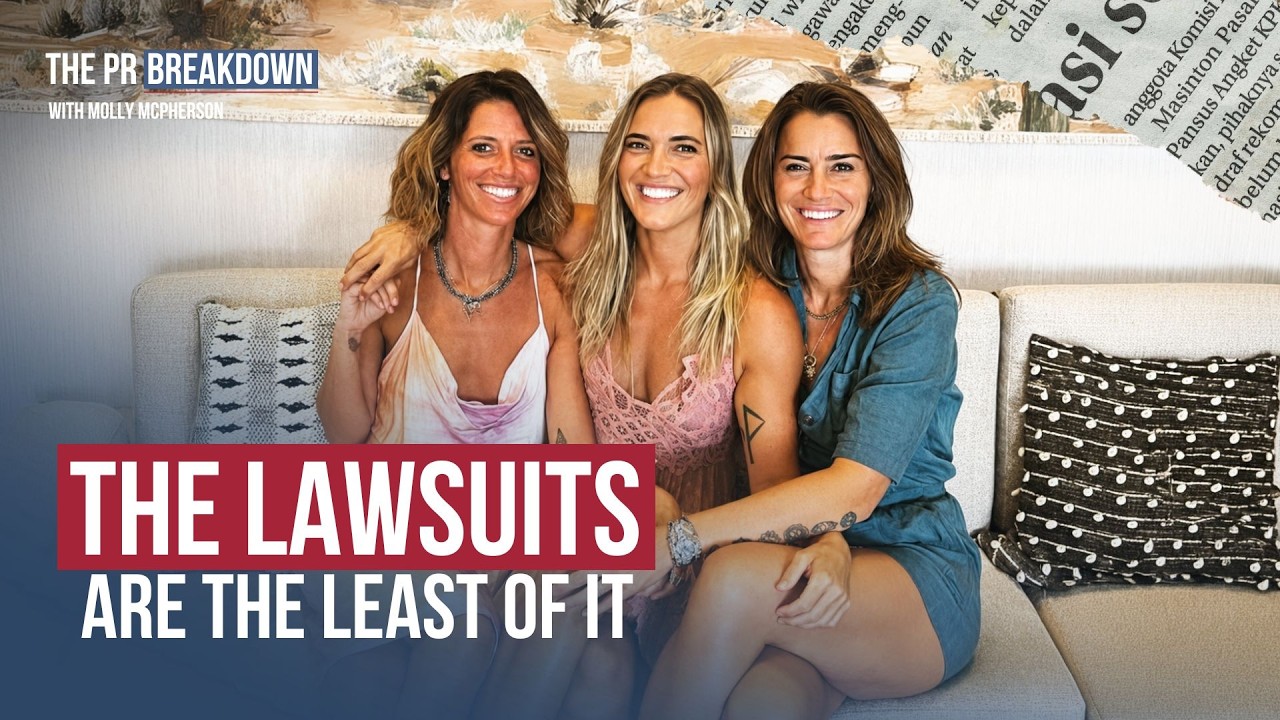
In this solo podcast episode, host Molly McPherson examines a New York Times profile of self‑help influencer Nicole LaPera, known as The Holistic Psychologist, and the ensuing authenticity crisis surrounding her brand. McPherson recounts her first encounter with LaPera’s polished public image, then pivots to the headline claim that LaPera is “the face of a brand she did not voice.” She unpacks the business’s structure—a three‑person “throuple” of LaPera, her wife Lolly Galvin, and associate Jenna Weakland—detailing their roles, ownership stakes, and the rapid growth of a $24‑a‑month membership, bestselling books, a podcast, and an app that together generate multi‑million‑dollar revenue. The episode outlines two ongoing lawsuits (LaPera vs. Weakland and vice‑versa), allegations of ghostwriting, misuse of corporate funds, and a prior charitable‑solicitation violation by Galvin. McPherson highlights how the brand’s promise of therapeutic authenticity clashes with internal disputes, opaque team disclosures, and contradictory statements from the publisher versus the author. She critiques the brand’s crisis‑response strategy—repeated silence to media inquiries—and contrasts it with best practices for credentialed content creators, emphasizing the importance of transparency about team contributions and the heightened trust expectations placed on medical‑oriented influencers. The episode concludes with actionable lessons for self‑help and medical content creators and promotes a forthcoming Substack training on crisis management for credentialed creators.
Chapters
Last weekend I was sitting on the couch watching the Red Sox beat the Dodgers, and I was on my phone. I was reading the New York Times, and I came across this story. Uh, whenever I see influencer in the headlines, I'm always curious. Headline: A self-help influencer with troubles of her own. Subhead: Millions look to Nicole LaPera for advice on how to achieve contentment and maintain healthy relationships. But her own story is complicated. Now, this piece by Jania Belafonte is excellent. Encourage you to read it. I'm going to have a link of it in the show notes. But what got me was this idea that The New York Times is highlighting an influencer, and I've never heard of this person before. Not that I have to know every influencer, that crosses my feed, but it feels like a lot of the self-help influencers, whether I love 'em or not, and most I don't love, have come across my feed and I know who they are. But this person I had never seen. Now that first photo looks like that classic Barnes Noble shot. So she's an author, published author. This photo struck me, one, because I still didn't recognize her, but two, I'm like, look at this outfit. That's such a Molly-coded outfit. Love the cream jacket. The pants look like a pleather, kind of dark green, inky blue. And she's wearing— at first I thought they were the Gucci shoes, but then they look like they're Gucci sneakers. I'm like, wow, what an upscale look. Like, who is this person? And so I'm reading the first paragraph, still not connecting with me. Started in 2018. I'm like, I don't get it. Who is it? So I'm scrolling, scrolling, scrolling, scrolling, scrolling. And then I see this photo of her at the Barnes Noble wearing the jacket again. Like, wait a minute, there's some familiarity here. And then I see that book, and I remember that book in the background of a, of a social media self-help person. I thought, it can't be that same person because she doesn't dress like this. And then I keep scroll, scroll, scroll, scroll, scroll, and then I see it. This is who I see on my feeds, and the wardrobe is not the same wardrobe that we saw at Barnes Noble. Now, is that the problem? Is that the reason for the call-up by the New York Times? No, but there's a little bit of a front there, and that's what this week's episode is all about. Hey there, welcome back to the podcast. I'm your host, Molly McPherson. Okay, kicking off this episode, uh, we're going to talk about self-help, but we're going to talk about one self-help influencer I showed you at top some of the photographs in a recent New York Times article. So we finally landed on who this person was. Since I just talked about it on a Substack Live this week, there are a number of people in the chat who are very familiar with this content creator, the holistic psychologist. And there were some people that didn't recognize her until, you know, I showed, you know, this, this photo. It's usually her. Sometimes it's her speaking to someone else. We'll get into that someone else in a moment. But the sentence that I pulled from the article that stuck with me was this quote: "She is the face of a brand she did not voice." Mm. For a podcast and for someone, a content creator herself, who talks about authenticity, talks about accountability, when I see a line like that, I'm now interested. I'm interested. So I dug into this article. Now, I want to be clear on this episode. This is a breakdown of a crisis, not a takedown, because I think there's a lot of lessons to be learned from this. And not just lessons, it's just an understanding about self-help and the space right now online. That line about she's the face of the brand, she not voice, that appeared on the holistic psychologist's own account. It was in the stories, and I saw some of the screenshots. And if you look, A lot of the people here are wondering, like, wait a minute, is this you? Have you been hacked? Like, what's going on here? Because of the millions, almost 9 million followers, this is broadcast to through Instagram Stories. But according to court filings, this is the case of the call is coming from inside the house. It was her own wife who posted it. So this is a story. It's a messy one. As personal stories often are. Again, we don't wanna highlight that piece of it, but the breakdown in the marriage or the relationship is exposing the cracks of what we see from this influencer. And that is definitely the through line, which is what happens when a business that's built on authenticity suddenly has an argument about its authenticity. All right. In this story, there are two active lawsuits going in both directions, all of them allegations at this point. And I don't want to focus as much on the legal aspect of it, but they need to be mentioned. Both sides deny the other's claims, and no court as of this recording has decided anything in this case. So there are no judgments on the docket that are happening right now. I'm not looking at the marriage. I'm looking at the communication. That's my job. But if you are not in the wellness space, you might not be familiar with her. But if you know who she is, you're probably familiar with the account, or at the very least, you're very familiar with self-help on the internet. But she's a Philadelphia therapist. Her name is Nicole LaPera. She left her conventional practice and started an Instagram account called The Holistic Psychologist. Now, she has a PhD. She is credentialed. I work with a lot of credentialed content creators that run afoul online, many of them in the medical content creator space. But self-help is close here. There are a lot of content creators who have PhDs like LaPera, but there are many self-help people in this world. Mel Robbins, I'm looking at you. Jay Shetty, I'm looking at you. A lot of the self-help content creators out there who do not have the credentials, they are making millions off the backs of others, of others who have those credentials, which is why it allows her to post more on social media. It's a little grayish for therapists, especially practicing therapists, when they have a, a content channel to their business or a content arm to their business. There isn't anything wrong with that. It's, it's strictly a judgment call if they choose to do that or not. I know of content creators who have a full roster of clients who they serve, but from a content perspective, they don't talk about what they see on the couch or in the chair. They're helping people through their issues. And I think that's a totally clean space. And even what LaPere is doing here, it's clean. She's taking her thoughts on it. So she doesn't practice traditionally anymore. Her entire— okay, for the lack of a better word, I'll call it a shtick. She's saying traditional therapy doesn't work. Everything kind of leads back to the trauma that you experienced as, as a kid. So in November of 2018, she that traditional psychology is built on the idea that you can spend week after week talking about trauma and make improvements, and that in her experience, that rarely leads to healing. That's also the angle that she's coming at from a content creator. And if you think about why people might find that appealing, well, it's quite universal, isn't it? When people are dealing with crap, how easy is it to say, hey, don't waste your money on a traditional therapist. I'm going to help you. That's appealing to people to follow, but also to eventually invest their money. That's the point of view. And it works because it's a business. What really amazed me the most when I uncovered this account and when I really started spending time on it is what you see online, like what I saw online when I would scroll her stuff, her aesthetic, I will call it, and this is a very, in a very non-disparaging way, is Granola, which when, when someone dresses Granola, to me it's someone who wants to dress for comfort and aesthetic, but it's very kind of natural. Like, I, I don't believe in labels. I, I just believe in Mother Earth and in just wearing things that don't harm the environment or anything like that. Okay, very kind of eco-friendly wardrobe as well. But I do not— I never got the impression that this was a multi-million dollar business, and that's where things get messy here. So she has a Self Healer Circle, $24 a month. Uh, didn't realize that, but there's a lot of money to be had there. There's also books, bestsellers, a podcast, an app, and today, as of this recording, 9 million followers. That's a lot of money. And that's where the scrutiny comes, is because when people are paying that amount of money for this help, and in probably many cases in lieu of actual therapy, there's a very high expectation for that person because there's a level of trust that is a part of that social contract that you make. So when it's self-help or medical content providers, again, like, they get all these followers and Instagram and TikTok, they will send you followers because that algorithm is so potent. But there comes a higher level of expectation because of that expertise. Now enter the wife, Lolly Galvin. She ran the brand with her. And in 2019, a woman named Jenna Weakland messages account— messages the account because they're so overwhelmed at that time. And she kind of like came in at the right time. It was right when they were enrolling people into this membership and the server crashed. So she comes in, she's hired, no psychology training. And in fact, I don't even think. I'm not sure if she even has a college degree. Uh, Lolly, the wife, also no psychology degree at all. And I wasn't able to— I wasn't able to find it, but I don't know if there's even a college degree there as well. But probably a deep expertise, especially if you're married to— you're married to a psychologist. And if you are someone who understands content creation, it's probably easy to take and turn it into something. So, and a quick deviation as well, in my research you know, a lot of these people who have these huge followings, they don't just show up somewhere out of the blue. In the beginning, she was platformed a lot by people in the, let's just call it the mega QAnon kind of space. So thinking, you know, 2020 anti-vax world, this account, The Holistic Psychologist, you know, a lot of likes, you know, in that area. So when other people, when you have a movement culturally, you're going to be boosted by that. So that also aided to the rapid ascent of this account. Now, timeline: 2019, a woman named Jenna Weakland messages the account just as they were launching their membership circle and the server crashed, which is one of those problems that are good/bad problems. It's bad that the server crashes, but it crashes because so many people want to join that membership. That says a lot. So she messages at a very opportune time that brings her into the business. 2021, LaPera posts that the three of them are in a committed relationship. The New York Times used a screenshot of that post in the article. They are in a self-committed throuple. That guy— that got by me as well. And then in 2023, Weekland gets one-third ownership stake in the company, a multimillion-dollar company, and it's a throuple. There's no judgment on throuples. I'm sure there are plenty out there, but it just kind of screams of messy. Like, you know, with, with millions of dollars and 3 people in a relationship. And that's exactly what happened. So March 2025, Weekland moves out. August 2025 is when the anonymous post appears that says that Nicola Pera is just the face and not the voice of the account. And the account goes dark for a while, that is. So now February of 2026, Weekland sues for $3.5 million. In May, the company countersues, alleging she misused more than $1 million of corporate funds. She denies it. Messy, messy, messy, messy, messy. Okay, that's the legal aspect of it. I am not a legal expert, so I'm not going to break down the legality of it, who's right or who's wrong. But let's look at the receipts, because the, the through line here, self-help this case, uh, it's not about the legality and who owns what, but it's more about the IP and, and the face of it and the authenticity of it. That's where, as a follower, particularly one where you spend a lot of money, makes a difference. So speaking of, let's talk about the receipts. Okay, if we look here, so from LePere's 2023 book, quote, Jenna quickly established herself as an essential member of our team, bringing communication and leadership that complemented the strengths Lolly and I had. From the 2026 legal filings, her role was, quote, merely administrative. Same person, same author, 3 years apart. Note the gap. And no surprise, people's opinions change of each other when money is involved. And that's a very human reaction. But both of those sentences about Weekland were produced by the same brand. And only one of them can be right. Then the other piece where it gets a little murky, the book itself. A Flatiron Books spokeswoman told the New York Times the 2026 book was written, quote, with a ghostwriter. LaPera and Galvin's court filing state all books were written solely by LaPera. That receipt is at the heart of what this episode is about. Think about the self-help influencers who you follow. Now ask yourself, why do you follow them? What do you get out of them? I'm not judging anybody for getting helped by anyone they see online. I'm a firm believer in the 3 E's of, of content creation. If someone educates, engages, or entertains, then you're going to build a following through those things. And certainly in self-help, so much of it is about the education. And the engagement comes into the podcast somewhat, the comment section, but the membership. That's why an account like this is going to be so successful. But with self-help or medical content creators, the trust bar is so high there because a follower isn't following you because you have an opinion about self-help. Or in my experience, I find 'When I do X, Y happens. When my partner says blah, blah, blah,' then you can discern what's right or wrong. But if you're following a PhD or someone who is a psychotherapist or psychiatrist, you are going to listen to what they have to say differently. It's gonna be weighted a lot differently, and that changes the social contract. Now, when the publisher and the author are not telling the same story about who wrote the book, Who are you going to believe? I know who I believe. It's not the author. I wanna be careful here and I wanna be fair here. And I wanna say the obvious thing. Ghostwriting is not a scandal. There are plenty of people who hire ghostwriters. I wrote a book a number of years ago, 2020, during a somewhat chaotic time in my life. I should have hired a ghostwriter, honestly, but I wrote it myself. And I think when you read it, you could tell, like, okay, there's stuff here, but this is written by someone who's going through a very chaotic point in their life. The ghostwriting itself is not a scandal. It's normal, particularly when it's disclosed. It's a normal part of publishing. And most business books, honestly, or a lot of books out there that you've read have had help. That's just how it works. Nobody is necessarily harmed by that. But what creates the problem is when the publisher says one thing And the author who you're following for their expertise says another. So that's not a ghostwriting story. That's a consistency story. So think about ghostwriting where it wouldn't matter to you. If it's a biography or an autobiography and a ghostwriter's involved, okay, that's fine because the person you're reading about is likely not a writer. So they need the book to be written by someone to make it pleasurable to read. But when you're a therapist giving therapy and advice in a book that you're selling for money, they're expecting that the content comes from said therapist. So now, receipt 3: the brand's own advice. LaPera's standing guidance to people in every single one of her posts was to choose people in your life carefully, understand the people who could cause damage in your life, to pick people who bring peace and contentment. And not chaos. But then you— but then I read the lawsuits and the protective order and police reports going in both directions. Lali and Nicole LaPera and then Jenna Weakland, back and forth, and the accusations. That doesn't match the content. I want to add one more piece to this episode here, not that it necessarily fits, but it is public record and I think it belongs here. And part of the reason why is because it's not one allegation, it's more than one allegation, and it's a signed state document— state document out of Pennsylvania. So in 2018, before any of this blew up, Lolly Galvin— so she's the wife of Nicola Parra— entered into a consent order with the Commonwealth of Pennsylvania. She admitted 5 violations of the state's charitable solicitation law, including depositing GoFundMe contributions into her personal bank account and represented her project as a registered nonprofit when it wasn't. It was a $3,000 fine, a cease and desist, and a 10-year prohibition on holding any solicitation or collection role in a charitable organization. And that's language that specifically included internet crowdfunding. Now It's not being litigated in the state anymore. It's, it's just something that's on file in the state. And I'm not going to litigate that in this episode much, but it shows where there is, I guess, an expertise in soliciting funds and the membership and the funds growing. So when there likely something happening between Nicole LaPera, the therapist, and the wife, Molly McPherson, And Lolly, according to court filings, posts that her wife Nicole is only the face of the whole operation, not the voice. It kind of matches because there's experience here in soliciting money online. So if we want to start naming the PR move here, this entire story is built around the credential front. We have a self-help influencer who has a credential, who has a PhD. And as I stated before, there comes a lot of trust with that PhD, which means there comes a lot of followers as well. And where there are followers, there is money. The credential earns the attention, but the voice earns the trust. And those are two different assets. Some people get followers online just because they're entertaining. Or they engage, but they don't have that credential there that kind of builds that education. When you have the credential, people are going to follow you and they're going to spend money with you. So the trust is so important, and we have to be precise in why it matters. It's not about snobbery that someone has a PhD, but when you follow a doctor or therapist with that credential, you're not just buying information because you can get information anywhere. But you're buying the judgment behind it. That's right. That's why when someone has a license, it's almost like a promise. The information I'm giving you is very specific to helping you. And when you have that specific credential, it comes with specific accountability. When something happens, you have to stand behind everything you say. You actually have to be the person who's writing everything that you're saying or thinking everything that you're saying. It has to come from you. And if you're writing a book, can it be shaped by a ghostwriter? Sure. But if your own wife is saying you're not the content, that's the piece of authenticity and trust that gets broken. Now, one of my crisis management doctrines that you've perhaps heard me talk about before is the crisis begins before the headlines. This New York Times story just didn't pop up overnight. It— the crisis didn't start on a— on August 2nd of this year. Now granted, news outlets, particularly big ones, traditional ones, everyone wants to highlight stories about content creators. If The New York Times publishes a story about a content creator with 9 million followers, they're thinking, ooh, we could get 9 million people potentially to click on this story. So you can understand the thinking that goes there. But the crisis happened well before the publication of this story. It started with the brand's promise. When Nicola Pera went online as a therapist and a holistic therapist with a brand and aesthetic that fit the handle, there was an expectation that came with it. And if she's a PhD and she's talking about her work and then her views go up and then her followers go up and then more press comes with all that. And the more press that you get, the more publicity. And then when you launch something with that, whether it's a book or a membership, then the money comes. And that's where the rub is. So when the brand's promise drifts from the brand's reality, the problem lies in that gap. The headline in the New York Times is not the crisis. That's the front-facing crisis. The headline is when you find out about the crisis that was there or building all along. So now let's look at the moves to uncover what's really happening behind the scenes of the story here. Here's the pattern that we can spot right away in the response. Now, back in August 2020, so this is pandemic year, Vice publishes a critical piece about the account. So at that time, she had $2.6 million followers. For 2020, that was a lot of followers. We're also pandemic, and if she is somewhat of an anti-vaxxer, kind of in that whole milieu of the MAGA conservative world, she's, she's going to get a lot of followers from that as well. But it puts her kind of in the crosshair of public scrutiny, and where there's scrutiny, that's where the press follows. And Vice does a lot of stories like that. I've worked with Vice. A few times, and they're, they're looking for these types of scandals. Now, Vice, in their reporting, reached out to Nicole LaPera for multiple requests for comments, and she never gave a response at all. Now, August 2026, we have another headline, same reporting posture. The Times says LaPera and Gelvin both declined interview requests. They sent them through their lawyers, through their literary agent, and through the book publicist. So 3 separate gates to get a response from someone who has 9 million followers on social media. And in remarkably bad lawyering, when a reporter reached out to their lawyer for comment, the lawyer said no comment, then hung up. So those 2 stories, 6 years apart, different scale— 2.6 million followers, Vice News, New York Times, 9 million followers, but same response. So different scale, different stakes, identical response. Official crisis response for the holistic psychologist is silence. Silence is the house style. And here's why it's more of a strategic problem rather than a bad look. Anyone who knows a little bit, uh, just media literacy just knows the no comment or the silence rarely, rarely works in your favor. Silence works only once. You have your first crisis. It's a big crisis. You're going viral. Reporters, anyone digging is going to understand. Maybe they're just being dignified. Maybe they're just terrified. Maybe they don't have a crisis team. Maybe they don't even know how to do this. So you might get a pass, lowercase p. But by the second time and the third time and the fourth time, you do not get credit for restraint. It becomes a problem. And that problem is a pattern. Now, pattern 2. This one is a good one because it's verifiable rather than alleged. The Holistic Psychologist team page, if you want to look it up and see the 3 women working together for this company, it now returns a 404. And a 404 is another way of saying no results, error message. The podcast pages, 404. The SelfHealers Soundboard YouTube channel, over 41,000 subscribers. Displays no content. But on Apple Podcasts, the Self Healer Soundboard feed is still live, 114 episodes, still credited to Dr. Nicole LaPera and Jenna Weakland. So there's a weak link there. They don't know how to take down the Apple Podcasts, you know, which is another way of saying, you know, they erased all the property that they owned except the one that they rented, Apple. So here's one truly useful piece of this entire story is to remember that you do not control the internet. You do not own your reputation on the internet. You control your website. And I drive a lot of my clients in the middle of a crisis, or if they're dealing with a reputational issue, I just point them to the own spaces. So now what's the contrast? What does that honest response look like? Okay, so let's go back to the beginning. Is it wrong for a content creator to get help? No, I get help. Someone's producing this episode. A lot of content creators get help. A lot of experts get help. And again, we talked about ghostwriters. That's not the problem. It's not the work itself, but it's the representation of your work. Okay? So think late-night television. Think David Letterman. Think Jimmy Kimmel, or even comedians for that matter. They represent the joke because they tell the joke, so you associate it with them. But everybody knows there's a room full of writers that help them craft that. Everything's kind of out in the open. So it's the same thing with publishing. It's the same thing with content creation. You want to be as open as possible with the help that you get. It doesn't take away from the good work that you're doing, but it shows more about the operation and how you can get into a big level like that. No one can run everything on their own, but if you're not being generous with who does what, when you're a content creator, especially a trusted one, that's where you run into problems. Audiences are completely fine with a team, but not when you go to court and claim there is no team. And that's the whole difference. Not whether you have help, but whether you say so. And in there lies the gap. Self-help medical content creators, they are expected to provide content at a different level because of the trust level. You get the followers that are aided by an algorithm and aided by people who really genuinely want to learn from you. And in some cases, it is in lieu of actual medical help. So whether it's anything medical related, self-help related, therapy related, they are trusting you with your content and that you are being honest in what you do. But if you're a self-help influencer with 9 million followers, but nobody knows the messes happening behind the scenes, and if you are presenting yourself as someone who helps people navigate messy relationships when you have a messy relationship that you're not really owning up to, but you're hiding behind court documents. That disparity in the two sides creates this gap of a lack of accountability, and that's where things go wrong. She should not be canceled. She should not be unfollowed. It doesn't take away from what she knows. But it does add scrutiny to the amount of money she's making off the backs of those followers. So the lesson— you don't have to be perfectly transparent about everything. The lesson is watch the gap between the trust. That's all for this week on the podcast. If you want to learn more about content creation for medical providers, self-help providers, I encourage you to head over to my Substack on September 23rd at 12:00 PM Eastern time. I will be conducting a training for content creators who are in that medical space, in that credentialed space. You're going to learn what the public expects from you in terms of trust and how to navigate it, especially if someone comes after you. You can find that on my Substack, the PR Breakdown publication. Thanks so much for joining me. Bye for now.








