What Everyone Missed About Graham Platner
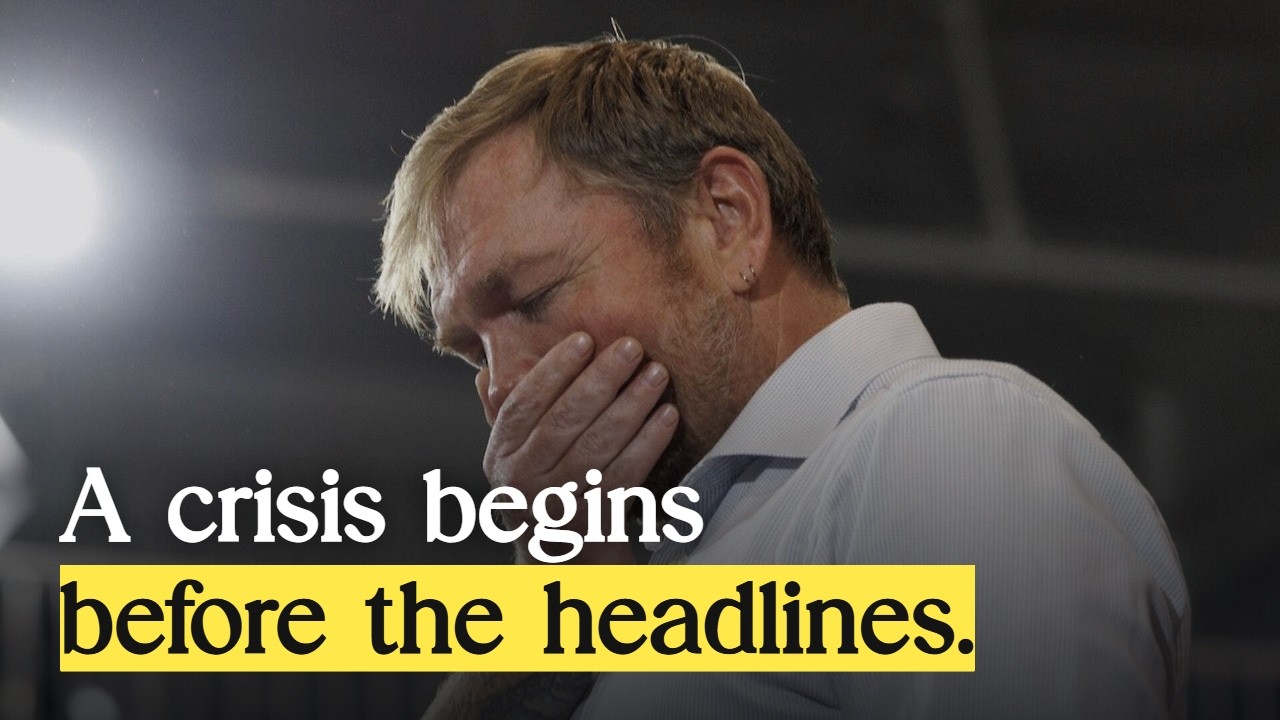
Crisis-management professional Molly McPherson breaks down Graham Platner's Maine Senate campaign, which collapsed after sexual-misconduct allegations from Jenny Rasicotte. She traces how poor vetting, algorithm-driven hype, and a shift from accountability to denial tanked a populist candidate, and what communicators should learn from the wreckage.
Chapters
A crisis begins before the headlines. Most people think the crisis begins when the video goes viral or the headline appears, but by the time that happens, the conditions for the crisis were already in place. Now I know that most people do not sit and follow Maine politics. I understand that. But Graham Plattner was a candidate who was making headlines for a reason. The Maine Senate race was making a difference nationally. We have midterms. We have Susan Collins, who's been in office in Maine for years, decades now, now up with really probably the first fight in a long time. In the candidate, but Graham Plattner also represents this new type of candidate. Very AOC, very Mamdani, the mayor of New York City, where we're pushing the candidate onto people. We're taking their persona, but we're, we're digitizing it and we're packaging it, and then we're shipping it to the algorithm. Where the algorithm feeds it, and then people get behind it and people get behind Platner. They get behind the platform. And this guy had a lot of momentum. Reasons why I paid attention, it's a local story for me. The candidacy was hitting all of the benchmarks that I hit when I'm watching mobilization. As many of you know, in my work, in my day-to-day work as a, as a reputation manager, as a crisis manager, I get called when there is a mobilization. So I'm very invested in why they happen. And watching what Graham Plattner, an out-of-the-blue oyster farmer from Sullivan, Maine, could pull off was pretty interesting to me. And he had a lot of momentum, even though up until like 2 weeks ago, The last poll that I saw, it was getting pretty close with Susan Collins, but he was still ahead of Susan Collins right before the primary. Of course, we get the big hit about women, Reddit spilled into Reddit that he was still on dating apps. You know, in the vault we talked about this. I had a podcast about it. His wife Amy out walking in the woods, shooing away the flies. We all saw it. It was very effective. We talked about it, the podcast talked about it, but that was the first time that my crisis management went. Now I know we had the tattoo, we had other— it was about women before, but what we had in Graham Plattner was an accountability candidate and he was taking ownership of a lot of it. That's what I was paying attention to, but then it changed. So he was our progressive. Insurgent answer to Republican politics, but also the brand and ideology of deep conservative MAGA Trump administration. On Monday, Politico— well, first I saw it in the New York Times. When I saw the headline, I was like, oh boy, what is it now? And then I watched Graham's video where he denied, derided the lies. Then I read the story in Politico and, and that's when I knew, oh, this is over. This is over. But Politico published an account from Jenny Rassakot, and it's a very important— don't look at this headline because strictly as a headline, this morning my algorithm fed me story after story after story about how much of a loser Graham Plattner is and all the people who come out and said, I told you he was a loser. I told you, who is this? And it was Lawrence O'Donnell on MSN Now who gave a clip. So it must have aired last night, and he was talking about the vetting of these candidates. And he said, we had AOC, and they showed photos of her. She wasn't vetted. She was the real deal. She came up and she proved that she was the real deal. And that's why we've had her on this program. And then he compared it to Grant Platner and said, that's why I never had him on this program. And I think that's what captured it for me, what bothered me about this. And this is not in defense of Grant Platner, but it's the hypocrisy and where the media is involved and where reputation is involved as well. This story, in my opinion, is not a Grant Platner story. He's the face of it, but there's so many other things that are happening behind the scenes here. I wanna highlight what worked for Graham Plattner, and not that it worked for Graham Plattner, it's what works in today's environment that we can learn from. Whether we're political, whether you work in strategic comms, whether you used to work at the DOJ, as someone in our community I just found out did, it, whether you're running your own business, you wanna know why people do what they do. That's what makes you good. That's what makes me good at my job. It's not that I know strategic comms, like, yeah, I know strategic comms, But you have to know why, the why behind it. And everybody now is talking about, we told you about Grant Platner. No, you can't say it like that. I wanna look at this story in the parts, not the sum. All the commentators out there are talking about Grant Platner in the sum. He's the worst. He's the this. Grant Platner did not get to where he got because he's the worst. He got there for a reason. But let's start with the bluff, the bottom line up top. Jenny Rasekhoff. This is the, I say, the cornerstone of this whole story that I pull away. If someone were sitting down at a bar with me or we're having a glass of wine, this is what I would want to come out of it. She tells her story, she tells it to Jake Tapper. She's, she's, you can see it everywhere now. She tells it to Politico. I don't know her. I don't believe that she woke up and said, today's the day I'm going to bring down Graham Plattner. Today's the day I'm gonna call. Who should I call? Jake Tapper. And I'm gonna bring down Graham Plattner. No. Where it comes from, from my perspective, which is of an outsider, but someone who's been inside of these campaigns in these moments, what drove her at— she was driven by being a victim. Okay. It's when people feel aggrieved over something that happened to them, the claims that she made against Graham Plattner are strong. They're believable. She admits, I don't remember everything plausible with the time they were dating on and off. There was a closeness there, but it was a definite violation. And the reason why I believe her, it's not just because of what she said. Okay. It's just because she said it. I believe it. I don't think that way necessarily all the time, but I do tend to believe women. But it's what drives someone to do that. I do also believe this, and as a crisis manager, and I would love to know if you all think the same way, I don't go through life like right, wrong, right, wrong, right, wrong. They're the worst. They're the best. They win. They're wrong. No, I go through life and in my work knowing two things can be true at once. Five things can be true at once. This can be true, but so can this. Yes, Graham Plattner can say, and it is understandable inside that campaign, A lot of the allegations come out right before the primary, the main primary. All of a sudden, whoosh, we're flooded with all the issues. I can see why a candidate like a Graham Plattner, why that campaign could say, oh, look, look what time it is. It's primary o'clock. Do I think operatives were behind a lot of the dismantling of Graham Plattner? Absolutely. Absolutely. It's not just the Republicans, it's the established Democrats, and that is something that we need to keep in mind. All right. That, that's very likely. Other candidates who wanted to run, Dan Cleveland, is that his name in Maine? He's a Freeport, owns like a, a beer, like a beer place, a distillery. He wanted to run, but he was encouraged by the establishment, the Dems, not to run. But there was a force behind Grant Platner. They saw him in a video. They thought he looked the part and they didn't vet him thoroughly because Graham Plattner clearly had a dark era in his life, and that is what came out, and that is what brought him down, the dark era. And that's where everything, in my opinion, makes sense. So we believe her, but I also think she's gonna be victimized twice. I think if she were to, if Jenny Rasicotte were to call Politico or Jake Tapper a month from now, 2 months from now, and say, hey, I want to follow up on something. I don't even know if they would take her call. The press got what they wanted. Now this woman has to live in Maine where there's plenty of people, I'm assuming already, who are going after her saying, this is your fault. It feels like we're in that same space that we're throwing the whole Graham Plattner issue out. It's the baby with the bathwater. I'm saying let's separate Graham Plattner, the person. From the message and what he was speaking to and why he was able to mobilize so many people. And I can say this while still believing Jenny Rasicotte. That's just my opinion. This is just my opinion. And I'm saying this as a strategic manager, but I'm also saying it as someone who saw Graham Plattner. I saw him speak. It was electric. I even wondered in the room and I was in the back and actually in the social media, you can see me in his social media. You can see me there. And, and I'm texting my kids saying, you are looking at, I don't know if I put likely Maine's next senator or not. I don't think I did. Let's move from, from Jenny, from the allegations. Okay. And I want to walk through what worked and then when I kind of turned and when everything changed for me and when I knew. He had to go. Let's look at this as lessons in this community. We're not gonna paint this as a whole Plattner problem. Let's look at the movement, why it worked and why it didn't. And it's important. And you and we all chatted about the moment it, it actually turned. We know about the Nazi tattoo. He came out, he admitted it, spoke about it. The women, when Janet Mills was running for Senate, for governor of Maine, Her whole campaign was getting women a little, a little light on the credentials of these women. They're more kind of performative paid people to say certain things. Some may be true, but they didn't get to the heart of it. And he was able to, to manage that. And, and a big part of it, and this is important, I'm not excusing what he did, and I have to be incredibly clear on that. I am not excusing Plattner's behavior. But what he did with it is important. He took accountability. You can argue now, not full accountability, but show me the other candidates out there. Show me the politicians who say, yep, that's true. Yep, I did it. Yes, that's, there's a, so it's own it, explain it, promise it. Owned it, then explained it. The reason why I think Platner was able to move that movement ahead and still get people behind him. Smart women who believe women still behind him is because they believed in the movement. It was less about the man and about the movement and what he said. And a big part of it is that he took accountability. And I've done posts about that and watching that. And then I saw it firsthand. And when I walked into the high school first, I was a minute early. So I thought, I'll see him. I couldn't even get in. And he was speaking kind of in the hallway of the school. And my first thought was, this is how we have to see him. Like, I don't see him, I just hear him. He spoke out in the hallway first. Everyone's around him, and then his campaign workers are around. They have signs and all this other stuff. Then Molly McPherson goes, wait a minute, what's going on here? And, and then I go to the theater and there is where every, the smart people are sitting there waiting in the great seats because that's where he is coming to speak. It was a town hall. So I, I was up a little bit in the rafters there, but I found my spot at the side, but I watched. The electricity. I watched him speak in a way that I, that I counsel, and this is a call that I had yesterday with a client. You speak to pain. That's what Grant Platner did. He spoke to pain. He spoke to people's pain, not just Manor's pain, but everybody's pain. Okay. Oligarchy, billionaires, corrupt Congress, money, you know, corrupt politicians. Money and politics that resonates with people. He would go after the Trump administration. That resonates. We want that to be a standard in politics, in life, in the people who we put in trusted positions. We want accountability. We want that. But this is also where it goes. We also had the warning signs. We also had the warning signs, but because he had such a movement, people were missing them. And I will admit too, I watched a lot of his interviews and I was allowing some of this as well because, and I'll give you one of the reasons why, and I think this is incredibly important. Graham Plattner took accountability for behaviors. He took accountability for behaviors that were caused in large part by him fighting in a war. Graham Plattner did something that many politicians don't do. He signed up to serve and he wasn't just an officer or OCS, and then he's sitting somewhere and, you know, in the mess room watching other guys go kill themselves. No, he was on the front lines. He fought. Where are we seeing in any of the commentary this last week about that? How do you feel if you're someone who served your country, you sacrificed for your country, you fought overseas? For your country, and someone who did this as a former Marine, Grant Plattner's a former Marine, but now we're labeling him as the worst person in the world. You know, that resonates down. We cannot take that away from Grant Plattner because if we do, we take it away from everybody else who served. And yes, people have said, oh, but he went to a prep school. Oh, he had money. Oh, he had this. Who cares? Who cares that he went to Hotchkiss in Connecticut for a year, which he was miserable at. And then he dropped out and moved back to Maine. Who cares? And then he went to a Catholic school. Why, why are we painting him as the problem for, for doing that? But we cannot lose the voices of people who served and struggled and coming back. And Graham Plattner is one of them. And I have watched interviews where he talked about how he was saved by the VA, Veterans Administration, the, the care that he gave, he gave, and he talks about mental health. So that's important. That's really, really important. It's not Graham Plattner. But it's what he experienced, but he's also representing what a lot of other people experience. Now, let's look at more signs here. Graham Plattner was chosen because he created a video, and there is no doubt that guy is a magnetic guy. His voice was made for a microphone. Graham Plattner on stage, watching Graham Plattner, I am telling you folks, that guy was magnetic. Watching him on stage, no notes, looking at people in the audience. And talking with the gestures and looking people, asking questions. And I scrutinize people who speak all the time and what takes time and what makes it painful. How do you captivate an audience? Is you fill the room speaking to people's pain. And that guy mastered that. And that's the reason why I think he did so well. We're overlooking a lot of people who have served, who have suffered, who suffer with mental health, who suffer and struggle. And he mentions a lot of the, a lot of the guys who he served with, who came back and, and, and took their lives and really struggled. And those are, those are parts of the narrative. We don't want to get lost in it. That's my angle that I'm coming from, you know, not to explain it, but to say that even in Jenny Rackcott's description, she said he was blackout drunk. And the next morning she asked like, do you even know what you did? And he said, I have no idea. In context, what he's talking about, it's probably believable. It probably is. Does it excuse it? Hell no, not at all. But it just gives us context. And that comes to the next piece of this, which is what we're all learning now. Big problem is the vetting. Is the vetting. I can see this, why someone would be so caught up in seeing this video and you're a part of a team and you see a Mom Donny, there's a reason why an Aiden and a Mom Donny and a Platner and a Bernie Sanders, like why they resonate. They're like a no notes. They get up and they speak, they speak the pain. That's why they're good at what they do. And, and people who lean more socialist can do that because that's what Socialist Party kind of is. It's for the people. So to be a part of that party, you speak to the people. But when you're deep in establishment, Democratic or Republican, you really can't say where you took your money or the lobbying money or why we're doing this. Well, what about this? They have to cover a lot of the time. And that's why Grant Platner as a candidate wanted to bust through that. That's another reason why he connected with people. And we don't want to lose that. We cannot make Grant Platner's message the problem. We can make Grant Platner and his actions the problem, but not the message, because it resonated for a reason. And no surprise, within 24 to 48 hours of Rassakatz, of the political story being put out there, that's when the institutional support collapsed. He really didn't have a lot of it anyway. He reluctantly came out with information saying that the Democratic Party just came out and said, we are not supporting you. I, it was, the guy was bullied by the establishment. He made that, he didn't make it crystal clear. It was kind of a footnote in some, in interviews, but also the other, other candidates in Maine who kind of like would speak to the same types of things where Maine wouldn't be where they are right now had these candidates not been pushed out. So you need, you need established people there to get things done. But Plattner has, he has to withdraw by 5:00 PM on July 13th. Right now it's July. 8th, where we are 24, 48 hours after the Politico story. The Maine Democratic Party pulls out, the DSCC pulls out. Chuck Schumer, Chris and Jill Brand said if he doesn't pull out, there will be no Democratic money going into Maine. This is like the moment for me where I want— ugh, it's the dirty politics of it. Now let's go into the second phase of it, which is the calm piece of it. In part one of our talk, We believe victims. We believe Jenny Rasicotte. I also believe that the press went to her. I think intermediaries brought the press to her. I wouldn't be surprised what I know about the industry, that people were putting some leaning on her to talk. This is why you gotta talk. And that woman is probably under so much pressure and now she has to deal with the second wave of that. That's important. And the other piece of it is the Graham Plattner. We are looking at the parts of it, the parts that worked, the parts that did not work, and the parts of why we're here. We're separating Graham Plattner, the person, from Graham Plattner, the messaging. Now, where I left off about his accountability, that's always been good until a moment that happened. We talked about it in a live here. It is when the Reddit women came out. About him being on a dating app. I said, I saw the Reddit threads about Graham Plattner before it hit the news. I thought to myself, how does this work now? Graham Plattner being on a dating app means there are screenshots of Graham Plattner on a dating app, which of course are on Reddit. And I have my crisis management hat on thinking, Well, how the heck is he going to accountability his way out of this one? So what we got was his wife, Amy Gartner, with her video, her, and I did a post about it saying why this was so good because we had the wife, we had the wife who took accountability in the sense that she knew what was happening. She also. Talked about why the story happened, cuz how that got out, the former campaign manager, Genevieve McDonald, who left the campaign because of problems with Kushner and women. So she has her redemption now, but Amy, the wife, confided in her. So I was likening it somewhat, a little bit of the Linda Tripp, Monica Lewinsky. Where someone confides into a trusted ally and they break that trust. That was the narrative that they were going with, that Amy used. I confided in someone. It was private. It was personal. It's our marriage. That works because privacy can be a guardrail. It can be when it's health. We talked about Tom King Jr. outta New Jersey. No one knew where he was. That wasn't working for a long time. He had to come up at some point. He came up for air 2 weeks ago. We talked about it here. He said he was battling depression, but he ripped it out. He said it, he did it, and all you have to do is wait for the news cycle. The news cycle will wash it like just the tides. It's almost like the tides. I gotta come up with an analogy or metaphor there, but it is, it will, it will bring it out to sea. That's a private matter that she's bringing out forward. It's believable. And again, we believe Jenny Rasicotte, but this is where the Platner campaign strategic comms shifted. Graham Platner, you could look at it as he put his wife out there, and I don't love that, but she agreed to do it and she did it and it, and it worked. But I still don't love that. That was not her battle, but maybe she chose to defend him and go out and do that. So that part, fine. But then he follows it up by doing something that is a flag. And I talk about it a lot. You guys heard me mention this many, many times. When I see it, it's usually 100%, and I don't like the absolutes. I don't like absolutes. I'm not a sum, I'm the parts. But when I hear this, and I want you all to do the same thing, the flag goes when you blame the press, when you don't make the story about the story, which is Reddit. The women, the dating app, and your wife having to go out and, and film a video in the woods getting attacked by black flies. And then you come out and say it's the press printing lies. It's the press's fault. That is the first time I went, oh, Graham. Graham, he played off of a different playbook. I don't know if someone told him to do that or if that was him. And why did his message matter? Why did his message resonate? Because it spoke to pain. He spoke to people's pain, but he didn't speak to Jenny Rasicotte's pain. And that's what I think happened with Jenny Rasicotte. She needed to— I mentioned this in the post, the, the reel that I did. I've worked with so many people at the center of a crisis when they decide to go, they go scorched earth. They go scorched earth. They don't do it for the sake of of blowing everything up. The people who often hire me, they paint those people as the problem. They're just there to bring me down. They're just there because they're trolls. Whenever I hear online mob, I know, like, nope, I don't look at the online mob. I go, whoop, and I look at them. When we start to label and victimize, no, those are the red herrings. If you want to think like a crisis manager, you don't pay attention to that. That is the distraction. What Graham Plattner should have done, and I think the massive mistake that he made, is he called Jenny Rasicotta a liar. It's awful. That's awful. And I assume that Jenny, I think that's what drove her. She felt she was a victim and she was aggrieved. And this is why people do this. They have to, they have to get it off their chest. They have to. That's why people go to online. That's why people go online or they blow people up online. Jenny's an extreme version, but think about every divorced couple that you know. Who gets labeled as a problem in any divorce? It's the wife, right? It's always the wife. It's never the guy. Everybody believes the guy. They never believe the woman who likely had to suffer through so much crap and abuse. Maybe it's not financial, maybe it's not sexual, or, you know, like physical, but maybe it was financial. Maybe it was geographical. Maybe it was social. There's so many abuses that people have to do. And then when they finally get out, what do the, what do the men do? It's their fault. They did it. And then people believe them. No, Jenny had a pain there. That's why I believe her. And I think the press came into that pain and they coerced her or coaxed her or talked her into doing the press. 'Cause she even said she doesn't want She didn't want to do that at first, and I believe her when she said that. And I actually feel for her in the future here. Where it went wrong and where Plattner, the shiny candidate, separated from what he was trying to do. He just separated there. And that's when I knew, okay, the drain. I really wondered, is he going to last until the election? It's July right now. Is he going to get there to the end? And I thought, I I don't know. He blamed the press and then he starts denying. So the first, the first Blattner video that comes out is, quote, any accusation of non-consensual behavior is troubling, serious, and false. Why this matters is because this is a denial, which essentially is him saying that, that his former girlfriend is a liar. Even though part of her context was blackout drunk, and he did say the next morning, I have no idea what I, what I did. The messaging could have mirrored that, but instead he went after by calling her a liar. That was the grievous error. And that's where I went, oh, Graham, you have to step down. Where it changed it because it was a forced disclosure. He didn't bring up this information. He didn't reach out to Jenny Raskot on his own. Which he should have done, absolutely should have done that, but he didn't do that. He didn't do it before, which he should have done, because then she could have had more of that healing there, but it just wasn't there. So that's why, I don't know, I see it all the time. He can't say it's false if he doesn't know what happened. He's contradicting his own story. But again, two things can be true at once, whatever. I don't think we can take away from the fact this guy has talked about this very publicly. PTSD, very dark times in his life. Very dark. There's context there, but then again, the texting, the dating apps, that was a lot more recent. It's the denial under the forced disclosure. And also, and if you compare it to the tone and the posture where earlier his redemption framing was more self-initiated, that accountability worked because it was self-initiated. Right now he's cornered. And when he got cornered, he denied and attacked. Deny, attack. When I see attacks against the victim, red flag. Then we have the Democrats pulling their— so what's withdrawing here is an incredibly important element of any campaign, any reputation story, and that is the ultimate metric, and that's trust. He lost the trust of the Democratic Party. We knew he lost the establishment anyway, because I personally think they were just worried. They were worried. Parts of the establishment were worried. But when you lose your insiders, your Democrats here, that's when he lost it. So yeah, he is probably looking at an independent run. He doesn't have any support from the Democrats, but if he's still in it, he must have run the numbers and there must be people in Maine who are saying, yes, we're still gonna do there. We're, we're still gonna stick it out. All right. And Plattner also, he made a big part of saying, it's not the man I am today. That was a part of his accountability. That worked because he went first. He framed the past in his own words, and he owned what he was prepared to own, and he asked the audience to evaluate him. Through that lens of change and who he is now. Own it, explain it, promise it. It's the Indestructible PR Framework. That's why it worked. He was in charge of the framing because of the accountability. And the problem is it can't work twice because now he's flipping it. He has, he's, the pattern is there where he's no longer owning things. He's partially owning it. And that's where we first saw it. Is when he put Amy out to do his damage control. Well, he blamed the press. So very quickly, I want to, I want to highlight some other people too. If you remember, Al Franken is doing the same thing that Graham Plattner did this last time. Al Franken wouldn't admit anything. He demeaned it. He actually kind of showed contempt. He was, eh, it's nothing. Oh, I mean, so I hugged a few women. If you remember, and I'm pulling this off of my memory cap right here, when you, when you demean, you belittle, you make it seem like nothing. When there's a lot of women in Minnesota were saying, well, no, that kind of is something. So Al, we could have got behind you if you said, you know what, what he should have done, his wife is amazing. That's who should have come out is the wife. But also he should have led with what he does, the changes he's made. But he should have just admitted that, yeah, it makes people uncomfortable. And he could have said, time he was on SNL, for God's sakes, he could have said, you know what? I grew up in an era when it was different. I grew up in entertainment. We were allowed these certain things and whether we weren't or not, that was a different time. Same thing that Graham Plattner's doing. That's not the man I am today, but it was the man he was still today. You could still do horrible things to a girlfriend and still be a great communicator, right? Both things can be true. But me, if, if I, you know, for the voters, they have to like reconcile both. I don't know how you reconcile that. I could never look at Graham Plattner the same. I can't. And I'm thinking this, that many people think that, right? I don't know. He sat down in that office with the camera, with the film, the glaze, with the backdrop. It's a mea culpa. It, it was a statement. I'm assuming he had the prompter there. There was such defiance in it. There was such defiance in his messaging. He, he wanted to make it about the politics and not about Jenny. And that's what I think was the mistake. And that's the Al Franken mistake too. It's the Al Franken mistake. It's the same thing. So I wanna quickly mention a couple other names when we talk about patterns. There's other people where the institution has been failed. So let's go back really quickly. Grant Platner, and it's in my notes, Grant Platner was vetted, folks, and not vetted well at all. Grant Platner was vetted and the Wall Street Journal did an interview where they admitted they shortcutted it. And again, it looked like money. That was the reason why behind it, they didn't want to pay for the full vetting. And they even said that they knew about some of the issues coming up. And we're going to assign blame too. We're going to assign blame there because they probably hyped up Graham Plattner in his ear like, you're the best, you're the best, you're the best. We're going to film you doing this tough guy, tough guy, bringing in the gnats, bringing in the oysters, all this other stuff. But they, they hung him out to dry as well by not properly vetting him. Because if he was properly vetted and he took full accountability and Graham Plattner went to the Jennys and went to people for to repent and atone, then maybe we'd have the candidate that of last week that we have today. I don't know. But the vetting is a big part of it as well. So we can't only blame the established Democrats for railroading him out. Who vetted him behind it? But also real quickly, other people not vetted well. Here are some names. George Santos, George Santos, who's on Cameo right now, who was pardoned by President Trump. An internal vulnerability report reportedly surfaced all the, like, lies and financial problems. They surfaced and they still got behind George Santos. Another one, if you remember this, and I remember this being a Minnesota Vikings fan, Herschel Walker as a candidate. Do you remember he was a candidate 2022? Much of the warning material already public, including reporting and his own disclosures, but they still went behind it anyway. Matt Gaetz, a politically useful figure facing serious allegations, but they knew and they pushed it anyway. So that's what I wanted to talk about today, you guys, and I want to thank you for allowing me the grace. To get around. It is sticky at best, but it's so problematic and disappointing and hard because we can't— again, what I said at the beginning, the bottom line up front was about Jenny Rasicotte and what she said. And man, my heart feels for her. I really do. I just, I can't put, I can't articulate it well enough, but I just feel for her. But everybody in life has a version of the 3-day vetting job. Everyone has a version of this. We're not all candidates for office, but where do you in your life allow the 3-day vetting? I had a friend tell me 2 days ago about something going on at work because she wanted to vent to me as a crisis manager. Because part of, I heard, well, we hired a crisis manager firm and I want to know from you what you think is going to happen or what you think is going on. And in my head, I thought, you are comms for this sitch? And wait a minute, we're at stage 10 right now. Can we go back to stage 1? And what has been allowed in that structure for how long? Where in your life do you have the 3-day vetting process? Where do we cut corners? Where do we allow this behavior, this behavior, this? Where do we allow it? Where are the 3-day vettings? Think about it in your work. In my crisis management, it's my job to not do the 3-day vetting. It's my job to look at the 3-day vetting and find all the problems with it. All right, everyone. I want to thank you for letting me talk about this. It's a sensitive topic. It's a sad topic. My heart is with Jenny. My heart is also with the people in Maine, you know, voters in Maine. My heart is there. I'm in it. And there's a candidate there that was going to make possibly a lot of good things happen for a lot of people. And I'll close on this. One of the reasons why I thought Graham Plattner was so incredibly effective as a politician and one of his talking points that I loved, and I hope someone picks it up and carries with it because it matters. 'Cause it was so good. It was so, so good because it speaks to pain, which is what I tell clients all the time. He said, I represent the working class. But the working class isn't just people working hourly wages or people in blue collar jobs, people in skilled labor. The working class is anyone who works for a living. Anyone who gets up every day and goes to work to pay their bills is working class. That's a great line because it speaks to pain. There are people who make a lot of money and they can't afford to live. There are people, my neighbors, nobody wants 2 kids because they can't afford it. That's the working class. That's what Graham Plattner spoke to, that audience, and that's who he spoke to and their pain. And that's why he mattered. Let's pick up the messaging. Let's look for it in our people who matter and our politicians, and let's move from this. All right, everybody, have a great week. Bye for now.








