Before You Burn Out: A Healing Conversation with Mona Sharma
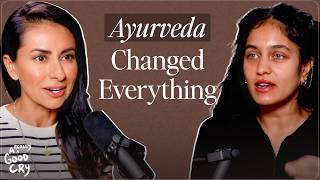
In this episode of the "A Really Good Cry" podcast, host Radhi Devlukia interviews nutritionist and holistic wellness advisor Mona Sharma about the hidden costs of chronic stress and the path to true healing. Mona recounts her high‑pressure corporate and fashion career, the onset of anxiety, heart palpitations, a diagnosis of atrial tachycardia, and two invasive ablations that failed to resolve her symptoms. She describes how conventional medicine offered quick fixes—beta‑blockers, surgery, and medication—while neglecting the emotional and energetic roots of her illness. A turning point came when she returned to her childhood exposure to Ayurveda, yoga, meditation, and the Sivananda ashram in Quebec, where a strict daily schedule of sunrise hydration, meditation, satsang, breath work, yoga, and sattvic meals rewired her nervous system, reduced stress, and allowed her heart condition to improve without further surgery. Mona explains how modern lifestyle habits—constant busyness, hyper‑vigilant nervous system activation, processed foods, and reliance on pharmaceuticals—fuel chronic diseases such as diabetes, obesity, and cancer. She advocates for a paradigm shift toward disease prevention, integrating ancient wisdom (Ayurveda, Reiki, NLP, sound and frequency healing) with modern science, and empowering individuals to become their own healers through root‑cause investigation, gratitude practices, breath work, and mindful nutrition. The conversation also touches on the limitations of Western medical training (especially nutrition), the importance of listening to bodily signals, and practical ways listeners can recreate an "ashram at home" to retrain their nervous system and restore balance. Additional dialogue delves into David Hawkins' emotional vibration scale, the impact of repeated antibiotic use on the gut microbiome and joy, aligning daily decisions with core emotions, and positioning breathwork as a future cornerstone of medicine.
Chapters
Cancer just doesn't show up overnight. It's the result of this stress on the body. And when our body no longer has the needs or resilience to deal with the stress within. The red alert is going to go on.
Today we have Mona Sharma, a nutritionist that works with high performing entrepreneurs and celebrities as well as a wellness advisor and coach. She blends ayurvedic wisdom with modern science to optimize health.
For somebody who suffers from something like stress or anxiety, is it stress or anxiety or does it come from a deeper cause? We live in a world where we need to be busy all the time. We think it's a weakness to stop because it makes us vulnerable. What do they practice that you have every single day that are training your nervous system to be in this hypervigilant, busy state? We need to decipher the foods that are causing us to be sick and imbalanced. We know that these ultra processed foods are linked to diseases amongst adults and children. Things like metabolic dysfunction, diabetes and obesity and even cancer rates are going up. So control with your dollar and make better decisions.
I'm Radhi Devlukia and on my podcast A really Good Cry, we embrace the real, the messy and the beautiful, providing a space for raw, unfiltered conversations that celebr vulnerability and allow you to tune in to learn, connect and find comfort together. Hey everyone. Welcome back to this week's episode of A really Good Cry. Today we have a nutritionist that works with high performing entrepreneurs and celebrities as well as a wellness advisor and coach. She blends ayurvedic wisdom with modern science to optimize health. She is my go to person whenever I have any health questions or issues and she always shares solutions with love and compassion. So, Mona Sharma, thank you so much for being here.
So good to be here. I'm so excited to connect with you.
Me too. I have to tell people that when I say she is my go to, I mean like every single thing that I possibly think of, you get a text message of.
I love it. Yeah, I love being the go to.
Person I know you really are and you have such a magnetic energy and I mean that in the sense of the things that you share you feel like when you meet you. So I don't know whether that makes sense but your energy is so representative of the wisdom and the nourishment that you give to other people. As soon as you walk into a room, I feel like I my whole pattern of voice changes. I feel calmer and I think that that's just your presence that allows people to feel that way. So I'm so excited to share you with everybody that's listening.
The highest compliment for me. Thank you so much.
I wanted to start off by just asking you one how you got to where you are today and how you have created a world where you're able to share Ayurvedic wisdom which is so old with western medicine and make it relevant and applicable to people now.
This is literally what drives me today. If the future of medicine can really merge the wisdom of all of our ancestors, no matter where we come from. Ayurveda is one of those incredible sciences with the amazing, incredible science that Western medicine is giving us. Merge the two together for true integration. I think that the world would be in such a better place. I think that disease prevention would be the primary source of healthcare instead of symptom management. And I can say that because I lived through all of it. So prior to becoming a holistic nutritionist and yogi and meditation teacher and reiki practitioner and NLP practitioner, I list them all because I probably should have just become a doctor instead of doing all of these modalities.
No, I love it.
But prior to that I actually come from the world of fashion. So I worked in head of sales for massive beauty brands. So Christian Dior and Tom Ford Beauty and Estee Lauder companies and stuff.
I know that about you.
Yeah. So my 20s was full of this like high fate, high paced fashion, fun lifestyle, traveling the world, doing makeup for fashion shows, training people at big retailers. And I say it out loud, I'm like, yeah, that sounds kind of fun. Like it was a really cool job to have. And as, you know, being Indian, having an Indian father, I didn't become a doctor or a lawyer or a judge like my dad or like my brother. When I got into the corporate world, I hustled like this. A type hyper vigilance that I had was like literally get to the top, get security, you know, do as much as you can to get a high paying job that was going to get me respect. And you know, that came with a big, big, big price tag. So I used to say all the time that anxiety was my blueprint. Like it's just, it's who I identified at. I, I hid it very well, Very, very well. I would almost say that the, the calmness that you so pleasantly gave me, that, that compliment, that was almost a coping mechanism for me. If people perceive me as calm on the outside, they won't know about the internal suffering and anxiety that I'm feeling that I think I've had since I was a little kid. So here I am. Anxiety, fast paced life, waking up hotel rooms, not knowing what city I was in, chasing this high corporate salary. It was a corporate job, right? Burnout is what I got to. During that time. I started getting heart palpitations. These heart palpitations got so fast that I would bend down to pick something up and nearly hit the deck. I would want to pass out. And things got really bad. I ended up getting pcos. I'll never forget a doctor told me that it was so bad that I would probably have a really hard time having children. Having children is the only thing I've ever now that I really, really wanted. And I. I do have two kids today.
Beautiful children.
Beautiful children. And the heart palpitations, I was like, look, this isn't working for me. This is now impacting my life. What's the solution? At that point in my life, I wasn't interested in getting to the root cause of healing. Give me quick fix. So doctors wrote me a prescription medication for beta blocker medication, beta blocker medication. They did slow everything down. I still did get my heart palpitations, but they weren't as bad. But they also caused me to gain 45 pounds. 45 pounds later, I was like, hey, hey, this isn't working for me. Like, I feel completely lethargic. Everything, my tone, my energy just like drained. It dropped. And so they said, well, hey, we can go in for surgery. And I said, okay, let's do it. So I went in for my first heart surgery. I was 23 years old.
Oh, my gosh.
They go through an ablation. So through your groin and through your neck, you're awake for the whole thing. Your heart's on this massive monitor and they induce you with, you know, adrenaline and caffeine and all these uppers to try to induce these palpitations that I knew would only happen if I was moving my body right? And so they found a place where they could do an ablation, where they burn off a portion of your heart on this electrical node. They say they ended up doing two ablations in that surgery. But the next morning, I woke up in the hospital and my heart was still pounding, balling my eyes out. What the hell is going on? They said, well, let's go back in. So now I'm 24, go back in for my second heart surgery. And I'll never forget. Doctors asked me why I was crying. I was like, I'm looking at my heart on A massive screen. I identify now as somebody who's on medication and somebody who has a heart condition. I'm young, I have this great life, but I'm not happy. I feel depressed most of the time at this point, I feel sad, but doctors never asked me about that. Doctors wanted to know, like, how much are you smoking? How much are you drinking? Are you partying? From the outside, you look really good. And I really want to call out to listeners who, like so many people, reach out to me about heart palpitations. And I think we all suffer from them for different reasons. But for me, like, I literally had a broken heart. I was really. There was a lot of, like, turmoil happening in my life. My parents were getting a divorce. I was, you know, going through massive changes and they just didn't ask about that big part of me, right? So I passed all the tests on paper and they said, well, you know what, Mona, we can do this ablation again, but if we go through with it, it's right next to your sinus node, your SA node. And so if we do that, you might have to wear a pacemaker for the rest of your life. In that moment, it was like one of those situations when your life flashes before your eyes. And I was like, what the hell is happening? I know that there's better way to heal. I don't want to identify as somebody who is sick, who has a heart condition. This makes no sense. And the irony of this entire story is that I knew that there was a better way. So I said, my dad was Indian, my mom is Danish. I've only ever known my mom to suffer from debilitating autoimmune disease. So rheumatoid arthritis.
Yes.
So I've only ever known my mom to have deformities of her. All of her limbs. Right. My mom is such a fighter. You know, the motto in our house growing up was, eat it, it's good for you. Drink it, it's good for you. She tried every single Eastern modality to heal her body. And my dad, with his insight in Ayurveda, my mom, this ashram in Valmoran in Quebec, it's the Sivananda ashram where we would go and spend summers. So my summers as a kid, I didn't get to go to fun summer camp. I like, literally had to go to yoga camp. My dad would tap me on the shoulder at 5 o' clock in the morning to go and meditate. But that was my blueprint. And I would see my mom's symptoms subside. I Would see the energy of my parents shift here. I would even feel better going to this place. Right. And so in that moment on the surgery table, I knew that I had to go back to my roots. And that's exactly what I did. So called it quits on the corporate world. Craig, my amazing husband, was so supportive. I went and I lived at the ashram for two months. And that's when I became a yoga teacher. Just for my own personal healing and radhi at the ashram, Returning to all of those ancient healing principles, my heart palpitations subsided.
Wow.
The weight fell off my body. I stopped dieting. I stopped being hardcore, hardcore exercise, hardcore dieting. And my body came into balance. And we can talk about this more. But the structure at the ashram, literally the schedule is set so that you are forced to be. So maybe for the first time in decades, I became present to my thoughts, the quality of my thoughts, which God, nobody in this world should have ever heard. My feelings, my emotions, the things that I was stuffing into my body. And like, you know, if you stuff things into your body and I'm focused on doing, doing, doing, doing, doing. I just ignored everything. And so looking back, when I think about my poor heart was like, I can't do this anymore. We can't take it. Like, you've been ignoring all of these symptoms for so long. Here's what's going that, you know, did I need the heart surgeries? Probably not. Like, I really think that had. I have done just a lot of this introspection work, you know, work with different coaches and guides, work on my frequency and my vibration words that I use with my clients all the time. But back then was completely woo woo. I think that now today there's a different approach to healing because the structure of my heart was actually healthy.
Oh my God. So many questions come to mind. But thank you so much for sharing that and what beautiful insight into why you are the person you are today. At the time. What were they naming your condition out of interest?
Yeah. So I was given the label of atrial tachycardia. Right.
Wow.
And so when people go to the doctors, I mean, what feels so good is to finally get a diagnosis. Right? We all want a diagnosis. Great, we've got a diagnosis. Now we're going to treat the diagnoses, but without getting to the root. And as you and I were talking about, we live in this symptom approach based healing methodology without considering the body as its whole. So if we know that the heart communicates to the rest of the Body, the rest of the body communicates to the heart. Why wasn't there ever any other introspection to this? Right.
So interesting how we always try and treat a physical problem with a physical solution. But the thing is, so like we've now learned and they, we still talk about it, but I don't think it's put into action where, oh, actually what your mind is feeling, your body feels the emotions that are being suppressed, your body is showing you what they are. So the physical is just a depiction of what's happening everywhere else in your subconscious, in your mind, in your heart. Yeah, but when it's a heart problem, you're in up trying to fix the heart as a physical body part rather than thinking about, wait, but what is the heart feeling? And we forget that the heart as a muscle feels something. It's more like it's a muscle and we have to try and fix it physically. But it's so interesting that they tried to fix it physically and it was actually something mentally and emotional that you actually did that helped heal it.
And what was so much worse for, you know, I started to identify as somebody who was sick.
Yes.
I'll never forget my brother asked me to do this triathlon with him. My brother's 10 years older, he's the athlete, he's the all of those things. And he asked me to do it one year and I was like, well, no, I can't, I've got a heart condition. And thank God for him. He just looked at me one day and this is closer to like 28, 29. And he said, how's that working for you? And I was just like, my life stopped because although the disease had passed, the weight had come off. I started my healing journey. There was obviously some part of my belief system that still identified as somebody who has a heart condition. So because of that I went, I found a cardiologist who was in tune with healing. I found a Reiki practitioner. I made it kind of like my non negotiable to go back to the ashram consistently as my source of healing, because it meant that I was moving myself to the number one position of my priority list to heal, so that I would never go back to that old version of myself that identified with sickness and illness.
And what was the routine that you had at the ashram? So for example, if people are trying to implement, you know, I'm sure many people listening to this are like, oh my gosh, I get heart palpitations or I feel like I'm sad in my life Right now, you know, if they don't have access to the ashram, what is a simple routine that you were doing there that you recommend people implement into their life now to create, mimic that same effect?
I love this question. So I really. I have this protocol with my clients, and it's really about building your ashram at home. I would love for every single listener to be able to go and experience an ashram. I know that you have many, many times, and the magic that comes with that. But it also means that if I'm looking to go somewhere to feel a certain way, that I'm putting that power outside of myself when true healing and consciousness is within. So I need to learn how to replicate that at home, wherever I am. So maybe let's first describe the rituals at the ashram, and then we'll describe the second half.
Yeah.
So like I said before, the structure, the schedule at the ashram is pretty strict, honestly. So strict and repetitive and consistent to the point where it kind of feels like torture when you're there. Like, oh, my God, this again. Yoga f. You know. So first of all, we wake up early in the morning. We rise with the sun every single day. We hydrate with warm, nourishing liquids to support our digestion and toxin elimination. From there, we move into about 30 minutes of meditation and about an hour of satsang. So satsang, sitting in community, gathering, chanting together, which activates your vagus nerve, which is like the spiritual calling and attunement of your own frequency, followed by some sort of a lecture from whether it's a swami at the ashram or a spiritual teacher that's there, it's the education around, like, hey, there's this wisdom and intelligence within your body. Let's learn how to awaken it. So we're already anchoring that belief. From there, we move to our yoga practice. And yoga practice isn't like this crazy, hardcore, you know, hot yoga. It's 30 minutes of breath work, Breath work again, attuning to our vagus nerve. We can talk about that in a bit. Turning into heart rate variability, calming down to the heart rate coming into the present moment. Balancing the left and right meridians of the body and our energetic centers right before we move into the asana practice. The asana practice is the actual yoga poses that most people in the west are familiar with. But the really cool thing about this lineage of yoga that I grew up with at the Sivanandashram was after every single pose that you hold, you're holding it, you move into Savasana. So hold the pose, move into Shavasana. Hold the pose, move into the Shavasana. And it's training your mind and your body to move through these periods of stress where it's like, okay, I want to get out of this. The mental resistance that comes with us that we all experience off the mat. And then we go into relaxation. So we're ultimately retraining our nervous system on how to build that resilience of moving into fight or flight. Right. Or something stressful, then back into relaxation. It's retraining and we take that back into the world. From there we go into beautiful sattvic high vibrational brunch which is like so colorful. I said I started eating more carbs than ever before and that's carbs from the earth. Like really trusting in nature to heal the body, body. Reds, purples, blues, greens, like all of these beautiful colors, more fiber than I was definitely eating back home. And the afternoon's open for either devotional practices, some karma yoga, maybe some study and then we repeat that whole thing. At night we go back into our breath work back into our yoga at 4 o', clock, 6 o' clock is an early dinner, 7 30s, back into Satsang and then lights out by about 9:30 or 10 every single night. So imagine doing that for two months straight.
Yes.
Talk about retraining for this. Like really stressed out, high intensity, plugged in nervous system, you know, behavior that I had into now feeling a sense of rest and digest. I put the wisdom back into my body to heal so it could really just start to activate. Instead of worrying about stress and worrying and anxiety and fear, it can now operate and do the things that it needed to do every single day to heal.
You know, I remember when I, when we go back to the ashram every year that, that we go to to do our practices. My first few days my body is like, what are you doing? Like I am on high alert and I' what's next? Where are we going? What's happening? Why are we just sitting around? Why are we not doing this? And it really takes, I'd say a good few days, if not a week.
Oh yeah.
To settle into the space of space. Like to settle into the idea that we have time. Settle into the idea that we don't have to go from thing to thing to thing and that the busyness is sometimes a way to hide or step away from what you actually have to come to terms with.
Yeah, there was an article written about that too. Like what's the new Emotion that we all have. How are you Busy.
Right.
How are you busy?
It's so true. I'm really trying to get out of saying that.
I know. It's so true.
Yes.
Right. And we're giving our. Each other permission to just be busy. Well, busy is to me. My shoulders are up at my ears.
My.
Everything's contracted. My digestion shut down. Everything's kind of sore. I'm not sleeping well. Well, I'm not, you know, I'm eating all the time. So it's really addressing that. Maybe that's a good question for your audience is what are the practices that you have every single day that are training your nervous system to be in this hypervigilant, busy state? And the retraining with your question about what can we do? Like, what practices from the ashram can we rebuild? You can obviously do every single one of those things that I had mentioned from the ashram back home. But if you want to start with one or two, your morning is magic. It has to be able to set the tone for the day that you want ahead. So one of my favorite meditation teachers, he came up with this analogy. Rpm, rise, pee, meditate. Every day I say, add on a G, R, P, M, G, rise, P, meditate, and then gratitude. So every morning before I even get out of bed, my hands are over my heart. I'm literally like, thank you for waking up today. Thank you to this heartbeat who's been beating for me since before I even arrived on this planet. Thank you for detoxing overnight, for replenishing and restoring my body. Thank you for the ability to wake up in the morning with a sense of calm and peace. Help me carry this with me throughout the day. And it's like, we now know through incredible practitioners and doctors and science that is now validating that the power of gratitude can change the frequency of your heart. Right. So you mentioned before the power of your heart having this electromagnetic frequency. We now know that through gratitude practices, you can expand your own electromagnetic frequency beyond the radius of your own body. So if you start off in gratitude or throughout the day, practice gratitude, you're radiating that energy to people around you, you're going to be impacting their field, impacting the way that they feel. You're going to notice that people are going to want to come talk to you and maybe smile at you or say, good morning. It's like, it's pretty incredible, the power of our energy when we tune into it.
So is. And, you know, the busy thing that we were talking about, it's almost like now it's not even. It is an emotion, but it's also almost like an award that we think we're giving ourselves that like, oh yeah, I'm just so busy, right. And I think like if I reflect on it, I definitely had that mindset of it because I was like, oh, it proves that I'm doing something and it proves that I like doing such important things because I'm busy all the time. But actually in the moments that I have felt that way and I have actually been very busy, it has depleted my mental energy, my physical energy, my emotional energy, my ability to interact with people in a way that's present, to be able to interact with the people that I love with presence and with mindfulness and with love. And it almost like it depletes you of all the things that you actually want to be. It depletes you of all the emotions that you want to have. It depletes you of like the ability to actually have meaningful interactions with the people you want to have meaningful interactions with. So it strips actually, it actually takes things away from you more than it gives to you. You.
Right. And I think like the intention behind the busy aspect, let's focus on the positive with it. Right? So we treat cortisol as like we demonize it. Cortisol. Oh, it's stress. You're going to gain weight, you're going to hold on to fat, you're going to do all these things. Too much cortisol. Cortisol is actually a beautiful thing. It's our motivation in the morning. It's our get up and go, it's our drive. But living in this state of constantly feeling like we're wearing busy with a badge of honor, right? And no one else is noticing, it's just, yeah, you that's putting that self imposed limitation and belief upon yourself over time, without practice coming into kind of that restful state, we become addicted to living there. That's what that was. My M.O. the busier than I could be if I was sitting down, resting or watching a movie. I need to be doing something. I can't just chill. I have to be doing something. If I was in a car, it's like I had to be listening to something educational. I couldn't waste time in the car, right? Just constantly busy and doing. And if you get stuck in that kind of hypervisor, vigilant state too, to your point, it's that analogy of like, you know, animals running in the wild from a predator, right? They're running constantly. They're you know, their processes in their body shut down, digestion stops. And yet we operate at that pace for as long as we can. Then we go out and we try to biohack our way to try to feel better, do things that are really, really hard. Right. To kind of shift us back because we think that it's good and it's strong. But I would say the most challenging practices for any of the people that I work with is really just like, stop.
Exactly.
Breathe and learn how to be in their bodies. Like, if a lot of my men, specifically, that I work with, if I guide them to an embodiment practice to come into their bodies within 15 seconds, their eyes are closed, but they can't keep them closed. They need to open them to see. Yeah. So much discomfort. I don't want to be in there. I need to be doing something, keep my eyes open. Right. And women too, right. We live in a world where we need to be busy all the time. We try to wear these accolades of being moms and entrepreneurs and doing it all. And we think that we need to show up to everybody else by doing it all. We think it's a weakness to stop because it makes us vulnerable. Right. It makes us be. It's as though we're going to be perceived as not successful.
Yeah. It's so much. I always think about this. I know I'm in that state when certain workouts that are really intense feel more attractive than the. Than the ones that are calm. And I have to, like, sit into the pose and you have to, like, go through each thing slowly. And I always. For a long time, I've chosen the heart hard, the ones that I perceive as being harder. But actually, if I think about it sitting in the asanas or like the slow movements of yoga, the reason I avoid it is because I don't want to go through the slow pace. I'm so used to the fast pace. This weekend, actually, I. I took a nap, a day nap for like a couple of hours.
Yeah.
And I. Since me and Jay have been married, I've probably napped in the day maybe twice he's seen me do that because I just don't. I've never. And when that was when I was unwell and had Covid, those are probably the only two times. And it was so interesting because I was referring. Reflecting back on it, and I woke up from the nap and I was like, oh, my God, like, what just happened? And so I said to Jay, and I was like, when was the last time you saw me nap? And he was like, yeah, don't think I've really seen you nap. And I think for the whole day I was kind of going on about it, saying, I can't believe I napped. Like, I don't even know what happened to me. Like, I told my mom about it, I told my dad about it. I was like, really in shock that I actually needed to nap. And Jay was like, God, I feel like this nap really affected you. And I was like. And I think it was the idea that, that one, why am I tired? One, why am I acting on it? And two, why am I acting on it? And three, why did my body need that much rest? I never need that much rest. So it was almost like my body was telling me should have been doing something else, or my mind was telling me, but my body was so exhausted and I really needed that nap. And it's so funny how the rest feels more uncomfortable. And I was like, oh, I could have organized this and I could have done this and I probably should have read this book for work. But it reminded me of that because I felt so uncomfortable and I had to explain why I took that nap to so many people.
You had to justify it to other people, right? Yeah. And let's hover on that for a second because, you know, I can hear a lot of your listeners probably empathizing. You know, we have to rationalize it afterwards. Right. Instead of just owning it. But here's what, like, again, science is proving at the ashram, they rest in between those yoga poses. They rest because they know that your productivity can actually go up. Your motivation goes up, your creativity goes up, the way that your body functions, functions goes up, your digestion is able to go up. So when we think about the things that your body is communicating every single day, I think as women, especially because we do have that intuition, we've almost mastered ignoring the symptoms. Right. So one of the practices that I have whenever I'm speaking to larger audiences is how many people here by showing their hands, how many people here suffer from digestive issues, heartburn, gas, bloating, constipation, diarrhea, acne on their skin, eczema, low sex drive, lack of concentration, inability to sleep, inability to rest, hypervigilance, worry, you know, every single hand.
Yeah, yeah. By the end of that, everyone's up.
He's already up. So these are symptoms. These are modern day symptoms that we're all suffering from and we're identifying with them. They become us over time. Especially if we're not doing anything to change them, and then we're normalizing them in society. And the work that you and I do with our clients, it's like recognizing those symptoms are so common, but they're certainly not normal. And so if you can just honor. Hey. Okay. I'm getting this, you know, irritability every single day. I'm getting these digestive issues every single day. Instead of ignoring them, tuning in, understanding where they come from, talking with a practitioner, and then working with your body, which is unlike any other body on this planet, with a different background and genetic code and obligations and expectations and everything, working on a protocol that's so unique for you to subside those symptoms. Because if we do have a symptom, it's simply our body's way of communicating with us so that we can resolve it. And instead we see the accumulation over time that leads to further imbalances, further diseases that eventually lead to dis. Ease.
Yes.
Disease just doesn't show up overnight. Cancer just doesn't show up overnight. It's the result of this stress on the body. And when our body no longer has the means or resilience to deal with the stress within, the red alert is going to go on. Yeah, Yeah.
I feel like we've normalized it because the only time anything's spoken about is when it's at its chronic state. So you don't hear doctors going on about, if you've got a bit of bloating, you should be. If you have eczema, you know, just put this cream on it. It's so interesting. I keep seeing these ads whenever I'm watching something when an advert comes on. It's all. A lot of them are health things like a cream for eczema or this. And it's so interesting to me that they'll say, this can help take your eczema away with it two days. And then at the end, it's like, can cause cancer, can cause multiple heart disorders, can cause all these things. And I think about how we've normalized the fact that you can take away these daily symptoms by putting a band aid on it. And, like, you're not really taking them away. You're just allowing. You're not allowing your body to show it. And I think there's a difference. You're not taking it away. Your body just isn't showing the symptom because you're suppressing that. That. And so it still exists in you. But all of these little things, they're trying to take them away so easily by pretending like they don't exist, but they're still developing in our body. And so I think it's normalized. Because the only time you then hear about a health issue is when it's at its chronic state, when it's a cancer or heart disease or diabetes. And so we get used to thinking, oh, well, the doctors aren't saying this is a big deal. So if I have bad digestion for three years, four years, five years, my whole life, life, it's a normal thing.
Oh, my gosh. Yeah. And that goes from like all these imbalances that you're talking about that are seemingly quite simple to even bigger things like miscarriages. Doctors are like, I'm so sorry. It's. It's normal, right? It's like, well, no, it's not normal for me. Right. And so I think that, you know, the wisdom, it's time for the wisdom to come back into our bodies. And I think that deep down, a lot of women understand this concept of consciousness within us or intelligence. Like, we see it all the time. If we break our bone, our body knows what to do to heal it, repairs it. If we have a wound or cut, our body heals it. But we were never taught that we could become our own healers. And so I still think, like, right now, it's still a little bit of a foreign concept. But as this world of like quantum healing is now waking up, we're understanding, okay, you know, what kind of done with the system of diagnoses and diagnosing. If we understand that we have a physical body, but there's also an energetic body that stands behind it. And now we understand through science that every single cell has its own frequency. Okay. And if you think about an orchestra, if there's one instrument in the orchestra, call it a violin, that's off tune now, that's a cell in your body. The whole orchestra is going to go up. But we have to understand what's the source of the imbalance and the frequency. And this is where I think, you know, not only ancient healing modalities, things like Ayurveda and traditional Chinese medicine and so many other ancient cultures, but also sound healing and frequency healing and PEMF and vibrational tables and acupuncture and all modalities that I think need to be. Needs to go viral, needs to go mainstream. Right. I'm amazed at how many people still haven't experienced something like acupuncture. Yes. When it balances the meridians in your body. Like, I've seen so many people heal through acupuncture. And through sound healing. It's just, it's incredible.
It is. And I think we get scared of, you know, whenever I talk about anything to do with natural means of healing and I find it really interesting because people's, a lot of people's automatic reaction is stop telling people misinformation. And you know, know, doctors like you can't tell people that doctors aren't wrong. I'm not saying doctors are wrong, but I think people are so scared to believe that they.
It's incredible.
It is. And I think we get scared of, you know, whenever I talk about anything to do with natural means of healing. And I find it really interesting because people's, a lot of people's automatic reaction is stop telling people misinformation. And you know, doctors can heal themselves because it feels like such a heavy responsibility. It's like, wait, how are you telling me that I can heal myself and I don't need to go to a doctor? And, and I'm not saying you don't need to, but what I am saying is I truly believe that how the person that knows how to heal yourself best is you. Because you are living in your body day in, day out. You are observing your, if you choose to, you can observe your body every single day, in every single moment. So you have the ability to get to know your body in the best way possible, more than any diagnostic tool possibly can. And the more that you connect to your body and your heart and your mind, the more your body starts speaking to you. And so it's not saying that you're worried about something, you don't speak to a professional about it. But in the day to day life where little things are going wrong, you should be able to self correct by having the education to do so. And I know, you know, it does feel heavy like to think that you can heal yourself after being told that just for a cough and a cold you should go to the doctor and get antibiotics. Yeah, of course you're going to be scared to take that responsibility onto yourself because you've forever been told that it is not in your control and that you do not have the power to do it. But again, just because something is normalized does not mean it's the right way or the right thing to do. And so I think people's fear is very justified. But I think as soon as you start taking it back into your own hands, like I share this not very often, actually. I don't even know whether I've shared it on this podcast, but I have chosen for the past 10 years, not to take medication, like conventional medication. And at first, I swear, people thought I was psychotic. I was like, I had a headache. Everyone take. Just take an Advil. I was like, I don't want to take an Advil. I'm like, and now my friends come over, and they're like, do you have Advil? I'm like, can I give you peppermint oil on your head? Yeah, for 10 minutes. If it doesn't work, ask me for the Advil and I will happily give it. Actually, I don't have Advil in the house, but I will order it for you. But try this. Or if you have a cough, let me make you some ajwain water. And if it. If it stops the irritation, great. If it doesn't, I will order you some coffee. Syrup.
You got it.
And what I realized is, in those 10 years, touchwood. Even when I had a tooth infection, which I think I had messaged you about at some point years ago, I got a tooth infection. And the person was, I take antibiotics. And my body was telling me, don't take antibiotics. Like, don't do it.
Yeah.
And I put clove all in. I was. My mom was like, chew on clove. It will help with the pain. It will help the inflammation. And I had those antibiotics that were given to me, and I didn't touch them. And all that to say there are. I'm not saying everything will be healed, but by that, but trusting in my body's ability to actually do what it's supposed to do by me fueling in the way I know I should. So I think it's two things. It's like, yes, your body can do the work, but are you giving it the things to allow it to do the work in the best way possible? Are you feeding it, nourishing it, listening to the right things, learning the right things to know what to do in those situations. So it goes in two ways. Your body has the ability, but not if you're not treating it in the right way, to actually fight the way that. That it needs to.
Yeah, don't be silly. I know the people that you're talking about who say it's irresponsible and all of these things, but we're also waking up to the fact that Western medicine is also a very antiquated form of training.
Right.
The fact that we know this past year was shining light on the fact that doctors really have no nutrition training. When nutrition and hydration is a pillar of survival, keeping a human body alive, it makes no sense. And the fact that we just know that there's so many things that we can be doing. So I think that if you can become your own greatest investigator to understand what's causing your symptoms, or if you're noticing that you do get things like headaches, pretty consistently something's causing the headache. It's your body communicating like, hey, figure this out for me. Right? And like you, I just. I don't pop Tylenol and Advil when I need it. I just really understand what I can be doing and all these other incredible modalities that we can be doing also.
And even with breath work, what you mentioned, like, I emphasize this so much because I've seen not even just mentally and emotionally, but physically, what difference it made. I, from a young age, was told I was asthmatic.
Wow.
And so I was on inhalers when I was younger, when I would.
Sure, yes. When it balances the meridians in your body. Like, I've seen so many people heal through acupuncture and through sound healing. It's just. It's incredible.
It is. And I think we get scared of, you know, whenever I talk about anything to do with natural means of healing. And I find it really interesting because people's. A lot of people's automatic reaction is work out. When I was, you know, doing any kind of exercise or I was at school and I did P.E. and I was, like, getting a bit out of breath in my mind, I was told, take your inhaler before you even do that. Take your inhaler before you even go into an exercise, just in case, so that your lungs can handle it. And so I grew up taking an inhaler before I started running, before I play with my friends. As soon as I felt a little bit out of breath, when I had allergies for cats or dogs or whatever it was, it was like my inhaler was the way to go. I made a decision that I did not want to use my inhaler when I got into, I think, my teens. And then when I stopped telling people misinformation and, you know, know, doctors got to my 20s, I decide. And I was use it here and there. As soon as I felt my chest go tight, it was scary for me. So I'd be like, okay, I need to take my inhaler. Like, you can't tell people that doctors aren't wrong. I'm not saying doctors are wrong, but I think people are so scared to believe that they can heal themselves because it feels like such a heavy responsibility. It's like, wait, how are you telling me that I can heal myself and I don't need to go to a doctor? And I, and I'm not saying you don't need to, but what I am saying is, is I truly believe that how the person that, that knows how to heal yourself best is you. Because you are living in your body day in, day out. You are observing your, if you, if you choose to, you can observe your body. I made a decision not to. And that was after learning breath work and every single day, in every single moment. So you have the ability to get to know your body in the best way possible. What I realized was I would say every single time I felt it, it, all I did was take deep breaths and all I did was sit there with my breath and go deeper and deeper into it. Whether it was at night when I was feeling wheezy, whether I'd just been around a cat and I was having an allergy for it. You know, there were so many times where I've been through it where I was about to take reach for something and I didn't. And breath work was the thing that got me through it. Even the most recent time. I haven't had an allergy for such a long time. But I went to a house and I had a shoot where they had obviously had a cat in the house. And I was literally in this photo shoot and my team was seeing me getting more and more breathless through it, like, and I actually got a wheeze which I hadn't had for a long time. My face was tingling from it. Everything. I got home and I was like, I have to have a shower. I need to put eucalyptus oil in the shower and then I need to get out. And for half an hour I need to deep breathe to let the oxygen.
Back in my mouth pathways. Yeah.
An hour, maybe two later, I felt like nothing had happened to me.
Yeah.
And it was just, it was just so interesting for me to observe. And again, I'm not saying this is going to heal everyone, but I am saying it was so interesting for me after not having experienced it for a long time, actually putting it into practice and being like, wow, I would have normally taken something for the ball more than any diagnostic tool possibly can. And the more that you connect to your body and your heart and your mind, the more your body starts speaking to you. And so it's not saying that, that you're worried about something, you don't speak to a professional about it. But in the day to day life where little things are going wrong. You should be able to this done something for this. But my body knew what I needed and because I listened to it, I didn't go straight into trying to work or do anything else.
And acupuncture and all of these modalities that I think need to be. Needs to go viral, needs to go mainstream. Right. I'm amazed at how many people still haven't experienced something like acupuncture. Yes. When it balances them meridians in your body. Like I've seen so many people heal through acupuncture and through sound healing.
It's just I took two hours where I was trying to listen to what's happening and I took action in that way. And breath is just so powerful. It's unbelievable.
So what did you do? You took your body from a stressful state.
Yes.
Where your mind wanted to take over and say, oh my God, it's happening again. Start to freak out more anxiety. And instead of it's incredible.
It is. And I think we get scared of, you know, whenever I talk about. About anything to do with natural means of healing and I find going to.
Pop the pill or whatever your trained response is for when that anxiety comes up, which is a rightly deserved anxiety response.
Like I'm not really interesting because people's. A lot of people's automatic reaction is stop telling people misinformation. And you know, doctors like you can't tell people that doctors aren't wrong. I'm not saying doctors are wrong, but I think people are so scared to.
Believe that they aren't dismissing that. But there's so few people, because of your background and where you came from knew, oh, hang on a second. My body, I need to come back into balance again. What are the modalities that can help me? And it's retraining and I think that people need to understand like you can train your body, you can retrain your nervous system. Yeah.
Effy. An hour, maybe two later, I felt like nothing had happened to me.
Yeah.
And it was just, it was just so interesting for me to observe. And again, I'm not saying this is going to heal everyone, but I am saying it was so interesting for me after not having experienced it for a long time time actually putting it into practice and being like, wow, I would have normally. Yeah.
Taken something from whatever the state of comfort that you're used to being in. I know for me growing up I was on antibiotics.
Everything heal themselves because it feels like such a heavy responsibility. It's like, wait, how are you telling me That I can heal myself and I don't need to go to a doctor. And I, and I'm not saying you don't need to, but what I am saying is I truly believe that how, how the, the person that, that knows how to heal yourself best is you. Because you are living in your body day in, day out. You are observing your, if you, if you choose to, you can observe your body.
Single year, from the age of three until about 15 when my mom found a functional medicine doctor.
And what were you on antibiotics for?
I had tonsillitis every year. Tonsillitis every single year. Wow. It was wild. And back then it was just like oh, antibiotics, sure. Two weeks later, again, sure, give it to her again. Over and over. Right now we know the gut microbiome is completely wiped out.
Fun. Every single day and every single moment. So you have the ability to get to know your body in the best way possible, more than any diagnostic tool possibly can. Well, there's done something for this, but my body knew what I needed and because I listened to it, I didn't go straight into trying to work or do anything else. And the more that you connect to your body and your heart and your mind, the more your body body starts speaking to you. And so it's not saying that you're worse. I took two hours where I was trying to listen to what's happening and I took action in that way. And breath is just so powerful. It's unbelievable.
So what did you do? You took your body from. And the vagus nerve moves from our gut, through our heart and up to our brain. Right. This constant state of stress that's moving back and forth through my heart. Right. And the bacteria that are also involved in our immune system and stuff like that. And a stressful state.
Yes.
Where your mind wanted to take over and say oh my God, it's happening again. Start to freak out more anxiety and.
Instead of worried about something, you don't speak to a professional about it. But in the day to day life where little things are going wrong, you should be able to self correct by having the education to do so. And I know, you know, it does feel heavy like to think that you can heal yourself after being told that just for a cough and a cold you should go to the doctor and get antibiotics.
Yeah.
Of course you're going to be scared to take that responsibility onto yourself because you've forever been told that it is not in your control and that you do not have the power to do it.
But again, after stopping that, those antibiotics, I'VE never looked back. Like, I really haven't. So again, I think it's just about asking questions.
Just because something is normalized does not mean it's the right way or the right thing to do. And so I think people's fear is very justified. But I think as soon as you start taking it back, going to pop.
The pill or whatever your trained response is for when that anxiety comes up, which is a rightly deserved anxiety response. Like I'm notions and being curious, just be curious if there's another way that you can heal your body.
Yeah, it's almost like just don't change the plan. Just have a plan A that's a little bit different. And if plan A doesn't work within an hour, within two, not dismissing that.
But there's so few people because of your background and where you came from.
Hours go back to the plan B. And I think it's just giving yourself that grace of space to think self. Correct. Correct. By having the education to do so.
New. Oh, hang on a second. My body's stressed. I need to come back into balance again. What are the modalities that can help.
Me and create a new pathway? And if that new pathway doesn't work, go back to the old pathway into your own hands. Like, I share this not very often, actually. I don't even know whether I've shared it on this podcast. But I have chosen for the past 10 years not to take medication, like conventional medication. And at first, first I swear people thought I was psychotic. I was like, I had a headache. Everyone take, just take an Advil. I was like, I don't want to take an Advil. I'm like, and now my friends come over and they're like, do you have Advil? I'm like, can I give you.
Yeah. And I love that you brought up breath work too. So breath work, I think is also like the future of medicine and it's retraining. And I think that people need to understand, like, you can train your body, you can retrain your nervous system. I really do. So if you can imagine going to your doctor's office, sitting in the waiting room and being prompted through a screen on how to. To breathe deeply. I wonder how many people would go into the appointment like, oh, you know what? I don't know if I need whatever the state of comfort that you're used to being in. I know for me growing up, I was on antibiotics every be here anymore or if it was something that was more acute.
Peppermint oil on your head.
Yeah.
For 10 minutes. If it doesn't work, ask me for the Advil and I will happily give it. Actually, I don't have Advil in the house.
Every single year from the age of 3 until about 15 when my mom found a functional medicine. Doctor.
But I will order it for you. But try.
Oh, my God.
And what were you on antibiotics for?
I had tonsillitis. Every year. Tonsillitis every single. Or if it was related to an illness, then leaving the doctor's office. But the first thing that they recommended was breath work. Every single.
This. Or if you have a cough, let me make you some ajwain water. And if it, if it stops the irritation, great. If it doesn't, I will order you some cough syrup.
You got it. And whatever day. Right. Or even middle meditation. Right. Like, I think that there's so many people out there who say that they can't meditate. And it's like, well, if I told you that there was this one thing that science is now proving that can lower your anxiety, improve your happiness, give you greater creativity and mental focus, optimize.
Your digestion, I've realized is in those 10 years, touchwood. Even when I had a tooth infection, which I think I had messaged you about at some point years ago, and.
Literally lower inflammation in your joints, help you sleep better, help year.
Wow.
It was wild. And back then it was just like, oh, antibiotics, sure. Two weeks later, again, sure. Give it to her again. Over and over, right?
I got a tooth infection and the person was like, take antibiotics. And my body was telling me, don't take antibiotics. Like, don't do it.
Yeah. Now we know the gut microbiome's completely wiped out.
I put clove oil and I was, my mom was like, chew on clove. It will help with the pain. It will help the inflammation.
You have better relationships. All proven. Right. Would you do it? And the vagus nerve moves from our gut, through our heart and up to our brain, right through this constant state of stress that's moving back and forth through my heart. Right. Yeah. We would do it. Right.
But if it's in a pill.
But it wasn't a pill, that's easier, right? So I don't have to spend the five or 10 minutes in the morning. Yeah.
You spoke about energy. You know, we talk about energy and frequencies. And I think sometimes, you know, back in the day, you said it was woo woo.
I still think people and the bacteria that are also involved in our immune system and stuff like that.
And, and, and I, I had those antibiotics that were given to me and I didn't touch them and all that. People have that narrative of it that it is a little bit woo woo. I would love to hear one say there are. I'm not saying everything will be healed by that, but trusting in my body's ability to actually do what it's supposed to do by me fueling it in the way I know I should. So I think it's two things. It's like, yes, when you're speaking about energy or when people are talking about energy, what does it mean? What does it look like, how can people experience it? And frequencies. Discuss that a little bit so people can understand where in their day, day they're experiencing frequencies and how it affects them.
After stopping that, those antibiotics, I've never looked back. Like I really haven't. So again, I think it's just about asking questions and being curious. Just be curious if there's another way that you can heal your body.
Yeah, it's almost like just don't change the plan. Just have a plan A that's a little bit different. And if plan A doesn't work within an hour, within yeah.
If you think about your current state of energy, I want you to consider when you wake up in the morning, what's the most important.
Your body can do the most work. But are you giving it the things to allow it to do the work in the best way possible? Are you feeding it, nourishing it hours? Go back to the plan B. I think it's just giving yourself that grace of space to think, listening to the right things, learning the right things to know what to do in those situations. So it goes in two ways. Your body has the ability, but not if you're not treating it in the right way, to actually fight the way that it needs to.
Important feeling that you want, what's the most important emotion that you want? And I bring this up with my clients on our first call, you know.
The first and create a new pathway. And if that new pathway doesn't work, go back to the old pathway.
Call's always Mona, tell me what to eat, what's the supplement protocol, what's the diet? And I'm like, okay, I've been that we don't want to know what to do. Yeah, don't be silly. I know the people that you're talking about who say it's irresponsible and yeah, and I love that you brought up breath work too. So breath work I think is also like the future of medicine. I really do. So if you can imagine Going to your doctor's office, sitting in the waiting room and all of these things. But we're also waking up to the fact that western medicine is also a very antiquated form. I want to know what to do also. Right. But when we peel back the layers when I'm understanding my clients so that other branch that I'm working of training right. The fact that we know you know this past year was shining light on the fact that doctors really have no nutrition training. Working with my clients on is understanding what is your core being prompted through a screen on how to breathe deeply. I wonder how many people would go into the appointment like oh you know what? I don't know if I need value system. What do you believe to be true about healing and health? How are you describing your to be here anymore or if it was something that was more acute. And nutrition and hydration is a pillar of survival. Keeping a human body alive. It makes no sense. And the self every day. I've said a few times on this podcast my blueprint is was or if it was related to an illness then leaving the doctor's office. But the first thing that they recommended was breathwork. Every single anxiety. Right. How would my body function if my blueprint was anxiety? Fact that we just know that there's so many things that we can be doing. So I think that if you can become your own greatest investigator to understand what's causing your symptoms or if you're noticing that you do get things like head of headaches. How do you identify and typically within that first 60 minutes on this initial call I met with tears by like consistently something's causing the headache. It's your body all day. Right. Or even meditation. Right. Like I think that there's so many people out there who say that they can't 90% of the callers because they identify with a memory that they had. You know, last time I felt meditate yes. And it's like well if I told you that there was this one thing that science is now proving that can lower your anxiety. Like really happy and like peaceful in my body with like no worries in the world. I was like communicating like hey, figure this out for me. Right? And like you I I don't pop Tylenol and Advil when I need it. I just really understand what I can be doing. And all these other incredible modalities that we can be doing also improve your happiness, give you greater creativity and mental focus, optimize your digestion, literally lower inflammation in your joints, help you sleep better, help five or six years old. Like I remember a version of myself that felt peace, but I don't feel it anymore.
And even with breath work, what you mentioned, like I emphasize this so much because I've seen not even just mentally and emotionally, but I think I cried on my first call.
You did. Yeah, I did.
I remember now that you mentioned I was like, I think I'm one of.
Those club, you have better relationships. All proven. Right.
Would you do it physically? What difference it made? I from a young age was told I was asthmatic.
But it's so normal.
Right.
Because we peel back the layers of. Yeah, we would do it. Right.
But if it's in a pill.
But if it's in a pill, that's easier, right. So I don't have to spend the five or 10 minutes in the morning. Yeah. What do I think do I need to be doing? What's the next thing that I can try? What's the next protocol? I'm going to try something new. What's the next magic pill? Wow.
So I was on inhalers when I was younger, when I would work out, when I was, you know, doing any kind of exercise or I was at school and I did pee and I was like getting a bit out the of breath.
In my mind, there's no magic pill. Let's peel back the layers to figure out like when's the last time that you actually felt good in your body. What are the emotions that we.
I was told take your inhaler before you even do that.
Take your awaken from that point. Right. Have you ever read any of you spoke about energy?
You know, we talk about energy and frequencies and I think sometimes, you know, back in the day you said it was woo woo. I still think people have that narrative of it that it is a little bit woo woo. I would love to hear before you even go into an exercise, just in case so that your lungs can handle it. And so I grew up taking an inhaler.
David Hawkins.
No. But I watched his, his stuff just like incredible, right?
So he has actually when you're speaking.
About energy or when people are talking about energy, what does it mean? What does it look like? How can people experience it?
And frequencies chart vibrations that people can look at where we can actually measure the vibrational frequency frequency of specific emotion.
Discuss that a little bit so people can understand where in their day they're experiencing frequencies and how it affects them. Before I started running, before I play with my friends, as soon as I felt a little bit out of breath when I oh wow.
When somebody's feeling anxiety or shame or stress or worry, had allergies for cats.
Or dogs or whatever it was, it was like my inhaler was the way to go. I made a decision that I did not want to use my inhaler. When I got into, I think, my teeth teens, and then when I retention.
Or fear within their body, like that.
Energy comes to my 20s, I decide. And I was use it here and there. As soon as I felt my chest go tight, it was scary for me. So I'd be like, okay, I need to take my inhaler.
And it's a lower vibrational frequency. When someone can shift into feeling a sense of happiness or peace or even joy, all of a sudden, that expansion opens. Yeah. If you think about your current state of energy, I want you to consider when you wake up in the morning, what's the most important feeling that you want? What's the most important, important emotion that you want? And I bring this up with my clients. On our first call, you know, the.
First I made a decision not to. And that was after learning breath work.
And calls always Mona, tell me what to eat, what's the supplement protocol, what's the diet? And I'm like, okay, I've been. That breaks a little bit.
Tell me what to do.
We don't want to know what to do.
What I realized was I would say every single time I felt it, all I did was take deep breaths. And all I did did was sit there with my breath and go deeper and deeper into it. Whether it was at night when I was feeling wheezy, whether I'd just been around a cat and I was having.
An app, we can measure this. And we now know through doctors like Dr. Joe Dispenza. Right. Whether you can visualize the feeling and make it feel really real in the moment. Your mind and your body doesn't know the difference between it happening in the past versus happening right now. This is true gratitude. Right. So with my clients, I help them really uncover, like, what is your core.
Value analogy for it? You know, there were so many times.
Where I've been, I want to know what to do also. Right. But when we peel back the layers, when I'm understanding my clients, so that other branch that I'm working with my clients on is understanding what is your core value system. What do you believe to be true about healing and health? How are you describing yourself every day? I've said a few times on this podcast, my blueprint was part about all this is that I would say A lot of people. How do you want to feel when you wake up in the morning? I want to feel successful. I want to feel motivated. I want to feel wealthy. I want to feel through it where.
I was about to take reach for something and I didn't. And breath work was the thing that got me through it. Even the most recent time, I haven't had an allergy for such a long admired.
I want to feel like, you know, people want to connect with me time.
But I went to a house and I had a shoot where they had obviously had a cat in the house.
And it's anxiety. Right. How would my body function if my blueprint was anxiety? Like, none of those are really emotions. What's the core emotion that you want to feel?
I was literally in this photo shoot, and my team was seeing me getting more and more breathless through it, like, and I actually got a wheeze which I hadn't had.
How do you identify? And typically within that first 60 minutes minutes on this initial call, I met with tears by like, 90% of the callers because they identify with a memory that they had. You know, last time I felt, like, really happy and, like, peaceful in my body with, like, no worries in the world. I was like. And it could take, like, honestly up to 30 minutes for some people to really even come to the word happy.
I know. I was thinking for a long time, my face was tingling from it. Everything. I got home and I was like, I have to have a shower. Shower. I need to think. What do I want to feel? And I was like, content and satisfied.
Did you come into this world to just feel content and satisfied?
Eucalyptus oil in the shower. And then I need to get out, and for half an hour, I need to deep breathe.
What's bigger than content and satisfied for you? Pathways. Yeah.
An hour, maybe two later, I felt like nothing had happened to me.
Yeah.
What's bigger than content and satisfied?
If you were to wake up tomorrow morning and you wake five or six years old, like, I remember a version of myself that felt peace, but I don't feel it anymore.
And it was just. It was just so interesting for me to observe. And again, I'm not saying this is going to heal everyone, but I am saying it was so interesting for me. I think I cried on my first call.
You did? Yeah.
I remember now that you mentioned. I was like, I think I'm one of those clients.
But it's so normal, right? Because we peel back the layers of feeling content and satisfied. Is there anything bigger than feeling content and satisfied? What do I think I need to be doing? What's the next thing that I can try? What's the next protocol? I'm going to try something new. What's the next magic pill?
I can think of lots of words. I could just shout them out.
Yeah, shout them out.
Me, after not having experienced it for a long time, actually putting it into practice and being like, wow, I would have normally.
Yeah.
Taken something for devoted, useful to others.
How do you feel when you're useful to others others and devoted and content and satisfied?
Well, there's done something for this. But my body knew what I needed and because I listened to it, I didn't go straight into trying to work or do anything else. I took two hours where I was trying to listen to what's happening and I took action in that way. And breath is just so present whole.
How do you feel when you're present and whole? You can see how this exercise is powerful.
It's unbelievable.
So what did you do? You took your body from kind of.
No, it's so good. Yeah, it's actually good going through it. How do I feel when I'm present and whole sometimes.
And if listeners are doing this, do you close your eyes, just kind of stressful state.
Yes.
Or your mind wanted to take over and say, oh my God, it's happening again. Start to freak out more anxiety and instead of into your body, how do you feel in the morning when you wake up and you feel content? Well, there's no magic pill. Let's peel back the layers to figure out like when's the last time that you actually felt good in your body. What are the emotions that we can awaken from that point? Right. Have you ever read any of David Hawkins? Ex.
No. But I wonder watched his. His stuff.
This is like incredible. Right. So he has actually it in whole and on purpose chart of vibrations that people can look at where we can actually measure the vibrational frequency of specific emotions. Going to pop the pill or whatever your trained response is for when that anxiety comes up, which is a rightly deserved anxiety response. Like I'm not dismissing that, but there's so few people because of your background and where you came from and pleasant and whole, how do you feel? What's that emotion within your body? Oh, wow. When somebody's feeling anxiety or shame or stress or worry or tension or fear within their body, like that energy come joy. There it is.
Yeah, it's always joy.
I feel joy. Right. And we think about all these things. Yeah. I want to be new. Oh, hang on. A second my body's stressed. I need to come back into balance again. What are the modalities that can help me? And it's a lower vital vibrational frequency when someone can shift into feeling a sense of happiness or peace or even purpose. I want to contribute. I want to be able to support others. I want to be. And it's retraining and I think that people need to understand like you can train your body, you can retrain your nervous system in mission based. Right. But how do all those things make me feel? That makes me feel in joy. All of a sudden that expansion open. Whatever the state of comfort that you're used to being in. I know for, for me growing up I was on antibiotics. Every joy for some other people, it makes them feel a sense of peace and comes up. We can measure this and we now know through doctors like Dr. Joe Dispenza. Right. Whether you.
Yeah.
So if I could work with you every single day when you wake up, every single morning, single year from the age of 3 until about 15 when my mom found a functional medicine doctor and just visualize like that train thought that took you through all those things. The thought thoughts that you can visualize the feeling and make it feel really real in the moment. Your mind and your body doesn't know the difference between it. Oh my God.
And what were you on antibiotics for?
I Tonsillitis. Every year. Tonsillitis. Every single happening in the past versus happening right now. This is true. Gratitude came up. The activities that you're doing, the people that you're meeting with, like get all that in. Like how does that make you feel? Joy. It was wild. And back then it was just like, oh, antibiotics, sure. Two weeks later, again, sure. Give it to her again. Over and over. Right, Right. So with my clients, I help them really uncover like what is your core value? Now we know the gut microbiome is completely wiped out.
Fun.
Your core value then that day is joy. So if you are aligning all of your decisions and the vagus nerve moves from our gut through our heart and up to our brains around what you eat, is this going to take me closer to joy or deplete me from joy? I'm going to eat that. Is watching this movie going to take me towards joy or deplete me from joy? I'm going to watch. Right. This constant state of stress that's moving back and forth through my heart. Right. But is doing this activity going to move me towards joy or not? Right. And I'm hearing listeners say, yeah, but Mona, I Go to a job that, you know, I need to make. Part about all this is that I would say a lot of people. How do you want to feel when you wake up in the morning? I want to feel successful. I want to feel motivated. I want to feel wealthy. I want to feel. Feel admired. I want to feel like, you know, people want to connect with me and the bacteria that are also involved in our immune system and stuff like that. And I'm like, none of those are really emotions. What's the core emotion that you want to feel after stopping that, those antibiotics? I've never looked back. Like, I really haven't. So, again, I think it's just about asking quick money. It doesn't bring me joy. Yeah, but that's your ownership for your healing blueprint to seek more joy and the opportunities and the bacteria that are also involved in our immune system and stuff like that. And after stopping that, those antibiotics, I've never looked back. Like, I really haven't. So, again, I think it's just about asking questions and being curious. Just be curious if there's another way that you can heal your body.
Yeah. It's almost like, just don't change the plan. Just have a plan A that's a little bit different. And if plan A doesn't work within an hour, within two, and it could.
Take, like, honestly, up to 30 minutes, minutes for some people to really even come to the word happy.
I know.
I was 20 questions and being curious. Just be curious if there's another way that you can heal your body.
Yeah, it's almost like, just don't change the plan. Just have a plan A that's a little bit different. And if plan A doesn't work within an hour, within two hours, go back to the plan B. And I think it's just giving yourself that grace of space to think. Hours. Go back to the plan B. I think it's just giving yourself that grace of space to think and create a new pathway. And if that new pathway doesn't, it doesn't work. Go back to the old pathway.
Yeah. And I love that you brought up breath work, too. So breath work, I think, is also, like, the future of medicine.
How do I want to feel? And I was like, content and satisfied.
Did you come into this world to just feel content and satisfied? What's bigger than content and satisfied for you? And I really do. So if you can imagine going to your doctor's office, sitting in the waiting room, ends when you can.
Yes.
Right.
My gosh. Frequencies and energy, people. And I feel like we spoke about vagus nerve as well. Could you just talk a little bit more about.
Yeah. Vagus nerve is like miracle wisdom. I call it intelligence of the body that moves from our brain down through our body, passes through our heart into our gut microbiome and it's bi directional. So it's communicating to the brain, commuting back to the gut through the heart. Right. So we have more nerve endings also within the gut microbiome than we do within the brain. But we don't have any connection to what's happening in our gut. It's become this trendy word. There's science behind it that we're trying to validate aid. It's still evolving. We can't see our gut, right.
So we're so disconnected and create a new pathway. And if that new pathway doesn't work, go back to the old pathway being.
Prompted through a screen on how to breathe deeply. I wonder how many people would go into the appointment like, oh, you know what, I don't know if I need. Get to know your gut. Get to know your gut through things like your bowel movements, through, you know, if you're somebody who gets nervous all the time to be here anymore, or if, if it was something that was more acute or if it was related to an illness, then leaving the doctor's office. But the first thing that they recommended was breathwork every single day.
What's bigger than content and satisfied?
If you were to wake up tomorrow morning and you wake all day, right. Or even meditation. Right. Like, I think that there's so many people out there who say that they can't. I mean, your stomach kind of goes off, right? Like, just get to know your gut. Is your digestion optimal?
Yeah.
Because if it's not and you're suffering from any of those digestive stuff symptoms, it's sending a stressful state, a stressful feeling up to the brain. So for somebody who suffers from something like stress or anxiety, meditate. And it's like, well, if I told you that there was this one thing that science is now proving that can lower your anxiety, improve your happiness, give you greater creativity and mental focus, optimize your digestion, literally lower inflammation in your joints, help you sleep better. Help. Yeah. And I love that you brought up breath work too. So breath work, I think is also like the future of medicine.
More from Mona

Why Women Need to Stop Normalizing Period Pain | Seed Cycling Explained with Kaya Purohit and Yasmin


How Distraction Becomes the Destruction of Your Health with Justin Roethlingshoefer

Why Normal Test Results Do Not Always Mean Your Heart Is Healthy with Dr. Abid Husain



From Ancient Healing to Microdosing: How Mushrooms Went Mainstream with Alli Schaper

The Missing Layer in Healing: Fascia, Trauma, and Why Pain Comes Back with Jason van Blerk

The Missing Link Behind Fatigue, Anxiety, and Inflammation with Dr. Tania Dempsey

