“Superfood” Isn’t What You Think… (And How to Fix It)
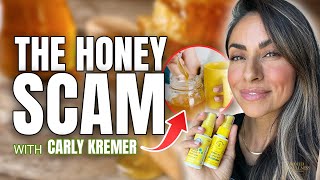
In this YouTube interview, host Mona Sharma talks with Carly Kramer, founder of Beekeepers Naturals, about the misconceptions surrounding "superfoods" and the real value of bee‑derived products. They explore how pesticides harm bees and, consequently, our food supply, emphasizing the need for transparency about product sources and quality. Carly explains the health benefits of propolis, bee pollen, and honey, and shares how her company formulates stress‑support supplements with ashwagandha to manage cortisol spikes. She highlights liposomal delivery technology as a breakthrough for nutrient bioavailability, ensuring capsules reach the body effectively. The conversation shifts to the critical role bees play—pollinating roughly one‑third of the world’s food—and offers concrete actions listeners can take: reduce pesticide use, plant bee‑friendly, brightly colored heirloom plants, support biodynamic and pesticide‑free growers, and vote with their dollars. Carly also mentions educational outreach, including a children’s book and online resources, and provides her social‑media handles for audience engagement. The interview underscores the interconnectedness of bee health, sustainable agriculture, and consumer choices in preserving natural, unprocessed foods.
Questions this video answers
Founded in 2017 (left finance in 2016 to start the brand).
Four sprays per day (daily maintenance).
One teaspoon = 745 mg royal jelly, 532 mg pollen, 43 mg propolis (in a pesticide‑tested raw honey base).
Almost all pollen that year was sourced from northern Spain (remote/wildflower apiaries).
Third‑party testing for every pesticide, toxin and pollutant in accordance with Health Canada.
Chapters
It's been really interesting to see just how damaging pesticides are for the bees. The most common class of pesticide in the U.S. it's called neonicotinoids. It's a neuroactive substance and so it affects the bees facial reasoning, it affects their brains, and it affects their long term health. And we don't really know what neonicotinoids are going to do to our bodies in the long term, being what they do to bees. Knowing it's a neuroactive substance, it makes me feel really strongly that we should try to avoid them at all costs.
I think it's also one of the easiest things that people can do, like just taking a stand for your health by understanding your food comes from where anything that you consume, just know where it comes from, know the people behind it, know what it, it's exposed to, because that's exactly what you're digesting. Today's a really exciting episode. I finally have one of my dear friends, the amazing Carly Kramer, founder of Beekeepers Naturals, one of the brands that I've loved from the very beginning. And you know what? I've never told you, it took me years to say yes to doing a podcast, but when I said yes, you literally were one of the first names that came to mind because of your vision and your intention. And I just thought, if there's a tribe of women running beside me who really want to shed light on ancient rituals and like the power of ingredients that come from the earth, it's you. So thank you so much for coming.
Thank you so much. That's such an honor. I'm so happy to be here. I'm so happy to be seeing you. So this is very exciting. I love chatting with you and getting to be on your podcast. It's just amazing.
Amazing. Well, let's dive in. So this podcast is really all about ancient wisdom in our modern world and how we can become more rooted. So not only rooted in your health, but rooted in a sense of yourself and your well being and yourself, even as a woman, to heal. So let's start off the episode and I'd love to know what are three things that help you feel really rooted in your life and who you are?
Yeah, so the first one, this is obviously shifted as I've become a mom, is spending time with my family. So, you know, there are, there are some days where I'm just really, really busy and it's kind of getting like 10 minutes and evening routine and these, these little bite sized moments where I can. And then there are days where I'm off traveling, but whenever possible, I try to get just some quality. So super present time with my little one, that's super grounding for me. And it's. It's like watching her discover the world is the most amazing thing. So that's my first one. Another one is nourishment. I mean, clean, beautiful food. I pay a lot of attention to where my food's coming from and from a sustainability standpoint as well as from a nutrition standpoint. And it makes me so happy when I can, you know, incorporate nourishing things into my routine and a lot of, like, ancestral eating style things. And that's in line with bee products, which I'm all about. And then movement, and specifically movement outdoors. Just like a walk outside, seeing trees. Those. Those are all things that just really anchor me.
They're so good. I think that they're so important for women to just hear on over and over and over and over again. Because I think a lot of people think of mindfulness and grounding as stopping and doing nothing. But you can actually bring mindfulness into every activity that you have throughout the day. And don't you find that kids, like, there's no choice but to become present? Like, you're instantly out of your head in your body experiencing life with them, like, they have awe and wonder. So that was one of the greatest gifts for me about being a mama. All right. You're also a very busy mom. You do a lot of things. Running a company is no joke. You're on the road, you're in demand. My gosh, you've been on so many platforms and people celebrating your accolades and the growth with beekeepers naturals. So we'll dive, we'll talk all about that. But, you know, people have these habits that they don't even realize are uprooting them. And I think, you know, as a wellness practitioner, I have a lot of my clients who are treating these things as a checklist. You're not even dropping into the aspect of the fact that they could be supporting you. It's like meditation, check. Walk, check. Grounding, check. So do you have any specific things that you feel really uproot you? Because I have a feeling now, especially you at this stage that you're in as a new mom. You probably notice when you're uprooted really, really quickly because you have a little baby depending on you.
Totally. And I really fall into the checklist trap. I do it all the time. It's really, really hard to. It's easy to do these things. It's hard to do them with the level of presence that is nourishing to you, to your soul, your spirit, everything. So, yeah, I find it. I find it really tricky to actually get there and balance, but I just kind of keep at it. But the things that uproot me one is social media. I really try not to, but every so often I'll get into like a doom scroll. And it will start with, you know, checking stuff for work, and then it will evolve. And, um, sometimes it's like I totally catch myself just when I'm depleted, and I've been working really long hours, numbing out, doing that, and it just doesn't help anyone. So that's a big one. Another one. And this is one that's really, really tough for me. I am on calls a lot, and I don't know sometimes what's better. Is it better being on a call and being around my kid or just completely not being with her when I'm on that call and can't be totally present with her? But it really. It really makes me sad when I've had a day where there's like a lot of time where I'm on a call, but I'm kind of holding her with her. Like, I'm not giving all of myself to her, which is inevitable and, you know, part of being a working mom. But too much of that can feel really hard. And so if. If I do some of that, I have to kind of balance it with, like, pure present, like one on one time with her. Um, and then another thing is just overloading my calendar. I feel like women are such amazing multitaskers, which is beautiful, but we tend to just do everything. And I feel like, at least for me, it's like, I'm good, I'm good, I'm good, I'm good. And then, whoa, I'm overwhelmed and depleted, and so I have to kind of manage that.
Yeah, I love that you point that out, because so many people, I think, especially in the professions that we have, they think that we have it figured out. They think that we've had it sorted, that these things come really, really easy to us and they don't. And I love that you brought up the fact around, like, is it better to do the call with my kid in the room or not? One of my least favorite terms is mompreneur. It's this idea that we can be a mom. And yeah, it's amazing that women have this capacity to multitask and do a lot of things at the exact same times. But it's to a fault because something is getting compromised or sacrificed. Right. And I don't want that thing to be at the price of my children. Like that is one and only thing. So, yeah, I do not wear the word mompreneur with the badge of honor, unfortunately.
Yeah, Yeah. I think I. I really. This really resonates with me, this whole idea that you can have it all, but not all at once. And I try to kind of stick with that on a day to day because obviously I am trying to run a business and be a mom at the same time, but, you know, I'll. I'll have my days where maybe I'm less productive at work and I'm more mom. And then I'll have my days where I know my baby is well cared for and everything is set and I need to just be really focused on my work. And so I try to just remember everything's a trade off. And ultimately, as long as I'm getting the amount of quality time, which is a lot for me that I feel comfortable with with my daughter, then, you know, we can, we can keep the train running.
I love that. Yeah. And I think that this is the magic of being a woman that we're finally waking up to is we can actually be so much more productive in smaller increments of. And it will feel good if we set the right boundaries on it. Right. So I love that. Okay. So diving in. You know, I think that your personal story is everything. So I don't say yes to a lot of companies. Beekeepers has been on my radar for years. I'm convinced that I saw you in Toronto at a Whole Foods, like doing a training.
I'm sure you did, because the amount of like standing at a booth in Whole Foods in. True. That's how I did. I was statistically probable that you saw me there.
Yeah. So it was like inching over to try to listen to the conversation and I was like, oh my God, this is insane. So I've been a beekeepers fan forever and sharing them, you know, with my family and my kids. And then obviously now sitting on your medical advisory board, which is like such. It's not like a cool thing for me. It's like the thing for me, like to showcase how there's a brand, a company and a person who are really making ancient rituals cool and doing such a massive part to save the planet. Your story is so important. I don't think that what happened to you was just coincidence. I really think that you've had this path kind of destined. So can you share a little bit about your discovery of bees and what light led you down this path?
Yeah, absolutely. I mean, it's something that's so important about this brand is that it came to light from such an organic place. It very much wasn't a story of I saw an opportunity in the market and tried to fill a hole. Was really me healing myself and then years later, continuing on that journey and wanting to share it. So to bring you back to the beginning, I. I have an autoimmune condition. I can't take antibiotics. And that's totally fine as long as you don't get something viral where you need antibiotics. And for me, I had a really weak immune system, and I had chronic tonsilitis, and I would have such severe tonsillitis that it was very hard for me to breathe. And I saw every specialist, and really there was no resolution. I couldn't get my tonsils removed. A tonsillectomy, which is like a standard procedure because I can't take antibiotics. So the risk of infection was like a whole different ball game. And so I was. It was just really frustrating because I saw specialist after specialists, and all the conventional medicine wasn't safe for me. And I started exploring the world of natural, and I found a lot of incredible tools. But ultimately, when it came to dealing with something chronic and something viral, nothing was powerful enough. And it just kind of put me in this place of like, okay, the natural stuff doesn't work well enough. The chemical stuff has all these side effects.
What.
Where do I go from here? And I was kind of operating from that place of frustration for a while. And then when I was in college, I did a semester abroad, and I got really, really sick while I was in Italy. And a pharmacist in Italy introduced me to be propolis. I had never heard of propolis before. Like many of us, I was only familiar with honey. But she told me all about this. We went through all of the allergen lists, and, you know, I. I purchased this product from her. And then I went home and I went on pubmed and I read. I went down the rabbit hole. I read every single study on propolis. And I was like, oh, my goodness, how have I never heard of this before? Like, why do we all know about honey? But propolis, which is this, like, integral part of the medical system across Europe and many other cultures, I've never even heard of. So after reading all the studies, reading about how powerful this product is, how it has over 300 beneficial compounds, antiviral Antifungal, antimicrobial. Most importantly for me, it's an immunomodulatory agent. So it actually works the same way. Adaptogens will work with your body, bee products and propolis specifically will actually work with your immune system to balance your body, which was critical for me and what I was dealing with. And I started using it and in five days I made a full recovery. So basically for me, propolis functioned the way antibiotics would for like a regular person. And then after that, I just became really obsessed with the more medicinal grade bee products, things like propolis and royal jelly and bee pollen. And I started beekeeping and I learned all about the critical role that bees play in our environment and just how amazing they are as creatures. And it just became my passion. And I never thought I could make a career out of it. So this was just kind of my passion. I was making these products for myself. Graduated college, I went into finance so I could have like a good on paper job and pay off my student debt. And a couple years into that I was still, you know, beekeeping on weekends. And even though I was working in Manhattan, I was like volunteering at rooftop apiaries and urban apiaries. And I kind of realized like, oh, people around me are getting sicker and sicker and I don't think that our current pharmaceutical methods are doing the trick or working for the majority of the population or, or maybe they work, but not without a bunch of trade offs and side effects. And this has changed my life and it needs to exist. So I quit my job, this is back in 2016, and I started Beekeepers in 2017. And it literally started with me standing at farmers markets and doing, you know, when, when I did get into retail, being there on the floor for a long time, it was like very, very grassroots and kind of a one woman show for a while. And it's a brand that really grew organically because like me, there were so many people looking for natural alternatives that were truly efficacious and science based. And so it's kind of, that's how it's. That's where it evolved from.
Yeah, there wasn't like a business plan, oh, bees, let's go start a company. And this is gonna turn it.
And everyone thought I was like crazy and destroying my life because. Because it doesn't make sense to people. They're like, what, you're starting a medicine company using B products but you work in finance in New York? What is this?
Yeah, we're choosing that route. Yeah, I can imagine though, for You. So it's so interesting because I had tonsillitis every single year growing up from God, the age of 2 until 13, until my mom found a functional medicine doctor who told me about honey and we started incorporating more holistic practices. And like, I really didn't look back. You must have been living and just like, what a. What a game changer for you. You would have just been so kind of like, amazed at how your body could heal itself in the wild.
I was sick all the time. I mean, the amount of ailments I have now. I always say I'm the best person to have this company because I have so many random allergies and issues and sensitivities. So I'm the best guinea pig for this brand because if I don't react and if I have a positive reaction to a product, we know it's like, pretty good. And I'm just allergic to every fil. Everybody, you know, all of those things. But I mean, I've. I've healed so much from psoriasis to chronic gut health issues. I've completely changed my immune system. My immune system is in a very, very different place. Even things like chronic leaky gut and Candida. So I've been able to use medicine from the beehive to support me in all these different areas. And it's so interesting because more and more science is really taking the western, I should say the western world, and Western science is really taking inventory on how these bee products can impact our health. We just saw this huge study looking at menopause and the effects of royal jelly. We're seeing more in the fertility space around royal jelly. So much more in the inflammation and oxidative stress management space around propolis. So it's really exciting.
Incredible. Like, I went on, you know, yesterday and today I was looking for just different papers, different research studies. There are thousands upon thousands upon thousands of studies now which are studying different parts of honey and healing. So this literally is something that's being considered as a scientific ingredient that could be beneficial to health. So I know you know the answer to this, but when we call something an ancient ingredient, can you give us a bit of the timeline or history? Like, it is so powerful. Like, the story behind honey is so huge.
It's really amazing. So first of all, bees have been around since prehistoric times. So these creatures are survivors. They understand how to work with. They've been around since the dinosaurs. Like, they understand how to work with changing environments and utilize the different products. And by the way, when you think of bee Products like propolis, for example. I feel like a lot of people don't actually know what that is. So maybe I should take a step back and just tell everyone. Okay, so propolis and honey are two totally different things. A lot of people think that honey is like the single thing the bees make and there's all different derivatives, but it's not the case at all. So propolis, it comes from plant and tree resin. So think of SAP as the base ingredient. The bees are literally collecting the immuno properties of the plants themselves. And these plants have been around for billions of years. So it's collecting the immuno properties of the plant itself, mixing it with their enzymes, and then they make propolis, which has over 300 beneficial compounds. It's antiviral, antifungal, antimicrobial, antibacterial. So high in antioxidants. And they use it to line the hive and keep it germ free. So that's what propolis is very different than honey. But honey has its own amazing set of benefits. But yeah, the bees have been around since prehistoric times. So people have been using propolis and honey and royal jelly in a healing capacity for thousands of years. Socrates spoke about propolis. Propolis was used in, in ancient Egypt. We've actually found honey and propolis in ancient Egyptian tombs which is still totally nutritionally intact. During the Boer War, people would use propolis to dress wounds because of its antibacterial, antifungal, antimicrobial activity. Today in Poland, in the hospital system, propolis is used in an antibacterial, anti inflammatory capacity. So it's so interesting because these different bee products, I mean in traditional Chinese medicine as well, we've talked about this. Royal jelly has been used for fertility for men and women and for general hormone balancing forever. We have this really long history with all of these different products that come from the beehive. But it's interesting that in the western world we have like such a limited awareness of how to use them or even what they are.
Yeah. When we go to the grocery store, when you see the squeezy bottles of honey, like those aren't nutrient rich. That's not what we're talking about right now. So tell us a little bit about the differences between wild honey. But I have to say more specifically with beekeeper's honey. So true confession. Yeah. Our office, by the way, is beekeeper's natural central.
I love it. I love it.
Come in. What do you need? A cup of tea? Do you need some propolis?
Amazing.
So here's a confession. Growing up as a kid, I did not like honey. My mom would give me something like maple syrup instead. And then I remember when I got my first bottle of your be powered superfood honey, the older formulation was crystallized and I was like, what is this? That tastes like candy. And even now, till this day, I find it's the only thing that, like, if I don't go for a dessert or something, I literally will just have a teaspoon of honey in my mouth. And my daughter's favorite dessert, guess what it is.
Honey.
Maybe specifically how she asked for it. Honey on a spoon.
Can I have honey on spoon? So healthy. I love that she's asking for that.
Yeah. And your honey, obviously. So break it down for us, because I want people to know that when they go into the grocery store, it's not about just getting honey. It's not about just getting wild honey. And literally, you know, in the same way that I teach people how to shop for their food, quality matters. Where your food comes from matters. Whether it's organic matters. There's so many things to consider about what you're consuming with honey.
Yes. So all honey is not created equal. A big thing to look for. So first, so when you go to the grocery store and you get that squeezy honey, it's typically been pasteurized, which means it's heated for a very long time at such a high heat point that it kills a lot of the enzymes and nutrients. And the increase incredible compounds of honey that make it so healthy, those get killed off in the heat. The trade off is that it stays squeezy. It doesn't crystallize. All honey will crystallize. The time for it to crystallize, the crystallization period differs depending on the floral sources. So honey from certain flowers will stay liquidy longer, but all natural raw wild honey will crystallize at some point. And that's totally fine. You can, you can melt it. You know, you don't have to worry about putting honey in your tea or baking with it, because to pasteurize honey, it has to literally be boiled to the point where it's bubbling for a long period of time. So you're not going to. You don't have to worry about that to kill off the nutrition, but you do really want to look for a raw, unpasteurized honey. That's really important. And then another thing that people don't consider, and I feel like this is a little bit of a misnomer, I think oftentimes People are looking for local honey. Yeah. And where that came from was local honey. Hypothetically, you're microdosing with the local allergen. So if you have allergies and you're getting something local, you're getting these small doses of the plant that is causing you that inflammatory response and helping to sort of normalize your body's response to it. In theory, that's great, but it's not the reality for the world we live in. In the olden days where a local farm had an abundance of wild crops and different things growing then, yes, you were exposing yourself to the local flora and fauna and all of those things. Today we have monocropping. We, we don't. We have dedicated blueberry growers and dedicated almond growers and avocado growers. We don't really have farms that have an abundance of wild plant life, which means you're not necessarily microdosing with the allergen. And the other issue with that is when it's all one crop type, it's very vulnerable to pests, which means more pesticides are used.
Right.
So unfortunately, modern agricultural practices create a situation where local often means heavy in pesticides, monocropped, and not necessarily the safest for your system. So at Beekeepers Naturals, one thing we're really passionate about, as you know, is pesticide free beekeeping. Really passionate about that for two reasons. One, to have impact with this crucial creature that plays such a role in our ecosystem. And two, to make sure we have a product quality that's truly clean. We're ingesting trace amounts of pesticides all the time from our water, from our fruits and vegetables. When it comes to bee products, they are literally pollen and SAP and nectar from the plants themselves. If these plants have been dosed with pesticides, I don't want that in my end product. We're actually the only bee product company that practices third party pesticide testing. And a lot of the, almost all of the beekeeping we do is international. So we're working in geographies. We're doing, I mean, this year almost all of our pollen was from northern Spain. We're doing a lot of work in Europe, we do a lot of work in South America. We basically are not working in the US for bee products specifically because of the pesticides pesticide issue here. So we're working in places where they either have better regulation like Europe, or we can get an apiary that's the middle of nowhere. Because we want to have wildflower apiaries, we want to have an abundance of different plant types that our bees can pollinate and no pesticides. And that's why also I sometimes see organic honey and organic honey is like not a thing. Yeah, because you can't, you can't actually consider it organic honey because unlike blueberries, the bees move. Yeah, they'll fly, they'll forage for a five mile radius. So unless you have five miles of clean ground surrounding you on all ends, and in the United States that is near impossible to get just with spraying ditches and blow over and all of that, you can't really call it organic. So I don't believe in organic bee products. I really believe in pesticide free bee products. Especially if you're autoimmune or have a sensitive system, make sure that the bee products you're using are pesticide free. That, you know, some companies like ours will test for third party pesticides. It's really, really important. We test for every pesticide, toxin and pollutant in accordance with Health Canada. We practice regenerative beekeeping. So all of our bees are kept in very healthy, beautiful environments. If one of the apiaries we're working with, an apiary, is a bee farm for anyone who is new to that word. But for any of the apiaries we're working with, if they do practice monocropping, they have to show us they're doing 30% margin planting. So they have to be planting wildflowers in the perimeter. So the bees have a varied diet. And we're just really making sure that our bees are in a happy, healthy habitat. And it's, it's been really amazing because over the years, contrary to population trends, our bees that we work with at beekeepers, their population has actually grown and expanded and they're thriving. And so it's so cool to see when you take pesticides out of the equation and create an environment that is healthy and wild and free, you can create a much better end product, but also a habitat that allows this precious creature to thrive and succeed. So not all honey is created equally. It's really, really important just to. I know I said a lot there just to recap. Raw, unpasteurized, unfiltered. If it crystallizes and gets hard, that doesn't mean it's gone bad. Honey will never go bad. It's actually the only food on the planet that doesn't expire, which is a testament to its enzymes. But yeah. So don't worry about crystallization and then look for pesticide tested, third party pesticide tested much more than organic and local Nice, but certainly not critical.
Such a great recap. Listening to you feels like you're able to tell this love story about bees. And something you said specifically was when you have an environment where you can kind of control the variety and diversity that these bees have access to, you're seeing them thrive. And I just want to call this out. Like, I think that nature teaches us everything that we need to heal. Like, I think nature also provides us with everything that we need and with everything that we're learning around the gut microbiome, around variety and diversity being so essential and key to our immune health. Then you have bees mirroring this and having their population thrive when you do this for them, like, I think it's such an important lesson. So it's like stuff like that that gives me goosebumps when I hear you talking like they're telling us. The answer is right there in front of us.
These are a total mirror. Also, it's been really interesting to see just how damaging pesticides are for the bees. The most common class of pesticide in the U.S. it's called neonicotinoids. It's used across abundantly all over. Yeah, all over our country. Most common class used. It's a neuroactive substance and so it affects the bees facial reasoning, it affects their brains and it affects their, their long term health. And we don't really know what neonicot neonicotinoids are going to do to our bodies in the long term. But you know, seeing what they do to bees, knowing it's a neuroactive substance, it makes me feel really strongly that we should try to avoid them at all costs. So, you know, shopping biodynamic when possible, farmer's markets where you can actually have the conversation. I know that's not feasible for so many people, but something to really be aware of to the extent that people can.
But I think it's also one of the easiest things that people can do like just taking a stand for your health by understanding where what, where your food comes from, where anything that you consume. Just know where it comes from, know the people behind it, know what it's exposed to, because that's exactly what you're digesting, right.
And you can demand that from companies. I, I mean we're really, we're. One of our core tenets is transparency. But even though it's all over our website, we have customers email all the time asking for more information. We're so happy to share it. And I think just people being kind of their own detectives, given all the shortcuts that corporations have been taking over the years.
A couple years ago, I had a client that sent an email just asking why, why don't I see organic on beekeepers on the front? Why can't you say that it's organic? And she emailed me back. She said I got the most beautiful, succinct, detailed answer. And she's never been more proud to use a brand. So I wanted to point that out because hearing a founder story like yours, it's a big deal. Like I hope you acknowledge how big of a deal it is to stay true to your word. Really decide that in this world of insane CPG and product focus, where the financial dollars are the priority, staying true to the efficacy of our product and the impact that it's going to make on a human being is so key. So like, please just take that in and own that for a second because it's.
Yeah, we. I mean we're so passionate about what we do both when it comes to sharing these products that I think can just help so many people with so many different ailments. And I just believe everyone should be taking. I think everyone should be taking propolis. It's. There's so much science behind it that there's just no doubt in my mind. But then getting to do something where we get to work with a creature like the bees and work with such incredible farmers and environmentalists, it's. It's a really. It's. It's really a gift that I get to do this. So I feel very grateful.
Amazing. Yeah. So perfect segue. You mentioned propolis. So I want to dive into this. My kids. I've shared endless videos of my kids using the propolis spray first thing in the morning. It's our routine. So it's right at our front door. So each kid gets a spray as they walk out the door every day. There you go.
I spray like a million times a day. Especially with the fires right now. Oh my gosh.
Oh my God. I know. Yeah, my kids too. These little coughs that are happening. So my kids love it. And do I notice the impact on my kids immune system? Yes. If they do get sick, I feel like it passes really, really quickly. And also when they do get sick, sick, which is rare, it's a mini celebration for the fact that their immune systems are working like we just. Our frame of mind around us is just so different. And they're aware of the power of bees. So can you please break down, you know, propolis? How does it support our immune system but also how does it support our gut health?
Yeah. So propolis is very well known for immune health, but it does so much more than that when it comes to gut health. It is a prebiotic. It's a really effective prebiotic. Again, think about the base ingredient to propolis. It's the plant and tree presence, the immuno properties of the plant itself mixed with the bees enzymes. Bees enzymes are unbelievable for overall digestion. I mean, just the fact that bee products don't expire, it just, it gives you a little insight into the power of their enzymes. But propolis has prebiotic effects. And then there's a lot of studies looking at leaky gut. Leaky gut is so common. I know that you see that across your practice. And yeah, it's a real challenge. And propolis is very effective for healing and restoring the gut lining. So it actually helps to strengthen the. To strengthen the tinctures in the digestive wall, helps to strengthen the small intestine. It helps to rebuild these areas that can be eroded by poor diet or stress or environmental toxins. So really effective for that. And then propolis has over 300 beneficial compounds in it. It contains quercetin, apigenin, pinobanskin, chrisan. All of these different compounds that meaningfully fight inflammation, act as immunomodulatory agents, have all of these amazing effects. And one of the compounds it contains is caffeic acid, which has really amazing effects for our brain. We're just learning about this. For so long, caffeic acid was all about gut health, but we're learning that it has positive impact for slowing neurological aging, which is very cool. But for a long time, caffeic acid has been looked at for fighting fungal issues in the gut and inflammatory issues in the gut. So things like candida. So propolis can be so effective for any sort of inflammatory gut conditions. It has that prebiotic effect. And then some of the immunomodulatory agents are just really great for stabilizing as well. And then the last thing I want to say about propolis, and one of the reasons I'm like spraying everyone extra, extra with the whole situation we're in right now, living in la, is that propolis helps to. Helps your body to fight post oxidative stress. Post oxidative stress affects so many of us. It affects women in a big way. And introducing something that can kind of act as a bodyguard for your system, can kind of protect your system from the wear and tear of daily life is so important. So it's something that it doesn't Just help you protect against viruses and bacteria and protect you from getting sick or help you recover more. It's something you can take to protect your body from again, the. The daily wear and tear of just our modern world.
So I'll share how I take it, but how are you, you know, based on years of doing this, how are you prescribing, taking it daily?
I think everyone should be taking propolis every day. Yeah, four sprays every single day. My. My baby, I just started giving her propolis now, actually she's just about to be one. And so we like to say, you know, wait to let the immune system stabilize. But I think it's so important for everybody to be getting propolis into their system. It's. And it's so interesting because again, going back to kind of ancient wisdom, propolis has been used across the Assyrians used to drink propolis to reduce fever. It's been used in South America, explored for its effects on tumors. There's so many different applications and in so many different cultures.
People.
It's a part of the daily routine for, you know, many of the people who live in the blue zones in the world. So it's something that everyone really should be using every day just to protect and support.
When my mom, she had surgery, I sent propolis to the hospital with her for her immune system. And I did this because when I had my son, I had an emergency C section, unfortunately with him. But I was working with an ayurvedic practitioner there, and she had me on propolis too. Just pure propolis for healing my body. I think it's so powerful. Okay, so we talked about propolis, then let's shift to bee pollen. So bee pollen, I think, is this superfood. You and I have had conversations before calling it nature's multivitamin, which, my gosh, with all of the enzymes that it has, the polyphenols that it has. Share a little bit more about that. Yeah.
So bee pollen, it really is nature's multivitamin. It's got broad spectrum vitamins and minerals, everything from vitamin K to vitamin C. It's really high in B vitamins. So it's fantastic to help support energy levels if you're a busy person and don't want to overdo it on the caffeine. It also is a great source for minerals and branch chain amino acids. There's actually studies and that show that bee pollen improves your endurance. So bee pollen is something that I like to use kind of as an active lifestyle. Multivitamin. IT Inc. It Increases that blood hemoglobin value. So it helps to oxygenate the tissue. So it's something that you can take to help to bring oxygen to the rest of your body. And that's why it helps to increase endurance, helps with skin health for that reason. And it's also something that has hormone balancing effects. So it's a great tool to incorporate into your day to day. I sprinkle it on my smoothie. I'll, like, I'll spoon it or I'll. I'll sp. I'll use it the way I would use, you know, chia seeds or hemp seeds or something like that. But it's something where you only need a tiny amount, especially the beekeepers one, because ours is raw. It's very, very potent. The enzymes are intact. We're working with wildflower apiaries. Most of our pollen right now is coming from our apiaries in Europe. So really, really beautiful parts of Spain that are super remote. I actually need to go out there pretty soon, so I'm excited about that. But pollen is really one of the most nourishing foods. When I was pregnant, I was just. I felt like my body was craving pollen because it's so nutritionally dense, so bioavailable. It's kind of like a power shot of all these nutrients.
I remember one of the first times that we met. You showed me, by the way. I love that they come in individual packs to go.
Packs.
Yeah. So I take one of these every single day, my kids in the morning, like you said. Like, chia seeds either goes in their smoothie or their yogurts, which they absolutely love. It gives a texture, too. And they're pretty sweet, which I think is like. Yeah, it's a nice touch. When they're asking for something, something sweeter.
I like to use them as, like, sprinkles. Like, I'll put it on if I'm making some kind of dessert or crumble something like that. I'll sprinkle pollen on top as well.
I love it. How much bee pollen should we be taking, though? To reap the benefits, all you need is a teaspoon.
I sometimes see people like half their smoothie bowls covered in pea pollen. And for a lot of bee pollens on the market, when they're dried or treated, maybe they degrade some of the vitamins and minerals or they lose some of the enzymes. But for ours, because it is raw, you really only need a teaspoon. A tiny. A little bit goes a long way.
Okay. So when I saw you, we had a Jar and we poured it into our hand. We literally took it like this little shot. And no joke, like pure energy, like, skip the coffee. You don't need the coffee. This absolutely gives you energy. And so when you switch to these individual packs, I knew that there was strategy around it, so that's why I was curious. So we could take. We took these on the airplane with us over the holidays. Perfect.
I. I always do that. I have one in my purse all the time now. And like, later in the afternoon, I just throw one back. And yeah, it's a great energy shot, but I love it because it's not just an energy shot. It's so nourishing. It's something that when you're feeling depleted, you can really support all aspects of health.
I work with a lot of people, too. We're living in a world where not even we think about supplements. Right? Supplements back in the day, they used to be a lot harder to get. There was a lot more education that gave from a practitioner who was prescribing something for you. Now because of social media and the way that things are, like, supplements is the wild west right now.
Totally. Yeah.
I have a lot of clients who are just like, you know what? I just want to use food like my, my grandmother, my grandfather did. They don't want to take a lot of supplements. Or then it's the shift that looks to what comes from nature. Right. So using things like, you know, they're open to spirulina, for example, or chlorella or bee pollen or honey, or these just chapana. Prage is another one from Ayurvedic Foundation. But yeah, using and sourcing, if you're somebody who wants to even take a break from a supplement protocol, literally, just start incorporating more pollen into your diet, more bee pollen into your diet, and you'll notice, like, subtle changes. It takes time to build into your system, but you'll definitely going to notice more energy. That's exactly what I noticed. And then just start to be. Tune into your immune system and just settle just in your immune system and how you're feeling.
Yeah, I think, I think it's a. It's a really dangerous world today with the supplements, because you're right, it's totally unregulated. There's a lot of marketing that goes into it, and I see a lot of people that are just taking endless supplements and you don't need that much. And then you also want to really understand the supplements you're taking. There's often fillers and binding agents and so if you look at the products from beekeepers naturals, we do a very short ingredient list, high dose ingredients and they're all, you know, natural food based. Like even our cough syrup. Our cough syrup is wildflower honey and buckwheat honey. A big thing that I've been talking about lately. On our cough syrup it says proprietary honey blend. And then we go on to say what's in the blend. I think that's very, very important. When companies say proprietary blend, they have to say what's in it. So our proprietary blend is just mixing wildflower honey with buckwheat honey, which are two different plant varietals. But we've anyways, we've got those two honeys. We've got propolis, chaga mushroom, elderberry, olive leaf extract, grapefruits, grapefruit seed extract. So we're using food grade ingredients that have been validated by science, that have been properly studied. And I think that's a really important way to go. And I always tell people I kind of have two modes when it comes to multivitamins. I'm either taking a prenatal and bee pollen, which means I'm pregnant or trying to be, or I'm taking bee pollen. That's my whole thing with multivitamins.
Oh my God. So good. Can we hover on the cough syrup for a second? So just to point out, so for people listening, we're recording this in January. It's right after the LA fires. Lots of coughs, lots of concern over respiratory issues right now, Lots of kids with sniffly noses and coughs going around. We did some education on this for beekeepers and, and just the power of making educated choices. When you're going into a CVS or a drugstore and you might be buying something that you were brought up on that contains harmful ingredients like propylene glycol and chemical dyes. And you know, so many things that are necessary.
It's, it's so crazy. And things that don't even have the effect that you think they do. I mean, the FDA just came out and, and saying they're going to walk back the use of phenylephrine and cough syrups, which has been the active ingredient for so many years. And after so many years of buying these, or most people buying these phenylephrine based cough syrups, they're saying, hey, these don't even work. And by the way, they have food dyes and maltodextrin and artificial this and that. So it's like, why would you take that ever, let alone when your system is compromised and you're, you're a little bit sick or dealing with something. So it's really important for people to look at the ingredients and do the research there. And it's something we're so passionate about, is just simple ingredients, food based ingredients, high impact ingredients, and short ingredient lists.
And it tastes really good. Like, my daughter and my son will easily take it, no problem. But like, the marketing industry did a really good number on us in terms of what we thought we had to take when we were sick. When we're at our worst. Why would we want to be taking in chemicals and dyes and high amounts of sugar when our body needs to heal? Like, it just, it makes no sense.
So the, the catalyst for me making a cough syrup, actually there was this huge study that came out and it was looking at upper pediatric respiratory infections, so children with respiratory infections. And it was comparing dextromethorphan, which is one of the active, the active ingredients in most cough syrup. It's, it's like phenylephrine or dextromethorphan or some combo of the two. So it was looking at dextromethorphan versus buckwheat honey. It found that buckwheat honey was across the board, just as effective.
Wow.
So we know that buckwheat honey is just as effective as something like dextromethorphan. Why wouldn't we choose that over dextro, which is chemical based and has all of these other things versus honey that has a calming effect on your nervous system and is full of antioxidants and has antiviral properties and, you know, all of these different beautiful positive side effects.
Absolutely. Oh my gosh. So true.
So read labels.
You might have to go through some, you know, deconditioning of what you think is good or what you think your, your child needs in those Tylenol, Advil, God knows what other bottles?
Well, we've kind of been taught by Big food and Big Pharma that we need to purchase these highly processed ingredients in order to feel a certain way or get the job done. And the reality is nature can do it very effectively, but nature can't be patented.
Absolutely.
So there's, there's just like kind of different incentives there. But it's, it is, I mean, more and more we're seeing these studies that are showing us that these things coming from the earth are much more effective, much safer, and you know, have positive side effects versus could potentially cause issues down the line.
Yeah. A hundred percent. And look, there's a time and a place for things like Tylenol and Advil, but it's more specifically all of the other syrups that are more marketed to kids and vitamins that are marketed to.
Kids and colorful, you know, these candies. I'm so happy that that Red Dye 3 was just banned, but I mean, that should have been banned back in like 1991. I mean, it was, it was banned in cosmetics, but they left it in food. It makes no sense. And so finally, consumers, consumer groups are the reason that this got banned. And I've been advocating against food dyes for years. And at Beekeepers, naturals are lollipop. We use fruit and vegetable juices and we use like, you know, we're making, I can't say the flavor, but we're coming out with a new flavor and we're using spirulina to make it blue and doing things like that. And there are ways to do it. So I just. It's so easy for some of these companies to cut corners and it's really important that consumers just demand the best from the people making their products.
You got it. Yeah. Which is why, like your story is everything because these brands become for profit companies at our expense. And I think there's just a lot of trust. You know, we saw our parents using a product or we go into a drugstore, we get it from a pharmacist, there's trust that they have our best interest in mind. And you know, the best thing about this red dye coming out of food is that we just have to understand there's so many more ingredients that we need to take on now. So reading your labels is, is everything. It's so.
I mean, look at, look at Flonase. All that's come out about how that affects our brain health. And so that's why, you know, making a nasal spray at Beekeepers was something I was so excited about. One, because propolis has a balancing effect on the nasal microbiome and limits the histamine response and is anti inflammatory and all of that. But just be all additionally, because what is on the market for people and being sold to people is seriously damaging. And in many cases, nasal sprays are habit forming, they contain steroids. So giving people something natural that's really effective is just, it's really cool to be able to solve that problem and work with things like propolis and royal jelly that have so many benefits and can be used in so many different ways.
I love that you brought up the nasal spray. That's another ritual of mine before bed. So in Ayurveda, we address your nasal cavity in the same way that we address digestion. It's a pillar part of health. It's part of your immune system, preventing illness, how you nourish it, how you hydrate it. And there's something really different about the beekeepers nasal spray, which isn't, it's not dehydrating, it's nourishing, and it even feels healing. Right. So, yeah, I love that you brought that up. Let's go to the other hero ingredient. And I have to say I'm obsessed right now with royal jelly. Royal jelly is like the one ingredient right now that I think is so much more superfood. I was doing some deep diving on royal jelly for perimenopause and menopause and also how it's a key ingredient for supporting our brain health. I can roll it up right now. So before every podcast, I take one of please, right next to me.
Brain health. I do too.
Like, no joke.
Everything is.
Yeah, I have to hold it up for everyone because like I, I preach and I get excited about brands and products that I feel work, which is why I share them. Right. So talk to me a little bit about royal jelly and this other amazing ancient nutrients.
I love royal jelly so much. So first of all, royal jelly was a big part of my pregnancy. My husband and I both, both took royal jelly. We took our superfood honey, which it's the, it's the, the honey you just held up and it has, it's, it's a medicinal grade honey. So it contains raw honey, propolis pollen, but in medicinal grade dosage. So 1 teaspoon, you're getting 745 milligrams of royal jelly, 532 milligrams of pollen, 43 milligrams of propolis. And then it's in a pesticide tested, sustainably sourced raw honey base. So super clean, super simple. So I was taking that every day and then I was taking the brain health formula every day. This I was really taking for work. But it gives you an amazing dose of royal jelly. And then there's just some other great adaptogens in there. And when I started really heavily dosing the royal jelly, that is when I got pregnant. And obviously there's a lot of variables there, but that's just my, my personal experience. But I read this really interesting study looking at follicular growth in royal jelly. And it was a study done in rats and the rats who consumed Royal Jelly had increased follicular growth and healthier ovarian reserves. So it's just really cool to see that. And then there's also a study done on male fertility, male sperm, and it found that men taking royal jelly, it increased the sperm health across so many parameters, from DNA to maturation, it just basically across all parameters. So royal jelly, I think, is a very important food for male and female hormonal balance.
We have to amplify that. Just sort of. We have to amplify this. You and I know so many men and women who are impacted by fertility issues. And, like, the stats are showing these numbers are dropping drastically. It's not just women, it's men also. So royal jelly.
No, it's. So my doctor, Dr. Melissa Clark, she is holistic endocrinologist. She actually just joined the Beekeepers Medical Advisory Board. She worked with me. She was like, legitimately my doctor. And I took her. We went through all of my products and all the things I was using and did such a deep dive that I was like, you know more about bee products than most people, and I think you need to join our board. So she just joined. You'll have to meet her. You'll love her. But this is what she is really big on is, is teaching people. There are so many tools and so many tools for women to balance their hormones and our hormonal health. We are like, like just scratching the surface when it comes to understanding that. It's frustrating how much of an afterthought women's health has been. But menopause and perimenopause, that is also such an interesting area, such an important area, because we're seeing women go through it at very different times now. We're seeing a lot of irregularity with when that's starting or when or how that's occurring. And there was a huge study done with, I think it was 200 women, and they were given a thousand milligrams of royal jelly a day for six weeks. And they were testing menopause symptoms across so many different. I think it was 11 different parameters. And they were looking at things like hot flashes, mood stabilization, appetite control, just like night sweats, all of these different things. And I don't think in all 11 parameters, women saw improvement. So this was a really cool study to see how royal jelly can play a huge role in stabilization, in managing symptoms, in supporting our body's evolving needs as we're changing and going through these different cycles, whether it's childbearing years and working on fertility or navigating menopause and perimenopause. Royal jelly is so important and just so everyone knows too. Royal jelly again, taking it back to these ancient, ancient wisdom. Royal jelly is the colostrum of the beehive. That's literally what royal jelly is.
It.
The nurse bees secrete it to feed the newborn baby bees. All newborn baby bees for the first three to five days of life have royal jelly the same way our newborns will have. Well, not all, but some newborns will have breast milk or a very nourishing formula or something like that. And then it's only the bee who becomes the queen bee, who stays on an exclusive royal jelly diet. And then that's very interesting because you can see the biological differences between a queen bee and a regular bee. And. And like, the only difference is the diet here. So a queen bee will live three to five years versus a regular bee who lives six to eight weeks during foraging season. So her longevity is like, whoosh. And then the queen bee will lay around 1500 babies a day versus a regular female worker bee doesn't have reproductive organs and doesn't have any babies. So royal jelly in the hive is creating a different creature that lives longer, has more babies, is much stronger, more robust. And so it's very cool to see the biological changes there. And you can kind of extrapolate that and think about how it affects our health.
I've had over a handful of hormone specialists on, and no one's brought up royal jelly. I want to do more on this because here's the thing. I don't know about you, but I suffered from hormonal issues from when I was in my 20s. Numb birth control. I had PCOS that was so bad, this one doctor said that I was going to have a really hard time having children. I have two amazing babies now, thank God. But then now on the other end, okay, so I'm not gonna have babies anymore. Now it's all perimenopause. You're gonna get initiated. Now it starts. But the one takeaway from all these interviews is that the sooner you start on prevention, the better you'll be, the symptoms will be. So let's just say we're looking at beekeepers, naturals products. We want to go on a therapeutic program. What would you recommend? What was the protocol for this?
So I love, I think it's a really easy way to integrate it is through our superfood honey. And again, that study that I cited, the menopause study, with 200 women, they were taking a thousand milligrams a day in one teaspoon of our superfood honey, it's 745. So you can do a slightly bigger teaspoon if you want, you know, a teaspoon and a little extra or you can just get the 745 which is a very, very healthy high dose. But incorporating that into your everyday, it's going to help with brain health, it's going to help support your skin. It's again got the pollen and propolis in there. So it's going to address immune health, inflammation, multivitamins, nutrition in that way. But that's a really, really easy way to get Royal Jelly into your system. And I think as a female you just want to get the Royal jelly in another way to get the Royal Jelly into your system. We both take this. I know, but our, our brain health formula, this one, I, I take this. So Royal Jelly, in addition to having all these effects on hormones, it's very well studied for brain health. And this product was originally formulated to help people who have, who've dealt with serious concussions. That was the original plan for this. It was going to be a concussion remedy. And then I started using it, different people started using it. We started seeing people who were members of the ADD and ADHD population using this and it kind of evolved into just a general brain health product. But this is something that has a high dose of Royal Jelly. And then we've got Citicoline, Bacopa Monieri and Ginkgopaloba. So it's a very simple, I like, like the short ingredient list with high impact formulations. So this is an example of that. It's just a few ingredients but high impact ones. You've got a good dose of Royal Jelly in there, Citicoline which naturally supports acetylcholine levels. Bacopa monnieri, which you know is so popular in Ayurvedic medicine. It's the extract of a leaf which has effects on long term and short term memory but also has adaptogenic effects. So helps to balance the system. And then Ginkgo biloba which helps with, helps with everything from inflammation to circulation of the brain. It's an adaptogen as well. So it's a super simple formula that's gonna help you with focused memory concentration if you're a member of the aging population or you know, I look at my, my brother in law, his father is Parkinson's so he's very conscious of doing everything preventative for brain health. So he's really into these or if you're like me and you just really use them for work, it's, it's a nice way to get the Royal Jelly into the system but also support one of your most vital organs.
Absolutely. Oh my gosh, that's so incredibly insightful because the amount of thought that you're putting into the formulations is really key. I think a lot of people, when they take something, they want to feel an immediate hit. But our bodies are not meant to work like that. Like transition should feel with, you know, ease and, and flow. You should feel a gradual improvement in how you're feeling every day. So I love 1 teaspoon of the honey every day as something that's therapeutic. Um, the other studies around longevity were huge. Those are coming up quite a bit.
Royal jelly, Royal jelly and propolis are being so. Propolis really being looked at in the longevity capacity because of its powerful effects on inflammation. Inflammation is the root cause of so many issues and diseases and so finding something that can help support the body's response and help to manage inflammation is so key. And then Royal Jelly for longevity, so much more coming out in that space. I mean, for one, it's the only naturally occurring substance that contains 10 HDA and AMPN1 oxide, which are these two fatty acids that literally can only be found naturally in Royal Jelly. And they help promote brain derived nootropic factor, they stimulate neurogenesis, they literally help our brain to create new clean neurons and support our body in a really holistic sense. So Royal jelly is one that I am just so obsessed with and I really do, you know, from my fertility journey. It really was. Again, maybe it was just timing, but we're not. Yeah, it happened when the Royal Jelly dosage got increased for both of us. So incredible.
Yeah. Gonna happen again, I imagine.
Yes, yes. And we will be doing a whole Royal Jelly protocol. I mean now I just, I just use it. So I, I wasn't using it. What happened was we were, we were in a different country for a while and I had, I did not have my Royal jelly. It got confiscated at the airport. I had a large, large size. You can take our travel size ones. I did not and I couldn't get my hands on it. And we were trying while we were there for about three months and it wasn't happening. But it was only three months. And then I got home, got back with all of my Royal Jelly stuff and my proper routine and got him taking the Royal Jelly as well. And it happened right away. So again, just my little, little anecdote There. So there, there are actually studies that substantiate the powerful effect of royal jelly on ovarian reserves and follicular growth and balancing hormones. But I did have that experience.
I love it, Carly. It's so good. All right. One of the key things we have to talk about that I know a lot of parents especially are concerned about, and not even parents, my God. GLP1 modulators are all the talk these days. So people are concerned about sugar, and rightfully so. Like, there's different types of sugar. And I think a lot of our ancestors, they didn't think twice about consuming things like honey. There was no obesity at that time either. And I remember wearing a glucose monitor, a continuous glucose monitor, and I was just curious with my honey intake and I didn't go on these spikes and crashes the way that you would typically go on after consuming honey.
I love that you brought that up. It's really, it's, it's a lot of misconception here. So first of all, Propolis honey. Propolis first of all, does not have sugar. It's actually a certified keto product. It's something that, you know, not everything from the hive necessarily has sugar in it, but honey, yes, it's a natural or for sure, but doesn't create an insulin spike the way that taking cane sugar or some of these other sweeteners does. It's really interesting. Your body actually integrates honey in a really healthy way. And then they're actually studying royal jelly for balancing the insulin response. So. And look, I, I don't advocate that people eat an entire jar of honey in one sitting, but having honey on a daily basis and making it a part of your routine is, is so incredible for your health, has so many different benefits. And again, doesn't spike insulin in the same way that some of these other sugars do.
There's actually studies you can find right now on honey's ability to improve insulin sensitivity over time. Like, yeah, this is huge, right? And I think that's so funny, like when you consume something like honey to kind of appease your, your sugar cravings. But yet it's the one thing that's going to help dissipate the impact of sugar on your body. It's really powerful. So one more reason. So if people are, listen and you are obviously just excited about everything, honey and royal jelly and bee pollen related, then please head over to beekeepers.com they've generously given our audience a discount of 20%. Just use code Monasharma at checkout. Now for some Rapid fire questions, which I love. What are some of the most common mistakes or misconceptions that you're seeing women make with their health?
I think over supplementing.
Thank you. Yeah, there's.
I have friends who are taking 30 different capsules a day and there's fillers and fighting agents. And some of these capsules don't interact well with the other things they're taking or it's the wrong time of day or they don't do well with food or vitamin C intake changes it. There's so many different things that people are not aware of. And marketing is very powerful and we're being sold a lot of stuff that we don't know necessarily need. And so I think paring it down, simplifying it not to be a hypocrite. Here I have my propolis spray and my liposomal and propolis routine. I have my whole protocol that I do, but I keep it pretty simple. And I think it is just a huge trap when you're taking so many things, not to mention a headache.
Yeah. Or maybe just consider taking a break and see how your body modifies afterwards. Every single year, there's always one or two people that come and I'm getting them off upwards of 60 supplements. And they're all things that are backed by signs that they hear are good. You know, somebody was on a podcast saying it was the best thing, which is fine. But, you know, I think my audience knows understand why you're taking something by doing a blood lab or working with a practitioner so that it's strategic for your health. And if you're not doing that, just trust in what nature gives you. And like those people that I work with on the other side of the fence are like, no, I just eat from nature. I trust what nature gives me. They're using supplements and ingredients that come from nature is just a completely different mental aspect. So what's one of your favorite ancient healing remedies? I know you're going to say honey, but what else, what else are you incorporating into your life now that you understand the wisdom of science and nature?
I mean, I really like ashwagandha. I, I'm a big fan of ashwagandha. I think it's, it's has many incredible effects, but also to help balance cortisone, cortisol levels.
It's such a tonic for men and for women. I love that you started adding adaptogens into your products.
Yeah, we, our stress support has ashwagandha in it. I went on an ashwagandha deep dive and was like, we need to make a product around this. So we make a really cool formula to manage cortisol spikes.
So good. If you had to pick something about modern medicine that excites you, what would it be?
Liposomal. I'm pretty excited about liposomal technology. I like the, I've always, since we started this company been obsessed with bioavailability and so many of the capsules. We take you know, back on the subject of too many capsules, but a lot of them don't even get where they need to go in the body. They don't survive the digestive journey. I think Liposomal is a really cool technology to help get the nutrients to the parts of the body that need them in a timely fashion.
Love it. Couldn't agree more. And then lastly, I'm going to strategize this question a little bit better. If you could leave our listeners with one takeaway. Let's maybe make this about the bees. Okay, so now when me and my kids see a dead bee, we get sad. We think it got lost. But you know, beekeepers, naturals, on your website you have so many incredible resources for people on how they can contribute things that they can do in their neighborhood. I think you wrote a book for children also. What are, what's one takeaway that you can leave with people? If we really want to invest in the future of bees, what can we do?
So something that's really important for people to recognize is bees pollinate one third of our food supply. We would be in a food desert. We would not have access, I mean the inflation, the price of these natural foods like apples or cucumbers, berries, so many of these foods, they do not self pollinate. They rely on pollinators to help them reproduce. So if we took bees, which are the world's honeybees, are the world's most effective pollinators, if we took them out of the equation, we would lose so many of our natural foods, not to mention flowering plants, the entire food chain would be turned on its head. It is so important that we support the bees and so you can do, you know, little things like check with your gardeners. If you live in a place that has a garden or a front lawn, get away from the pesticides. If we can reduce pesticide use that is so important, vote with your dollars. Try to support biodynamic growers, natural producers, pesticide free products and plant things. We need more clean heirloom wild plants. Plant something that is bright colored, it will attract the bees. The bees are not going to sting you unless they're afraid or think that they're going to. Unless they feel threatened, they're not going to sting you. So they're actually really peaceful creatures. I don't even wear a bee suit when I'm beekeeping these days.
Wow.
But yeah, planting is a really important thing you can do. So reduce the pesticide use, try to understand where your food's coming from and support growers who are doing things in the right way. And then plant a garden if you can.
What a powerful imagery. So if we don't take care of our bees, imagine walking into your grocery store and seeing a quarter of your food supply.
Like, like we Whole Foods did a campaign years ago where they took all the produce out of the produce section that was be pollinated and there was almost nothing there. I mean, yeah, even, you know, let's say, let's. If you're listening to this podcast, you're probably, probably care a lot about natural foods, but let's say you don't even things like beef, grass fed beef, they're, they're eating clover and these things that are bee pollinated. So our entire food supply would just be completely destroyed. And it's already become a lot harder to get clean, natural, unprocessed foods. If we eliminate the bees or even lost more of the bee population, it would just become that much harder to get access to clean natural food.
So incredible. All right, Carly, I adore you. Where can people find you?
I am on all the social medias. Our, our Instagram is Beekeepers underscore Naturals. We're on Tick Tock. I'm on TikTok at Carly the Beekeeper. My Instagram is Carly Kramer. And yeah, check out, check us out. If anybody has any questions, wants to learn more about bees, about the products, you can email us. DM us. We love hearing from you, Mona. Thank you so much for having me. I love you. This was so fun and I can't wait to see you soon.
Thank you.
More from Mona

Why Women Need to Stop Normalizing Period Pain | Seed Cycling Explained with Kaya Purohit and Yasmin


How Distraction Becomes the Destruction of Your Health with Justin Roethlingshoefer

Why Normal Test Results Do Not Always Mean Your Heart Is Healthy with Dr. Abid Husain



From Ancient Healing to Microdosing: How Mushrooms Went Mainstream with Alli Schaper

The Missing Layer in Healing: Fascia, Trauma, and Why Pain Comes Back with Jason van Blerk

The Missing Link Behind Fatigue, Anxiety, and Inflammation with Dr. Tania Dempsey

