The Hidden Reason You’re Not Healing (And How to Fix It)
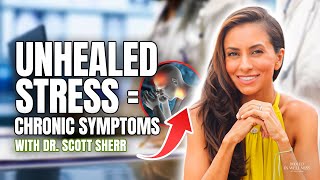
Dr. Scott Sherr explains why healing stalls: chronic stress keeps your nervous system stuck in fight-or-flight, and your mitochondria can't produce energy. He uses methylene blue to reboot mitochondria, low-dose nicotine for inflammation, and GABA blends to flip you into rest mode. The goal is reversing your biomarkers to a younger baseline.
Chapters
I feel like nervous system regulation is coming onto the radar in terms of us understanding it. But I think for a lot of the emotions that you are describing, whether it's being emotional, having too much stress, or feeling that you're someone who just experiences a bit more anxiety, a lot of that is a learned way of being within our nervous system that we're not even aware of because it's all we've ever known.
And a lot of times it's related to your upbringing. Right. And how your parents were involved or not involved in your life and how what you had to do and didn't have to do and your friends, and that's all a big part of it. And there's also this other huge piece which we were just alluding to, which your social media, your screen time, like, these are big deal, right? This kind of light going into your eyes all the time from a screen is not a good idea. And so it's just where the amount of anxiety, the amount of stress, I think is just. It's amazing. It's crazy. And. And so I'm. You know, one of the big things I always talk about with my patients is that if you want to heal, we have to figure out a way to get you more parasympathetic. If you don't get parasympathetic, you are not going to heal.
All right, Dr. Scott Shear, welcome to Rooted in Wallace.
It's a pleasure to be here, Mona. Thank you for having me.
For those of you who are listening, my tongue is blue, so I wanted to try methylene blue. It's been so effective and kind of like, in a very gentle, therapeutic way. So my tongue is blue. Today, there wasn't a better opportunity to do this, so here I am.
I love it. So I am also on methylene blue, but I did swallow mine, so there you go. You can swallow it. We can talk about that.
Okay. Well, I had to show it looks.
Better this way, but I should have masked you. You have whiter teeth than me.
Anyway, I took a 50, 50 chance that you'd do it. All right, so before we get started.
Yeah.
Rooted in Wellness. This podcast is all about ancient wisdom in our modern world. Talking a little bit about my healing journey and really like the. The magic that came when I fused the worlds together.
Sure, sure.
So I'd love to know, you know, becoming rooted in your health, in yourself, and in your own wisdom to heal. Are there any practices that you have that help you feel rooted in your health and happiness?
Oh, 100%. So I feel your journey. I think acutely because I grew up the son of a chiropractor. Always very out of the box. He was always, what I thought is crazy because he was always doing things like meditating and seeing dead people and other kinds of things that he said. I was always looking at him like, what's going on with you? But my own journey, really, obviously, I went to medical school. I did the conventional training, and I've done a lot then. But my rooted stuff kind of. It starts off observing the things that I saw when I was a child. But I took a very long hiatus until I was in my mid-30s. And then, you know, meditation has been a big part of. And learning also just my own personal practices on a regular basis to. To root myself in, you know, this. This avatar, these meat suits that we wear and, you know, have to carry around with us all the time. So. And there's programs and there's habits that these avatars need, and you have to be able to align with those and understand. But then also you can move things and change things, but also can be rooted in like the mom is. So meditation has been a big piece for me. And understanding that on average, we have about 70,000 thoughts per day. If you're anxious or if you're stressed, it's going to go up to about 120,000. So even if you just have, you know, just have 70,000 thoughts, please don't believe everything that you think. Right. And so understanding that, you know, these minds that are minds are still the same primate minds that have been around for a long time and are needs and our wants are related to survival and fitness and protection. Right. Survival and protection. So this always reminders for me, so rooted in the ground with meditation and also, you know, having kids as well, forces me to get out of my head and roll on the ground and. And be silly, too.
Yeah, absolutely. I love that lens that you just gave. Because a lot of people will talk about meditation, grounding, but to pair it with having, you know, 70,000 thoughts, up to 150,000 thoughts a day.
Yeah.
Just saying that out loud feels exhausting.
It is exhausting. I don't even know how they measure this at all, but it's. It's a real thing. It's a real problem. And so when you're anxious and when you're depressed, people don't realize that when you're depressed, you're typically perseverating or just thinking of the same thoughts over and over again. So it may not be 70,000 new thoughts per day, but it's 70,000 thoughts. Right? So you could have the same thought a hundred thousand times or something like that. Right. And some people will, which it can be really, really tough. And anxiety, stress, depression, insomnia as well. And actually this is all related to the, the breaks of our brain. And this is actually the GABA system. GAB is a big part of relaxing our brain, and it's a neurotransmitter that many of us are deficient in. So. And gaba's got this really cool position where it's like an interneuron, so that it stays in between your norepinephrine dopamine, your stimulating neurons, and allows the, the sensing of the gates, so allows you to prevent all that information from bludgeoning you and kind of overwhelming you. And so so many of are GABA deficient. And as a result, we're not having that sensory gate and getting too much information and just not being able to process as much.
But this is the fascinating aspect. So you're talking about a process from the body that comes from the body, which is the body's innate wisdom to regulate itself and to heal itself. And maybe you'll agree, I know you'll share more about your story, but the processes that we go through in life that cause us to feel more stress and worry and anxiety, pair that with the news and social media that causes it to exacerbate so much more. Are we losing the ability for our bodies to function at their best 100%?
I think that just the way culture is created, it's not a culture created on rest to recover detoxification, which is your parasympathetic nervous system. It's a culture that's trying to just hit you with more and more stuff at all times, and that is just keeping our on switch on all the time. So how do you turn your off switch on? That's really a hard part for most of us. And that's why there's like a rash of so many people can't sleep as, you know, and. And then they have so much anxiety and they, And I see this even in younger kids. Like, even it's in like kids. My, you know, like my kid. My kids age and my kids are okay for the most part, you know. But I have one specifically that does have like a anxious bent. And I. If she does do more social. She doesn't do any social media. She's too young. But if she does do more TV or more games, I do, I see it, I see the Screens that'll do it. Right. And. And so I just. It's a challenge. It's a huge challenge. And so one of the drives that I have, and, you know, the people that I work with have, is to try to remind people that there should be an off switch. And it's called your parasympathetic nervous system. And GABA is a really big part of that. And if we can support our GABA system, you can see huge amounts of benefit. And parasympathetic is always thought of as, you know, your rest and digest, but it's also your detoxification as well. And so that's when we can actually get rid of toxins and we can actually feel like we're. And it's a challenge because I was actually talking to somebody just a couple days ago that they didn't know what it felt like to be parasympathetic. And what can happen when you start feeling that way all of a sudden is that you can get this sort of reactive anxiety related to it because you don't know what you're supposed to do because your, your mind and your brain are actually calm. And you get this anxiety related to being calm as well. Which is kind of a big thing these days, I found, is that I'm like, no, you're supposed to feel that way. It's okay. Like, it's going to get better. Once your nervous system remembers that it's supposed to relax at times, too.
It means so much hearing you as a doctor with this Western lens, speaking to this.
Yeah.
Because often I feel like people just. They need that scientific validation.
Yeah.
And I feel like nervous system regulation is coming onto the radar in terms of us understanding it. But I think for a lot of the emotions that you are describing, whether it's being, you know, emotional, having too much stress, or feeling.
Yeah.
That you're someone who just experiences a bit more anxiety. A lot of that is a learned way of being within our nervous system that we're not even aware of because it's all we've ever known.
Yeah. Yeah. And a lot of times it's related to your upbringing. Right. And how your parents were involved or not involved in your life and how what you had to do and didn't have to do and your friends. And that's all a big part of it. But there's also this other huge piece which we were just alluding to, which is your social media, your screen time. Like, these are big deal, Right. This kind of light going into your eyes all the time from A screen is not a good idea. And so it's just. We're. The amount of anxiety, the amount of stress, I think is just. It's amazing. It's crazy. And. And so I'm. You know, one of the big things I always talk about with my patients is that if you want to heal, we have to figure out a way to get you more parasympathetic. If you don't get parasympathetic, you are not going to heal. And it could be a problem. I mean, I can. I'm. I'm guilty as everybody else is. Right. I haven't been sick in a long time, but then I. I had two weeks off for December, for the Christmas break, and I got home from two to conferences in Vegas, and I just. I was like, oh, I have nothing going on. This is going to be great. And I just slammed and I got sick for three days. And I was like, wow. But that's okay. I grew up. My father would always say, oh, that's amazing. You're exfoliating, you're detoxing. This is great. And I'd be like, shut up, dad. I'm sorry.
That's my mom. Yeah.
And. And that's what I. That's what I tell my kids now. And they're like, shut up, dad. But it's true, right? It's okay to get sick when you're going parasympathetic because that's what your body wanted to do. It needed to do that so that you can actually recalibrate thing with kids. I don't know if you've seen this with yours, but if your kids get sick, especially if they're really young, if they're 2, 3, 4 years old and they get a viral infection and, like, they're sick for a couple days, and it sucks for everybody because they're not sleeping, you're not sleeping. But when they're finished being sick, they just have these huge jumps in their milestones. Why is that? Because they've just kind of called things they didn't need. They detox, and all of a sudden they just make these huge jumps. And it actually can help. Actually can happen with adults, too. Now, none of us want to be sick for sure, but you can take it as an opportunity. Like, okay, this is something that my body needed so that I can, you know, move to the next level.
I don't think I've heard very many practitioners talk about the relationship of your nervous system to detoxification.
Oh, yeah.
But as you're speaking, of course they're like inherently connected. How can your body function when it's thinking that it's stressed all the time?
Right, right. It can't at all. And that's why being parasympathetic is essential for healing. If you're not going that route, you're not working on that system. I mean, you may not get sick for a while, but when you do, you're going to crash because your body's just not used to being in parasympathetic mode. And so this is a problem, like. But the cool thing is if you learn how to balance your nervous system and you know, you obviously know about our rate variability training, that's really great ones for H hrv and so that's a great way to help understand that balance. Right. If you have a good balance, then you can get stressed when you need to get stressed and you can be unstressed or decrease. Go back to parasympathetic when you're not. Right. Our base status is parasympathetic. Most likely we like, evolutionarily we had to mostly digest our food, right. We had to have something intake. So we think most likely, evolutionarily, our system probably started off as more of a sleeping digestive cycle at least millions of years ago, before we were actually human form. And then we created the sympathetic response to react to danger. I'm sure. I don't know if you've ever seen these National Geographic videos where you have an animal that's getting chased by a predator, a predator type of animal, and then somehow the animal gets away, it doesn't get killed, doesn't eat, doesn't get eaten. You'll see them go through this reaction, right, this parasympathetic, this sympathetic storm, as it were. They start shaking, they move all like crazy and all of a sudden, 30 seconds later they're fine, they go back, you know, and that's what we're basically programmed to do too. But now that stress is just constantly going at us every minute, and then we don't have any time to, you know, to respond and to go parasympathetic.
And we've never really been educated or it's not part of our training as a kid to like, what is the shake? How can we induce the shake to really shake it off and then start fresh? Right?
Yeah.
Let's take a quick break from this episode to talk about something that's made a huge difference in my cellular health lately. It's a product called fatty 15. If you're like me, always on the hunt for science backed solutions for optimizing your health and longevity. Check this out. Fatty 15 contains a pure bioavailable form of C15 which is a saturated fatty AC that's been coined the longevity nutrient by scientists. C15 was discovered by Dr. Stephanie Van Watson, a veterinary epidemiologist who was studying healthy aging in dolphins. What she found was game changing. C15 had a remarkable impact not just on the dolphins, but on human health too. Here's what got me really excited about taking fatty 15. The clinical research behind it has shown that it strengthens cell membranes, it boosts mitochondrial function and it activates key pathways that control AG. It outperformed leading longevity compounds in providing over 36 clinically relevant health benefits. And get this, 72% of users in a trial reported better sleep, better mood, better joints and energy within 16 weeks. I've been taking fatty 15 religiously as part of my wellness routine and I have to say I feel a noticeable difference. My energy is more stable throughout the day, my sleep is deeper and more restful and I just feel more resilient overall. Like my cells have this extra layer of armor against stress and aging. The capsules are small and have a neutral smell and taste and the refills come in a beautiful eco friendly glass jar. I love that fatty 15 is vegan, pure C15 without any fillers or preservatives. It feels like such a clean, potent way to give my body this essential nutrient it needs to thrive. Fatty 15 is on a mission to optimize your C15 levels and help you live a healthier, longer life. You can get an additional 15% off their 90 day subscription starter kit by going to fatty15.commona and using code monam at checkout. I really believe that this is something that can benefit all of us in our journey to optimal wellness and longevity. Definitely check it out and see the difference that it can make for you. Again, shop@futty15.com that's F A T T Y15.com Mona and use code Mona at checkout. So you mentioned about your little one.
Yeah.
In your practice, have you noticed that some people are just more inherently susceptible to being more dominant in their sympathetic nervous system?
I think that that is the case. I think and there is some genetics that are probably playing a part here and you'll find that, you know, some kids, I have four as you know and some of my kids are more on the anxiety side. Some of my kids are, are like really chill, you know, and, and then some are kind of just even keel right And I think so there is some sort of like nature nurture, there is some sort of base status, but that doesn't mean that you can't also modify that over time. And I think that it doesn't mean that just because you were quote unquote born this way that you can't shift things as you understand more about your, how you respond to things naturally. Right. And so, you know, there's usually like your type, a type of people which are more head driven. They don't. They can be anxious, but they're typically more anxious related to not doing as good as they can do. Right. That's me too. And so. And then you have your hardcore. Yeah, usually it's the first child. Right. And I'm the first. Right. And so, but then you have, you know, more that are like heart centered, more sensitive. Like they can tend to be more anxious because they're just taking in a lot from the world around them and don't realize like what's their emotional status versus what everybody else's emotional status is. And being able to delineate that is very, very difficult. And I see that in a couple of my kids, actually. So they get anxious because they worry about what other people are doing and how other people are feeling and how their response. It's like the heart on the, on the sleeve kinds of people. So I think there's a base there, but I don't, you know, I think that it's malleable over time as you understand more of how you respond to things.
I couldn't agree more. I think it's all malleable.
Yeah.
And I wanted to own in on that because you are the first doctor in 20 years since my heart surgery who said that there was a direct relationship with being sympathetic, with being dominant in my sympathetic nervous system.
Yeah.
You're the first person to ever say that.
Really?
I've known that all along.
Of course you do.
Yeah, yeah, yeah, yeah, yeah. No, because I think that for many Western doctors, when they're looking at diagnosing something, they want to look for a specific physical issue or imbalance.
Right.
And with the nervous system a little harder to, to assess and diagnose.
Yeah. It's because it's more of a. I mean, there are things to do, but they're not what we would do in conventional medicine. Right. You're going to get an ekg. Great. You have atrial tech, whatever it might be. Right. And. But you don't have like HRV training. Right. Like, that's not something that conventional doctors would ever think of. Right. So if they did HRV training or HRV testing on you when you were in your 20s, they would have seen, oh, wow, look at that. Like, her HRV is like zero. Right. And that's because if you have a higher hrv, by the way, that's better for you. Okay? And so the HRV is just the balance between your. What's called your autonomic nervous system, your sympathetic and your parasympathetic system. So, I mean, the problem with conventional docs is that they are trained very specifically they. And so specialized now overall. And the other problem is that your generalists. So I'm an internal medicine physician, are so freaking busy, so they don't have time really to understand anything more than putting band aids on thing most of the time. And, you know, the conventional system is also broken as far as it comes to preventative care. At the most, you have some preventative care that can happen with your colonoscopies and your breast cancer. But this is more early detection of disease. It's not looking to prevent disease entirely. Or in the case, you know, in my practice, which is more of optimizing health is the focus. So instead of focusing on disease or illness, why don't we shift the perspective to optimizing health? If we do that, then anxiety, stress, all that exists, and that may need to be addressed, and that's absolutely okay. But also looking at why foundationally people are having a hard time, like, are their mitochondria screwed up? Right. Can they make energy? Well, like, do they have a gut issue? Do they have GI issues as well? Do they have issues with their neurotransmitters or their hormones? And are these also playing a part? Right. So the way I think about it is that the medical system as it is does one thing really, really good, and that's acute care. Like, if you go. Go into the hospital. Yeah. For a GI bleed or a pneumonia or if you had a car accident.
And that's what they'll do.
It's fantastic. Right. But preventative care is broken. It really is. And, you know, chronic disease, as we all know, is just going up through the roof. And there's so many different reasons for that. Right. But it's. It's just. It's not in the purview of a conventional doctor at this point because they're so stuck in for the most part, unless. Unless they have their own journey. And you'll find, like, a lot of the integrative docs out there have gone to the integrative side because of their own medical issues that weren't solved by the conventional system. Or you grew up crazy, like I did as a son of a chiropractor, but I'm the exception to the rule. Yeah. But there is. But most of the docs that I know that have come this way have come because the medical system has failed them or somebody that they love. Right. Which is sad, but at least it is an avenue for them to be thinking about. Okay. There's got to be something else here. Right. Like, my son has fatigue and nothing's getting him better. All of a sudden, I gave him B vitamins, and something just flipped in a switch. And his fatig and his anxiety were better. Right. And so I think there's a huge amount that's happening now, which is great in the alternative, you know, world, as I would call it, integrative world. And I'm happy to be part of that, so.
Absolutely. I think it's a gift. The more that we can share, like, the power of integration across these modalities. It's a game changer for the future. Yeah. And it's happening.
Yeah. I like to say I can talk out of both sides of my mouth. Right. I can do the conventional thing. I can talk to anyone, Doc, for the most part. Or I can do the alternative thing. As crazy and as esoteric as you would like.
Yeah. I like both realms.
Yeah, me too.
Let's go back to that resilience that you mentioned of the body.
Sure.
And now one of the biometrics. Are you wearing an aura? Do you wear wearables? There you go. Yeah. So a lot of people are wearing these. These devices to measure reactions within their body. HRV being one of them. Right. So maybe give a lens. Let's just from basics, what is hrv? And in terms of a prevention scope, the numbers that you should be looking for.
Yeah. So I am wearing a ring as well. I do wear it almost every day, but it's also good. I was just thinking about this recently. Like, wearing and tracking are really, really important. But don't get crazy about it, people.
Oh, I know. I need to take a break.
I know. And so, like, the first thing that I did for a long time when I first got the ring was like, go in the morning, you wake up, check your score. Right. See how you did the night before. And then when they changed their algorithm and my deep sleep went down by an hour, I was like, God damn it. But it's probably better because that's closer to what it actually Is so what's nice about following data is that you can see trends over time. But I do worry, you know, not in an anxious way, but I worry that people get too reliant on these over time and then they forget that there's an intuition. The way I would equate it is like did you have, and you grew up the same year I did? Like you had maps, right? You had to follow a map, like a physical map and draw your stuff to like I was kid and I was 18 and we went to Montreal with my friends from New York and we had to go on a map, right? And I had this map. So but now like nobody knows how to look at a map, right? Nobody's even, even that like how you get anywhere without a map. It's the same thing with, and you lose your intuition of like directional space, right? The same thing comes with your sleep or your, your exercise or your steps or things like that. So just be aware of that. Because it can also sort of lead to like, oh crap, my score sucks, so today's gonna be a shitty day.
Exactly.
And I, I, I tend to, it's like the, or it's called, we call, you know, orthosomnia is a name for it, right? The fear of having a bad ring.
Score or whatever when you woke up feeling great.
Yeah, exactly. Yeah. I'm like, oh man, I feel great. But my ring, oh no, what am I supposed to.
Day's over.
No, days over.
Gone.
God, that's gonna be terrible. And so I, I think the, the data is good, but you know, taking it and then understanding that there is a place for intuition in there. But you know, HRV is one of those metrics, right? So HRV is one of the older metrics. It's been around for a while. And we know what HRV really is able to do is as I was alluding to earlier, is to give us a. Your body's balance between the nervous system, the stress, the sympathetic nervous system and the parasympathetic rest digest detox nervous system. And so your HRV tends, it does go down as you get older. That's a natural process. But there are certain things that can improve your hiv, like exercise can, obviously stress relief can as well. Exercise is interesting because people think well that's stressful. But no, actually yes it is in the short term. But you're also increasing something called bdnf, like brain derived neurotrophic factor that increases your GABA levels at the same time. And so GABA gets increased as A result of exercise, too. So it has this balance, like. Like even breath work, like. Like WIM HOF breath work or something like that, people will talk. That's a sympathetic increase. But if you're also doing some parasympathetic work afterwards, you're gonna have a benefit from that. So you. There's a lot of different things that can do increase your hrv, but. And there's no, like, actual, like, score that's. You should be kind of driving at really. What's nice about these kind of these rings and the other things. You can get a baseline, and then you. Whatever that baseline is. I really don't number is then you can work on increasing your HRV from whatever baseline that is. So, like, for example, if your baseline in your 40s, as I am, is like, in your, like, 50 to 60 or 40 to 60, somewhere in that range. And then you have a night where you. Your HRV is 20, like, okay, something's going on. Right. Or if your HRV is 70 for some reason that night, like, what did I do yesterday? Right. Or was it because I don't know how to do it again? And often, sometimes you can't repeat it, and that's okay. But a. It's a nice metric there. There's. It's come a long way.
Yeah.
When I first started using HRV about, you know, seven or eight years ago, it was much harder for people to measure, but now it's a lot easier, which is great. And you can find that you can actually increase your HRV very quickly just by doing some slow exhale breaths and improving the parasympathetic tone. Right. So that's what I teach my kids. I don't know if you do the same, but. Yeah.
Yeah. I always say you. If. If with my clients, if they want to see the number go up, do more of the activities that help you change your state from fight or flight to rest and digest. For some, it might be meditation. For other people, it's journaling. For some people, it could be guitar playing. Who knows? Right.
Right.
But what's fascinating for me, when we put this on the lens of prevention. For a lot of my clients who progressively got sick not knowing what was happening in their body, that HRV number continued to go down. A couple years ago, I had mold toxicity.
Oh, goodness. Okay.
And kept going down deep sleep going down. And it was. It was a blessing to have this.
Right. So you had a metric to look.
At it to understand it wasn't just stress. Yeah.
Yeah. And that's a Big part, right, is because people think it's just in their head sometimes, and there is often a significant cognitive piece, let's not lie. However, that doesn't mean there isn't something physical that's going on. Right. And I think that that's a big piece. So when I work with people, I'm interested in your take on this, but I always find that I know within about 30 seconds to five minutes tops, whether I'm going to be able to help them physically. Because my work is mostly looking at optimized vitamins, minerals, nutrients, co factors. It's, you know, looking at testing and then diet and lifestyle. But if there's a significant psychosomatic. Not psychosomatic, but psychological component to it, I'm not going to be able to shift any of those things until they start doing some of the psychological work first, no matter what's going on. I mean, it could be something like, oh, I just need to give you, like a vitamin and you're going to be, you know, then it's going to optimize your B vitamins. No, it's not gonna work. It's just not gonna work. And I've been amazed and obviously burnt when I was first starting practice, like, oh, we can just shift things a little bit here and, and make it work. But I mean, sometimes that does work. Sometimes you can help them feel like a little bit better. And then all of a sudden they're more motivated to do maybe some psychological care or some additional work there, which sometimes can work, but you're not gonna get them where they want to go without looking at that psychological piece. And, and that's been a big thing. So. So, like, I don't like to tell people that I don't want to work with them. It's more that I think that they need to do some additional work before we start, you know, optimizing, you know, and really digging deep into their. Into their foundational biomarkers and things.
So, yeah, I learned that lesson very early on, which is why I ended up going into nlp.
Oh, yeah.
To show up and talk about.
Have you been doing that all the time to me, this whole podcast?
Yes, Subconsciously, the way that I ask questions and the tone of my voice.
Of course. There you go. The.
But I realized that, you know, I'd show up to these calls to talk about supplement protocols and types of foods and recipes and stuff like that, but we would spend 60 minutes of, you know, a client would be in tears talking about their childhood or their stress. It's like well, obviously this is why you can't make healthy choices.
Exactly. Yeah.
You know what to eat. I think the bulk of the population knows what the healthier option is. But the deeper rooted question is, why aren't you choosing that for yourself? That's what we have to address. So, yeah, this is where you and I would work really well together.
Yeah.
So going back that word resilience, like I just, I love that so much. And let's shift gears then. And talking about oxygen.
Sure.
So from, you know, Vedic wisdom and when we think about yoga and breath work, we think about, you know, we'll call our air our life source energy. Right. It's our life force that we breathe into our body that can change our state. And I really think that with the rise in awareness around hyperbaric oxygen chambers, this is a catalyst for change, but it's something that's also rooted in wisdom for the body to heal itself. So this is like a great merge of modern with ancient. So I would agree with you.
Yeah.
Tell us a little bit about what a hyperbaric oxygen chamber is. Do you say hbot H B O T hbot Know exactly what it is and what was your path to kind of get into this modality for healing?
Yeah. So it's, it's an interesting technology and it's been around for a long time. Actually. I got involved and interested in medical school, actually. So I went to medical school, as I mentioned, the son of a chiropractor. And I knew I didn't want to go into a regular field, one where you could make tons of money out the gate, but it really wouldn't serve what I really felt I was going into medicine for. So I got tantalized by high price salaries of being a dermatologist or gastroenterologist. I thought I might be a GI doc for a little while, but then I kind of knew down deep that that's not really what I was here for to do. And interestingly enough, I was in a trauma center in Baltimore. And it's a place called the Shock Trauma Center. It's one of the biggest shock and trauma centers in the world. Baltimore is well known for its shock and trauma. The Navy, actually almost all the military branches go there to train because of all the gunshot wounds. Basically I saw some gnarly things. But down in the basement they have a very large hyperbaric chamber. And this chamber is kind of like a submarine looking chamber. It's called a multiplace chamber. So you can get multiple people in the chamber at the same time and get treated. And you also can have an attendant in there, like if you need to have attending to the patient that's in the chamber. And so I saw some really gnarly things go into the chamber and come out looking not so gnarly. One of them was called necrotizing fasciitis, which is called. Also known as flesh eating bacteria. So it's a nasty infection. It starts really just eating up skin and bone and everything else. And so this lady had had it and, like, all of her limbs look like they were gonna need to be amputated, which happens with this particular infection. You have to amputate the area so that the infection stops going up. Yeah. And so she went in looking like she was dark and dusty, not in a good way. And she came out looking pink and healthy in, like, I think, three of her four limbs, which was much better than all four limbs. Right. And so I was like, what? What's going on? I mean, I was really tired. Okay. It was. We were on call for 30 hours every three nights for two weeks. It was intense. And I remember thinking, wow, that was really cool. And then I just wanted to go to bed. And then afterwards I was like, what was going on in the chamber? And my father, at the same time, interestingly, was getting interested in hyperbaric therapy from an alternative perspective, looking at it for autistic kids, because he's a big practice that includes lots of autistic kids and families. And so he was seeing benefit there. I was like, well, there's something here. So I dove into the research and I realized that. That there's a lot of power in this particular technology to heal in so many different ways that we were not even looking at in the conventional side. So it became obvious to me, I was like, well, I can find a way to bridge the gap between alternative and conventional medicine using this technology, at least to start. And let's see how things go from there.
Wow.
Yeah.
And correct me if I'm wrong, but, you know, these chambers are way more accessible in other parts of the world than they are in the U.S. they are.
Are actually more accessible in the U.S. because there's just more of them.
Yeah.
But they're more accessible in some countries because insurance will cover more indications.
Okay.
So, for example, in Russia, China, and Japan, there's about 70 indications where their insurance will cover hyperbaric therapy. In the US there's 14. In England, there's five. In Australia, there's five. So it's. It's a big challenge from A. An access perspective, because it does cost money to go into a chamber. A significant amount depending on the type of chamber you're going into and how often you need to go in. And we can talk about all that if you want, but it's. It is now, you know, since the pandemic especially, there's been a lot more interest in hyperbaric therapy. And there are just chambers everywhere now. And that's. It's. It's good. It's good. But it's also a bit of a challenge for me because there is nuances in how to use these and how best to access them and how to integrate them with other tools, technologies, and practices. And most the time, it's just companies selling people chambers no matter what. If they have a wallet, you can get a chamber. Right. But is it right for everybody at this very time? And the answer is probably not, actually. And in fact, I was. This is a big issue that I've had in the hyperbaric community is that I've often said that it's not the right thing to get people in to the chamber all the time, right away. I often say it's not if, but when hyperbaric therapy will be helpful. And maybe in. Not now, but maybe in three or six months when they're really a little bit more well optimized to go in. So, and that's. That's a nuance that is challenging for people in the hyperbaric community to hear, because any community, right. If you have a chamber, you want to use it. But my. My argument or my response is like, look, if we can get people a bit better optimized before they go into a chamber, absolutely. They're gonna have a much better experience, much better outcome overall. And this all goes down to, like, what's happening in our cells. Right. And this is what's called energy metabolism. And. And hyperbaric, really what we're doing, and we can talk about the definition, is that we're increasing the amount of oxygen in circulation, and that is a huge amount of catalytic change. But not everybody can tolerate that right away.
That's fascinating. And you brought in mitochondrial health, too, so it would be beneficial first. Overall, don't go into this thinking this is the next thing that's going to be the. The cure all, as we tend to do in this side of the world. So let's break down the mechanics. I was trying to do a deep dive last night.
Yeah.
You can find studies on, you know, brain health, neurological disorders, wound healing, energy production within body. It's used for athletes. So what is the biological kind of aspect that's happening in terms of making this happen?
Yeah, so the. The quick story is that it's two things. In a hyperbaric chamber, we're increasing the amount of oxygen that you breathe, and we're increasing the amount of atmospheric pressure that your body is under. So I like to go through oxygen first, because oxygen's easy for the most part. So at sea level, there is 21% oxygen in the air that we're breathing. Right now. In Colorado, where I live, it's 16% oxygen. Okay. So typically, our oxygen is carried on our red blood cells. Red blood cells actually have fun. Fact. 1 billion oxygen molecules per red blood cell can be carried on a red blood cell. And it's done that through a molecule called hemoglobin, which binds four oxygen molecules per hemoglobin molecule. So if you can do the math, it's 250 million hemoglobin molecules per red blood cell. So our oxygen carrying capacity is relegated to how many red blood cells that we have usually. And what is oxygen necessary for energy production. If we don't have oxygen around, our mitochondria cannot make energy. It is called the final electron acceptor of your mitochondria for this oxygen there. And then as a result of that, we can make ATP, or energy currency. Also, another fun fact, we make about 165 pounds of ATP every single day. So this is a very important process. Okay, so we have oxygen. It's carried on red blood cells. Uh, it's getting dumped off into tissue, so you can make energy. So how can we increase the amount of oxygen carrying capacity? So you can come visit me in Colorado, stay for about three months, and you will have a hormone released called epogen, or epo for short. That hormone increases the number of red blood cells that you'll have in circulation. You can also take that drug. Take it as a drug. And if you've heard of cyclists like Lance Armstrong, he's the most famous. Doping is actually taking EPO itself to increase the number of red blood cells you have in circulation. The other way to do that is obviously just to take the drug, or you can actually give yourself a transfusion of red blood cells, and that'll increase your oxygen carrying capacity. So, but in a hyperbaric chamber, what we do is we increase the amount of atmospheric pressure. We simulate the amount of pressure that you would feel under a certain amount of seawater. So water is extremely heavy. We don't feel it. If we're Diving in a pool or something like that. But if you pick up a bucket of water, it's extremely heavy. And so what you can do is you can simulate that heaviness in the chamber, and that heaviness drives more oxygen and circulation, not only in those red blood cells, but also into the plasma or the liquid of our bloodstream. So it's the liquid that has very little oxygen in it at sea level. And in a hyperbaric chamber, you can increase the amount up to over 1,200% more oxygen as a result of that pressure. It's a physics law called Henry's law. And Henry's law just basically states that the more pressure you put on a gas, the more of that gas is going to go from a gaseous form to a liquid form. In this case, we have liquid O2. And so as a result of having this huge amount of oxygen in circulation, you create this catalytic kind of change. And it does it in a number of different ways. But the basics of it, and we can go into details if you like, are there's a huge amount of oxygen in circulation, number one. So that's good, especially if you had an acute issue like acute heart attack or stroke or traumatic brain injury or spinal cord injury or a limb, partial amputation. What I actually saw when I was in medical school, like, you can get oxygen to the tissue faster, so you have less tissue that dies, kind of a big deal, right? So that's all that oxygen going in. There's also, because of all that oxygen going in, you're making a huge amount of energy, which can be really helpful. And you're also making amount. A huge amount of oxidative stress or reactive oxygen species. That's not a bad thing as long as your system is able to compensate for that with antioxidants. Right? And so you have to have enough in the system to be able to. To balance that out. And that's. That's an issue. But what happens with that oxidative stress is that it has this shift onto your biology. And so you get stem cells that get released from your bone marrow. Stem cells are baby cells that can go anywhere in the body to help us heal tissue. Okay. It also immediately decreases inflammation by binding up something called inducible nitric oxide, which is in circulation causing inflammation, causing. Causing blood vessel dilation and causing low blood pressures. As a result of that, it also can improve immune system function. So that oxidative stress revs up the immune system in a way that says, okay, something's happening here. We need to do something about it. So immune system gets activated. And you also have a direct effect on bugs, on organisms that do not like high oxidative load or do not like oxygen directly, like that necrotizing fasciitis that I mentioned. That's an anaerobic bacteria. It does not like oxygen. So that's why hyperbaric therapy works so well in that case. And then. So that's the oxidative piece of it. So that. And then what also is happening as a result of that oxidative piece is that with multiple hyperbaric treatments, you're getting a shift in the expression of your genes related to epigenetic shifts. So epigenetics is the study of how your genes express depending on environmental stimuli. And what happens in a hyperbaric chamber is that you get this shift in epigenetics. And so that's a shift that causes more blood vessels to grow for decreasing inflammation over the long term, for the rebuilding of tissue and maturation of. Of cells into the area. So bone, new bone, new heart, new neurons, new cartilage.
Regeneration.
Regeneration, yeah. And then decreased scarring in tissue because of all that as well. And then you also get this. With this immune system activation, you get this sort of rebuilding and recalibration of the immune system as well.
Fascinating. So many points.
Yeah, I know that's a lot. I know.
No, it's a lot, but it. It's landing for sure. When I experienced a chamber, it was an exile. So through our mutual friend, Dr. Shah, the feeling, I think I was in there for about 50 minutes. 50 to 60 minutes. You could feel the pressure shift when you're sitting in there. I remember feeling a little bit like I wanted to lay down. And then all of a sudden, I felt like my mind was very awake. Like I had a stimulant and I was ready to go.
Nice.
Yeah. And I felt so energized afterwards. And of course, is, well, why would I just use it consistently then if that was what I felt? What is the protocol? Yeah, we're thinking about it through a lens today. Obviously, you'd mentioned first, you want to make sure that you're in, like, a good place. Hang in on, you know, your labs, your micronutrients, energy and stuff like that. But therapeutically, then what should people be looking for?
Yeah, so if you have an acute issue, like, if you have an acute trauma, acute ischemia, like a low oxygen state, acute injury, overall, hyperbaric therapy is like the do not pass go kind of thing. Like, it can really Help people heal, even from surgeries, for example, like if you have an acute wound of some sort, there really is no other things that you need to do. There's things you can do and I do them all the time, including use, like things like methylene blue, for example. But in essence, an acute injury, whether it's done by a surgeon, or if it's done by you on the soccer field, or you have a stroke, you know, God forbid, or something like that, like getting into a hyperbaric chamber very fast without any other modalities is going to help you because it's that reoxygenation that's so important during that acute phase overall and decreasing inflammation and things that I mentioned. But if you have a chronic issue where you have a long term goal, say that you have mild cognitive impairment or chronic pain, or you have a chronic infection, then what I always say is it's best not to go into the chamber right away and then try to optimize your vitamins, minerals, nutrients and co factors, your diet, your lifestyle, and then think about synergizing that with hyperbaric therapy, because that's when you're gonna get the most of the benefit. Right? The other piece of it to mention though is that there are different pressures that we can go into a chamber. The milder pressures like they have Dr. Shaw has, it's a mild hyperbaric unit. Milder pressures are always in essence safer in because the deeper you go, the more oxidative stress that you're going to create in the system. And actually the more stem cells are you're going to release and the more immune system activation, which can be positive. Right? But again, if your system's not able to tolerate these high levels of oxidative load, then that's not gonna go well. And I saw that in clinical practice very quickly when I started over a decade ago. If we put people in the chamber that were too sick, they didn't do well. They may start, they may get a little bit better after feeling terrible for a couple days. But then almost always they kind of go back to the way they were before they relapse, as it were, you know, interesting. And so that's because the system needs to be better optimized and they needs to be more support. But these milder pressures, like 1.3, 1.5, like you can get away with these even if you're not as well optimized. In general, if you are well optimized, you tend to feel very good when you go into the chamber. You tend to like even at deeper pressures, you're like, oh man, that's freaking amazing because you get all the oxygen in and your system is well optimized so that that oxidative load because of the oxygen in there gets neutralized relatively quickly by your own antioxidant capacity. And so if you have that, you're in good shape, you're gonna feel great. And so when it comes to protocols, it really just depends on what the goals are. Right. If your goal is to is a longevity protocol, is it a exercise recovery, is it jet lag? I mean, it depends on a lot of different things. Right. But in essence, the milder pressures, 1.3, 1.5, even up to 1.8, that's about the equivalent of, of like 15 to 30, 15 to 25ft of seawater or so. So again, we measure all this in seawater. Right. So 15 to 25ft below the sea. Right. And so if you're going to those kinds of pressures, that's really great for brain kinds of things. So neurocognitive things. It's also great for what I call like day to day operations, your health span kinds of things. So your recovery from exercise, your recovery from jet lag, your athletic performance, your athletic recovery, your hangover recovery and things like that. So those milder pressures can be quite good for that. But if you're going for more systemic focus, decreasing inflammation, dealing with a chronic, complex medical illness, the deeper pressures are usually needed.
Fascinating. I did not know that.
Yeah.
And what about through the lens of aging? Well, you know, studies on reducing inflammation or a common symptom. I'm sure you hear all the time is brain fog or issues with memory and stuff like that?
Sure.
Is there like a systemic way? Is it going it into a chamber once a week? Do you have to do a series of 6, 10, 12 sessions to be beneficial?
Thank you for reminding me to mention that. So if it's an acute issue, typically three, five hyperbaric sessions in a row, maybe up to 10, can have a huge benefit, just accelerating the whole healing process. If you have a long term thing going on, it's not going to have the same effect. You need to go in usually the protocol, somewhere between 30 to 40 sessions, five days a week as a protocol to start off with. And then depending on what's going on, you may need further hyperbaric therapy over the long term, maybe maintenance and things like that. But this is where it comes really important, like the things you were just describing. Right. And I get these consults all the time. It's like, Dr. Scott, I'd love to use hyperbaric therapy because I have brain fog. Like, okay, tell me more about your brain fog and what else you've done thus far. Right. Because if somebody wants to go into a chamber for brain fog, I would say short answer. No. No, because what else are you doing? Right? If you're eating McDonald's four days a week, you're drinking alcohol every day, and you have a partner next to you that's snoring every night, and you can't get enough rest, there's nothing that a hyperbaric therapy chamber is going to do long term to help you. Right. And so for me, it's always making that. Having that conversation. Right. And saying, look, I. These chambers can absolutely help you, but let's work on some of the foundational things first before you spend the money and the time. Right, right. Because in general, like, once or twice a week in a hyperbaric chamber. That's nice. It's good for, like, what I would call maintenance kind of mode. If you've already kind of had a good experience in a chamber. What I usually say is that I like people to do a protocol first. I call it like a startup protocol or something like that, where you do 20 or so sessions in the chamber just to start shifting the physiology. And then you can go in periodically, but in a targeted type of way, I typically say. So what I mean by that is that. That I like to target hyperbaric therapy when you're more of a maintenance kind of mode to what you're doing that day or that week. So, hey, I have. I'm getting off an airplane, so. So go ahead, go do three hyperbaric sessions. Because when you're on an airplane, you're pressurized to 8,000ft above sea level. So that's low oxygen. Methylene blue is really good for that, too. But you want to reoxygenate yourself when you get back to sea level because that's going to make you feel better faster. So it's a great jet lag hack. If you have a chamber either in your home or that you can go to that's close by, so you can target it to a big day of exercise. If you target. Target it to a big day of exercise, you can use a chamber at night, usually at milder pressures, to help with recovery.
Yeah.
So the maintenance mode, the maintenance piece for it really just depends on what your initial goals are, then how you're using it long term. But I have a lot of patients that have chambers at their house now or they can go to a local facility and they have a membership like next house I know and others where you can get in a certain amount of time, times per month. But my, my deal with is that if you're going in just a couple times a week or a couple times a month, you really should be targeting those to something that you're doing or I mean, or just know that there's no real long term benefit that I can really see from that. I don't see it being harmful, but I don't see that there being the shifts that you see. If you're going in on a five day week kind of protocol for a period of time before you got start going into a couple times a month or a couple times a year or something like that.
Such good feedback because I think it just offers, it's the invitation to use it strategically at different parts and times throughout your life. I'm also really interested in how it merges with the kind of ancient wisdom so often. I'm sure you prescribe this also. When you're in that chamber for 60 minutes, you could either sit on your computer and scroll. Right. Doom scroll or you can sit in meditation and focus on doing deep breath work. And the impact obviously of the latter feels so much more therapeutic to the system 100%. And I love that it's a scientific device that's merging with the wisdom of your body to enhance healing.
Yeah, I love that. And what I always say is that it's not only do what you're doing. So my framework is what are you doing before, during and after hyperbaric therapy to truly optimize that the before might be right before or the before might be six months before. And that's typically where the mitochondrial health becomes a huge piece of it. Because. Because I got burned in the beginning not understanding that if you don't have the machinery to allow yourself to make energy effectively and also to detox from the energy that you make. People don't realize that when we make energy just like an exhaust from a car, you make waste products too. Some of that waste is we breathe off as carbon dioxide and water. But some of those are reactive oxygen species that are necessary. But if they're too many of them or there's a lot all of a sudden like in a hyperbaric chamber and you don't have the capacity to you neutralize that oxidative load, you're going to feel bad. And. And so that's just a big piece for me. So that's kind of been, you know, with my journey in my clinical practice has been, well, I was a hyperbaric physician initially and I still am, but now that's when I talk to people. That's about, you know, 80% of what I talk about has nothing to do with hyperbaric therapy at all.
And I'm understanding from what you're saying, the more that you can understand about your biology, the better. Are you running genetic test tests on all your patients?
You know, I don't typically do genetics, I've found over the years. So the framework I use is something called health optimization Medicine in practice, it's Home Hope for short. It was founded by a colleague and mentor and friend of mine. His name is Dr. Ted. Dr. Ted Achicoso and brilliant guy, anti aging physician, was doing AI in the 1980s, that kind of thing. He was doing currency. Everything you can imagine, the dude has done. And so he established this framework and the idea was genetics are important, but they, genetics aren't your destiny, genes aren't your destiny. And so we look at something called metabolomics, which is a little bit further down from your genes. Metabolomics is kind of the real time assessment of what's happening with your cells again in real time. So we can opt, we can see what happened, what's happening with energy, what's happening with detox, look at heavy metals, micronutrients, macronutrient, you can look at all these things. So what we do in clinical practice is work on optimizing metabolomic data. And if you're doing that, I'm looking at what the expression of those genes is going to be. So you can look at the, you can look at the, the byproducts or the, the, the aspects of the metabolism for your B vitamins, for example, for example. So you can see, does somebody B vitamin deficient or what are you going to do? You're going to give them probably an activated B vitamin as a result of that. So as you know with genetics, if you have like your mta, HFR or your motherfucker gene, right? That's. People like to say that you can't make, you can't methylate your B vitamins, your B12, right? Great, that's fine. But how much are you actually, you don't even know. Like it could be 20% methylation, it could be 75% methylation, you don't know the expression of that. Although the genetic tests are getting better with that now to give you a better sense. But in essence I Don't use genetic testing. I will look at it if my patients have it. And I think it can be helpful as data for patients if they have a family history of dementia, for example. Right. If you have, have, you know, the alleles that are, that are more prevalent in dementia, for example, like then maybe it's a good idea. So you know that, that gives you like, well, holy shit, I really need to get my, my health in order if that's going to be the type of person you are, that you need that kind of, you know. And so I, I find that, you know, when, when looking at metabolomic data, it is truly transformed my clinical practice. Oh, I believe it because now I can understand how to optimize, you know, those vitamins, minerals, nutrients and co factors and how lifestyle and diet plays a huge part in that, that you know, get directed supplementation which is so, so important and not just taking the next supplement that somebody told you about on Instagram or on social media, which again we're all guilty of at some point. But then that's okay. But their stack doesn't need to be your stack and shouldn't be your stack. Right. Because you are you and they are them and most of them are not clinicians seeing patients, as you and I both know.
Yeah. And it's this personalized approach that I think is really important. And the more that you can own your physiology, then you're not looking for sources outside of yourself to try to make you feel better. You know exactly what your constitution needs. Right.
Yeah.
And can I ask, is there a specific company that you, you would say is leading the way with, with biomarker testing?
Well, I think there's a number of them out there now. I mean the one that we use mostly at, at home Hope is a company called Genova Diagnostics. What we like about Genova is that you're the one of the only companies out there that has done something very special with their ranges of normal. So what is normal? Right. So do you want to be, do you want to be normal for 44 year old or do you want to be normal for a 20 to 30 year old? Right. 20 to 30 is kind of the age when we're, as everybody probably remembers, is that you can do a lot to yourself and still wake up the next day feeling like you didn't do anything to yourself the day before. I mean, I had a roommate in college that could drink himself and like piss and puke the next day. He could run a marathon. And he also was Irish, so that was probably part of that. But, but I mean, so what we do at home Hope is try to reverse people's biomarkers. They're, they're nutrient hormone gut neurotransmitter markers back to the ages between 21 and 30 years of age. And Genova's normal levels or normal ranges are within, are doing that. That's their normals are between 21 and 30. So if you look at most laboratory companies out there, you're not getting those kinds of age ranges. Usually it's 18 to 65 even in some of the functional labs, most of the functional labs actually I've even asked some of these labs to, to piece out the data so that I could find it from 18 to 30 and they won't do it. So. Fascinating. And then you go like to the, the conventional side and you look like a thyroid, like a TSH level or something that's, that's ranges between I think it's around 8 years old to 95 years old is the range. And then we think like a TSH of 4.5 is normal for a 20 year old, right? No it's not. Right. And so it doesn't mean you need to start thyroid medicine. That's a different story. But like again normal ranges are a big deal. So, so from our perspective Genova is great because it's easy for us to be able to know what those normal levels are for somebody once between 21 and 30 years of age. So the difference again in their approach is that we're not looking for disease related markers. We're not looking for the root causes of illness, we're looking for the root causes of health. And as there's like, there's so many standards of care for disease, I keep hitting this thing. That's okay, I'm just going to start playing with it. Sorry everybody. There's so many standards of care for disease. Disease. Right. For every disease you can imagine. But there's no standard of care for health. And so we're really trying to do it at home. Hope is try to create that. And so my clinical practice is based, that being the foundation of what I do. And then the hyperbaric piece is something that I will add on when it's appropriate, when it's time, unless it's an acute issue, then we use the chamber and we, as I like to say, I educationally throw shit at the wall to get as much of a holistic plan as I can for them if they need to go in immediately.
I love that list so much. It puts a really optimistic spin on the concept of prevention because I think the word prevention itself comes from fear of getting sick. And for me, for the longest time, even my own journey, I shared. My mom has rheumatoid arthritis and I lost my mom to this disease. So the fear was, I'm not going to get it. I'm not going to get it. I'm not going to get it. Which turned into healing and feel my best. So I kind of understood when I just focused on the healing aspect and what my constitution needed. Yes, the fear dissipated, which loosened the grip on getting disease.
Exactly. Yeah. It's like having that. That thought you can't get out of your head. You have to actually really just change your whole perspective.
Right, Got it.
Yeah. Yeah. And that's how to do it.
So going back to age ranges, so longevity also is massive buzzword. Telomeres were in the the spotlight for a little while and everyone's checking their telomeres to see what their biological age is versus their chronological age. But oxygen chambers, hyperbaric, they're showing how this impacts telomere length also. Is that right?
Yeah. There was a study that came out a couple years ago now by a pretty big group in Israel. They have the largest hyperbaric program in the world. And they were seeing about 250 people per day in their chamber on average. Most places in the US Might see like six at the most. So it's a huge number. And they put out a study, I think the age range was people over 65 years of age and mostly healthy, maybe on maybe one or two medications at the most. Most. And they did 60 hyperbaric sessions, six, zero sessions over three months, five days a week at 2 atmospheres of pressure, which is a huge time commitment. Right. But they didn't do anything else. They didn't change their diet, they didn't change their lifestyle. Because this is a study. Right. And they put them in the chamber basically for two hours every day, five days a weekend, as 18 year olds. What's that?
They came out as 18 year olds, so not exactly.
But their telomere length did improve. So again, do we really know enough to say that telomeres are important? We don't know for sure, but there was about a 20% improvement in telomere length. So that was one marker. But the marker that really got me interested actually was a marker on senescent cells. Senescent cells are zombie cells. They're these cells in our body that do not divide anymore. And they do not really make anything good, they just kind of stick around, don't die, and cause inflammatory mediators to increase because they make them and they have a high risk or they're associated with dementia, degeneration, cardiovascular disease, death, you know, all the good, bad things. Right. So what that study showed is that there was about a 30% reduction in senescent cell population at around the treatment number 30. And so this is a great study for me because I was thinking, well, they didn't change their diet, they didn't change their lifestyle, they didn't optimize any mitochondrial markers or any metabolomic markers at all. Like, I bet I could cut that down in half at least, and they would still see a significant benefit. And I've seen that in clinical practice. If people are with me and they are allowing themselves to do more of the groundwork, then they're going to see massive benefit. And I went to Israel in 2018 actually to look at the program, and I was a very, you know, they were very gracious hosts as, as Israelis tend to be. And I asked them a question. I mean, they show me these amazing pictures of these brains, like, because they actually, they've published a whole bunch of studies now since then on that same population that they showed you can revascularize the br. Brain and get the brain to revascularize after 60 sessions. You can revascularize your genital organs and you can get better erections as a male. And females too, actually, even though females don't talk about it as much, but females do enjoy benefits the same. And so, but female, the males in this population had better erections. Right. And they also saw better cardiac function too. Circulation. Yeah, circulation. Right. So blood, the blood vessel growth that happens in a hyperbaric chamber. Happens everywhere, Right, right. Happens in the brain and the heart, you know, and the sexual organs as well. Right. And so, but I asked them the question, after all, I was there showing me all this stuff, I'm like, oh, this is amazing. Like, like, well, what about what happens long term? They're like, oh, we don't know, you know, like, maybe they'll have to come back in a couple years. We don't know, you know, And I'm like, well, that's not. I mean, that's. That sounds like a good model. Right? At least you're helping people. But what is their diet? What is their lifestyle? What is their supplementation? What's going on? Right? And then they're like, oh, we don't do any of that. You know, just don't do it. We tried some coconut oil. I was like, okay. I was like, like, I'm like, okay, I. I see where things are. Are going, but I get it right? Because as a research facility, you don't want to have that many things that you're actually changing because then you can't figure out the studies. So, but anyway, so this, this study got a lot of press, and now we have lots of people interested in hyperbaric therapy because of longevity. And I think it's a. It's a good thing. And I think that we do have a modality here that can truly help people reverse some of those age markers. And there's much more interest in it now, and I'm very excited about it. It. And so I use it clinically in that way, especially in. In an integrative way. I mean, that's the key, right?
Absolutely.
Is that if you're doing that groundwork. Excuse me, you're doing the groundwork and you're really working on that optimizing of your foundational biology, then we have all these other tools and technologies that people are using all the time. And how you're integrating those things together is really, really important. Like, so your red light, your sauna, your cold plunge, your whatever else. Like, and. And so I got really interested and kind of fed up in like, 20, 19, 2020, that people were contacting me about this stuff all the time and nobody knew what they were doing. And they were getting chambers from companies that didn't tell them how to use them or how often to use them. How not often. And so that's when, you know, I started my own company called One Base Health that does more on the education side. And we're creating ways to help integrate all our technologies together with Bluetooth connectivity so you can use it all from your phone and then create your own protocols and then use your own wearable technology to see what you need at the time. And so I'm really excited about that.
So it will integrate the wearables that you have in order to create your protocol.
Yeah. So you'll be able to connect all of your. So the equipment that we have, so it's currently going to be with our equipment. So it's one base equipment for chambers, lights, sauna, cold plunge, and something else I'm forgetting. And you'll have Bluetooth connection to all those. So you'll be able to do it remotely from your phone, actually connect to them and operate them. And then you'll get data from them as well. You'll get we have sensor data that's going to be coming from the machines so that you can see what's happening with the machines, but then also going to be data coming from your wearables and what you want to help program your devices and integrate them in various ways.
Biggest pet peeve, all of these different wearables. Not knowing what to use on what I know.
Right.
None of it goes together and I still don't know what to do.
Yeah. Yeah. I mean, it's a big thing for me too. I have all this stuff in my house. I have an infrared sauna. I have a chamber. I have lights. And so I just got tired of having people tell me that what they were doing and then knowing it was entirely not what they needed.
Yeah, absolutely. So you've put the scientific lens, ATP production on longevity, on telomeres, on senescent cells. I mean, all science is really pointing to this as being an incredibly therapeutic, kind of coherent treatment that people can go through to experience. I highly recommend it just for the experience alone as a modality that can really help you shift your body.
Yeah.
But also just the feeling of oxygen in your system. In a world when we focus so much on stress and anxiety and worry and just knowing that we're not breathing a lot.
Yeah.
Till this day, no matter what lecture or class I teach, I just say exhale.
Yeah.
And you hear it. It's an audible like I'm giving.
Or hum with it too. Just do some humming.
Yeah.
Do some singing.
You don't need the permission to do it. We just need. Need somebody cueing us to do it. So having the experience, what it feels like to be fully oxygenated. And I'm sure you've gotten to this state too, after doing lots of breathwork practices or WIM hof like, the ability of the body to turn on that healing process, I think is just fascinating.
Yeah.
So do you see it as then when we're considering lowering chronic inflammation, but going back to the nervous system talk that we were talking about, what would you say the physiological impact then on nervous system regulation stimulation is?
So when you're in a chamber, we want to get you as parasympathetic as fast as possible, too. So when we were talking about what do you do before, during and after, you know, the chamber. During the chamber experience itself, the key is to try to get you as relaxed as possible. So you don't want to be watching John Wick 3. You don't want to be scrolling on your phone. You want to be relaxed. And that's when you're going to heal. And so, and you were mentioning about, you know, just trying hyperbaric therapy and I think that's really a good idea. My only caveat to that is if you're gonna try it, know that a mild chamber is likely better for you to try to start off with. If you're not that well optimized to start off with. Like if you're pretty sick and you're having a lot of issues like going to a deeper chamber and deeper pressures, all right. Right away may not be very good.
It's like yoga. Go to the hardest yoga class, it's gonna be your first.
Exactly the same thing. And then if you're looking at the types of chambers available, going to milder pressures tends to be, you know, easier on the system overall. Right. And so, and not everybody's going to feel anything when they first go in the chamber either. You were one of the people that did. But many people go in, they don't feel anything. And you know why? Because they didn't get, they didn't get parasympathetic in the chamber. Right. So the big piece of it is to heal to. And then what I've seen over time, actually, we haven't. There's no, this hasn't been published. But doing a hyperbaric protocol does improve people's hrv. It does improve the balance of their nervous system overall as they go through hyperbaric therapy. Therapy, especially if they're consistent with hyperbaric therapy, they're consistent with their treatments. So I have seen a benefit overall. But the key really is that parasympathetic shift. And so I work and I give a lot of people, you know, GABAergic things before they go into the chamber. Some of our products at Transcriptions, for example, because I know that it's going to drop them in faster so they can take in something to meditate. They can use something like our Trocom for example, that helps with relaxation to help get them down a notch. And that's gonna help a lot.
I love that.
Yeah.
I actually used Trocom consistently last week before bed.
Oh, nice.
I noticed a difference in my sleep.
Yeah. It's working on the GABA system. Right. And it's working on that thought generator that you have up there that's giving you 70,220,000 thoughts per day. Yeah. And so, and that's what, you know, Trocom at, at our company. So the Troscriptions company was developed as the for profit entity of the nonprofit that we have that train. So, so the Home Hope trains practitioners on how to optimize health. Like I've been trained. And it's a seven module certification system or certification program for docs or non docs, anybody that is really interested in working with clients. And so, but we know that optimizing health takes a while and not something that happens overnight for most people, although most people want to feel better tomorrow. And so what can we do right now while they're on that longer path is that we can help them with the things that prevent them from being on that path. And one of those things, of course, is their anxiety and stress and insomnia. And working on the GABA system has been transformative really because it's working on allowing people to feel how it feels to be parasympathetic again. I love Trocom, I love R Trozy, also for sleep. But these are things that, you know, if you're working on yourself, your, your, your lifestyle, your breath, practices, meditation, yoga, you most, you probably won't need them very often, but you may need them in a pinch and you may need them when you're first starting to understand what it is to feel calm again, what it is to feel like, get good sleep again. Right. Because what we developed is ways to do that in a holistic, synergistic way with the types of ingredients that we have in there. But really the main thing that we're doing in those is working on the GABA system, working on it in a holistic way so that you don't deplete your GABA while taking it, which is a problem with a lot of supplements out there, actually. Yeah, yeah. And things like benzodiazepines, benzos like Ativan and Xanax. And they're depleting GABA and they're, they're tight. Excuse me, they bind tightly to the receptor and as a result of that they cause issues with tolerance and withdrawal and potential issues with, you know, with, you know, with dependence as well. And alcohol is the same thing. Alcohol makes people feel relaxed, but it also trashes your sleep, as we know. And because it binds very tightly to the receptor and then it takes itself off very, very quickly. And then you get this two o' clock in the morning, wake up with severe headache because of glutamate toxicity, actually. And that's, yeah, because gaba. And so glutamate is an excitatory neurotransmitter. Right. And glutamate actually gets converted to GABA in the brain. So it's this. And those two themselves are 80% of your brain's neurotransmission.
Right.
So the other serotonin, norepinephrine, those are your superstar neuro, your dopamine, superstar neurotransmitters. But there's only 20% of what's going on. 80% is actually glutamate and GABA. And so if you, you very quickly deplete GABA because you just had a whole bunch of alcohol, glutamate is going to be much higher. And then the conversion requires B6 and magnesium. What do you deplete when you're drinking all that alcohol? Right. Both B6 and magnesium. And so you have all this glutamate around and you wake up with this. This is like my classic. It's like wake up at two o' clock in the morning with this terrible headache is because you just depleted all this GABA and you have all this glutamate around. And the other way to the other, the other common example is to go to a Chinese restaurant where they have MSG in the food and you have MSG and you feel terrible. Right. You get headaches, you can't sleep.
Absolutely.
And that's because of that glutamate toxicity, that glutamate elevation, as it were. So the key for us is try to rebalance the GABA system. And it can take a while, it can take a while to optimize nutrients and the gut. And you know, optimizing that can take months. And so. But working on the GABA system quickly with something like TROCOM or like Troz for sleep can be really, really helpful.
Yeah. And I really wanted to showcase like there's a time and a place for using modalities like this. But what in your education is so great on it? For somebody who is accustomed to living in sympathetic overdrive, you don't know the difference when you're out of it, it's such a comfortable place, you almost become addicted over. Caffeinating is your norm.
Yeah.
So for a lot of my, my clients, if I'm prescribing something for them to experience the shift, I literally have to send them like to acupuncture where they physically can, can't move. Right. Or maybe even going to a chamber, but not taking their cell phones with them. So sometimes we need to just awaken the memory within us. And I think that it's modalities like transcription that can kind of help us get it.
It's an on demand solution. Right. And I tell my Patients all the time. I hope you don't need these all the time.
Absolutely.
But they're there for you. I don't use them all the time, but I use them when I'm flying, you know, when I'm on an airplane. And I know it's, you know, it's just a kind of a. It's a hustle to get on there no matter where, what. And so I use Trocom to help relax and just quiet things down. And I was talking to a friend of mine just recently, a couple months ago, actually, maybe about a couple months ago now, she's like, Scott, I was on an airplane, my heart rate was 85 and she's usually like 60. And I took a trocom. In 15 minutes, her heart rate was back to 60. And she felt the difference and she felt that just calming of her nervous system being on an airplane. And so that's really, really important. It's great. And then I use a lot of methylene blue on airplanes too. And we can talk about that if there's time. But when it comes down to the GABA system, my hope always is that we can rebalance it naturally over time. Nutrient optimized, Gut optimized. If you have a lot of gut inflammation, it's gonna be a big issue, actually, because the main amino acid that turns into glutamate is glutamine. And glutamine is also our primary fuel of our small intestine. And so if you have a leaky gut, a lot of inflammation there, all your glutamine is going to be going to that point.
Right.
And it's not going to be allowing enough glutamate and GABA transition. So I mean, it's, it's a holistic plan. Right. I mean, for me, when I work with people, it's, I'm looking at optimizing all of those things there, B6, their magnesium, which caused the conversion of glutamate to GABA. But what do you need right now so that we can get you the B6 and the magnesium and heal the gut and things. And Trochan can be great for that. And. But the other thing to mention also that's important is that GABA supplements.
Yeah.
Do not work because GABA is too big of a molecule to get across the blood brain barrier. And so you take GABA supplements and they work for you.
Yeah.
It typically means that you took a really high dose of it or you have a leaky blood brain barrier or a leaky brain.
Interesting.
Yeah.
So what about liposomal.
So there are some liposomal varieties, like they're quicksilver brand, for example. Yeah. I've talked to Chris about this and he thinks, he's convinced that it can get across because their liposomes are so small. And so I think that some liposomal varieties may work. Yeah. So that would be the only one that I'll sometimes recommend is liposomal.
They pair it with L Theanine, I believe. Yeah. So.
And L theanine is great working on the GABA system. But be careful, don't take too much L Theanine. Actually, it can have a paradoxical effect if you take too much.
And it's in everything now. Right. Like in so many adaptogens and drinks and coffees and lattes that people are just throwing it all in. So. I know.
Yeah. Be careful. Yeah, yeah. With. With. What we do is that we give something in Trocom called vitamin B. It's B3 GABA or nicotinel GABA, and the vitamin B3 attached to it. B3 has a transporter get that gets across the broadband barrier and those B3 kind of takes GABA with it as it goes through the transporter. Then it hydrolyzes and breaks up. And so you have a little bit of B3 and you have GABA. So GABA binds obviously to the GABA receptor and B3 is mildly activating as B3 would be. It's causing, you know, NAD is what it produces. And so you get a mild activation, but you don't feel. And you don't feel tired, but you also don't feel anxious. So taking it before bed is interesting. I take it before bed too.
Yeah.
Because it quiets those thoughts down.
Right.
But you don't necessarily feel tired from it. So but that's. That's something you have to get your patients or your clients or. Or you used to. Because like most people who take anxiety medications are used to feeling that deadness inside.
Exactly.
And that real like just like sink into the couch kind of feeling. They can get used to that, but it's not really that productive. Right. You can take a quarter of Trocom and go to work and it changes your identity otherwise. Right, exactly. Yeah, yeah. So you can take apart like it's a quarter of the trocom and feel like you can actually perform better because your mind is actually not as sympathetically dominant. So you actually can think again. You know, when you're so sympathetically active, your frontal lobe actually doesn't get as much blood flow. And so your executive function Your ability to think and to remember and to recall and to perform, it just. It gets. Gets wonky. Right? And so taking down that notch, you know, we call it from the. The boardroom to the bedroom, actually, because, you know, also there's something called anxiety of performance, performance anxiety from. From men as well. And so erection is actually parasympathetic.
There you go. Makes sense.
Ejaculation is sympathetic. Right. So if you're sympathetically dominant, you know what might happen. Right? So. And so it's something that we've actually done lots of. Of nice reports from couples saying thank you for the TROCOM for the bedroom. Right. Which is.
The men in this community are going to be very happy that you're here.
And the women. Come on, come on. The women. The women more than the men, I would imagine. Come on.
No, I always get the feedback. Where are the men on your show? Where are the men on your show? I'm like, they're coming, they're coming. All good. It's nice to hear your voice.
But it's good for the men and the women together. Right? So. But working on that GABA system is just so, so important. And, and so we do this nicotinel GABA, vitamin B3, GABA in trocom. Then it's combined with kava, CBD and CBG, which are working on. So Kava works on the GABA receptor too, just on a separate site. And then CBD and CBG work on the endocannabinoid system, which is, you know, our homeostatic balance system in our body, which is a very cool system, but also work on the GABA receptor as well.
Okay, so flip into methylene blue nicotine.
Okay.
And for people who live in sympathetic dominance, how this could be beneficial for someone like them?
Yeah. So it's an interesting concept, right? Because what happens really is that that if you're always in sympathetic dominance, you're clocking the system at all times. You're causing a lot of stress on your mitochondria. And so your mitochondria are not going to be able to produce energy as well. And they're also not going to be able to detox as well because you're causing more inflammation in the system. You're requiring more antioxidant capacity than you likely have. And so what methylene glute can do is it can reset your mitochondria, it can reboot how it functions, reboot the energy production capacity of it, and also can help with the detox side, too. So it's got this really cool form called, we call it a redox cycler. So it's got very few things are like this. And redox cycling means that it can act like an energy enhancer or it can act like a detox at the same time or in conjunction with each other. There's very few things that do both. Most things will do one or the other. There's very few things that will do both at the same time or depending on what you need. And it's been around for a long time and has a lot of different additional potential applications. But from a mitochondrial perspective, we know that about 94% of the US population has some element of mitochondrial dysfunction. And the most common reason is insulin resistance. Actually, if you have high blood sugars all the time, that's going to affect your mitochondria.
Right.
But also toxins in our environment, infections, medications, you know, lifestyle, diet, poor sleep, of course. And so if you have a snoring partner, for example, like, that's also going to do it. And so, like, that's going to cause stress and you're going to get sleep. And so what we want to do really is optimize mitochondrial function because it's kind of the. The most important thing you can do for your cell, really. And not every cell is actually created equal when it comes to mitochondria. Some cells have lots of mitochondria and some cells don't have any. Actually, one cell in the body that doesn't have. Doesn't have any is your red blood cell, actually.
Wow.
And do you know where we have the most mitochondria per cell? Otherwise?
This is heart.
The heart's one of them.
Okay.
The heart, the brain.
The brain.
And actually the number one is ovaries.
And ovaries. No way.
Yeah, yeah. Your ovaries have the most mitochondria per cell.
Wow.
Makes sense, right? Yeah. Making babies is not. Not a small amount of energy required. And so why is infertility rate, why the rate's going down so much is because of mitochondrial dysfunction and all these reasons why. Right. So then your brain, your heart, your liver, your musculoskeletal tissue, you have a huge amount of mitochondria in your muscles, kind of in reserve, ready for when you need them. So when you have to run away from something, something like your kids. But yeah, yeah, but mostly it would be like from a lion or, you know, something like that. And so it's really important to mind our mitochondria. And as we can do that, we can See transformative things in our patients. And, and methylene blue has this capacity, as I mentioned, to reboot mitochondrial function to compensate for any damage that you might actually have, even so severe damage that you would die if you didn't have methylene blue around. Something that I hope nobody ever had has something called cyanide poisoning, I hope nobody has cyanide poisoning, but cyanide destroys one of your complexes on your mitochondria. And what methane blue can do, it actually can compensate despite that and recycle things like NAD and fad, which are important for our, for energy production and making it have you some capacity to still make energy despite you not having one of these complexes that work. So, and that's kind of like the most severe thing. But many people here have issues with some of their complexes on that mitochondria. And methylene blue can compensate and reboot, regenerate, and then the, the awesome thing about it, in addition, I think maybe my favorite thing clinically is that you can start using it very early on in your journey and use very low doses, 4, 8, 16 milligrams and slowly titrate that dose. And then you can start seeing changes in people almost immediately as you titrate that dose and they start feeling better, their energy gets better, their brain fog gets better, their, their exercise induced fatigue gets better. Then all of a sudden everything else becomes easier too. And so it's one of the first things that I'll use clinically now because some people just, they can't even tolerate being on B vitamins. Right. Because it's just too much, too much stress, too much energy made too quickly. Right.
And prescriptions are being written because of lack of energy or poor mental focus or.
Absolutely. Yeah, yeah. And you mentioned nicotine too, right? And nicotine is one of those black children, what's it called? The black sheep, you know, black sheep. And like, and, and, and like. And I really, I really don't want it to be, it doesn't have to be. Right. Because nicotine at low doses as well established as an anti inflammatory, as a cognitive enhancer, as something that can help with memory recall, focus, all those kinds of things. And so you don't want to smoke it, you don't want to vape it because that's too much nicotine too quickly. And also there's additives in those products that make them more addictive. When it comes down to low doses of nicotine, it's been studied in Alzheimer's and mild cognitive impairment. It's well established. So as Long as you don't vape it or smoke it and keep it low dose, less than about 4 milligrams per day, you're in good shape. And you know, we have a product that has methylene blue with nicotine, caffeine and CBD together called blue canitine, which is amazing for focus and for productivity and for getting things done and dropping in a flow as a pre workout as well.
I put a client on that who was addicted to energy drink monster drinks.
Yeah, yeah, yeah.
He was doing like four or five a day. Like it was gross. But he was a lawyer, high performing case after case, stress after stress and it was a game changer for him.
So I love that. Yes, we've seen a lot of that where they can get off energy drinks, they get off the caffeine roller coaster, they can sometimes even get off prescribed pharmaceuticals. But they do that obviously with the care of their healthcare practitioner. And I work with a lot of clinicians, we have a whole clinician side the of, of transcriptions and we've been doing this and seeing amazing benefits. People getting off their stimulants after years and years of being on them. So it doesn't like happen overnight, it takes time. But you can see this, you know, this massive benefit and, and nicotine's really an anti inflammatory as well. And so we've seen a lot of people with brain fog and like post infectious stuff, like they just weren't getting better and they started some blue canadine. It's like night and day and it's. We had one person that, that hadn't had her smell in two years. She just took a quarter of the blue canadine and she had this really interesting, almost negative response. Initially she felt like kind of had some shivers, a little bit of, not a little bit of sweating. It's like, I don't really like how I feel and I'm like, well, you know, maybe it's. Maybe we're having a little bit of a detox reaction. It's hard to know. And she's, you know, I'm really sensitive to everything is what she said. And then the next day she comes back, she's like, I don't know what happened, but I can smell today.
That was the shake. Yeah, she had the shake of the animal.
Exactly. Yeah. It's crazy, right? Exactly. Your nervous system had to reset and all of a sudden she could smell again. Right. We've had a number of stories like that. And so I really do think that there's a place for a Low dose nicotine. You just want to make sure you're not vaping it or smoking it and keeping the dose less than 4 milligrams per day in general.
Great Scott. You're such a great teacher.
Oh, thank you.
Yeah. And just doing my research on you, you know, you really have a great education platform. So thank you for sharing a little bit about your practice. Practice that went by so fast.
My goodness.
No, it just. Holy bullies.
No, no.
We covered a lot too, of the process. So for people listening when they come into working with you as a practitioner in your organization and home.
Sure.
What does it look like?
So my clinical practice, as I kind of alluded to throughout this, is an integrative approach to hyperbaric oxygen therapy. But really that's in quotes because sometimes I'll just consult for people doing hyperbaric therapy. And I, I've, I work with clinics, I work with people all over the world that are just interested in the modality to use it in various ways. But that's what really kind of evolved my practice into being more focused on health optimization medicine. And that's called Health Optimization Medicine in practice as our nonprofit organization. So that's Home Hope for short. Homehope.org is the website and it's a training program for practitioners of all types, whether you're licensed or unlicensed, seeing clients or patients, depending on your licensure, to learn how to optimize the health of your patients rather than treating disease. So the focus and the shift is on things like metabolomics or epigenetics or the gut immune system and things like that. But the focus is more on setting disease aside and optimizing the health of the person in front of you and doing that with reversing their markers to markers when they were 21 to 30 years of age. And so that's what I do in clinical practice and I work with people all over as well. It's all via telemedicine, all via zoom for the most part. And I, I do a battery of tests and then we, we do an interpretation of those tests along with obviously their diet, their lifestyle, their behaviors, all with using the pillars of health optimization medicine in together. So the training program's open to anybody if they go to home. Hope.org if you're interested. If you're a practitioner listening, go check it out. We have a number of different modules within that framework. The, the primary and the foundational one is metabolomics. About three times a year we do a co. So that we have about 10 to 20 students that take it. And we have weekly lessons with the faculty to talk about the lesson of the week. And we have clinical case presentations and journal clubs as well. And so if anybody's interested, they're welcome to come check that out. And so that's the, the, the for profit, excuse me, the nonprofit arm, that's the home hope.org, homehope.org website and framework. And then we have the transcriptions company which is the for profit entity that does the supplements and the products that help people right now while they're on the longer path of optimizing their health. And so we talked about a number of them already. The trocom and tro z are our GABAergic ones, the ones that are focused on that parasympathetic activation and relaxation, relaxing the nervous system and you know, helping you heal, but also helping you have less anxiety and less stress and, and sleep better. And then the methylene blue piece is for our energy focus. So methylene blue, we have just blue, which is our lower strength, 16 milligram methylene blue. And then we have a higher strength that's for practitioners called TRO Plus Blue. That's 50 milligrams. The higher strength is more for acute mitochondrial stress or for infection overall. So we use it, the higher doses for infection and it really works well for infection.
I'm excited to try that.
Yeah, yeah, we'll get you some. And, and, and so we also have our blue canteen which is our combination with our nicotine, caffeine, CBD plus the methylene blue together. And so that's our methylene blue containing products. We also have another one called Tromune which is for immune system function based on the cordyceps mushroom, but high strength cordycepin, which is a higher potency piece of the mushroom that's about a hundred times more potent as a immune system activator. So it's, that's@transcriptions.com and at troscriptions on Instagram and, and at Home Hope. Org for the website for the nonprofit. And I think also. Oh yeah. So there's also the hyperbaric company, one base health onebasehealth.com and then if you're looking for me, you can find me at Dr. Scott Shersert on Instagram. I guess the best place.
Amazing. We'll link out to everything for sure below. I know people are going to have questions. Thank you for such a refreshing lens on the body healing.
My pleasure.
It's something that we don't often hear from medical doctors to wrap things up. I'm going to take you through some rapid fire questions.
Oh, fun. Okay, good.
Just some fun ones. Yeah. So what are the most common mistakes or misconceptions that you're seeing people make with their health?
They think they need to do more to see benefit. Oftentimes if they need to do less.
I couldn't agree more. What's one way that women would. Let's say that again. What's one way that women are making healing and health too complicated?
Too complicated? Thinking about my wife right now. Yeah, I'm thinking about my wife. I, I think I, I think that they, they think the challenge is that they think they need to do everything women and I see this with my wife and it's just how society works and it's hard, it's hard to be female. They're just expected to do more and men are just expected to show up. I remember when I was in the Bay Area, there was a, a billboard that said that basically showed a male a father. Basically the connotation was just show up. And that's all I could like. That's what, you know, guys in this society. And so I think, think letting your partner, if it's a true partner in rearing children, they should be involved in the care of your kids. Right. And like finding a partner that's willing to do that I think is really important too.
So, so good. What would you say, what is your favorite ancient healing remedy?
My favorite ancient healing remedy? Ah, that's good. I would have to say it's meditation. I mean, for sure. I mean and there's all different types of meditation and I, I used to think when I was first learning about meditation you had to like clear your mind and have no thoughts. And that's not what meditation's all about. So there's lots of different ways to access it. I encourage everybody to find a way that they feel comfortable doing. For me, I'm a big believer in the Zogcheng practice and Buddhist meditation. That's what I use a lot. I'll use a lot in my own personal practices.
So beautiful.
Yeah.
Last one. If you had to pick something about modern medicine that excites you, what would it pick be?
I think that what's happening with longevity medicine is very cool. I think that the Brian Johnson's of the world and are very interesting and they're very much not the norm and never will be. 90% of all of the things that he does or that most people do in the longevity world do not require millions and millions of dollars. And so I think that's really important. But, but will there potentially be some breakthroughs that really allow us to live longer? Maybe. And I do get excited about that kind of thing, but I have always the, the trepidation of just living longer doesn't make those years much better. Right. We have to really be focused on healthspan, healthspan, healthspan and living as many lot and as many years we can, as healthy as we can, no matter how many years years that we have. And so but I do get excited what's happening in some of the longevity world with some of the new therapies, some of the new technologies and we have friends and colleagues that are in this world. And I get excited about it, but I don't get terribly excited about it. I get excited with the caveat, as I recall, as I just described so.
Well, I love how you're really redefining kind of the face of integrative medicine in the future and longevity. So thank you so much. Until next time.
Time.
Yeah, I'll have you back.
Thank you for having me.
More from Mona

Why Women Need to Stop Normalizing Period Pain | Seed Cycling Explained with Kaya Purohit and Yasmin


How Distraction Becomes the Destruction of Your Health with Justin Roethlingshoefer

Why Normal Test Results Do Not Always Mean Your Heart Is Healthy with Dr. Abid Husain



From Ancient Healing to Microdosing: How Mushrooms Went Mainstream with Alli Schaper

The Missing Layer in Healing: Fascia, Trauma, and Why Pain Comes Back with Jason van Blerk

The Missing Link Behind Fatigue, Anxiety, and Inflammation with Dr. Tania Dempsey

