Why Kindle Vella is Not Going to Go Away
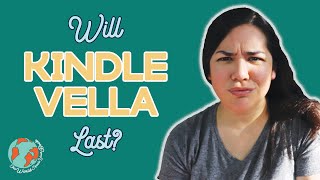
Monica Leonelle explains why Amazon's Kindle Vella, a serialized fiction platform, is unlikely to shut down like four earlier Amazon author programs did. Kindle Serials, Kindle Worlds, Kindle Scout, and Write on Kindle all failed due to limited access, scalability issues, and poor profitability. Vella avoids those mistakes with open access to all authors and dedicated episode approval staff.
Chapters
Hey there, Igniter! Monica Leonelle from theworldneedsyourbook.com. You are listening to The Productive Novelist, and today I'm going to be talking about why Kindle Vella is not going to go away. So Kindle Vella is Amazon's new program where you can post your serialized fiction, and there are a lot of interesting things about the program. I'll definitely be doing a couple more episodes about it, so, um, Yeah, you can, you know, I'll kind of explain what Kindle Vella is a little bit more if you're not familiar with it. But most likely, if you are an independent author, you are familiar with it. It's a new thing that has really taken the publishing industry by storm, and it is a pretty big deal, actually. So what I wanted to talk about today was why this program is not going to go away. Um, and, uh, specifically what I've heard in the ind— independent author community is that the program is similar to, uh, other programs that Amazon has had in the past, specifically writer programs that they have shut down in the last several years. So, um, some of those programs are Kindle Serials, which was a failed attempt at making money off of serials. And that program, what they, what they were doing is they were partnering with their most popular serialized fiction authors. So this was 2013, 2014 timeframe. And they had a lot of problems with that program. I actually had a couple close, close-ish friends, author friends who were in that program with their serials. And they were talking about how there was just a lot of misunderstanding, I guess, on Amazon's part and how Amazon had built the serialization delivery system. And also how they were doing payments was really confusing to serialized fiction readers. And they were, they were just having trouble with retention from what I understood. And so there were some other problems with it. So the program was not scalable. They did talk about how they wanted to launch it to all authors eventually, but they, they kept it in like a, um, limited beta for a while, and they were only working with certain authors. So that program, um, I don't know if we would say it failed, but that program did eventually get discontinued. And typically when Amazon discontinues something, it's because it's just not viable in the form that they did it. So that was Kindle Serials. Another program that they had was Kindle Worlds. This is another one I hear mentioned frequently in the independent author community. And Kindle Worlds was actually probably the most successful program that Amazon had that I have on my list. So what Kindle Worlds was is that certain creators— it was a limited number of creators— could offer their universe to other authors to write in. And there were lots of parameters around that. So the idea was that you were going to allow people to create fanfiction in your universe and the money was going to get split properly. So some of it went to Amazon, some went to the writers and creators, and then some went to the universe creator. So that program went for about 5 years. I, um, let me look at— I have it written down. Okay, it closed in 2018. I think it started in like 2014 or 2013. Uh, so the program was, you know, it lasted for about 5 years, and there were a number of authors who were making real money from this, uh, full-time living from writing stories in other authors' worlds. Additionally, if you were a universe creator, you were making quite a bit of money because your world was open to a lot of writers. And so, and you know, you were getting like a percentage of every single book that was sold, and there were like 40, 50, hundreds of books in your world. And so that was pretty, you know, that was exciting. Um, So kind of like overnight they decided to shut it down. So they, they had— there was a year period where they started pulling back on support, pulling back on programs for Kindle Worlds, and then they just announced like, hey, we're shutting this down. Um, it was pretty, uh, unceremonious, I guess I would say. Um, and you know, nobody is ever really sure why Amazon shuts these programs down, but The speculation is that it just wasn't profitable enough for them. And I think it's not that— and there were a lot of authors who were profiting off of this, but I think when things are not profitable for Amazon, a lot of times it's that they cannot scale them. And so there were a number of reasons why Kindle Worlds couldn't be scaled. And I think the biggest reason, and I will kind of come back to this a couple times, is that The model for these serialized fiction apps and companies is really that they find stories that are, that kind of like bubble up, and then they try to get the rights to those stories so that they can turn them into franchises. So it's, it's really, I think part of the business model is the data mining of these fiction stories, seeing which ones can really stay engaging and can be turned into television television shows and merchandise. And, um, that— because it seems like that's where the big money is. And right now, a lot of the film and television industry, they are taking bets on some of this stuff. And so this is going to, uh, find kind of these fan-supported stories and try to get the rights from them to, uh, go, you know, go further. So Kindle Worlds, one of the big problems— I think there were a lot of support issues, and Amazon The issue is that there's a lot of legal issues as well in terms of copyright. And Amazon's not really a legal company. It's a tech company. It's an e-commerce company. It's a shipping distribution company. Like, these are the things that they're good at. It's not really a company that is good at like the rights stuff, I don't think, and not a company that should be in that business. So with these worlds, Amazon was really limited in that they couldn't make money past, uh, just the books that were happening. So they couldn't— they couldn't make money on the world expanding because that world still belonged to the creators, and it wasn't a way to get rights for, uh, you know, like a cheaper price or whatever. And it just— I think that it just didn't— it didn't really make sense the amount of support that they would have to put in to basically just be in books still. So then there was this other program called Kindle Scout. Kindle Scout was basically like The Voice for authors. The Voice is a US— I think it's a US-based TV show that is about— it's like a singing competition. So similar ones would be like America's Got Talent or Britain's Got Talent, American Idol, like that sort of show. So there was— it was basically like that type of competition, but for, for books, for authors. And so they selected about 300 authors over the course of that program to— or not authors, selected 300 books over the course of that program and They had, you know, they had like a mild, like a small advance, like $1,500. They, they essentially offered a publishing contract and that program got shut down, I think. So again, like, you never really know. And I think there's always like support issues, focus issues, changes in priorities that these huge companies like sometimes these little startups kind of get abandoned in some ways. But another thing I think is that it— I think that the, the program wasn't really able to find, um, more profitable books, basically. So, uh, you know, I, I think that, that if they were able to, for example, find all the books that were going to be like the top 10 of their store and that we're gonna sell, you know, 20 million copies, which there are indie published books and series that sell that many copies. If, if they were able to find those and get a stake in them, like get the rights for them for $1,500 advance, I think that they would have continued the program. But I think that, that it just wasn't able to— it wasn't able to determine a winner any better than like The Voice itself is. So like if you win the show The Voice for one of the seasons, and they have so many seasons of the show, and same with American Idol, all of them, it does not guarantee that you are going to become a pop star or that you are going to— I mean, you will get a record deal. It doesn't, it doesn't mean that you're going to become a professional musician, basically. So I think it's the same with these books. I, I think they just were not necessarily finding, um, the top books, and so it just became not worth it to them, um, because that was probably what they were trying to do, is they were trying to find a way to use voting mechanisms and reader feedback to find the books that were going to explode in the industry. And this probably wasn't doing that. So they shut it down because it doesn't make sense for them to give, you know, advances and do all this to have that— have these books being published if they're not the kind of cream of the crop for Amazon. And then the last program is that got shut down by Amazon is called Write on Kindle. And most of us, a lot of independent authors have not even heard of this. I, I mean, I may have heard of it at some point. I did not remember it until I was researching this article and this post that I'm doing here because so with this program, it was basically a story lab. And what you could do is you could post your work as you were writing it, post it in progress, and people could— other authors could give you feedback, readers could give you feedback. So it was meant to be this place that you could kind of test your content. And the goal, I think, for Amazon was to grow it as an author community, an author network. It soon— that was how they built it. Other people in the industry built it as like Wattpad by Amazon, basically. Wattpad is another serialized fiction app in the space, and it primarily— it started out being more for fan fiction, and then it started having original content, but it's still pretty much episodic fiction or serialized fiction. So, yeah, the reason this program got shut down is because nobody knew about it. Nobody was using it. Nobody was talking about it. So they just shut it down. And it kind of makes sense. It just, it just didn't work for whatever reason. They, you know, they weren't able to make it work. All right. So all of these programs, they're very different from Kindle Vella. So the first two that I talked about, Amazon Serials and— or sorry, Kindle Serials and then Kindle Worlds, those programs were launched in a very small beta in terms of, like, relatively in terms of their whole, you know, Amazon's whole entire author base versus the people that they let into these programs. So I think that tends to limit the success of the program. And so they were essentially piloting these ideas and I think that they just realized that they could not scale those ideas to their entire author base for, you know, the effort that they wanted to put into it. So that is kind of my take on it. And I think the fact that they have Kindle Vella coming out and it's available to all authors now, and they are putting tons— they're, they're What I've heard is that they are manually approving every single episode that goes up, which means they're putting tons of manpower behind this right now. They're putting a lot of resources on this and they are— they made a very big announcement about it. And so typically when they're trying something that they may kill later, they're doing it a lot quieter than the way they're doing Kindle Vella right now. So I think that difference is very, very big. Um, and with these other two programs, they just, you know, I think again, it, um, it's like they just couldn't get the scalability. Um, where with Kindle Vella, they've kind of built it from the ground up to be scalable, at least on the author side. We don't know about the reader side yet and what they have planned for that. So That kind of makes this different. And I was looking at these 4 programs, um, that have been killed at this point by Amazon, and I noticed that the things that they did wrong in those programs are now fixed in Vella, uh, and the things that they did right in those programs are the foundation of Vella. And so that alone, it kind of makes sense from Amazon's perspective. You, you know, you try a bunch of stuff in private beta, you have these small experiments, they don't succeed, but you learn a ton from them. And then you kind of put all of that knowledge, all of that data that you collected, all that understanding together, and you get Kindle Vella, and then you launch it big. So that's kind of what I noticed when looking at the history of these other programs versus Kindle Vella and what they're doing differently with Kindle Vella. So for me, that's why I think this is a very different type of program than some of the regular programs that they've put out in the past. Um, that said, there's still one major question, which is is, is serialized fiction here to stay? Are— is Kindle Vella going to be able to find a reader base specifically in the US, which is where they are focused right now? And for that, I will answer in the next episode. So there's going to be a follow-up to this one. So I hope that this was helpful to you. I hope it helped you to understand why Kindle Vella is quite a bit different than some of these other programs that Amazon has put out and why it may be worth paying attention to if you are an independent author and if you want to kind of play into Amazon systems. Also, if you want to write serialized fiction, because it is a very different beast. So once again, I will be doing a couple more Kindle Vella episodes over the next couple days and weeks. So stay tuned for that. Make sure you subscribe to the podcast or, um, to the YouTube channel. You can go to theworldneedsyourbook.com/podcast if you want to see all the places that this podcast is posted. And at the time of this recording, I've had a number of people email me and ask me if I'm going to be on Apple Podcasts, and the answer is yes. It's in process. It just takes a couple days to get approved, I guess. So I will have that and the link by the time you're watching this or listening to this. The link may already be there, but if not, the link will be there shortly. So yes, I will be on Apple Podcasts. For now, you can watch these or listen to these elsewhere. Most, you know, like one person listened to it on Spotify instead. So Just a little bit of housekeeping there. For the YouTube channel, go to theworldneedsyourbook.com/youtube, and that will take you to the YouTube channel. And I will be posting these Kindle Vella episodes in both places, so please stay tuned. And, uh, hope, hope that this was helpful to you. Thank you so much. Have a wonderful day.
More from Monica

Free Full Book! Get Your Book Selling Wide by USA Today Bestselling Author Monica Leonelle

Full Free Book! Get Your Book Selling on Amazon by USA Today Bestselling Author Monica Leonelle

Full Free Book! Get Your Book Selling on Apple Books by USA Today Bestselling Author Monica Leonelle

Full Free Book! Get Your Book Selling on Your Website - USA Today Bestselling Author Monica Leonelle

Full Free Book! Dictate Your Book by USA Today Bestselling Author Monica Leonelle

Full Free Book! Write Better, Faster by USA Today Bestselling Author Monica Leonelle

Full Free Book! The 8-Minute Writing Habit by USA Today Bestselling Author Monica Leonelle



Full Book! Novel Writing Prep - USA TODAY Bestseller Monica Leonelle -The Productive Novelist Series
