From Flipping houses in his free time to $90M in AUM | Michael Wagman NGDR Ep #7
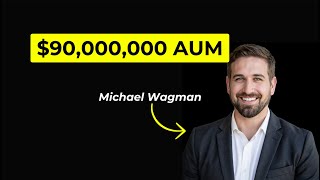
In this episode of the NGDR podcast, host Speaker A interviews Michael Wagman, the co‑founder of Nimble Capital Group and a multifamily syndicator with roughly $80‑$90 million in assets under management. Wagman recounts his path from a tech‑sales job and a hobby of watching HGTV to buying his first house at 25, flipping it for a modest profit, and experimenting with every residential real‑estate strategy—wholesaling, realtor work, house‑hacking, Airbnb, and long‑term rentals. He explains why he shifted from flipping to raising other people’s money, describing the tax disadvantages of short‑term gains and the scalability of equity syndications. Drawing on his Tel‑Aviv startup experience, Wagman built a systematic capital‑raising operation that uses virtual assistants, lead‑generation ads, and a sales‑funnel‑like process to qualify investors, allowing him to travel to 19 countries while closing $5 million in deals. He shares his mindset on discipline, the importance of delegating, and how limiting beliefs can hold people back. Wagman critiques the traditional education system, emphasizes accountability, and outlines the three primary ways multifamily investors earn money: acquisition fees, cash flow, and equity appreciation. He also offers personal recommendations—books like “10X Is Easier Than 2X” and the “Red Rising” series—and reflects on the biggest lessons he’s learned, including the need to own every outcome and to trust the right partners. The conversation provides practical insights into real‑estate syndication, investor acquisition, and personal development for aspiring entrepreneurs.
Chapters
Michael Wagman is a real estate investor and syndicator who co-founded Nimble Capital Group in Phoenix. He leads a portfolio with roughly $80 million in AUM across multifamily properties. He's flipped his first house at 25 and is now running his own private equity firm. He spent a year traveling to 19 countries while still raising over $5 million remotely. Michael Wagman, welcome to the podcast.
Thank you so much. That was a great, great intro. I like it.
Yeah. What do you think got you started in real estate? Because correct me if I'm wrong, I think you were in tech sales or something like that, right?
I was. Yes, I was. The simple answer is I was watching too much HGTV back in 2016 or so. This is back when all of those Flip or Flop and Fixer Upper and all those shows were really popular and people still watched cable. That's not really a thing anymore. Amazing how 10 years flies by. But yeah, I'd been watching too much and I just remember like watching it and thinking, man, I could do that better than they could. And needless to say, I was young and ambitious and probably wrong about that. But, you know, I took the leap and I bought my first house. And like you said, I did used to work in tech sales and I only lasted about 3 years in the working world before I basically said, I'm not okay with other people telling me what to do. I think that's a pretty common trait in a lot of entrepreneurs. And so yeah, I just took the plunge and I bought my first house.
So were you ever thinking of doing real estate before that? Or was it just like, oh, I see this on TV every night, I'm going to—
Yeah, they really make it seem like easy money. They're like, oh, you flip a house, you'll make $50 grand and you get to take an ugly house and make it beautiful. And I was like, I could do that.
What was the process of that first house?
So I moved from Tel Aviv to Florida, and in Florida, houses are really cheap. So the first house, I had never heard of raising capital. I'd never heard of using other people's money. Like I said, I was just watching too much TV. And so I used all my own money that I had saved up in the last 3 years of working. I had about $100,000 to my name, and the house itself cost $66,000 for a 2-bedroom, 1-bathroom house in Florida. Paid cash for it, couldn't afford a real contractor, so I hired a handyman, and him and me did all the work together. We spent about $20-ish thousand on the rehab, and after all was said and done, you know, I was into it for like roughly $90 grand, and I walked away with $13,000 in profit. After 6 months. So not a lot of money, certainly not the 50,000.
Well, probably a lot less than you would make in tech sales.
Yes, exactly. But you know what? It was enough to keep me going and be like, okay, this works.
So you weren't at that point thinking, I just made something like $2,000 a month.
I wasn't thinking that.
And lost like so much time. You weren't thinking, you know, this is maybe not for me. I should just keep going. What do you think was that?
I mean, first of all, I was my own boss. So, you know, keep in mind I was still 25 years old then. So I was waking up at 10, 11 AM, rolling into the job site whenever I felt like it, you know, playing video games every night. It was my first true taste of, you know, like real, real freedom. So yeah, I didn't make a lot of money, but I felt like I was doing something productive every day and I was really enjoying my time and enjoying my life. And, you know, needless to say, further down the road I learned, oh crap, you actually have to work hard and have a schedule and wake up early. Be disciplined in a lot of things. But at 25, I wasn't really thinking about that.
Wow. That's, uh, very interesting. 'Cause I mean, just through this pro podcast, I interviewed so many people at so many different parts of their life and it's like crazy. Like some people, um, actually interviewed one guy who started at 20 and like literally like straight outta college. And there's other people that start like 45, um, and even later. So it's, it's crazy. Like, industry.
Yeah. And I will say that, you know, I had to learn a lot of these lessons really the hard way because I am not somebody who is naturally disciplined. I've pretty much gotten through my life doing the most minimal amount of effort for the maximum results. Um, and that's kind of how I started approaching this. And then I very quickly learned that that's not going to cut it. Right. So I had to learn things the hard way and develop those skills over time.
Do you think that mindsets help you get the most leverage for your time, or you think it's just been absolutely—
Absolutely. And I think that's a pretty common thread in entrepreneurs as well, is that a lot of us are very ADHD people. We tend to think of the bigger picture, and, you know, we have this and this and this and this, all this going on at one time, and we don't, um, you know, we're not really super, super detail-focused. But, um, I think that leveraging the power of others and delegating and hiring out is absolutely something where it's like, I know I'm not going to be able to make myself do that task, but I can definitely hire somebody who's going to be better at it than me. And that's 100% helped me get to where I am.
What were you like in school?
I was a stoner. I was, I was smoking weed from the moment I got up every day. And, you know, probably from age like 14 to age 20, I was stoned constantly, but I still had pretty good grades and it like school wasn't super hard for me. But I remember one time I told my dad I was intentionally getting a C and he said, get that fucking grade up right now. Sorry, I don't know if I can curse on your thing. That was the only time he ever got mad at me. And needless to say, I really fixed my grades really quick. So yeah, I was like I said, naturally lazy, trying to get the maximum result with the most minimum amount of effort.
It's very interesting cuz there's so many people who are like, do not bad in school, but kind of have the same mindset and then become really successful after. What do you think that is like? Do you think the school system's broken or?
Absolutely. The school system is broken.
Yeah.
It's designed to make you figure out how to be good at taking a test and it's all standardized. It's not designed for critical thinking. It's not designed for people, you know, who maybe learn in different ways. Some people are more audio learners. Auditory, learning, visual, you know, different kinds of ways. I mean, you know, for me, I remember just never paying attention in class, but I knew that if I had a deadline and there was a test the next day, I could cram, cram, cram, and then I'd be fine, probably. Right. And yeah, I don't know. I'm, I'm passionate about education. The, the American education system concerns me, and when I have kids, I don't know if I'll homeschool or what.
Interesting.
Wow.
Okay. So why not just stay flipping and going? Why did you start to raise capital?
So probably after about 3 or 4 flips, I realized that if you borrow money from other people, you can do more than one at a time. So I took 6 months to do the first one and then still another 6 months to do the second one. So I think I ended up making 40 grand in profit in my first year, um, which is, you know, considering it's like your first business, and 10 years ago, you know, that, that went a lot farther. But, um, there's a bunch of problems with flipping. Um, one is capital gains. So all of that money is short-term capital gains. It's subject to tax. Um, two is the second that you finish a flip, you have no more income stream. So you have to go find another one right away. Um, and I spent a lot of time listening to BiggerPockets. I don't know if they're still as popular these days as they were when I got started, but I used to religiously listen to that podcast. That's when I started hearing about, um, you know, long-term rental income and house hacking and all these other kinds of things. And so I actually spent 3 years living in Florida before I moved to Phoenix, and I tried every single kind of residential real estate investing you can imagine. I was a realtor acting as, you know, the buyer and seller representative on all of my own properties, as well as trying to represent other people. That was a horrible job. I don't wish that upon anyone ever. It's just an absolute nightmare. I tried wholesaling. I absolutely hated that. It felt very dishonest to me. So props to anybody who can be a good wholesaler. But I used to buy my properties from wholesalers and then my real first aha aha moment when I moved across the state. So I was living on the east coast of Florida and I moved to Tampa, and I bought a 4-unit building and I lived in one of the units. So now I had consistent income coming in from 3 of them, and then my housing expense was zero. So not only, you know, was I living for free, but people were actually paying me to live where I was living each month. And that was just like a, oh my God, I need more of this kind of moment. And so I bought a couple more duplexes and did long-term rentals with those. I even moved out of the unit I was living in and did Airbnb with it for a little while. So every single kind of residential real estate investing that you can try, I have tried. I would say the one that stuck with me the most is consistent passive income from long-term rentals.
And did you take the capital from the flipping and from whatever you had left over I don't know if you maybe had $120,000, did you take that and put it into buying it yourself or you raised capital for those?
Most of those was either private investors, so yeah, capital. And I want to be careful when I say that because it's a little bit different what I do now when I'm actually raising capital, I'm raising equity for deals. That was more just like debt, right? So Definitely. Yeah, I'll pay you 10% on your money.
Okay, interesting. How did you negotiate 100% seller financed on a 60-unit motel?
So I didn't at all. I mean, we did. And when I say we, I mean my side hustle, so to speak, is I coach other students on how to raise capital. And my first ever coaching student, He, you know, we've become really good buddies over the time that I've been coaching him. And he found this deal, he underwrote 2,000 deals before he found this deal. And it was just an absolute slam dunk of a deal. And he negotiated 100% seller financing because it's in this really little niche market in Arkansas, where there's a lot of mom and pop owners who've owned their properties for a really long time. It's 100% tourism town. It's a small town of 2,500, but they get a million visitors a year. So basically thrives and survives on tourism. And yeah, not only was it 100% owner financing, but the purchase price was $1.2 million for 60 units, meaning that our monthly mortgage is roughly $4,000 on a 60-unit property.
And the income from that is probably like—
Yeah. Yeah, we're going to smash it out of the park. We'll probably do like a 4x, I would say, for the investors. But the real, you know, the real home run there is the cash flow. It'll be cash flowing probably 30% by year 2.
Wow, that's amazing. So I'm guessing a lot of— how do you— what do you teach in your private teachings, I guess?
Yeah. So, you know, what I did And what a lot of people do when they get into this world is there's so many multifamily guru courses and some of them are fantastic. You know, I won't really knock any of them. The one that I did cost $40,000. And they, you know, when you graduate it, they tell you you can do everything. You can do the underwriting, you can do the broker relationships, you can do the property management, you can raise the money. And the truth is that that's really just not how the industry works. It very much is a team sport. And oftentimes you have different groups groups of operators come together and they all raise a little bit of capital, but you have somebody who's better at asset management or somebody who, you know, signs on the note. There's all these sort of different pieces that contribute to making a big deal like that work on a syndication. And, you know, I was pretty fortunate in that I had a strong sales background. I used to make 100 cold calls a day, and then I got promoted to be you know, the deal closer from, from the SDR. And I kind of took what I learned in working in startups in Tel Aviv and then imprinted it onto how to raise capital. So, you know, I have a bunch of systems which basically bring qualified investors to you without requiring you to make 100 cold calls every day or feel like you're begging for cash, you know, and And it was very, very effective for me. And it's the same system that allowed me to travel the world for a year and raise capital while, you know, barely working and just showing up to closing calls. And that's what I teach my students.
Yeah, it's a really impressive thing you did. You traveled to 19, 18 or 19 countries.
19 countries.
19 countries. 12 months.
It was a lot. I wouldn't, if I could do it all over again, I probably wouldn't do that many in that little time. But, I certainly did it.
What was the mindset going in and saying, I'm going to raise $5 million while traveling to 19 countries in one year, which most people don't even do in a lifetime, like either of those?
Yeah, well, I think we bought two deals during that time, or maybe we had one going on and then we bought another one while I was traveling. But the systems are exactly the same, right? So the way it works is I have trained my VA to act as an SDR for me. We get leads from deal-specific ads, and those leads are either qualified through a questionnaire and booked directly in my calendar, or she basically cold calls everybody who's interested and then sets up qualified appointments in my calendar. So my job is essentially to show up to the closing call, and by the time I get to that call, I already know if they're accredited, if they've ever done a syndication before, what their goals are, you know, how much they're looking to invest, when they're looking to invest, if I already have all of this ammo with me going into that call, and then my job is really to get it over the finish line.
Wow. How would you compare working in Tel Aviv and startups to real estate flipping houses and raising capital?
Well, I mean, for raising capital in particular, my Tel Aviv experience really shaped how I designed my capital raising operation. You know, I knew that marketing generates the leads, pre-sales develops the leads, sales closes the leads, and then, you know, success, I guess, manages them from then on. You can really kind of create the same thing in capital raising. You need leads, you need lead generation, you need to nurture them, develop them for a while, you need to close them, and then you need investor relations to make sure that they're happy. Obviously, that depends on the performance of your deals and everything, right? But there's a lot of communication that needs to happen, and all of it can be systematized. So I I really, you know, took everything I learned there and used it to shape what I do now.
Very interesting. Would you say you worked harder in startups or in real estate?
That's a good question. You know, I had a very interesting Tel Aviv startup experience in the sense that, you know, we worked American hours, so we'd go into work at 2 PM, and the rest of the office would leave at like 7 or whatever, and we'd work until midnight. But keep in mind, I'm 22 years old, so I'm in my prime drinking years. And, you know, the sales office, we were a bunch of like crazy guys. So usually when the rest of the office left, we'd start partying and then we'd go straight to the bar after. So I don't know if I could say that I worked that hard then, but it was, it was a lot of calls and it was a lot of It was a lot of fun, but it was, it was an easy lifestyle, especially when somebody is paying you just to show up, right? Versus being an entrepreneur, nobody's paying you to show up. You have to show up for yourself and make sure that you're the one putting your own food on the table, right? So I'd say I worked a lot harder in developing my business now.
Yeah, it's a lot more responsibility, I'm guessing.
Yeah. And, you know, it's just, you know, being young is great. But at some point, you have to take 100% responsibility for everything that happens to you in your life. And if you want your business to succeed, it's because you made it succeed. And if it doesn't succeed, it's because you didn't do enough.
You became a millionaire by age 30. How would you say that you did that? Break it down. Network?
No, no, net worth. So— Oh, net worth. Yeah, yeah. I mean, the way that you make money in multifamily syndications is through equity. And it's an extremely powerful tool. So usually you get paid in 3 ways. You get paid upfront with an acquisition fee, which can be substantial depending on how big the deal is or isn't, right? It could be anywhere from like a small one might be $20K to a big one might be $100K. Then. But the problem with that is you need to keep closing more and more deals in order to keep getting them. Then you get paid in cash flow throughout the life of the hold, assuming that your deal is performing right. The multifamily has been in a pretty tough spot though since 2022. So a lot of deals are underperforming right now. But assuming your deal is performing, you get paid in cash flow throughout the life of the hold. And then, you know, let's say I end up as a 10% overall owner in a $5 million deal, well, guess what? My net worth just increased by $500K the day we closed. And obviously, it's much more nuanced in real life. You have debt service and all these sorts of things, but that's how you can do it with real estate.
Do you have to pay phantom income tax on that? No. No?
And as a real estate professional, it's very easy to basically never pay tax.
Interesting. What do you think is one thing that you wish you could have told yourself when you were 18?
Oh, man. Buy a bunch of Bitcoin. No, you know, that's tough. I really try to be somebody who doesn't look back in regret. Obviously, it's easy to say, like, man, I should have studied finance, or I could have tried so much harder. I could have just applied myself a little bit more when I was in school, or I could have gone to a different school if I just tried a little harder. You know, I think about that. Stuff. But at the same time, you cannot rewrite your own story, and it doesn't really serve that much to go back. I just try to be, you know, the most productive adult version of myself right now that I can, and that serves me well.
Interesting. What would you say the biggest lesson that you've learned?
The biggest lesson that I've learned? Oh, the biggest lesson that I have learned is that at the end of the day, it's kind of this accountability thing that I spoke about already, because at the end of the day, everything that happens in your life, you are responsible for. And where I'm going with this is there have been instances in my professional career where I have relied on others thinking they were just going to get the job done or trusted the wrong people. You know, I've made every mistake in the book, and we're not shy about talking about that. We've had failed partnerships, bad partnerships, we've trusted the wrong people, we've done all sorts of things. But, you know, if you go into a deal and let's say somebody tells you they're going to raise $5 million, but it's their first time raising, you have no reason to believe that they can actually do that, right? So you need to be the person who's capable of doing everything to get that across the finish line. And if the deal doesn't close because you couldn't raise enough money, it's because you weren't ready for that deal and you shouldn't have trusted the people who said they were going to raise that money.
So it's all up to you.
It's all up to you. That's 100% it. Yeah.
Who's the most impressive person you've ever met?
Oh, it's my dad, hands down. No question about it. I've never met a man smarter in my entire life. My dad is I don't know. He taught himself how to code because he was bored. You know, like that's the kind of stuff he does for fun. He used to run like a massive Fortune 500 company and just, I don't know, nothing is hard to him. He knows everything. Maybe that's, you know, the eyes of the son idolizing the father, but I've still never met anybody who can, who can compare to him.
Well, oh, do you think you would have been an entrepreneur if your parents, your dad specifically, wasn't That's a really good question.
Both of my parents were entrepreneurs. My mom was also— there's— I think they've done studies on this, right? Trying to find out if your parents are entrepreneurs, how much likely are you to be one? I don't know. Yeah, I was, I was raised to believe in myself and believe that I can accomplish my dreams and believe that, you know, I am capable. And I'm sure that maybe if I was raised in a different environment, I would have been told, you know, follow the rules, go to school, get a job, all this kind of stuff. And, and maybe I would have been okay with that, but I wasn't.
What do you think is one thing that holds people back from becoming successful?
It's their own limiting beliefs. It really is. It's— you are basically the, the amalgamation of what you tell yourself. So if you have a victim mentality, if you always feel like you're the victim, if you always feel like things are happening to you and, you know, not because of you, they're happening to you, then that's the story that you tell yourself and that's what your truth is. But if you really get out of your own way and start believing in yourself and start taking the steps to actually accomplish your dreams, then there's really nothing that can't be accomplished.
That's a very powerful message. What do you think is one common misconception In real estate?
In real estate? Um, yeah, I think a lot of people think real estate is a high cash flow business, and whenever people talk about passive income, real estate is like the first thing that comes up. But real estate, you know, even when I got into it, cash flow is pretty low, and now since 2022, it's much, much lower. Um, real estate is a very powerful wealth builder and tax savings vehicle. You can use it to explode your net worth and you can use it to basically never have to pay the government taxes. But most real estate is a low cash flow business unless you're talking about short-term rentals.
Interesting. Do you think if you could go back in time, would you start real estate again or would you have gone to a different industry?
Yeah, I'd start buying houses in 2008 when I was 17 years old if I could go back in time. I'd buy all those short sales, but I did not know then.
But if you could go back in time to the start of your career when you were watching HGTV and all these television shows, are you glad that you started real estate or do you wish you went into something like finance or maybe not finance, of course, but day trading or something else?
No, I am glad that I started real estate. And despite flipping not being the best business model, I got immense gratification out of it. I really, really love doing it. If I wasn't worried about making money on the backside, which is very hard to do, I would just flip houses for fun because it was creative and fulfilling to me. I really like taking something ugly and making it look cool. I don't regret that at all. You know, everyone's on their journey and every house I bought, every step I took was one more push that ultimately led me into scaling something really big. Right. But sure, it's easy to say that, yeah, if I bought a bunch of multifamily back in 2016, 2017, I'd be in a crazy position because I started buying in 2020 and 2021 after the boom already started with COVID So yeah, you know, that would've been a cool time to get started and have gone, you know, full cycle a bunch of times by now, but we made it here eventually. Yeah.
And it's, it's always gonna come back as well. Yeah. Just repeat itself. What is one book that you recommend every single person read?
Oh, well, okay. I have two recommendations for, for personal development. I really like a book called 10X Is Easier Than 2X. It's a very simple principle in itself. It's really kind of about the 80/20 rule at the end of the day. But it— the author, the way it's distilled down is just— it's almost like putting words to something you've always innately known, but in a way that is completely mind-blowing. And it's like, okay, if you really want a much higher result, like a 10x result, then you actually have a lot less options of how you can get there. Versus if you just want to 2x your results. And I really, really like that book. And then the second book is just for personal enjoyment. If your listeners have ever read the book called Red Rising, I just started that series recently and it absolutely got its grips in me and I read 3 books in 4 days. So I highly recommend that one.
It's really interesting that you said that it's harder to do, or maybe not harder, but it's harder. Yeah, I guess so. Harder to do something that's easy than something that's really hard. I think Sam Altman said something really similar where he's like, it's harder to raise $2 million in capital than to raise like $400 million. Do you see that happening every day in life?
Yes and no. I would say that if you are really, really clear about your vision and what you want, then on some level you already know all the steps you have to take to get there. Right? You're not gonna be paralyzed by, you know, the doubt and worries because if you know what you need to do, then all you need to do is do it.
Interesting. So you would prioritize having a clear goal over a really large—
Absolutely. You need to have something you're working towards at all times. You know, goal setting is something I work with a
More from Nadav
If your sons and daughters only remembered one lesson from you about money, what would it be?