Why Camber Creek is backing SERHANT | Jeffery Berman | Ep 13
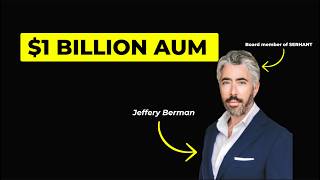
Jeffery Berman, General Partner at the $1 billion-plus Camber Creek, explains why his firm backs Flex, a fintech that lets renters smooth out income-expense curves. He avoids "proptech" because it's too narrow, invests based on founder X-factor over market size, and calls housing affordability the most intractable problem today.
Chapters
Jeffrey Berman is the general partner at Camber Creek, a private equity firm with a real estate arm and a venture capital arm with over $1 billion in AUM. Let's just jump right into it. Jeffrey Berman.
All right, Nadav. First of all, I have to say, I guess my EA set this up. I don't know who you are. You look incredibly young. Tell your audience how old you are.
I'm 15 years old right now.
Okay, so that's, that's pretty incredible. The fact that you're doing this, that, and that you're getting access to people like me. Not to say that I'm so great, but I am a pretty busy person and I don't normally— I don't think I've ever done this with a high schooler. So congratulations to you. I think you're going to go far. We got a little hung up on the introduction, so I'll just introduce myself to your audience. I am a general partner at Camber Creek. As you said, we have two divisions. We have a venture capital division and a real estate division. And my background is in real estate development. I used to be a principal at one of the DC area's largest real estate development and management firms. And about, I guess, unofficially 18 years ago and officially 15 years ago, we created Camber Creek to invest in innovation in the built world. And I spend most of my time on the venture arm creating value for the companies that we invest in. Go.
What do you think pulled you into real estate at the start?
That was pretty easy. I was born into it.
What do you mean? Your parents were in real estate, so you just decided that's what it was, or you think it was in your blood?
It's in my blood. My family has been in real estate for generations. And it was almost a default in the family that the boys in the family would join the family business. But at this point, my cousin Casey and I, who are two of the partners at Camber Creek, we left our family firm to create Camber Creek. I think I always knew in some sense that I wouldn't be long for the family office. It just wasn't that their work, while very interesting, wasn't exactly what fueled my fire.
And did you always see yourself going into venture private equity, or did you think that you were going to work in the family office from the beginning?
Well, it's interesting. In college, I dabbled a little bit in angel investing and creating relationships with with different VCs. I went to college during what was called the dot-com boom and bust well before you were born. And there was something that just fascinated me about that world. And I suppose I knew at some point, even when I was working with the family office, I was still doing angel investing. So I had a premonition that my future was going to be in, in that world.
So you're 18 years old, you're in college, you're basically at one of the, I guess, high points of the venture world. Companies are raising money with no product. Why did you— how did you get the money to invest at such a young age?
Well, I was investing nothing. What, what, what, what I honed in on was— and it's interesting, you said companies were raising money with no product. They were raising— they had, they had ideas. And people were getting— sorry, my dogs are in the background. They love to fight when I'm on a podcast. People were getting money for ideas that where you appended.com to anything, which by the way is happening right now with.ai. It's the exact same thing and it's going to end just as badly. In fact, probably worse because it's an order of magnitude more money. But I saw this and I saw college-age people creating these business ideas. And I said, you know what, I could potentially make some money by investing alongside them little bits, or even, even potentially getting some equity for introducing them to, to money. And that's, and that's what I did.
Interesting. And were you always like this? Were you growing up, were you like always selling stuff in school or—
No, no, no, no. I was, I was a, I was a terrible student. I was not motivated. My brain didn't turn on until after I left high school. Wow.
Interesting. Why don't you use the term prop tech?
Great question. So there are a few reasons, but before I answer that, tell me about your audience. Who listens to this?
I would say it's a mix of people who are looking to get into real estate, who are young in high school, and then a lot of, you know, agents and developers and investors.
Will any of them know what the term prop tech means?
I think so.
Okay. So the reason I don't use or like the term prop tech is it's limiting when someone pigeonholes you. If I said, Nadav, you are a podcaster instead of a media personality, right? Like you're doing this right now. To— and I'm going to use a whole bunch of terms that I think are— are you in Gen Alpha or Gen Z?
I don't even know.
Yeah, me neither. But like, you're trying to create your rizz, right? The W rizz. And there you go. There's a smile. And you're trying to not be sus and flex. No cap, right? Like all the stuff that you're doing. Yes, I got the smile.
Awesome.
Cringe, right? Cringe.
Yeah.
So So you're trying to do a bunch of things in media to increase your exposure. But if I just said, nadav, you're a podcaster, you're not a media personality, you're a podcaster. Well, that would limit you. Right.
So you see, proptech is like the companies that are proptech are bigger than just.
No, no, no, no, no, no. Not companies that are proptech, but the term proptech. When someone says proptech, they. They tend to think of a specific vertical. Whereas if you look at our portfolio, The biggest companies we have are actually fintech companies, fintech companies that address the real estate market. And so, what I like to say is that we are venture capitalists investing in innovation in the built world, or if you want to use a more banal term, real estate technology, but not just proptech, because proptech is to the exclusion of contech or retail tech or fintech or et cetera tech. So I get hung up on semantics.
It's an overgeneralization of what Cambria Creek invests in, you're saying?
I think that's the right— that's exactly right.
What do you think is one company that doesn't exist now but should?
One company that doesn't exist? Well, if I knew that, I certainly wouldn't say it here. I'd create it.
That's true. What do you think is one problem that isn't being addressed that should be I don't think so.
I think every problem is trying to get addressed. I think affordability in housing is one of the more intractable problems that we have. We're looking at a number of companies that are trying to address it and the models. Where are you located, by the way?
Uh, mainly in New York City.
Okay, so, because it looks like there's some ocean behind you, but I can't— where are you right now?
West Palm Beach.
Oh, I'm on Palm Beach. Where are you in West Palm?
Singer Island.
All right. Where?
Like this, I think the most south part of Singer Island.
Are you at the— are you at the Ritz? The old Ritz? Or Marriott?
No, no hotel.
No hotel. Okay, so the— so the— you're near like the Tiara, that really tall tower? Yeah, yeah, yeah. That's, that's great. I used to actually live there. The last real estate deal I did was down here. It's, it's wonderful down here. Are you on break?
Yeah, I'm on school break.
Good times. All right, this is a great place to spend it, and you're indoors on such a beautiful day because I'm looking at the ocean too, and it is gorgeous outside. But anyway, getting back to affordability, and that's why I asked you where you are. So West Palm Beach Palm Beach has exploded in recent years. And what's happening is the population that used to be that, that middle class, and let's call the working class, they're getting pushed out further and further west because so many people are moving down from your communist city and state. And that's increasing the housing prices here. And there's a limited amount of places where these people can go. This is the intractable problem of our time right now. And so companies that are addressing this and that can figure out how to scale affordable housing that is not cheap, meaning like durable, they're going to do very well. A bunch of folks have tried to do it. Most have failed.
Interesting. So affordable housing, you would say it's the largest problem Affordability.
And no, no, not just affordable housing, affordability in general. So as a further example, so did you look at our portfolio at all?
A couple of companies. Yeah, I read.
Okay, so there's a company called Flex in our portfolio. Do you know what Flex does?
Um, not really.
Okay, so are you familiar with Affirm or Klarna?
Yeah. Oh yeah, yeah.
Buy Now, Pay Later.
This. Yeah, right about this.
Right. So Flex was the first company of its kind to offer a flexible rent solution. Why is this important? Because the majority of Americans— this is a crazy stat— the majority of Americans can't afford a surprise expense of $400 in any given month because they pay their largest expense, i.e., rent, etc., at the beginning of the month and they get paid twice a month. So what Flex does is they say, hey, You can subscribe to us like a Netflix subscription, Netflix and chill. Yo, Riz, uh, cap? No, no cap? No, no, no smile. Yeah, cringe. Uh, and then we will pay your rent on the first of the month, and then you can pay us back over the course of the month, which essentially allows somebody to flatten out their income and expense curve. That helps with the affordability of someone's lifestyle. So companies like that, it's not just affordable housing, it's affordability in general. So any of your friends who are listening to this who are entrepreneurs, if they can figure out— they can figure out ways to make people's lives better and more affordable, that is where they should be spending time.
Interesting. And with a product like Flex, where they're basically, I guess, carrying the burden of rent for a small period of time from a renter. How does that work with, I don't know how much you can share, but how does that work with, I have a feeling that most people won't be able to be accepted to something like that because of the risk that Flex would have to put up, the amount of capital that it would have to pay if let's say something like AI all of a sudden one month, you know, takes 1,000 jobs and then a bunch of people can't pay rent and then Flex is responsible for, you know, 400,000 people's rent. So how does—
that's a, that's a, that's a really good question. So the, this, the Flex's secret sauce is in their credit and underwriting model and their ability to issue short-duration credit. I'm not sure if you know what that is, but short-duration credit is the key to this. So, Flex's loss rate, what's called the DQ rate, is exceedingly low. It's lower than most credit card companies. And this is— Flex is now a very large company. I won't say how large, but they're a very large company. They're one of the world's largest and fastest-growing fintech companies. And this isn't just something that you can hop into and say like, oh yeah, we're going to offer flexible payment terms one day. It ain't that easy. It's an incredibly complex and complicated problem that is delivered in an elegant and simple solution. And by the way, that's the key to any company going hyperscaling, basically making it easy for anybody to integrate into their, into their workflow or their work life or whatever, what have you. That's the, that's how you get virality. That's why Instagram, TikTok, Snapchats, or whatever it is you kids use, that's why all those things work so well, because it's so easy to download to your phone. It's so easy to start using and sharing, etc., etc., etc. Same thing with with Flex.
So user experience, you would say it's one of the most important things?
Like, absolutely frictionless user experience. By the way, that's for the enterprise too.
Yeah, for B2B as well.
100%.
Okay. If you were to start over today with no money at 18 years old, what would you do differently than, uh, you think you did?
Let me tell you something. I have never been more nervous for our society as I am right now. Like, I don't even know why you're going to school because the— like, what do you want to do when you leave high school?
When I leave high school?
Yeah. What school do you go to?
High school.
Heschel. Oh, I know Heschel. Okay. And are you going to do a gap year in Israel or are you going to go straight to college?
I think straight to college, probably.
Okay. Where do you want to go?
It's an interesting question. Probably U— University of British Columbia, University of Toronto, or University of Victoria, depending on if I get into Why, why Canada? Well, so my thesis is that if you go to college in the US, and as well my parents, is that if you go to the college in the US, if you're not going to college like Stanford, Harvard, Cornell, or Wharton, or I'm sure there's a couple more, then it's not worth paying $90,000 a year that you would be paying in Canada $5,000 a year.
Is your family Canadian? Yeah, but you go— but they live in New York. Yeah. Interesting. Okay, so I'm sure you have these conversations with him as well because he's probably seeing the exact same thing I'm seeing. And the— so if I were starting over again at 18, the thing that I would be— the thing that I would be— school's very important. Understanding math and science history to the extent that it's not being rewritten. I mean, I can't even imagine what it's like being in school right now. And, you know, the things that you're learning are— you're being told history isn't history. It's bat stuff crazy. Or what's the term? Totes sus. What's— how do kids say like that's not true.
Like, cap?
No, but that's— well, when you say no cap, it's like no lie. It's like— but whatever it is, it's like you're, you're being fed, like, who knows. I would be focusing on— and I'm sure you are because you seem to be an enterprising person— do you know what a prompt engineer is?
Yeah.
That, that, that skill set, understanding how to interact with the foundational model systems is going to be the most important thing in the short term. Eventually, what will happen, like, you think about what might occur within the next 10, 15, or 20 years. Like, if I was your father, how many brothers and sisters do you have?
It's just me.
Just you. Sweet. You're going to inherit it all. Okay, so hopefully your father is super rich and all of this dope cash that he's making is going to go into a trust fund that's going to support you because what there are multiple ways that this could play out. One way is that the wealth level that everyone is at is just going to be stuck. Why? Because how are you— when AI can do quote unquote everything, well, how do you create value and access capital markets to increase your wealth? I actually don't know the answer. The answer to that question. Of course, pardon me, I don't think it's going to be that dire. I do think there will be things to do. I think if I were starting out again with no money, I would focus— and, and we were in the environment that we are today— I would focus on creating a career in experiences, because it's the one thing that cannot be, at least for the moment, AI'd away. And like, I don't know if you— have you ever seen the movie Total Recall?
No.
Okay, it's rated R, so you probably shouldn't be watching rated R movies, but it's a— it's an old movie. Ask your dad to watch it.
It—
there's, there's, there's technology in there. It's— I think it's from the '80s, but there's technology in there where like they get into this pod and they have this alternate reality. There's another movie called Surrogates. Watch that movie. That's actually also a really good movie. Like this idea that people will just stay in their homes and then their consciousness will inhabit humanoid-type machines where they live in these alternate realities. All this is possible now. Like, it's actually wild to think that this is something that we could— that you could— and if you're thinking in your head, oh my God, he sounds crazy. Well, imagine this. You put on an Oculus, right? You know what an Oculus is?
Of course.
Okay, you load up a drone, fly the drone. Your eyes are now the drone's eyes, are your eyes, right? Basically. Exactly. So that is— that's the first step towards this wildly dystopian potential utopia. So, but until that occurs to the point where, like, you're not having in-person experiences, experience— the experience economy, I think, is going to be where the most opportunity is because human beings still crave interaction with other human beings.
So when you say experience economy, do you mean that like the experience economy can be provided that if you go to a restaurant, the waiter, you know, is a, you know, a nice, basically young, attractive female, and that is what the experience of going to a restaurant is going to be rather than eating food?
I think for a pubescent male to say that the hospitality would be a—
a young female.
But what I mean by that is, like, for instance, right now you're, you're in, you're on Singer Island. So hopefully after this podcast, you're going to go outside and maybe hit the WaveRunner or, or work out or do something that's like IRL. You're not going to be glued to your screen. right?
Yeah.
You will be experiencing life. And let's, for the sake of argument, say that you've got, uh, some friends here, right? And you guys are gonna be hanging out and you meet some girls or guys or whatever it is you're into, and you create memories that are holistic and natural. Well, now imagine you're in a space, like whether it's a, uh, uh, the hotel or a restaurant, and they're providing that background experience for you with other human beings. That to me, that's real estate, right? Like, that's real estate is the one thing that until we live in a completely virtual world that I was describing in our dystopian future with surrogates and Total Recall, real estate is going to be the one constant. Development is going to be the one constant. That I think if I were 18 years old, I'd be trying to figure out a way to make myself valuable and useful in that industry.
What specific part of real estate do you think that brokers and agents are going away, or do you think that they're going to be the most valuable?
No, I don't think brokers and agents are going away, but I do think— do you know what an— I would be stunned if you do, but do you know what an arb trader is?
Uh, like wholesaling?
No. Okay, so, so way before you were born, in fact, like, like when I was a kid, there were these things called arbitrage traders, and there used to be thousands of them, and they were basically trying— they were creating arbitrage. They were trying to buy something low and sell it high to different buyers, trading on information asymmetry. There are very few of those now left. It's mostly done by black box machines, right? Data companies, much like your dad probably runs. I don't know if he is in the financial services, but what's his company called?
Um, it does like advertising data.
Oh, okay. So it's— what's it called? Uh, oh, cool. Okay, so, but it's not, uh, it's not in this, in this field. So arb trading. So right now anybody can be a real estate broker. But notice the difference between why do people want Ryan Serhant or Gary Porrer versus Joe Smith on the street? Because Ryan Serhant and Gary Porrer can get the eyeballs. They know how and they know how to sell. So, what'll happen is like Serhant, I'm on the board of Serhant. There are two venture capital firms that are in the deal, only one in real estate technology, that's us. We— what we see the future is not the biggest. We're not going to be the biggest real estate brokerage in the world, but we're probably going to be the most efficient and the most successful. Because what we're trying to do is empower our agents with technology so that they can do the work of 3 or 4, which means they can spend their time on the experiential side of the business. I.e., the relationship side of the business. So do I think— would I, would I tell somebody at 18, hey, go get your real estate license? No, I would not do that unless you have a superhuman power of charisma. If you're an unbelievably charismatic human being, then yes. But for everybody else, I would suggest not.
How do you think social media changed real estate?
How do I think social media changed real estate? That's a loaded question. I'll give you one answer: social selling, which is part of the reason we invested with Ryan. This idea, you know, where do you guys go in the summer?
Uh, usually a camp.
No, no, not, not you, like your parents. Oh, my parents go to the Hamptons.
I have no idea. Depends.
You don't know where your parents go? Good Lord, talk to your parents a little bit more. Okay, so let's say go to the Hamptons. It used to be that the, the way people would find their homes would be in magazines, right? Like Dan's Papers or whatever, or the New York Times. That is an anachronism now. The ability to just open up your, uh, your, your iPad or your phone and scroll through every listing in the country. And then the social media, like, layering on interesting catchy music and camera work made real estate more accessible to everybody. And I don't think— we're not even there yet. I think there's more that's happening. There's a company we're working on that's doing something really interesting, which I won't talk about, but It's— I, I think that there's— there are still yet— there are more products that can be utilized to make real estate even more accessible to people. But yes, I think social media has certainly, uh, played a, a big part in creating a more accessible and more interesting market environment.
Interesting. Do you know the company Clipster?
I do not.
Okay. So do you know Modern Spaces?
I do not. Oh, gosh. But that doesn't mean it's not in our, in our CRM.
Yeah. So basically they made like TikTok, but it like Zillow, but it's TikTok. And it's really interesting how you think, do you think that it's going to stay on the main platforms that people are already using? Or do you think it's going to jump to like a new platform and replace something like Zillow?
So, it's funny you say that. Just yesterday, I had a conversation with somebody that created their own Zillow, their own realtor, and they spent millions of dollars on this. And they essentially have the infrastructure for both of these companies. And they're like, listen, it ain't working. Somebody could buy this for nothing. And I said, okay, but once they buy it, they still have to spend hundreds of millions of dollars to get people's eyeballs on it. So it might be super slick, but the fact of the matter is, why is TikTok and why is Instagram in the best position? Because they're already there. They have— you have to be able— you have to give somebody a reason to migrate from what's already working to something else. It has to be This is somewhat arbitrary, but it has to be 10x better for me to say like, well, I was using Instagram, now I'm gonna use Clipster, whatever it is. Why? Everyone's already on Instagram. It's like people that try, you know how many people have said, oh, we're LinkedIn for. Well, guess what? It doesn't work. 'Cause LinkedIn's already LinkedIn. And if it works, it works. This is actually a really good lesson. Unless you are certain that you're providing, and again, arbitrary number, but 10x the value of a current product, don't pretend you're going to be Uber for— I mean, how many times I've heard that in my career. Woof.
Interesting. So it's all about friction when you guys are investing in a company. Does it play into an ecosystem that is inherently broken? That if this product was introduced to the industry, that it would basically— everybody would use it because it's the easiest to use. And you think that's why companies succeed?
I think that's one of the reasons. One of the reasons.
How important would you say hiring is and team is when you're investing in a company?
Critical. That's 1, 2, and 3.
What are the 3 pinnacles of things that you look at when you're investing in a company?
It starts with founder first. I'm going to leave it at that. Like anybody, I was actually in a conversation last week where a successful venture capitalist said the team doesn't matter. And then when I looked into this person's background, I realized they'd gotten incredibly lucky by investing in the best teams. I, I, I actually, I almost couldn't believe it. And then I found out that they were able to piggyback on, on another incredibly successful investor. Team is it. Team is it. The, the market size also incredibly important, but I would rather invest in an absolute rockstar team that is going after a a niche and having them figure it out than invest in a mediocre team attacking a big market. But that's just me personally.
Interesting. Okay, got it. So you're looking at more the team than the TAM or the—
I'm not saying I'm not looking at the TAM. What I'm saying to you is you're asking me what the most important component is. It's team. If I don't have, if I don't have the sense that this person or these people are rock stars, I'm not. I won't work on it.
Got it. You've backed Jackpocket, Sirhan, Kindbody, and Rappi. What do you think those founders have that most founders don't?
Well, Kindbody, Rappi, and Jackpocket are not in the Camber Creek portfolio. They were in my Angel portfolio. Sirhan is in the Camber Creek portfolio. But why don't I just talk about Jackpocket and Sirhan? Because I can tell you Ryan and Pete Sullivan, who is the founder of Jackpocket. So, Jackpocket, for those who don't know, is lottery on your phone. It is legal in New York, not for your age though. They were bought by DraftKings. So, So it's now a publicly traded company. The similarity between those two humans is that both of them will grind their fingers to the bone to win. Ryan was— actually, this is not my story to tell. Both Ryan and Pete are the hardest workers you will ever meet. Oh, that rhymes. Bussin'. Uh, the— no cap— Chuggy. Yes! I'm gonna keep on going. I'm gonna keep on going because I'm gonna— I'm gonna ate that, as they say, right? Did that— I didn't use that right, did I? Uh, I, I, I can't wait. I love embarrassing my nieces and nephews. My kids are too young to— for me to embarrass them, but it's gonna happen one day anyway. Uh, Ryan and Pete work exceedingly hard and they, they just have a persistence and perseverance that you can, you can feel their energy when they walk in the room. And that's, and by the way, that's almost every single company I've invested in, invested in really early because Jack Pocket, I was a very early investor with Sirhan. We, we were the only investor. Alongside Lefkine and some angels. But we created the opportunity. That's the key. You got to feel that energy. You got to feel those people.
So it's like it's an aura that—
Yes, that's the word you guys use. That's what— Darn it. I was trying to think. It's a vibe aura. It's a vibe.
There's something that just people have that others don't, or you think it's, it's, it's primarily built in their childhood? Like, you know, something happened all of a sudden?
It's absolutely— my father used to call it the X Factor. There are people that are just born with it. Everyone's got a superpower, right? Like, every human being has a superpower, and success comes when you're able to figure out what yours is and not trying to fit a square peg in a round hole. The thing that, the thing that people like I remember in college I was a finance major because I thought that's what my father would want. That's not for me. I did well because I studied hard, but I'm not a finance guy, right? I'm a— technically, I guess I am a finance guy, but like, I'm not the type of person that's sitting in front of a spreadsheet all day long. That's not where my highest and best use and value add is. When people can figure out what they're really good at that's when the magic happens in their careers, in their lives. And the— that translates into a— like, what's the thing you like to do most?
The thing I like to do most?
Yeah.
Probably I would say meeting new people and working on hard things.
That's— but you get energy from that. It doesn't feel like work. Right? Yeah, exactly. So when you get that, that's the dream. And then the double dream is when you figure out what you're good at, what you enjoy doing, and it's a valuable skill set, i.e., someone will pay you for it.
Who is the most successful person you've met and what did they teach you?
The most successful person I've ever met. I'm not going to say his name because, because the lesson is bad, but he's somebody that is extraordinarily wealthy, like to a level that is, is almost absurd, even down here in Palm Beach. And he is wildly ungenerous. And I, I, it was almost to the point, almost to the point where I couldn't believe that he was serious about how ungenerous he is and like purposefully so. And I scratched my head and thought, wow, That is like an exact opposite lesson I want to teach my children. And because generosity of spirit, generosity with your time— like, I don't— this right now, this, however much time we spent, is costing me a fortune. Because if you divide my income by every hour of the day, it's expensive. This is expensive time that you've gotten. But if I'm helpful to you, I'm happy to do it because if this in some small way helps somebody learn something, then I'm putting something of value into the world that's just beyond what's going into my pocket. And this person was the exact opposite, and I couldn't believe it. So I think that was the most monetarily successful person I've ever met by an order of magnitude, I think. And also kind of sad.
Interesting. Interesting. Would you say that's a pattern with ultra successful people?
No, no, no. Most of the, most of the ultra successful people I know down here are incredibly generous.
Interesting.
Maybe, maybe not at the ratio. You know, you go to Heschel. So they— that's a Jewish school, right? So you learn that you're supposed to tithe somewhere between 10% and 20% of your annual income, correct? Yeah. Right. So, so there are people here that, that make tens of millions, hundreds of millions, even billions of dollars. I don't know whether the folks that are making that level of income are actually giving 10% to 20% a year away, but there's certainly many of them are creating massive value for society. So, thankfully, the vast majority of people are not the way this person is. But you did ask me who is the most successful, so I answered it. Interesting.
What is the best piece of advice you ever received?
The best piece of advice I've ever received. Hmm, I didn't listen to it, but I was your age and my father said buckle down. I didn't listen to it and I regret not listening to it, but I didn't have the mental capacity to actually understand what he was saying. But the idea was focus. Effort, time. And instead I was preoccupied with video games and other assorted idiotic minutiae.
Interesting. So focus—
no, it's the opposite of interesting. I was, I was not an interesting child.
Got it.
Okay.
How do you make your time worth something?
And make my time— what do you mean by that question?
Kind of a complicated question, I understand. How do you recommend someone who's starting off make their time valuable? How do you basically make your time valuable enough to talk to successful people?
I don't understand what you're asking me.
Yeah, it's kind of a complicated question. What's the worst piece of advice you ever received?
I don't remember because I probably disregarded it.
Got it. What do you think?
I think the question you were asking You were asking how do you make your time valuable, or how do you make your presence valuable to successful people? That, that's different. So first of all, this is not valuable to me, but you've done something like— you should, you should, you should feel really good about this. You should continue doing— again, like, I have no idea how, like, how or why I'm sitting here talking to you for close to an hour, and I gotta, I gotta jump in a minute. But the fact that you were able to do this, keep doing it. 9 out of 10 people might say like, hey, I have no interest in, in being on your podcast. Who cares? Keep going. Because the, the thing for you at this age, frankly, at any age, it doesn't matter. Here's the secret. I'm 47. I'm still a 15-year-old in my brain. You never grow up. That's the scary thing. Your body just decays and deteriorates. Oh yeah, take care of your body. That's a big one. Take care of your body. Take care of your health. Don't do drugs. Don't drink too much weed. Sorry, don't drink too much alcohol. Like, don't enjoy yourself, right? Moderation is the key to everything. Now, of course, you're underage, so I would expect that you'd neither indulge in illicit drugs or alcohol. But at some point in your life when you decide, oh, you'd like an adult beverage and you're of age, Moderate it. The, the, the, the, the worst thing I see is successful people who cannot control their vices and they destroy their health. Because health is everything. What I always wish my friends, in this order, is health, happiness, and wealth. Because without your health, everything else sucks. Everything else sucks. Doesn't matter if you're the richest man in the world, you don't have your health. Yeah, no, you, you ain't choogie, you know, you, you're not bussing, okay? You, you not whatever aura vibes you're talking about. But, uh, making your time valuable, or you're sorry, you're trying to say how do I make myself valuable? How do you make yourself valuable to successful people? You can't yet. The, the— but at some point you're going to meet enough people And this is specifically for you, for Nadav. You're going to meet enough people that all of a sudden your Rolodex will be valuable. You'll be able to reach out to someone like me and say, hey, Jeff, you know, we talked about fintech. I met this guy Steve who's working on this really interesting project. Hey, here's what it is. Would you like— would you like an introduction? That will be incredibly valuable. So what you're doing right now by gathering all these relationships, I don't know whether one person listens to this podcast or 100,000. Doesn't matter. This is right now. This is only valuable for you. You. There is nobody else this is going to be valuable to at the moment, as valuable as it is for you. And you're creating that value, so you should feel really good about that.
Thank you so much for your time and—
you got it—
wise words. Take care.
More from Nadav



If your sons and daughters only remembered one lesson from you about money, what would it be?

How an Israeli immigrant built a real estate empire from scratch | Eyal Mehaber Ep.13